

US President Donald Trump has launched Task Force Iron Gate to target Iran's land-based commercial connections, following Washington's failure to persuade neighboring countries to shut down their trade routes with Tehran.
The November 7 announcement by US Central Command extends the American campaign beyond its naval blockade of Iranian ports, targeting the movement of goods, technologies and revenues.
Yet the initiative comes as Iran's neighbors are expanding commercial agreements with Tehran, investing in transportation infrastructure and negotiating arrangements that strengthen their economic connections with the Islamic Republic.
A November 11 New York Times report revealed that American officials had spent weeks pressing Turkey, Iraq and Pakistan to close their Iranian border crossings, encountering considerable resistance from regional governments.
Turkey largely maintained its existing border policies, Baghdad rejected Washington's demand to retain only two Iranian crossings, while Pakistan repeatedly reopened crossings following temporary closures attributed to security considerations.
The resistance reflects a fundamental economic reality: Iran's neighbors have substantial commercial interests in maintaining access to its markets, energy supplies and transportation infrastructure.
Kazakhstan offers one of the clearest examples of this expanding relationship, having signed a 27-year agreement with Iran to establish a dedicated transport and logistics terminal at Shahid Rajaee port.
A delegation led by the director general of its Trade Development Fund recently visited the port to examine transportation infrastructure, Kazakhstan's Consul in Hormozgan Dauirbek Duisbay announced.
The agreement, signed in June, provides for two years of construction followed by twenty-five years of operation, establishing a long-term Kazakh commercial presence at Iran's largest container port.
The terminal will facilitate Kazakh exports towards Persian Gulf markets, South and Southeast Asia and East Africa. The investment accompanies broader efforts to increase bilateral trade towards $3 billion annually.
Around 500 Iranian companies already operate in Kazakhstan, providing an established foundation for expanding investment and commercial cooperation.
Uzbekistan has also strengthened its transportation relationship with Tehran. Iranian Roads Minister Farzaneh Sadegh reached agreements during her Wednesday visit to remove transit barriers and facilitate commercial exchanges.
Discussions covered railway, road and aviation cooperation, alongside establishing a joint committee to restore regional transportation corridors.
The relationship is particularly important for Uzbekistan, one of the world's two doubly landlocked countries, whose access to international maritime markets depends upon reliable transit through neighboring states.
Iran's southern ports provide an important geographical outlet towards international waters.
China is another increasingly important dimension of Iran's expanding land-based trade.
Direct railway freight connections between Chinese industrial centers and Iran, operating through Central Asian countries including Kazakhstan and Turkmenistan, are strengthening commercial links between the two economies.
The growing use of these routes provides Chinese exporters with an overland connection to Iranian markets while positioning Iran as an important transportation link between East Asia, Central Asia and the wider West Asian region.
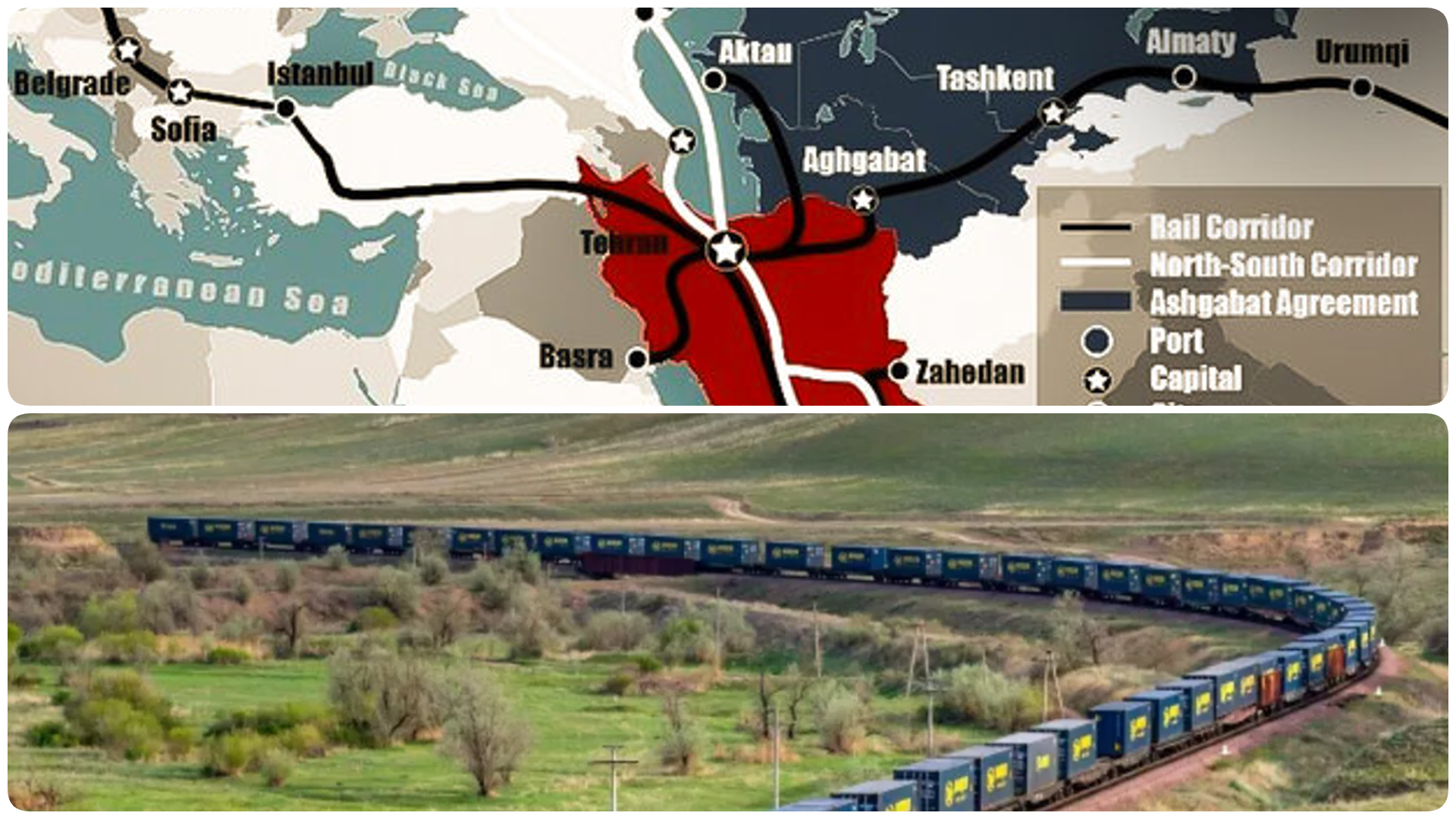
This cooperation adds another substantial dimension to Iran's expanding Eurasian commercial network.
Armenia represents another important partner, with the nineteenth Iran-Armenia Joint Economic Commission concluding on Tuesday with agreements covering transportation, energy, infrastructure and bilateral economic cooperation.
Tehran is preparing another bridge across the Aras River, expanding the Norduz border terminal and developing additional road connections. Iranian officials have announced plans to increase daily truck movements through Norduz from approximately 300 to 500.
These agreements demonstrate how regional governments are strengthening commercial connections with Iran through investments serving their own economic interests.
Iran's geographical position presents Washington with an exceptionally complicated challenge.
Its approximately 5,900 kilometers of land borders connect seven neighboring countries, linking the country with European-facing markets, the Caucasus, Central Asia and South Asia.
Its northern and southern coastlines also provide access to the Caspian Sea, Persian Gulf and Gulf of Oman through established commercial ports.
Restricting Iranian land commerce would require cooperation across numerous sovereign territories, border crossings and interconnected transportation systems.
Every neighboring government has its own economic calculations, energy requirements and commercial relationships.
Iraq relies substantially on Iranian natural gas for electricity generation, while Pakistani businesses and consumers depend upon established commercial exchanges and Iranian fuel supplies.
Turkey's geographical position also makes continued transportation and trade with Iran important to its wider economic interests.
The pressure on maritime commerce has accelerated attention towards Iran's extensive railway potential.
The 730-kilometre Chabahar-Zahedan railway expected to open soon connects southeastern Iran's strategic port with the national railway network, strengthening connections between Central Asia and international maritime markets.
Another major undertaking is the proposed 324-kilometre railway connecting Sarakhs, Tabriz, Marand and Cheshmeh Soraya, establishing an important east-west connection between Iranian and Turkish railway networks.
Iranian railway officials have estimated the first phase's investment requirements at approximately $1.8 billion, with a Turkish investment partner expected to participate through an arrangement involving equal ownership.
Iran's railway program also includes expanding the Rasht-Astara connection, improving border capacity and integrating national infrastructure with neighboring transportation networks.
Cooperation also extends into digital infrastructure, with an initial agreement between Iran, Turkmenistan and Kazakhstan on a regional digital corridor connecting Central Asian communications infrastructure with the Persian Gulf.
The Caspian Sea introduces another dimension to Iron Gate. Russia has explicitly warned the US against extending the new coercive measure into its waters, describing the initiative as a threat to the rights and interests of Caspian littoral states.
The Caspian connects Iran with Russia, Kazakhstan, Azerbaijan and Turkmenistan, creating an established regional transportation system supported by the commercial interests of its five coastal countries.
Russian-Iranian cooperation also extends into energy, with discussions concerning Russian gas deliveries to Iran offering opportunities to strengthen energy security and regional commercial exchanges.
These expanding relationships coincide with a significant change in regional perceptions following the recent US-Israeli war. Iran’s ability to withstand and frustrate American and Israeli strategic calculations has reinforced its position as a sovereign regional power.
For neighboring governments, maintaining economic relations with Tehran increasingly represents a practical national interest rather than a political concession.
Treasury Secretary Scott Bessent's prediction that Iran would face economic collapse within approximately two weeks after exhausting its remaining oil shipments illustrates how substantially Washington has underestimated the country's economic resilience.
Iran's geographical position, established commercial relationships and expanding transportation infrastructure are working together to strengthen its regional economic integration.
Task Force Iron Gate therefore arrives as Iran's regional economic position becomes increasingly interconnected, with governments investing in commercial relationships that serve their own national interests and extend beyond Washington's political calculations.
What is emerging is a more geographically diversified Iranian economy, increasingly connected to neighboring markets through infrastructure and commercial arrangements that American pressure has helped bring into sharper strategic focus.
 This makes it easy to access the Press TV website