How Iran turned US military and economic aggression into strategic leverage to dictate terms
By Press TV Strategic Analysis Desk
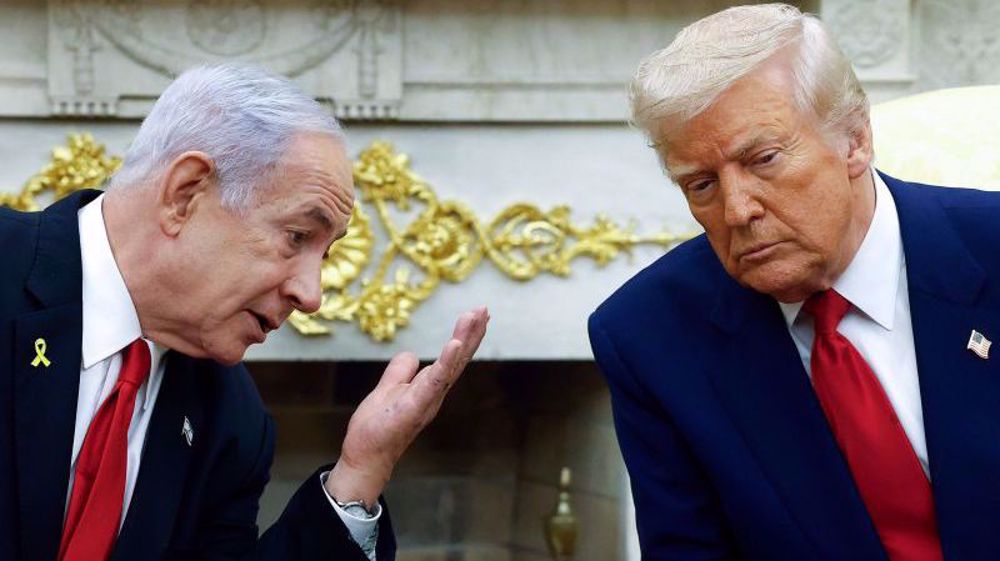
In late February 2026, US President Donald Trump launched what he haughtily described as a "little excursion" against Iran, an all-out military aggression he predicted would conclude with the overthrow of the Islamic Republic within four weeks.
Seven months later, the reality is for the world to see. The unprovoked and illegal war on the Islamic Republic has become a quagmire for the US war machine that has consumed tens of billions of dollars, drained American military stockpiles, destabilized global energy markets, and – most critically – failed to achieve a single one of its stated objectives.
What has emerged instead is a strategic landscape in which Iran, the target of American military aggression, sanctions and blockade, now dictates the terms of ending the futile war.
As the Khatam al-Anbiya Central Headquarters, the operational headquarters of the Islamic Republic of Iran Armed Forces, warned in a statement on Sunday, the US regime, in collusion with its Arab and European allies, is seeking to resume full-scale military aggression against Iran.
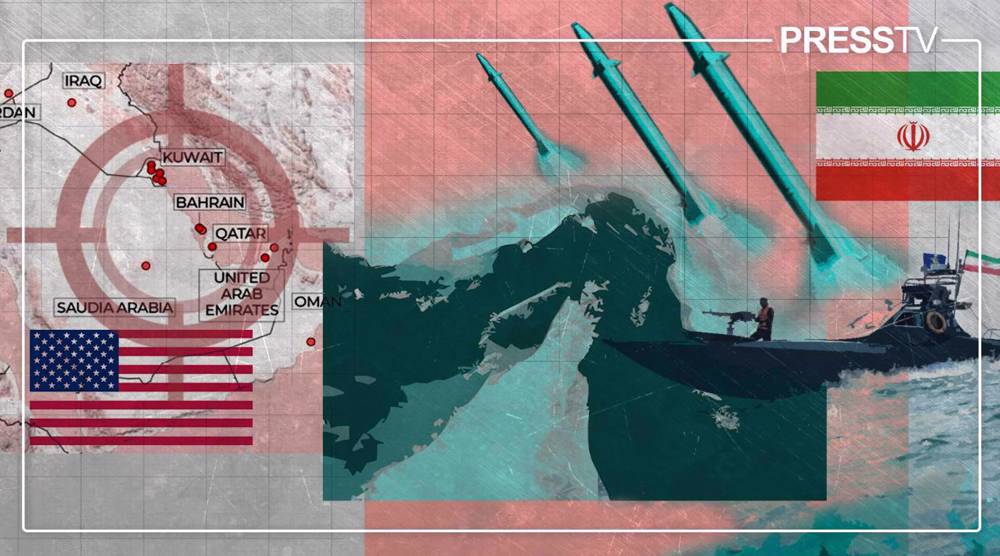
It warned that any mistake or hostile action against the Islamic Republic of Iran will trigger a strong response, and all of American bases, military positions and interests in the region will be targeted by “sustained, effective and painful attacks, without any restrictions or consideration.”
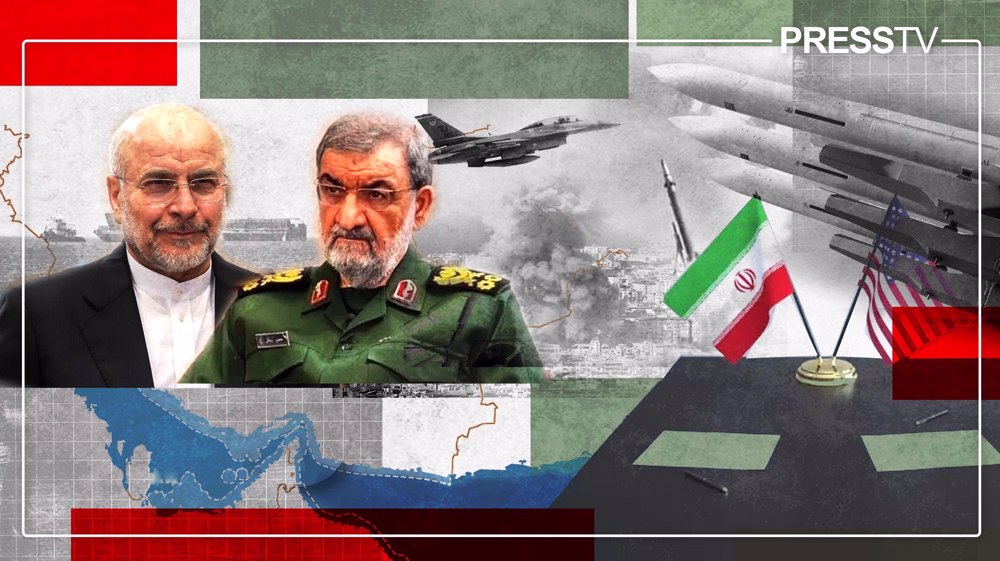
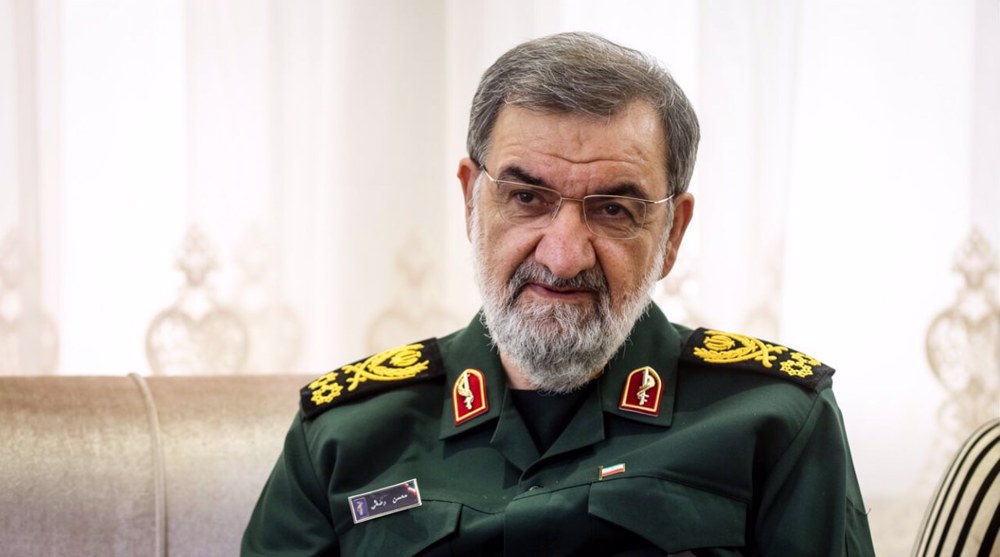
It follows the seven conditions communicated to Washington by Major General Mohsen Rezaei, Secretary of Iran's Supreme National Security Council, which represent the terms of a party with upper hand. US aggression, far from undoing Iran's commanding position, has paradoxically consolidated it – militarily, diplomatically, and strategically. There is no looking back now.
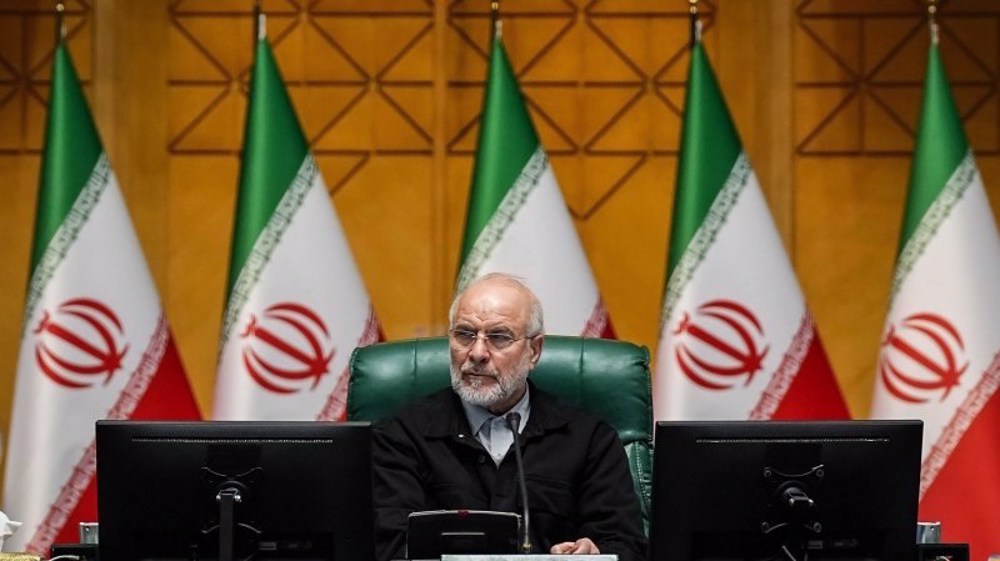
The remarks made by Parliament Speaker and lead negotiator Mohammad Bagher Ghalibaf that Iran is ready for both war and diplomacy make it amply clear that the enemy is chasing a mirage. Any fresh aggression will backfire, as every attempt in the past did.
Military dimension: Asymmetric resilience against overwhelming force
The foundational assumption of American war strategy was that overwhelming military force would bring about Iranian capitulation. The United States possesses the most advanced military arsenal, while Iran, by contrast, has been reeling under decades of illegal and crippling sanctions. On paper, the contest appeared lopsided.
Reality proved otherwise. Iran's strategy rested not on matching American firepower but on denying the US military-industrial complex its preferred mode of warfare. From the earliest days of the war, Iran demonstrated that it had prepared for precisely this scenario.
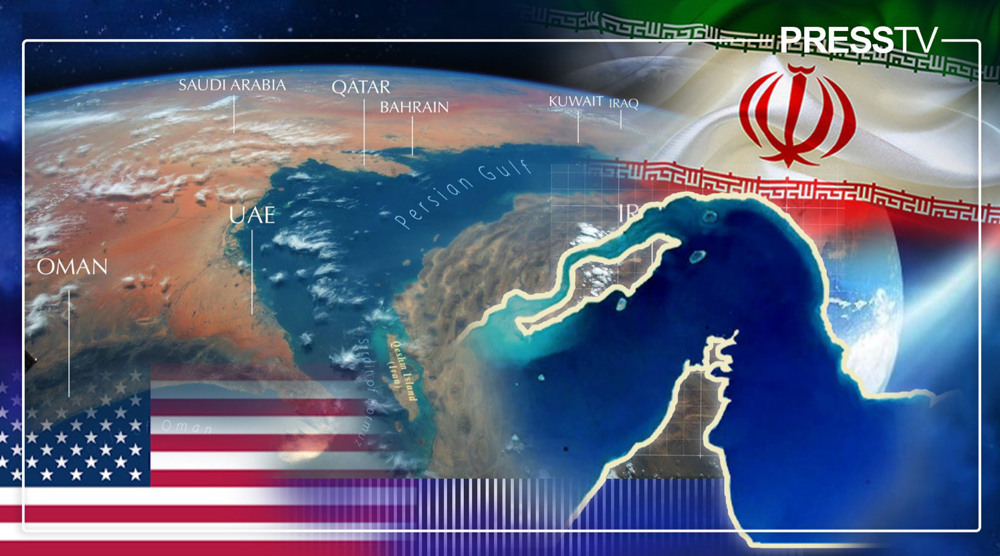
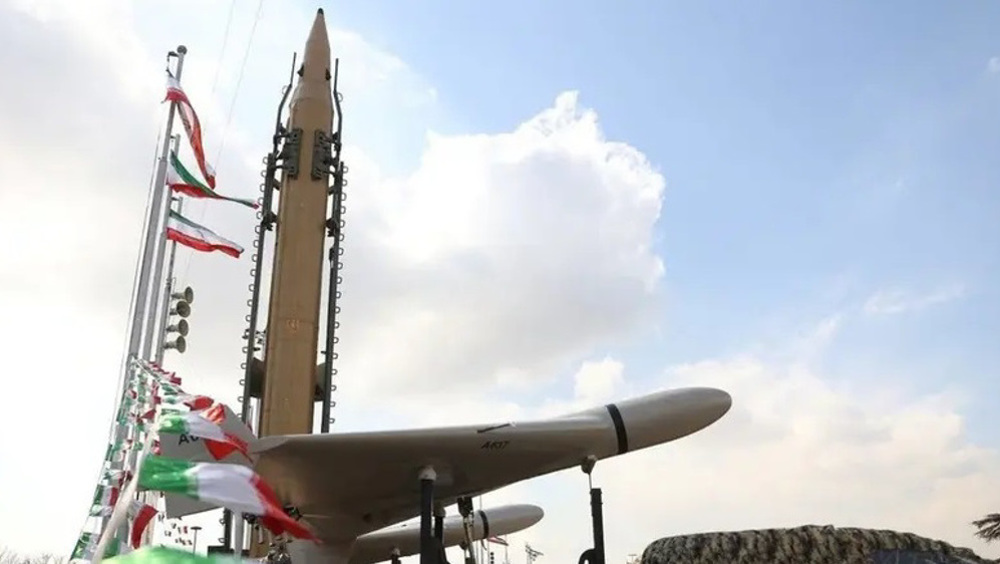
Its short- and medium-range ballistic missiles and attack drones, dispersed across underground bunkers and mountain caves, survived the multiple waves of bombardment and remained operational. More importantly, Iran immediately seized the strategic initiative by taking control of the Strait of Hormuz, the narrow waterway through which approximately one-fifth of global energy supplies transit.
This single act transformed the calculus of the war that Iran didn’t choose. The United States could bomb the country, but it could not prevent Iran from imposing staggering costs on the global economy. By September 2026, oil prices have surged close to $110 per barrel, inflation is climbing alarmingly across major economies, and the International Monetary Fund has twice downgraded global growth projections. The war's frontline has shifted from Iranian territory to the global energy market, where American power is far less decisive.
The material costs to the United States have been staggering. The US war machine expended thousands of Patriot interceptors – more than half its inventory – and hundreds of THAAD interceptors, and at least 1,000 Tomahawk missiles. Replacing these munitions would take years of production and cost hundreds of billions of dollars. Americans are still tight-lipped about the real fatality figures, but it is believed to be in the hundreds.
John Mearsheimer, the prominent international relations scholar at the University of Chicago, has been unequivocal in his assessment. In a September interview, he stated that after seven months of imposed war, the US war machine failed to achieve any of its four primary objectives: the so-called “regime” change, ending uranium enrichment, destroying Iran's ballistic missile capability, and dismantling its network of regional allies.
The implications of this military reality extend far beyond the immediate battlefield. The US regime has demonstrated that even with overwhelming air and naval superiority, it cannot compel a determined opponent to submit or retreat. This lesson will not be lost on other members of the anti-imperialist bloc that might contemplate resisting American pressure.
The deterrent value of American military power has been diminished, while Iran's reputation for resilience has been enhanced. In the calculus of international politics, this is a decisive shift.
The diplomatic dimension: From isolation to indispensability
Perhaps the most striking feature of this war is how it has inverted the diplomatic positions of the two sides. Before the war, the US was imposing its hegemony in the region and the Israeli regime was lobbying for the farce of normalization.
Seven months on, the US now finds itself diplomatically isolated, and its Zionist ally has been complexly ostracized. On the other hand, Iran has emerged as the new regional superpower.
The evidence is manifold. When the Trump administration announced its so-called "Economic D-Day" – a sweeping sanctions campaign intended to strangle Iran's economy, many countries refused to comply, while China and Russia immediately rejected the move as unacceptable.
More significantly, none of Iran's neighbors – Pakistan, Iraq, or Turkey – indicated they would enforce the illegal sanctions. Even among Persian Gulf Arab states, only the United Arab Emirates, with its close coordination with Washington and Israel, temporarily paused financial transactions with Iran. The sanctions regime, in other words, lacks the international participation necessary to be effective and that is the key outcome of this war.
Meanwhile, Iran has skillfully leveraged its position. In June, a memorandum of understanding (MoU) was signed between the two sides, framed around a fourteen-point package that included the complete lifting of the US naval blockade, the release of frozen assets, and a mechanism for managing the Strait of Hormuz under Iranian control.
Foreign Minister Abbas Araghchi characterized the agreement as the consolidation of Iran's battlefield achievements into diplomatic gains, emphasizing that "the world now recognizes the Iranian people as champions and a symbol of resistance."
When the United States violated the memorandum multiple times, a pattern that Iranian officials have documented in detail, Iran simply ceased fulfilling its obligations, declaring that the Americans have already received their answer. The diplomatic initiative, in other words, remains firmly in Iranian hands. The United States, which launched the war expecting to dictate terms, now finds itself responding to Iranian initiatives rather than setting the agenda.
This reversal reflects a fundamental shift in the balance of diplomatic power in the region and across the world. Iran has demonstrated that it can withstand American pressure and still command a seat at the high table. The United States, by contrast, has shown that its threats are mere bluster and its promises not reliable. This erosion of American credibility, more than ever before, will prove more damaging to Washington than any battlefield losses.
The strategic dimension: The objective assessment
The most rigorous test of victory in any war is whether the aggressor achieves its stated objectives. By this metric, the United States has failed decisively and comprehensively.
Before the war was launched in late February, American officials articulated goals such as toppling the Islamic Republic, ending Iran's uranium enrichment program, eliminating its ballistic missile capability, and dismantling its regional network.
Seven months later, none of these objectives have been achieved. The Iranian government remains in power, its enrichment program continues, its missile arsenal has grown rather than shrunk, and its regional allies – including Hezbollah in Lebanon and the Ansarullah in Yemen – remain active and strong. The Yemeni military forces have recently expanded their control along the Red Sea coast, capturing strategic ports and islands.
What the United States has lost, by contrast, is substantial. It has completely lost control of the Strait of Hormuz and the Persian Gulf at large. It has seen its expensive military stockpiles depleted to levels that will take years and decades to replenish. It has alienated key allies and demonstrated to the world that its military power is a myth.
The strategic implications extend beyond the immediate region. The US failure to achieve its military or strategic objectives in Iran will be studied by policymakers and strategists for years to come. It represents a case study in the limits of military power and the importance of understanding an adversary's will to resist the aggression. Iran, by contrast, has demonstrated that a smaller power can prevail against a larger one by exploiting asymmetric advantages, maintaining strategic patience, and refusing to capitulate in the face of overwhelming force.
The aggression that failed
The central irony of this seven-month war on Iran is that American aggression has accomplished precisely the opposite of what was intended. The war was designed to weaken Iran, to force its submission, to demonstrate the futility of resistance to American hegemonic power. Instead, it has strengthened Iran's regional position, demonstrated the limits of American military coercion, and united the Iranian people behind their government in the face of aggression.
General Rezaei's seven conditions should be understood in this context. They are the terms of a state that has weathered the storm and emerged stronger and mightier. His statement that Washington "has no choice but to accept Iran's rights and conditions" reflects a strategic reality that seven months of bombing, blockading, and sanctioning have failed to alter.
He noted that Trump launched an "absurd war" against Iran based on an incorrect reading of Iran's political, military, economic, and social conditions, a reading distorted by analogy to Venezuela. The consequence is that continued American involvement will impose ever-greater political, economic, and military costs on Washington, costs that the top security official presents as the natural wages of aggression pursued without accurate assessment.
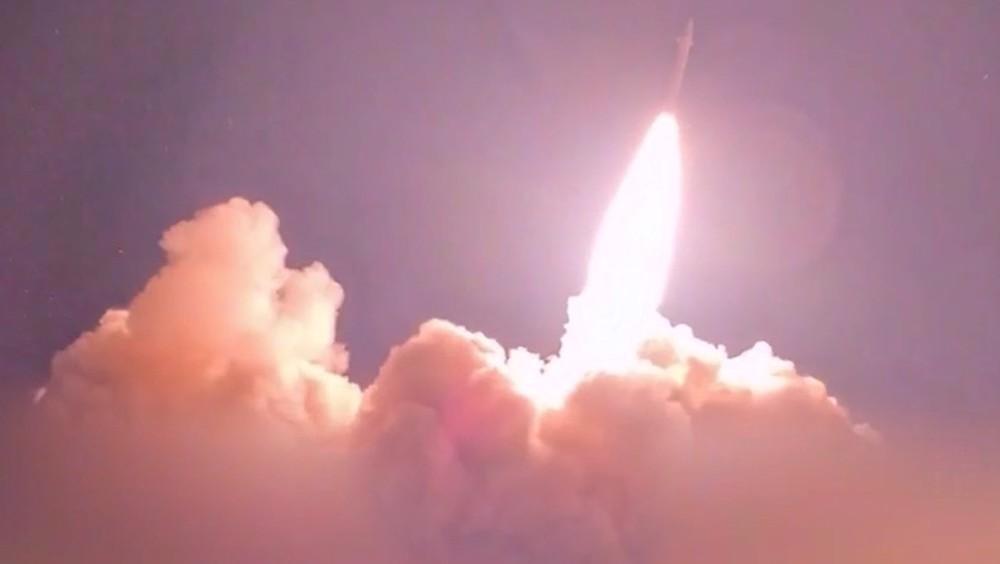
He made clear that Iran's defensive capabilities have increased compared with the 40-day war period, with missile capabilities, electronic warfare systems, and air defenses all strengthened. An anti-ship missile tested near a US aircraft carrier with the capacity to divide into multiple submunitions; hypersonic missiles whose speed has been increased from Mach 6 to Mach 10; and the development of new missile capabilities that render American defensive systems impenetrable are some of the recent achievements he highlighted.
Iran, he maintained, has so far not targeted cities or facilities in Arab countries, directing its attacks instead at American bases used in attacks against Iran. The only way for Arab states to prevent attacks on bases in their territories is to prevent the United States from using those bases to attack Iran, a formulation that shifts responsibility onto the host governments and offers them a path to safety through non-cooperation with Washington.
He also referred to Iran's invitation to Persian Gulf countries to join the Iran-Oman understanding regarding the Strait of Hormuz as evidence of Iranian goodwill. While Iran offers regional partnership, the Persian Gulf states pursue external alignments. General Rezaei's message is that the countries of the region will remain in West Asia, while the US will leave.
On the diplomatic and economic dimensions, his most significant point concerns the consequences of the American withdrawal from the Islamabad memorandum. That withdrawal, he said, led to a change in Iran's strategy regarding the war, negotiations, and efforts to counter economic sanctions. Iran's new strategy in the Strait of Hormuz includes considering broader areas for confronting vessels deemed non-compliant in the Persian Gulf.
US and Israeli attacks on Iran's nuclear facilities, General Rezaei noted, have prompted Iranian institutions to consider the future of Iran's membership in the Nuclear Non-Proliferation Treaty. Iran has not withdrawn from the NPT so far, and the question of whether to remain in or withdraw from the treaty is under consideration. He, however, reaffirmed that Iran's official position on prohibiting the production and use of nuclear weapons remains intact.
Iran the victor in military, diplomatic arenas
In his remarks on Sunday, Ghalibaf articulated a comprehensive assessment of the seven-month war that reinforced and extended Rezaei's strategic framework.
He emphasized that while the United States and Israel launched the war with specific, officially declared and repeatedly stated objectives, they did not achieve any of their objectives at any level, which marks the absolute defeat for America and its Zionist ally.
Qalibaf's remarks carry particular weight because of his dual role as both the head of Iran's legislature and the country’s chief negotiator. He explicitly rejected the binary between war and diplomacy, saying the country is ready for both options.
“We must fight rationally and from a position of strength, and negotiate with confidence and reason at the appropriate time,” he emphasized. There is no ambiguity for the enemy to exploit, no room for interpretation that might allow Washington to claim partial compliance.
The conditions have been clearly communicated to the other side through mediators, he noted, and the enemy knows very well that the path of deception and unilateral imposition is closed. This is a clear rejection of the American negotiating style – the demand for unilateral concessions, the use of ambiguity to extract advantages, the assumption that pressure and threats can force capitulation.
He also pointed to the Strait of Hormuz as both a military achievement and a diplomatic asset. Until all Iranian conditions are fulfilled, its legitimate rights are recognized, and US commitments are implemented, there will be no opening for a return to the previous conditions for negotiations or for reopening the Strait of Hormuz, the top negotiator declared.
The seven-month war, he stated, has destroyed the regional architecture that the United States constructed over decades – the network of bases, alliances, and security guarantees that underwrote American primacy. What replaces it must be built by the Islamic countries of the region. The new order is to be regional, indigenous, and Islamic – a direct repudiation of the external powers that have dominated West Asia for long.
“We will show, relying on the historic will of our people, the wisdom of our brave commanders on the ground, and our hope in the generation now sitting in classrooms at schools, seminaries and universities, that the path of the future will be determined not through pleading, but through rationality, courage and struggle," he said.
War is far from over, but the winner is Iran
The war is far from over. The Trump administration continues to pursue military strikes and economic pressure, but the trajectory is clearer than ever before. The target of the aggression has not only survived but has reshaped the regional order in its favor.
Seven months of American full-scale aggression have not undone what Iran has built. And any fresh attempts to target Iran will backfire spectacularly, as the top military command warned.
The lessons of this war are profound. They suggest that military power, however overwhelming, cannot always achieve political objectives. And they suggest that the US, for all its military might, has entered a phase in which its regional and global domination is effectively over.
History will judge this war not by the rhetoric of the aggressors but by its outcomes. And the outcomes are clear. The United States launched a war to topple the Islamic Republic but failed. Iran resisted and prevailed. The aggressor has been defeated – not only on the battlefield, but also in the realm of strategic objectives, diplomatic positioning, and military credibility.
The seven-month war has demonstrated that American power has serious limits. It has shown that Iran has many options. And it has established, beyond reasonable doubt, that the winner of this war is Iran – militarily, diplomatically, and strategically.
US lawmaker admits American people footing bill for Trump’s failed aggression against Iran
Iran’s Armed Forces vow to inflict further defeats on US, Israeli enemies
IRGC: Iran will change war’s geography, weapons if attacked again



Leader’s advisor: Any foreign forces attempting to land in Iran ‘will certainly be destroyed’
VIDEO | Press TV's news headlines
VIDEO | Priests rally in Rome to honor Palestinian, Lebanese children murdered by Israel
Iran’s military warns of ‘unpredictable blows’ in response to US threats
VIDEO | US economic war on Iran
Iran FM meets with US envoy on UN meeting’s sidelines at American side’s insistence: Report
UN chief warns Israeli violence in West Bank raises ‘specter of ethnic cleansing’
VIDEO | ‘Korea gets nothing, loses everything, with Hormuz deployment’


 PressTV NEWSLETTER
now
PressTV NEWSLETTER
now
 This makes it easy to access the Press TV website
