Strategic dilemma of Persian Gulf states: Between American pressure and Iran's postwar leverage
By Press TV Strategic Analysis Desk
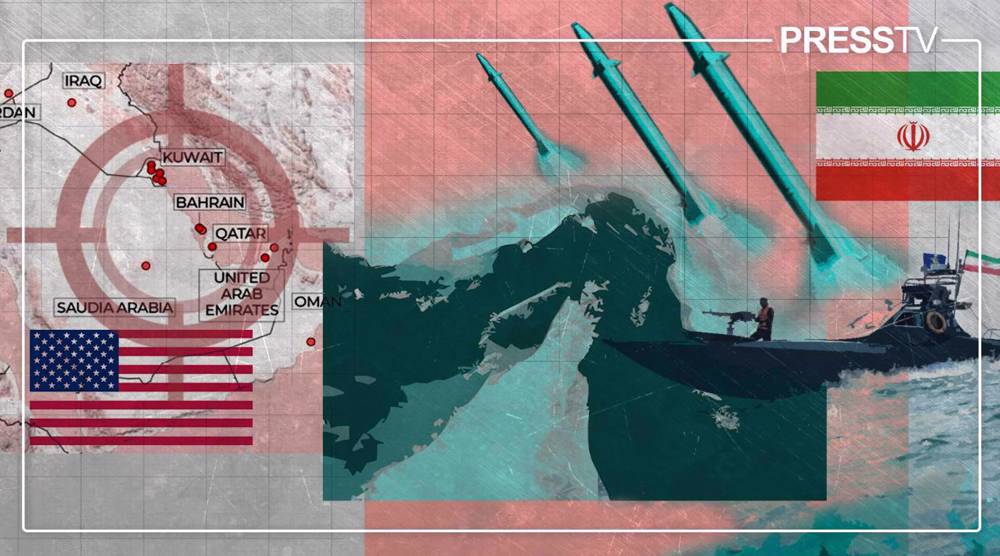
The strategic landscape of the Persian Gulf has been irrevocably transformed by the seismic shifts of the recent US-Israeli war of aggression against Iran that ended in the US capitulation in the face of Iranian military retaliation and steadfastness.
What emerged from the imposed war was not merely a reaffirmation of Iran's defensive capabilities but a fundamental reordering of power dynamics that the Arab Persian Gulf states appear, at best, reluctant to acknowledge and, at worst, actively seek to undermine.
The individual and collective positions of these states – Oman's imprudent and unilateral foray into Strait of Hormuz navigation, Qatar's uncharacteristic interventionism, Kuwait's detainment of Iranian military personnel, and Bahrain's intensified internal repression of pro-Iran citizens – are not isolated incidents of diplomatic clumsiness.
They constitute a desperate and shortsighted strategy that seeks to test the boundaries of a new regional order while simultaneously placating a United States that is desperately attempting to restore its eroded influence through proxy pressure on Iran.
This behavior is a symptom of strategic anxiety in the face of Iran's demonstrated resilience and the clear failure of the Western security architecture to guarantee their safety.
Persian Gulf states' miscalculation: A proxy assertiveness
The actions of the Persian Gulf Cooperation Council (GCC) states over recent weeks betray a coordinated effort, evidently encouraged by Washington, to complicate Iran's strategic calculus and attempt to re-establish leverage ahead of any potential negotiations.
Yet, each maneuver reveals a deeper structural weakness and a dangerous misreading of the transformed regional balance.
Oman has historically served as the region's quiet interlocutor, a bridge between Iran and the West. Its unilateral announcement of a shipping route through the Strait of Hormuz, bypassing Iranian-designated lanes and fees, represents a stark departure from this policy.
This move, which drew an immediate and sharp response from Tehran, is emblematic of the pressure being applied by the United States to force Persian Gulf states into the role of enforcers of Washington's economic war.
Oman's gamble was swiftly corrected by Iran's credible military warnings – vessels using the route were intercepted or turned back – illustrating the limits of paper declarations in the face of established maritime control.
✍ Analysis - Strait of Hormuz as a strategic red line: Why Iran must confront Oman's corridor plan and Trump's threats
— Press TV 🔻 (@PressTV) June 25, 2026
By Press TV Strategic Analysis Deskhttps://t.co/Yuv9Sd1usD
It does not demonstrate Omani autonomy but rather reveals the deep entanglement of Persian Gulf states in a US-led strategy that puts their immediate economic interests (secure energy exports via the Strait of Hormuz) in direct conflict with long-term regional stability.
Qatar, long a neutral mediator and maintainer of non-hostile ties with Iran, has also adopted an interventionist position regarding the Strait of Hormuz lately.
This is particularly significant given Qatar's role as a mediator in Iran-US negotiations alongside Pakistan. By signaling pressure on the strategic waterway, Qatar risks undermining its own credibility as an honest broker. Its actions suggest that the calculus of "strategic indispensability" (a term used to describe the Persian Gulf's leverage through economic control of global energy and data flows) may be leading Doha to overestimate its ability to challenge Iran's primary source of geographic power – its control over the chokepoint.
Kuwait's continued detention of four Iranian military personnel and Bahrain's ongoing crackdown on Shiite communities demonstrate that Washington's "maximum pressure" policy has merely been delegated and rebranded as a local-level harassment strategy.
The refusal to release or grant consular access to the Iranian personnel is a deliberate affront. Similarly, Bahrain's renewed spree of arrests and bans on mourning ceremonies for the martyred Leader are a clear message to Tehran that the US is supporting its allies in rolling back Iranian influence through internal destabilization.
However, as the recent RUSI analysis suggests, these tactics come with a high cost for the Persian Gulf states, jeopardizing the very stability they have sold to investors.
The regional balance: A new reality unacknowledged
The positions of these Arab states suggest a failure to recognize the shift in the regional balance of power following the Ramadan War that was illegally imposed on the Islamic Republic of Iran and ended in the catastrophic defeat for the aggressors.
The defeat of American and Israeli strategic objectives during the war has been described as a watershed moment. The US strategy of building influence through "indispensability" has been exposed as deeply reliant on a security guarantee that is no longer credible.
The Persian Gulf states are attempting through political and media maneuvering to conceal this reality, preventing the new regional balance from becoming firmly established.
The US-GCC joint statement issued on Thursday, parroting Washington's baseless allegations regarding Iran's nuclear and missile programs, is a classic example of this performative alignment. It demonstrates that the GCC states are willing to echo narratives that serve US interests, even if such rhetoric antagonizes their neighbor.
Yet, the implications of these positions are fundamentally different from those of the United States or the Zionist regime. The US and Israel operate from a distance. The Persian Gulf states are Iran's permanent neighbors, and during the recent war, they experienced firsthand the reality that collective security is indivisible.
Any threat to Iran's security directly endangers their own. While the GCC is projected to lead in AI and digital transformation, establishing a $300 billion lead over Iran, this economic edge is predicated on peace and stability. Their current antagonistic policies undermine that very stability, proving that they have not fully internalized the economic and security costs of aligning with the US-Israeli axis against the Islamic Republic of Iran.
✍️ Analysis - Leader’s strategic vision leverages Iran’s post-war ascendancy to reshape regional power dynamics
— Press TV 🔻 (@PressTV) June 21, 2026
By Press TV Strategic Analysis Desk https://t.co/ldvVF1jpXg
The question of Iranian restraint: Creating a misimpression
One possible reason for this unfriendly conduct is the excessive restraint shown by Iranian officials toward these countries during and after the recent war.
During Iran's retaliatory strikes against US military bases and assets across the region, Iranian officials repeatedly emphasized that these countries should be distinguished from the United States, targeting American bases rather than their territory.
In some cases, Iranian officials even apologized for targeting the US bases in Arab countries. This policy of distinction may have created the mistaken impression that Iran fears them.
In reality, allowing military bases on their territory to be used by Iran's long-standing enemy has for years constituted a hostile act. During the last war, those bases served as launching points for attacks against Iran, including the assassination of the Leader of the Islamic Revolution, the killing of thousands of innocent Iranian citizens, widespread damage to infrastructure, and severe harm to the Iranian economy.
The 2023 Saudi-Iran normalization brokered by China has come under this strain, and the 25-year cooperation agreement with Beijing (valued at $400 billion) remains largely unimplemented, highlighting the limits of Iran's strategic depth.
The Lebanese test: A strategic alliance
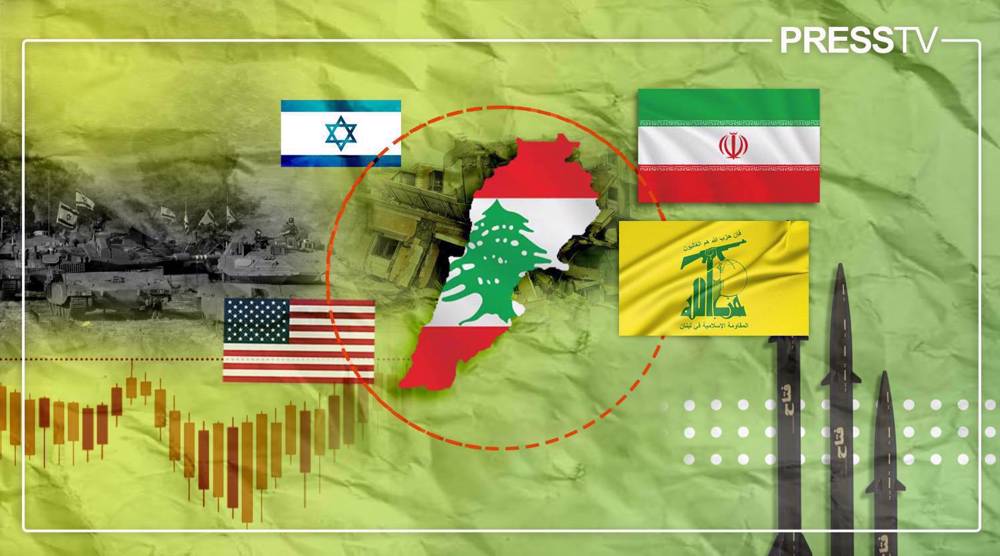
The situation in Lebanon provides a critical test case for this regional recalibration. The Zionist regime's persistence in attacking southern Lebanon is a political message from the United States and Israel directed at Iran.
By continuing military attacks while adopting increasingly aggressive rhetoric, the regime seeks to undermine the strategic roadmap of the unified Resistance Front.
The US-Israeli strategy aims to separate the Lebanese front from the Iranian nuclear file. By continuing operations and leveraging public disagreements between Netanyahu and Trump, the US seeks to pressure Iran into settling merely for halting military attacks, abandoning its insistence on a withdrawal from occupied areas.
However, from the Iranian perspective, the war has taught the Arab world that the US is an unreliable partner and that Israel's hostility is directed not only at Iran but at all Arab and Islamic countries. The agenda of "Greater Israel" articulated by Israeli strategists envisions the fragmentation of Arab states, including Saudi Arabia, Jordan, and Iraq.
The assassination of the Leader of the Islamic Revolution on the first day of the imposed war forced Hezbollah into a strategic place where inaction was more costly than escalation, shattering the post-2024 ceasefire illusion that the Lebanese theater could be decoupled from the broader confrontation.
The Persian Gulf states could have played a constructive role by supporting Iran's insistence on a comprehensive ceasefire and Israel's military withdrawal from Lebanon. Instead, Washington has heavily pressured Beirut to enter US-mediated negotiations with Israel, aiming to push Lebanon into direct talks and potentially force the Lebanese government into direct conflict with Hezbollah.
✍️ Analysis - From battlefield superiority to strategic leverage: Iran’s new post-war doctrine takes shape
— Press TV 🔻 (@PressTV) June 15, 2026
By Press TV Strategic Analysis Deskhttps://t.co/QHmgtsFazC
A decisive Iranian diplomatic and strategic response
Given this context, Iran's diplomacy, alongside the readiness of its armed forces, is expected to respond decisively to any hostile actions from adversaries. Statements of condemnation are wholly insufficient. The response must carry tangible consequences.
The first pillar of Iran's response should be diplomatic. Iran must make any future agreement with the United States conditional upon the exclusion of Arab states that pursue hostile policies. They must understand that the era of hiding behind Iran's enemies while conspiring against their largest neighbor is no longer acceptable.
The second pillar involves the use of strategic geography. Iran could exercise its sovereign authority over the Strait of Hormuz by imposing navigation restrictions on vessels from those countries in proportion to their hostile conduct.
The strategic indispensability of the Persian Gulf states is their greatest weapon against Iran, but their reliance on the Strait for energy exports is their greatest vulnerability. A targeted blockage would send a clear message that the Persian Gulf states cannot enjoy a free ride on a trade route while simultaneously seeking to contain Iran.
Regarding Lebanon, Iran's diplomatic response must be an even firmer insistence on Clause 1 of any MoU, which requires the immediate and complete withdrawal of the Zionist military from all occupied areas in Lebanon.
Statements falling short of this demand are insufficient. By clearly declaring that no negotiations on the nuclear issue will take place unless the occupied areas of Lebanon are evacuated, and by making any future negotiations contingent upon the withdrawal, Iran can consolidate the strategic framework of the unified Resistance Front.
Arab states and bid to maintain the status quo
The positions of the Arab Persian Gulf states represent a last-ditch attempt to maintain a status quo that has been demolished by the events of the Ramadan War.
They are caught between a United States demanding they act as instruments of pressure against Iran and a new regional reality that demands good-neighborly relations.
For too long, these states have sought to have it both ways: benefiting from US security guarantees and economic ties while expecting immunity from Iranian retaliation for acts of unprovoked and illegal military aggression emanating from their soil.
This latest war has ended that period. Iran is the new superpower in the Persian Gulf, and the Arab states must come to terms with the fact that their security cannot be sustained by aligning with external powers against their immediate neighbor.
As long as they refuse to accept this reality, Iran must ensure that their short-sightedness is met with a firm and decisive response – whether through diplomatic exclusion, the strategic use of the Strait of Hormuz chokepoint, or the consolidation of the Resistance Front.
The choice for the Persian Gulf states is clear: they can either be part of a collective security framework that benefits all littoral states or continue as proxies of a declining power.
‘Wake up and wrest back control from corrupt politicians’: Snippets from IRGC’s letter to Americans
Enemies seek to weaken Islamic Republic, advance ‘Greater Israel’ plot: Army spokesman
Iran Army demands Qatar clarify fate of missing pilots who struck Al-Udeid air base



VIDEO | Restricting Chinese firms is own goal against Europe's economy: Analyst
Pezeshkian: Iran’s strong maritime presence in Hormuz kept vital national lifelines moving
Iran Airbus A319 returns to service with in-house expertise
Iraq’s long, dark night ends: 23 years of American lies, occupation, abuse end in humiliating ouster
VIDEO | Over 400 detained in student protests across France as public workers join strike
VIDEO | Press TV's news headlines
Iran will fire as many missiles as needed to deter enemy: IRGC advisor
From 1980s to 2026: The legacy of Sacred Defense and transformation of Iranian defense doctrine



 PressTV NEWSLETTER
now
PressTV NEWSLETTER
now
 This makes it easy to access the Press TV website
