Qalibaf: US ‘arsenal’ of interventions, Treasury falsehoods will fail to curb oil prices

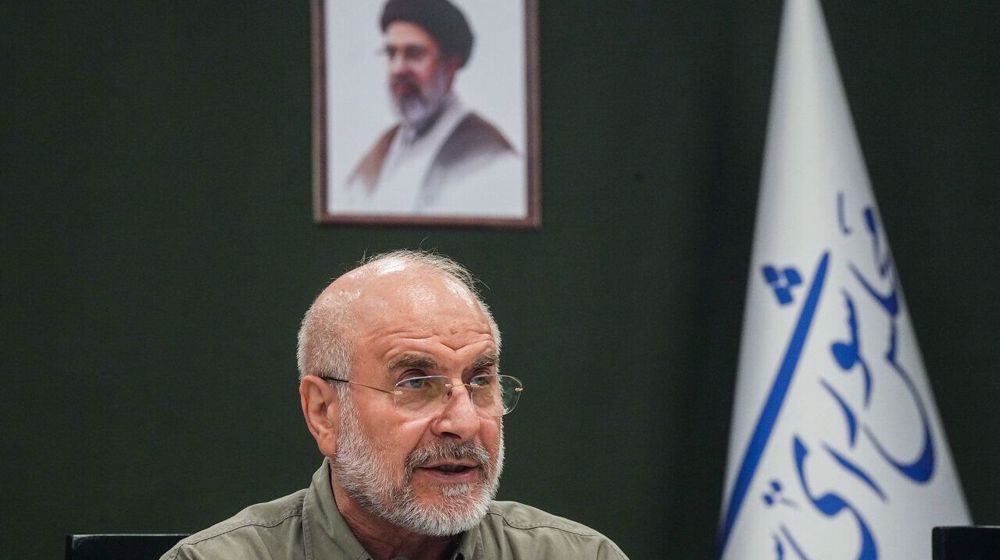
Iran’s Parliament Speaker Mohammad Bagher Qalibaf has mocked Washington’s efforts to curb rising oil prices, saying US measures, including market interventions and the release of strategic reserves, have failed to stop the surge in crude prices.
Reacting to Brent crude climbing above $107 a barrel on Thursday, Qalibaf took a swipe at Washington’s efforts on X, writing: “Here is your daily dose of ‘forward guidance,’ in case you do not hear from your regime authorities: the arsenal they will exhaust and the exact order they will run through it.”
He said the US Treasury would run through its “arsenal” of measures to bring oil prices down, including “false reporting through Axios, market intervention, the release of reserves and other measures,” but would ultimately fail to reverse the rise.
“Act like you do not know what comes next,” Qalibaf added, referring to the graph showing the expected trajectory of oil prices.
Here is your daily dose of "forward guidance", in case you don't hear from your regime authorities: the arsenal they will exhaust and the exact order they'll run through it. Act like you don't know what comes next 😉 pic.twitter.com/3G1dL2qE5j
— محمدباقر قالیباف | MB Ghalibaf (@mb_ghalibaf) September 10, 2026
Oil prices have surged since the US-Israeli war against Iran and the subsequent closure of the Strait of Hormuz by Iran’s Armed Forces.
The waterway is crucial to global energy markets, normally carrying roughly one-fifth of the world’s oil and liquefied natural gas supplies.
The price surge has also hit American consumers, with gasoline prices reaching around $4.28 per gallon, roughly 34 percent higher than a year earlier, underscoring the growing cost of the energy crisis in the US. The motor club said Thursday that diesel prices reached $5.98 per gallon, a record.
The latest round of aggression against Iran began on February 28, when US and Israeli forces launched large-scale strikes on Iranian territory killing the Leader of the Islamic Revolution Ayatollah Sayyed Ali Khamenei along with top ranking military generals and officials.
Iran’s Armed Forces responded with daily waves of missile and drone attacks targeting US and Israeli assets across the region, while closing the Strait of Hormuz to US and allied vessels.
The escalation sent oil prices higher as concerns grew over disruptions to energy supplies through the strategic waterway.
On June 17, Iran and the US signed the Islamabad Memorandum of Understanding (MoU) in an effort to end the wars across all fronts.
In recent weeks, however, the US has continued its naval blockade of Iran and struck multiple locations in southern Iran in violation of the MoU, prompting Tehran to target US military facilities across the region and close the strategic waterway again.
Global oil prices surged Thursday after US President Donald Trump said the night before that he isn't looking to reach a deal with Iran as fighting between the countries escalated this week.
Brent crude, the global benchmark, rose nearly 6% to more than $107 per barrel, while West Texas Intermediate, the US benchmark, also popped about 6% to close to $102 per barrel.
Daan Struyven, Goldman Sachs' head of global commodities, told CNBC that an escalating US-Iran war could push oil prices to more than $120 per barrel.
S&P Global Energy said Thursday it doesn't expect oil output in West Asia to return to pre-war levels by the end of 2027. The firm also doesn't believe a definitive end to war or shipping through the Strait of Hormuz to return to normal levels by the end of next year.
Iran working to remove obstacles to joining BRICS New Development Bank: Araghchi
Pezeshkian: US seeks to turn brotherly Muslim nations against each other

Lamerd emerges as symbol of resistance, resilience after US aggression: FM spox



Iran has good reason to bar IAEA inspectors from returning amid US aggression: Author
Iraqi resistance denies involvement in attacks on Saudi oil infrastructure
BRICS voices concern over attacks on IAEA-safeguarded nuclear facilities in Iran
Pezeshkian urges genuine reform of international mechanisms at BRICS summit
China’s Xi calls on BRICS to help restore peace to West Asia
VIDEO | Iran’s response raises Israeli alert levels across all fronts
VIDEO | Iran's Pezeshkian calls for BRICS unity against external pressure
VIDEO | Press TV's news headlines



 PressTV NEWSLETTER
now
PressTV NEWSLETTER
now
 This makes it easy to access the Press TV website
