Pezeshkian urges genuine reform of international mechanisms at BRICS summit
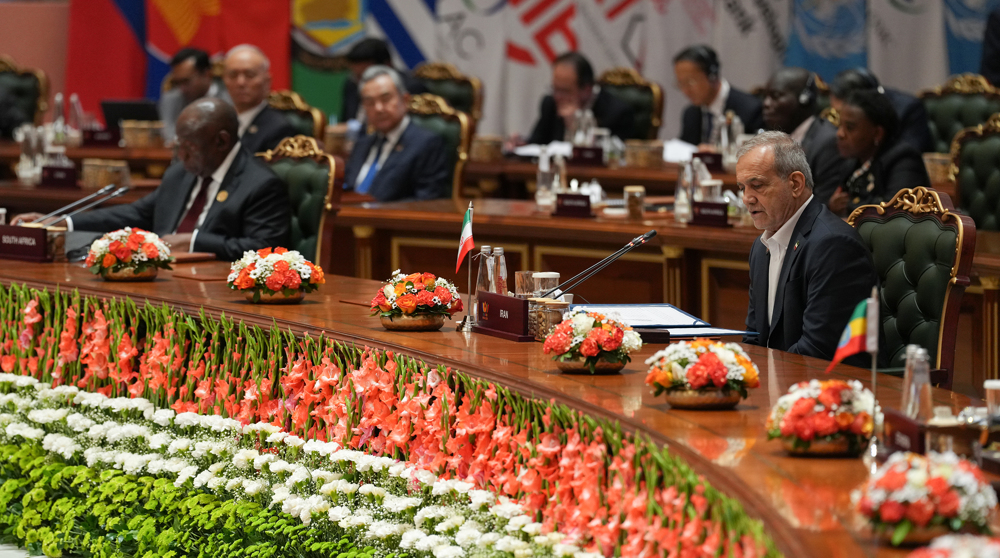
Iranian President Masoud Pezeshkian has called for genuine reform of global governance mechanisms, saying meaningful multilateralism cannot exist unless all countries are treated equally under international law.
Speaking at a closed-door session of BRICS leaders in New Delhi, India, on Saturday, Pezeshkian said stronger multilateralism and effective global governance have become increasingly important in the face of mounting global challenges.
Pointing to a growing contradiction in the international system, he added that deeper interconnectedness among nations is unfolding alongside a resurgence of unilateral policies, coercive measures and the use of financial and technological tools to exert political influence.
Such patterns, he cautioned, undermine the foundations of global governance.
The president emphasized that the credibility of any international order rests on whether it can safeguard the rights of all countries equally irrespective of their size or level of power.
Pezeshkian argued that multilateralism loses its meaning when the UN Charter fails to shield countries from unlawful military action or when international rules are binding on some countries but open to interpretation for others.
He noted that Iran has directly endured the fallout of such double standards, citing military aggression by the United States and the Israeli regime against Iran and the resulting damage to civilian infrastructure and vital facilities.
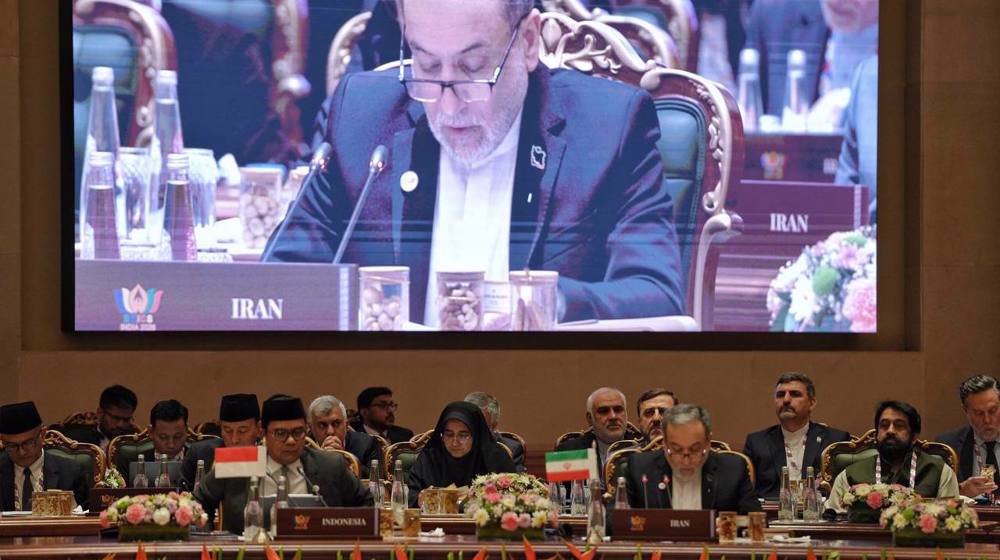
Referring to developments in Gaza and Lebanon, he said the international community must be able to defend both human life and national sovereignty in the face of war, genocide, and aggression, stressing the need for reforms that produce practical changes.
The Iranian president laid out four priorities for global governance: upholding the principles of sovereignty and international law, restructuring global institutions such as the UN Security Council and major financial bodies, expanding economic cooperation through national currencies and independent financial mechanisms, including the New Development Bank, and confronting unilateral sanctions.
He also called on BRICS members to coordinate efforts in defending the UN Charter, broadening economic and financial cooperation and strengthening collaboration in science, technology, energy and food security.
Pezeshkian emphasized that durable security is unattainable if it is guaranteed for some while others are left vulnerable to insecurity.
In this context, he urged BRICS countries to condemn attacks targeting civilian infrastructure, including peaceful nuclear installations.
Elsewhere in his address, Pezeshkian underscored the right of the Palestinian people to both security and self-determination, urging BRICS to take a more active role in ending occupation and backing their legitimate rights.
He further said BRICS should withstand outside pressure, tighten coordination, and set up a permanent secretariat to facilitate the implementation of joint decisions and deepen cooperation among member states more effectively.
Pezeshkian expressed Iran’s readiness to work with other countries toward a world in which law prevails over power politics, dialogue replaces conflict, cooperation takes precedence over sanctions and all nations have a meaningful role in global decision-making.
Oman meeting a 'key step' toward regional stability and security: Iran
Iran working to remove obstacles to joining BRICS New Development Bank: Araghchi
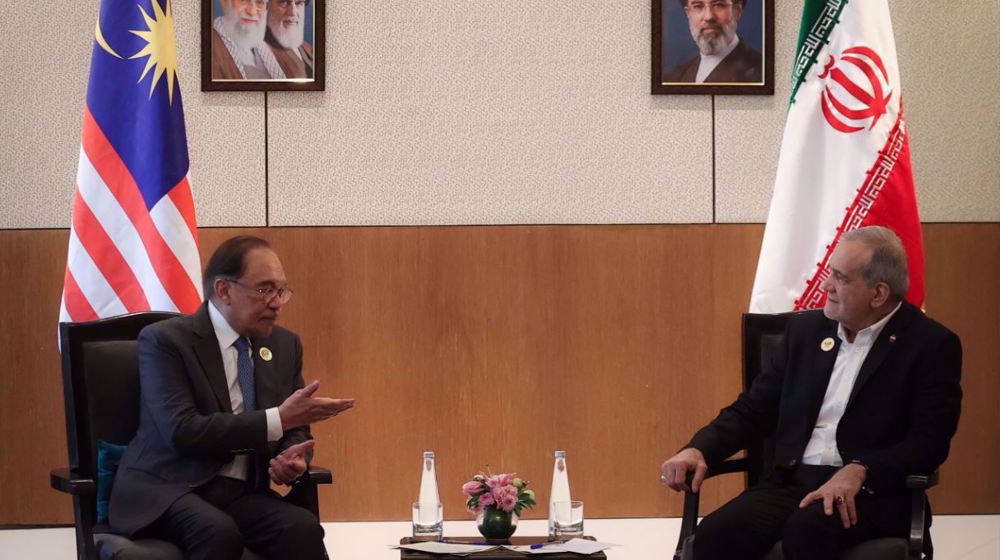
Pezeshkian: US seeks to turn brotherly Muslim nations against each other



VIDEO | Málaga mobilizes against racism, hate
VIDEO | Paris protesters call for boycott of Israeli products, end to ties with Israel
VIDEO | Jenin families face displacement as Israel continues settlement expansion
VIDEO | South Koreans rally against potential West Asia troop deployment
VIDEO | Israel escalates attacks on south Lebanon despite ceasefire
Iran can’t be bullied into submission: President Pezeshkian
VIDEO | News Review: Yemen’s Armed Forces make rapid coastal advance
Yemen stages large-scale missile-and-drone strikes against Saudi base in retaliation for aggression


 PressTV NEWSLETTER
now
PressTV NEWSLETTER
now
 This makes it easy to access the Press TV website
