Why Trump's reckless ‘tanker for tanker’ gambit against Iran is also doomed to strategic failure
By Mohammad Molaei
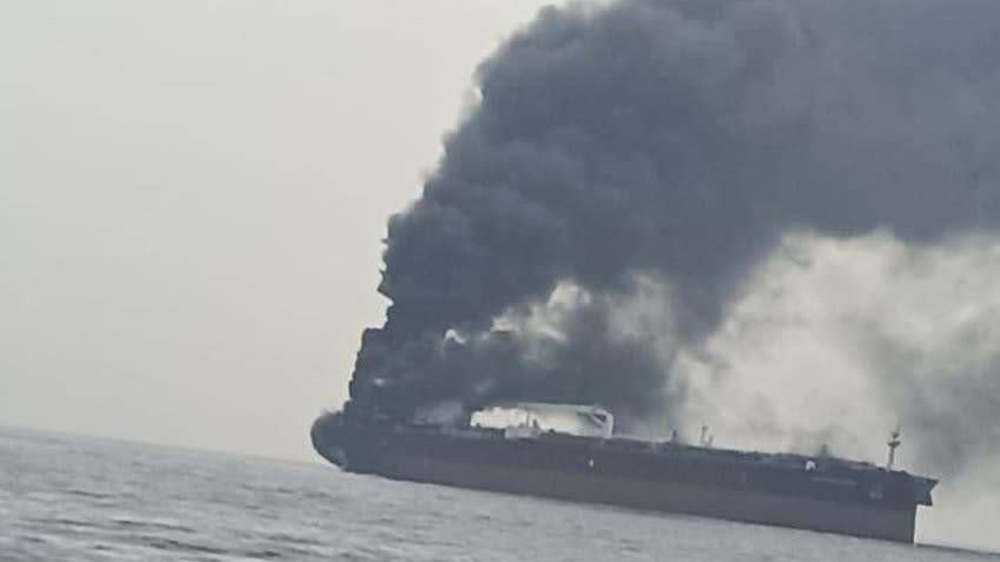
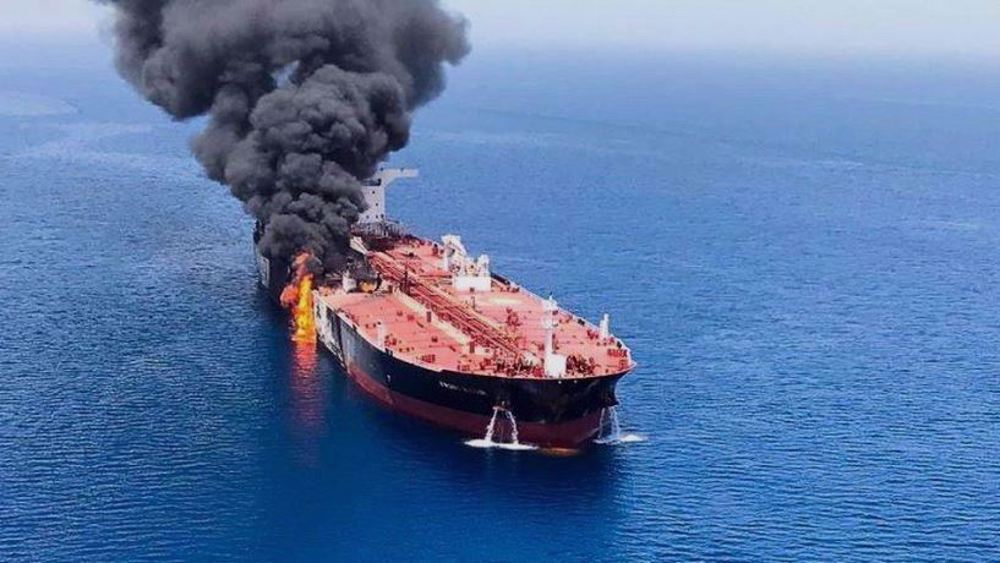
The Trump administration's "tanker for tanker" policy, the first instance of direct US strikes on vessels belonging to the Islamic Republic, marks a significant escalation in Washington’s maritime aggression against Tehran.
United States presents this doctrine as a measured and calibrated response to Iranian naval operations. In reality, it represents a strategic miscalculation of considerable scale, one rooted in a fundamental misreading of the asymmetric dynamics that govern the Persian Gulf and one that exposes a vulnerability Washington would rather keep hidden.
The "tanker for tanker" policy will not help the US salvage its tattered image. What is at risk is not only economic stability, but the very problem the policy claims to solve.
The central contradiction of the US maritime strategy against Iran is that a dying superpower with naval superiority has hesitated to deploy its full military weight, a hesitation that itself betrays a quiet recognition that the strategy is self-defeating.
This pattern has been visible since the earliest days of the war imposed on the Islamic Republic, with the Trump administration opting for caution and reactive strikes rather than a full naval blockade or a comprehensive "tanker for tanker" campaign.
It reflects a stark operational reality: Iran holds more targets in the Persian Gulf waters than the United States can credibly threaten or defend.
Washington's early restraint and its reluctance to adopt a fully aggressive posture from the outset were an implicit acknowledgment of this vulnerability. A complete blockade, or a full-scale "tanker for tanker" campaign, risks turning the Persian Gulf into a high-stakes battleground that becomes a liability for the US war machine.
The United States and its allies, with vast economic interests, long and exposed supply lines, and centralized naval assets, have far more to lose than Iran, which has spent years preparing precisely for this kind of asymmetric confrontation. Washington's initial caution was a tacit admission that the maritime domain already belongs to Iran.
Any assessment of Washington's maritime options must begin with the geopolitical and economic realities that make a theater-wide war with Iran a losing proposition for the United States. As the world's most critical energy chokepoint, the Strait of Hormuz turns every tanker transiting it into a point of global vulnerability. This narrow waterway between Iran and Oman carries roughly one-fifth of the world's oil supply, along with substantial volumes of liquefied natural gas. A closure of the strait would trigger one of the largest supply disruptions in the history of the oil market.
What this economic strain demonstrates is that Iran, in part because of its unique geography, can impose heavy costs on the United States and its partners that far outweigh any military gain Washington might secure in any of its military offensives.
Iran to declare new ‘restricted zone’ beyond Strait of Hormuz, SNSC secretary sayshttps://t.co/CLEgCyOUyk
— Press TV 🔻 (@PressTV) September 6, 2026
The "tanker for tanker" policy overlooks the very asymmetry that has made the Persian Gulf, in the words of some analysts, a graveyard of American military assumptions.
Iran has built a large force of small, fast-attack vessels often described as a "mosquito fleet" that challenge US naval supremacy not through size but through speed, numbers, and the ability to operate in the shallow, island-dotted waters of the Persian Gulf, where they can mount swarming attacks against larger American ships.
Beyond the mosquito fleet, Iran fields an extensive arsenal of anti-ship ballistic and cruise missiles, a large naval mine inventory, and a dispersed network of coastal missile batteries and radar installations. Iran's naval infrastructure is spread across its long coastline and numerous Persian Gulf islands, making it costly and time-consuming to degrade in any comprehensive way. American forces, by contrast, are concentrated in a small number of bases in Bahrain, Qatar, Kuwait, and the UAE, bases that sit well within range of Iranian drones and missiles.
Some US officials have framed the administration's approach as "mowing the lawn": periodic strikes intended to degrade Iran's military capabilities and buy roughly a month of relative calm. This framing is fundamentally flawed. It treats a deeply embedded strategic capability as a minor, recurring nuisance rather than what it actually is: a resilient system that regenerates, adapts, and rebuilds after each American strike. Repeated cycles of strikes do not produce a lasting resolution; they produce an open-ended cycle of confrontation in the Persian Gulf.
This framing also obscures a larger strategic reality: Iran is not merely reacting to US provocations but it is shaping the terms of engagement. Tehran understands that a prolonged war of attrition strains the global economy through energy shortages, and that time works in its favor. As the war drags on, Iran aims to erode the patience of Washington's allies and to impose the economic costs of a drawn-out standoff on the American public as well.
The "tanker for tanker" policy has also damaged the US strategic standing in the region, which has already taken an unprecedented beating since late February. One consequence has been the erosion of American credibility among regional partners who bear the most immediate economic costs of rising tensions. Rather than reassuring Persian Gulf states, the US military presence increasingly makes them feel more exposed, a dynamic reinforced by Tehran's warning that any country used as a launching point against Iran will face retaliation.
The war has strained Washington's relationships with its partners and accelerated a broader push toward strategic diversification in the Persian Gulf, raising the prospect of a diminished long-term American presence in the region.
Deepening international disagreement over the legality and wisdom of the campaign has further isolated Washington diplomatically. The "tanker for tanker" policy has not only failed to hurt Iran, but it has also compounded the very vulnerabilities it was meant to address.
What was intended as a projection of American resolve in the maritime domain has instead exposed the fragility of that projection, one the Iranians have shown they can exploit.
Mohammad Molaei is a Tehran-based military affairs analyst.
(The views expressed in this article do not necessarily reflect those of Press TV)
‘False illusion’: Top general vows Iran will never cave to US pressure
Iran’s OIC mission denounces ‘cowardly’ US attack on oil tankers
IRGC strikes US unmanned vessel in Hormuz, vows ‘decisive’ response to enemy moves



Iran dismantles US-Israeli-linked Takfiri terror cells, seizes large weapon hauls
'Strike our assets and you get struck': Qalibaf warns US
27 Iranian airports damaged during war, air services restored after ceasefire: Official
Iran warns Seoul: Hormuz deployment amounts to ‘direct' support for US
Israel’s growing ties with Serb secessionists raise fears for Bosnia’s unity
Data shows 1,370 doctors departed Israeli-occupied lands over past 3 years
US war on Iran set to become ‘another failed’ aggression: Ex-Pentagon chief Panetta
VIDEO | Two films on Israeli regime's genocide in Gaza screened at Venice Film Festival


 PressTV NEWSLETTER
now
PressTV NEWSLETTER
now
 This makes it easy to access the Press TV website
