Nearly 1,370 physicians departed Israeli-occupied lands over past 3 years, study shows
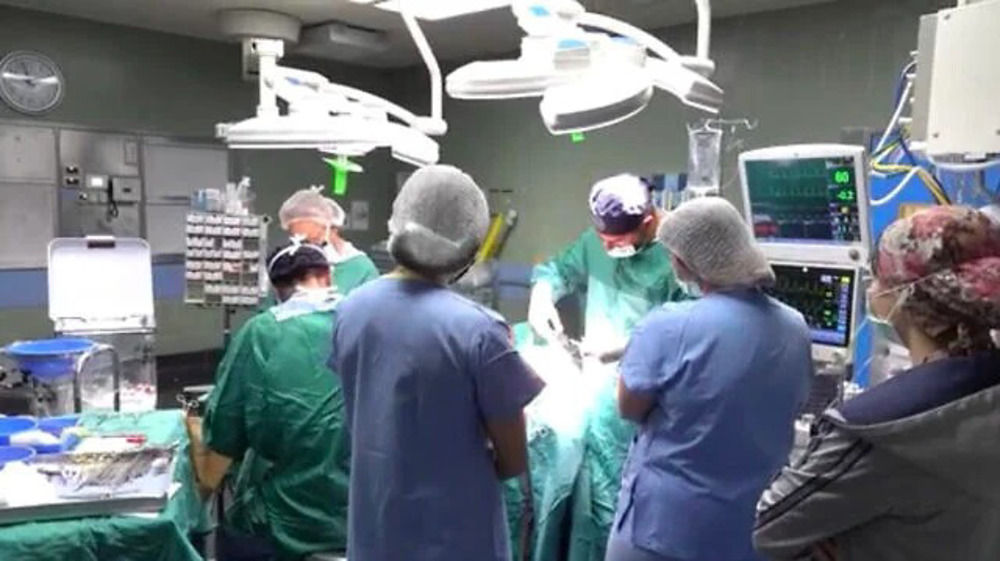
New research has found that approximately 1,370 doctors left the Israeli-occupied territories between 2023 and 2025, with the total number of departures over these three years exceeding the entire medical staff of major facilities.
The study highlights growing concerns over the brain drain in Israel’s healthcare system amid ongoing political instability and Israeli aggression across several countries in West Asia.
According to the research conducted by Tel Aviv University, the figure during the three years is almost twice that of the 705 physicians who moved overseas between 2013 and 2015.
The researchers documented 416 departures in 2023, followed by 530 in 2024, and an initial projection of 419 for 2025.
The researchers noted that the overall count of departures over the span of these three years surpasses the entire medical personnel at prominent institutions such as Shaare Zedek Medical Center, Soroka Medical Center, or Shamir Medical Center.
Despite the return of Israeli physicians who had previously worked abroad, the net loss amounted to 509 doctors from 2023 to 2024. This yearly net loss of around 255 doctors is nearly five times greater than the average annual net loss of 54 doctors observed between 2010 and 2019.
The researchers emphasized that spending a year overseas does not necessarily equate to permanent emigration. Numerous doctors undertake travel for fellowships, research, or training purposes.
Nevertheless, the significant increase in long-term stays abroad is a troubling sign, the researchers said.
The research was carried out by Prof. Itai Ater, Prof. Nittai Bergman, and PhD candidate Doron Zamir, employing cross-referenced information from population registries, educational data, and medical licensing documents provided by the Central Bureau of Statistics.
“All of us have family members waiting for surgery or other medical care. The departure of nearly 1,400 doctors translates directly into longer wait times, less effective medical care, and ultimately severe harm to our quality of life,” Ater said.

The researchers observed an increasing number of seasoned physicians emigrating from the Israeli-occupied lands.
More than 20 percent of those who moved between 2023 and 2025 were aged 45 or older, totaling 281 experienced doctors. In contrast, a decade ago, senior physicians constituted merely 14% of the doctors who left.
The exodus includes all medical disciplines, predominantly led by pediatricians, ophthalmologists, dermatologists, and ear, nose, and throat specialists; 6.2% of Israeli practitioners in these areas have exited the territories.
Surgeons accounted for 6%, while intensive care and emergency physicians represented 4.7%. Gynecologists made up 4%, internists and supportive specialties were at 3.9%, psychiatrists at 3.2%, and family doctors constituted 2%.
Among ophthalmologists, dermatologists, and ENT specialists under the age of 60, 9.4% have emigrated, while 8.8% of surgeons and 6.4% of pediatricians in the same age group have also left the Israeli-occupied lands.
The Tel Aviv district experienced the most significant decrease, with a loss of 429 doctors, representing 7.4% of its physicians under the age of 60.
This was followed by the central district, which lost 290 doctors; Haifa, with a reduction of 190; occupied al-Quds, with 132; and the southern region, with 125.
As a significant portion of the departing physicians consists of experienced veterans, their move is much less likely to be influenced by short-term training requirements, and their departure could greatly harm the quality of healthcare and the education of future doctors.
Over the past two years, Israel has experienced an unusual and considerable net migration deficit, characterized by a greater number of individuals departing from the occupied territories than those arriving.
According to Sergio Della Pergola, a prominent expert on Jewish demographics, there have only been specific times during the 1950s and 1980s when the number of Jews immigrating to the occupied lands exceeded the number of those departing.
Data from the Central Bureau of Statistics reveals that during 2024 and 2025, almost 50,000 more individuals left the Israeli-usurped territories than those who arrived to live there.
Historically, a significant portion of Israel’s emigration has been characterized by the quest for improved economic prospects overseas. Nevertheless, a considerable number of individuals departing from the occupied lands currently cite discontent with the ruling regime as the primary reason for their choices.

Lebanese president: Withdrawal of Israeli forces ‘national principle’ to uphold

Anti-Israel protest cancels planned Jewish New Year celebrations in Thailand

French broadcaster removes program replay after actress blasts Israeli genocide in Gaza



Israeli forces raid West Bank communities as settler attacks intensify
VIDEO | Press TV's news headlines
VIDEO | Fresh US sanctions challenge Pakistan-Iran push to expand trade
'Normalization of war and genocide’ unacceptable, Irish president tells Trump
VIDEO | 'Shutdown of Saudi Arabia's pipeline reflects coordinated pressure from resistance'
Ansarullah rejects Trump’s claim it asked US ‘not to go after them’
VIDEO | US economic D-Day backfires
US attacks on Lamerd a clear case of war crime: Iran




 PressTV NEWSLETTER
now
PressTV NEWSLETTER
now
 This makes it easy to access the Press TV website
