
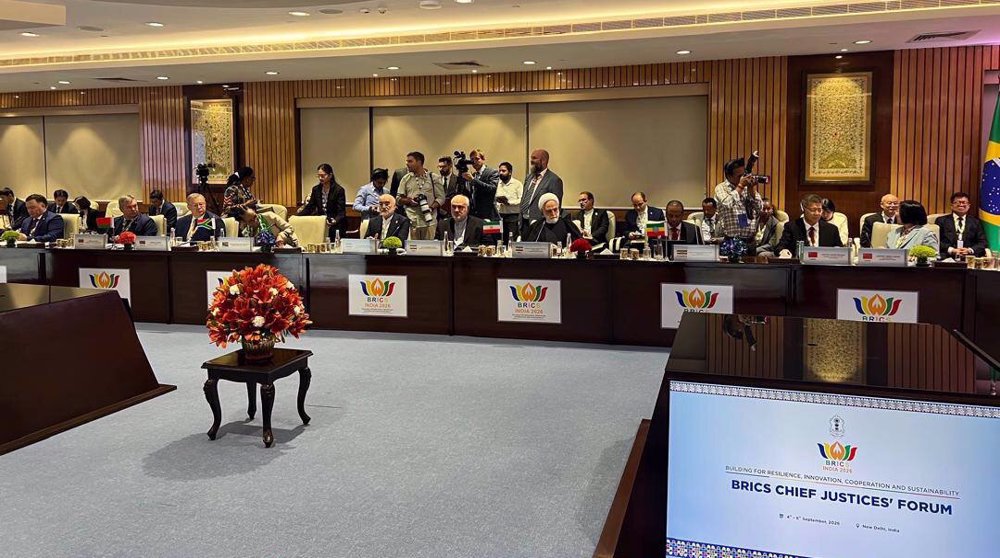
Iran’s judiciary chief has called on BRICS members to condemn violations of Iran’s sovereignty and pursue those responsible for war crimes and crimes against humanity committed during the wars against the Islamic Republic, invoking the principle of universal jurisdiction.
Speaking at the BRICS meeting of heads of judicial systems in New Delhi on Saturday, Gholam-Hossein Mohseni Ejei referred to the “brutal aggression” by the US and Israel against Iran, recounting that Leader of the Islamic revolution Ayatollah Seyyed Ali Khamenei and 168 schoolchildren were killed on the first day of the war.
“The Iranian people have paid a heavy price for their independence for many years,” Ejei said, adding that Iran has faced “brutal aggression by the United States and the Zionist regime” during the past two years.
He said the attacks constitute an unlawful war in violation of international norms and are not merely a limited military confrontation.
“Many infrastructures and facilities, including hospitals, educational and cultural centers, and residential areas, were targeted, resulting in the deaths of large numbers of civilians, including women and children,” he noted.
Ejei described the actions of the United States and Israel as “clear instances of war crimes,” while criticizing the international community’s failure to respond to the violations.
Ejei said the issue extended beyond Iran, warning BRICS members that other countries could face similar violations in the future.
“Today, this may be Iran’s voice, but tomorrow it may be the voice of any one of the countries represented in this hall,” he said.
The US and Israel launched another round of aggression against Iran on February 28, some eight months after carrying out unprovoked attacks on the country.
Iran swiftly retaliated by launching barrages of missiles and drones at the Israeli-occupied territories, as well as US bases and interests across the region.
A ceasefire took effect on April 7, and on June 18, the presidents of Iran and the United States signed a memorandum of understanding (MoU) to end the war and begin a 60-day diplomatic process to resolve the differences.
However, renewed US strikes once again triggered Iranian retaliation.
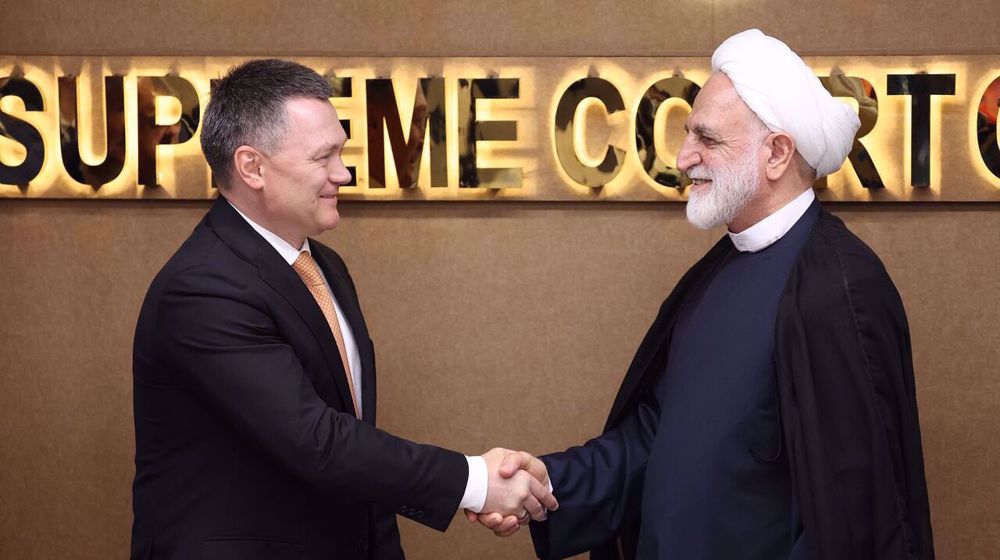
Ejei referred to US military interventions in Afghanistan, Iraq and, more recently, Venezuela, saying thousands of civilians have been killed in the aggressions.
He also slammed Israel for killing more than 73,000 people in Gaza and Lebanon, including women and children, and forcing more than two million people to leave their homes.
Ejei urged BRICS members to take concrete legal and political measures in response to violations of Iran’s sovereignty and territorial integrity.
“First, BRICS members should condemn the violation of the sovereignty and territorial integrity of Iran in accordance with international law, particularly the UN Charter, and take the necessary measures to prevent the aggressors from carrying out illegal actions,” he said.
“Second, by applying the principle of universal jurisdiction, they should prosecute those responsible for war crimes and crimes against humanity committed during the two wars of aggression against the Islamic Republic of Iran,” he added.
Referring to BRICS’ role in shaping a new global order, he noted that BRICS documents repeatedly emphasize mutual respect, respect for countries’ sovereignty and territorial integrity, the peaceful settlement of disputes and adherence to the UN Charter.
“BRICS, as one of the most important economic and political coalitions, has an increasingly important role in shaping the new world order,” Ejei said. “We seek an order in which no power considers itself above the law. We call on BRICS members to stand with the law.”
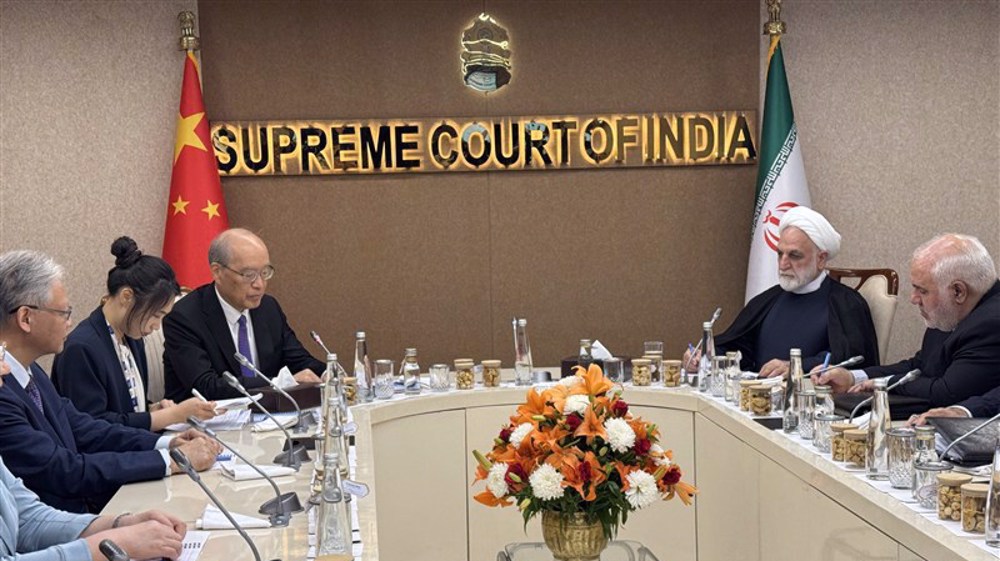
Ejei said the international community is witnessing growing violations of national sovereignty, human rights and international humanitarian law, as well as unilateral sanctions and increasing pressure against independent nations.
“Today’s world, alongside its scientific and technological advances, is witnessing the expansion of aggression against the sovereignty of countries, widespread violations of human rights and humanitarian law, illegal and unjust unilateral sanctions, and increasing pressure on independent nations by certain hegemonic powers,” he said.
He called on judicial and legal institutions to play a more active role in addressing international crimes.
“Our judicial systems and legal institutions must not remain indifferent to violations of fundamental human rights, the killing of civilians, the forced displacement of peoples, damage to infrastructure, and the impunity of perpetrators of international crimes,” Ejei said.
 This makes it easy to access the Press TV website