
By Mina Mosallanejad
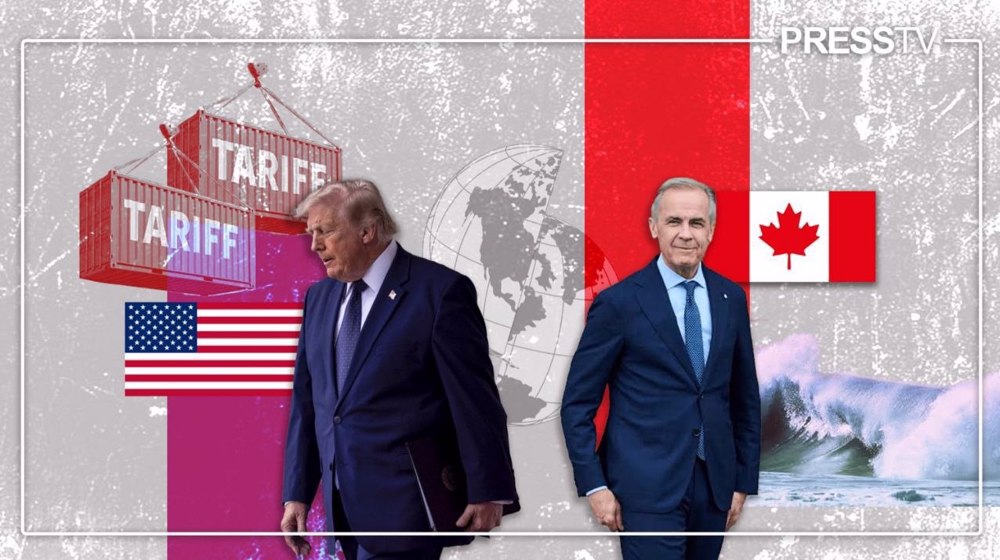
Canada has announced retaliatory measures against the latest round of US tariffs, announcing duties of 15, 25 and 50 percent on a wide range of American products as its trade dispute with Washington enters a new and potentially more damaging phase.
The Canadian counter-tariffs, covering about $27.6 billion worth of US imports, are scheduled to take effect at 12:01 a.m. on September 8.
They will target products in sectors including steel and aluminum, dairy, appliances, agricultural equipment, pulp and paper, plastics and electronics. Canada says the measures are designed to match the latest US tariffs “dollar for dollar” and “rate for rate.”
The measures are the latest escalation in a trade war between two of the world’s most closely integrated economies, after days of negotiations between Washington and Ottawa collapsed last week.
The dispute is no longer limited to steel mills, factories and large corporations. The latest tariff lists reach into everyday products, from clothing and household goods to paper products and electronics, raising the prospect of higher costs for businesses and consumers on both sides of the border.
How did the trade war reach this point?
The latest escalation followed the collapse of US-Canada trade negotiations in Washington on Friday.
Canadian officials said the two sides had negotiated intensively and in good faith in an effort to reach a broader trade agreement.
But Ottawa said Washington ultimately presented terms that were unacceptable to Canada, describing them as an attempt to “ask too much of Canada, and offer too little in return.”
Canada therefore suspended the negotiations rather than accepting what Prime Minister Mark Carney’s government described as “uneconomic” and “unfair.”
US President Donald Trump, meanwhile, has repeatedly accused Canada of taking advantage of the United States and has said that American trade policy needs to become more aggressive.
When the negotiations broke down, Washington moved ahead with a new 50 percent tariff on a broad range of Canadian goods.
The new duties took effect at 12:01 a.m. Eastern Time on August 22. The US measure covers about $27.6 billion worth of Canadian products, according to the Canadian government.
Canada responded by promising to match the tariffs. Carney has defended the response as necessary to protect Canadian businesses and workers, while stating that Canada did not choose the trade war.
“Canada did not choose this trade conflict, but we need to respond to provide a level playing field to our businesses,” he said.
Ontario Premier Doug Ford, whose province is at the center of Canada’s manufacturing sector, has gone even further, warning that Canada could consider restricting exports of electricity and critical minerals if the dispute continues.
“Everything is on the table” in terms of retaliation, said Ford. “I’ll cut them off,” he added, referring to critical minerals. “You won’t get a grain of sand out of Ontario.”
Trump quickly responded to Ford’s comments, writing on social media, “Someone should get these clowns to ‘fall in line’ or, the consequences for Canada will be far WORSE!”
Canada vows ‘dollar-for-dollar’ tariff retaliation as Ottawa-Washington trade war escalates https://t.co/XKydVaLpRS
— Press TV 🔻 (@PressTV) August 22, 2026
What exactly is the US tariffing about?
The latest US measure imposes a 50 percent tariff on hundreds of Canadian products. The list includes a surprisingly broad range of goods. Among the products affected are clothing, cosmetics, food products, household goods, sporting equipment, furniture and construction-related products.
Hockey sticks – an unmistakably Canadian product – have become one of the more recognizable examples of the new duties.
The measure is significant because it reaches beyond the traditional targets of the US-Canada trade dispute, such as steel, aluminum and automobiles.
According to the Canadian government, the latest US tariffs affect about $27.6 billion in Canadian goods. That represents only a fraction of Canada’s overall exports to the United States, but the impact can be much greater in specific industries and regions.
Canada, meanwhile, has structured its response around the US tariff lists.
What is Canada targeting?
Canada’s counter-tariffs will cover approximately $27.6 billion worth of American imports and will take effect on September 8.
The Canadian government has grouped the products into several major sectors, including steel and aluminum, dairy products, appliances, agricultural machinery, pulp and paper, plastics and electronics. The tariff rate on individual products will generally correspond to the US rate imposed on comparable goods.
The official Canadian list runs to hundreds of tariff lines. Some steel and aluminum products will face tariffs of up to 50 percent. Dairy products are also among the targets, with some milk and cream products subject to a 50 percent tariff. A range of clothing, sporting goods, electronics, and household products are also included.
The list is designed to put pressure on US exporters while avoiding, at least for now, the most economically disruptive response available to Canada: restricting exports of energy and other critical inputs.
That distinction matters because the US economy depends heavily on Canadian resources. Canada accounts for 60% of total US crude oil imports, according to Canadian government data.
Why does Canada still matter to the US economy?
Despite Trump’s claim that the US does not need Canada, the two economies are deeply intertwined.
Canada ranks as the third-highest source of US imports. In 2025, more than $380 billion worth of goods were brought over the border, according to US Census Bureau data.
Canada supplies the US with enormous quantities of crude oil, aluminum, potash, and auto parts.
Roughly four million barrels of Canadian crude enter the US every day, accounting for nearly one-fifth of US petroleum consumption. Canada is also a major supplier of aluminum and potash, both of which are important to American manufacturing and agriculture.
This creates a basic problem with tariffs: the country imposing the tariff is not necessarily insulated from its consequences.
A US manufacturer that imports a Canadian component may pay the tariff when the component crosses the border. That additional cost can then be passed along the supply chain – from the importer to the manufacturer, from the manufacturer to the retailer and ultimately to the consumer.
The same process works in the opposite direction when Canada taxes American goods.
In other words, tariffs are not simply a penalty paid by foreign governments. They are taxes collected at the importing country’s border, with the economic burden potentially shared among importers, businesses, workers and consumers.
Canadian PM Mark Carney says the country’s close economic ties with the US have become a "weakness." He argues Canada must build economic ties with other countries amid a shifting relationship with the United States.
— Press TV 🔻 (@PressTV) April 20, 2026
Follow: https://t.co/LWoNSpkc2J pic.twitter.com/UsqDX0GPqm
What about the USMCA?
This is where the dispute becomes particularly complicated.
The United States-Mexico-Canada Agreement, or USMCA, is a trade agreement designed to allow qualifying goods produced in the three North American countries to move across their borders with preferential, and in many cases zero, tariffs.
The agreement is still in effect. In July, however, the Trump administration declined to simply renew the agreement for another 16 years.
Instead, Washington said it wanted to address what it considers shortcomings in the agreement and negotiate better terms. The US Trade Representative’s office stressed that USMCA remains in force while the United States seeks changes.
The current tariff dispute therefore does not mean that USMCA has disappeared. Rather, it means that USMCA is operating alongside a growing collection of tariffs and special trade measures.
That distinction is particularly important for steel, aluminum and automobiles.
But being covered by USMCA does not mean a product is automatically protected from every tariff imposed by the US government.
The reason is that the Trump administration is using several different legal authorities to impose tariffs, and those measures operate separately from the normal tariff preferences provided by USMCA.
What is Section 232?
One of the most important is Section 232 of the Trade Expansion Act of 1962. It allows the US president to restrict imports when the administration determines that they threaten US national security.
The Trump administration has used Section 232 extensively against strategic industrial products, most notably steel and aluminum.
In other words, the US government is not treating steel and aluminum simply as ordinary imports. It argues that maintaining domestic production of these materials is a national-security issue because they are important to industries such as construction, manufacturing, defense and infrastructure.
That is why steel and aluminum have been subject to a separate tariff regime from many of the other Canadian products caught by the latest measures.
The important point is that USMCA does not automatically cancel a Section 232 tariff. A Canadian steel product can satisfy USMCA’s rules of origin and still face a US national-security tariff if Washington has decided that the relevant Section 232 measure applies to it.
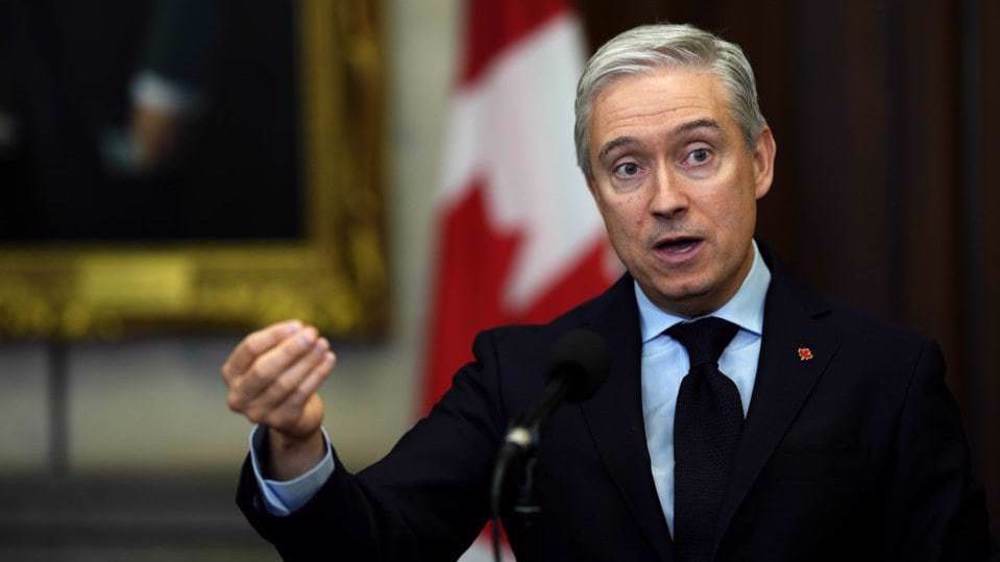
Canada has therefore included some US steel and aluminum products in its own retaliatory tariff list.
Are cars exempt or not?
Automobiles are even more complicated. Cars and auto parts were not simply swept into the new August 22 50 percent tariff on the same basis as the hundreds of other products.
Instead, Trump has threatened to raise US tariffs on Canadian-made automobiles and auto parts from 25 percent to 50 percent starting January 1, 2027.
That threat followed the collapse of negotiations that had raised hopes that auto tariffs could instead be reduced to 15 percent.
For automakers, the prospect is particularly alarming because the North American auto industry is not organized around national borders.
A vehicle can cross the US-Canada border multiple times during the manufacturing process, with parts produced in one country assembled in another.
Canadian-built vehicles accounted for about 6 percent of US vehicle sales in 2025, while major companies including Ford, General Motors, Stellantis, Toyota and Honda have significant manufacturing operations connected to the Canadian market.
A 50 percent tariff could therefore raise costs not only for Canadian exporters but also for American manufacturers that depend on Canadian plants and components.
How is the switch from factories to toilet paper?
The economic consequences of the trade war could eventually become visible in products that have little to do with geopolitics, according to watchers.
Paper products are one example. Canada is a major source of the raw materials used by the US paper industry, thanks in part to its enormous forestry sector.
The US imported $328m worth of toilet paper from Canada in 2024, according to the World Bank, making it by far the largest exporter of the product to the US. Retailers including Costco source much of their paper products from the country.
The US accounts for more than 20 percent of global tissue consumption despite having only 4% of the world’s population. The average American uses 141 rolls of toilet paper per year.
Tariffs on paper and related products can therefore affect an industry that is deeply integrated across the border. The same logic applies to many other goods.
A tariff on an imported component can increase the cost of a finished American product even when that final product is manufactured in the United States.
This is why economists and businesses worry about tariffs disrupting supply chains rather than simply reducing imports.
The effects can also spread geographically. A Canadian factory facing lower demand from the United States may cut production or employment, while an American company relying on Canadian inputs may face higher production costs.
Economist Trevor Tombe of the University of Calgary estimated before the latest tariffs took effect that prolonged 50 percent US tariffs on selected Canadian exports could eventually put nearly 90,000 Canadian jobs at risk.
He also stressed that the overall macroeconomic effect could appear relatively small because the affected goods represent only a portion of Canada’s total exports, while the effects could be much more severe in particular industries and communities.
Canada is particularly exposed because roughly 70 percent of its exports go to the United States. But the United States is hardly immune.
The two countries exchanged hundreds of billions of dollars in goods and services last year, while American manufacturers depend on Canadian energy, metals, minerals and industrial inputs.
That means a prolonged tariff war could create a classic lose-lose scenario: Canadian exporters lose access to their largest market while American companies and consumers pay more for imported goods and inputs.

Could the trade war hurt Trump in midterms?
That is one of the biggest political questions surrounding the ongoing and simmering trade dispute between the two countries. The 2026 US midterm elections are less than three months away, and the economy and cost of living are already major concerns for American voters.
A Reuters/Ipsos poll conducted in late July and early August found that 48 percent of Americans said the cost of living would be the most important factor in deciding how they vote in the midterms.
The same poll found that Americans trusted Democrats more than Republicans to handle the cost of living, 35 percent to 27 percent.
That creates a political vulnerability for Trump’s tariff strategy.
The US president has presented tariffs as a way to protect American workers, bring manufacturing back to the United States and force trading partners to offer better terms.
But if tariffs instead translate into higher prices for consumers, more expensive manufactured goods or disruptions at American factories, Democrats could use those effects to warn that Trump’s trade policies are worsening the already bad cost-of-living problem in the country.
The impact could be particularly important in states and congressional districts where manufacturing and cross-border trade are major parts of the local economy.
What is the issue related to Lake Ontario?
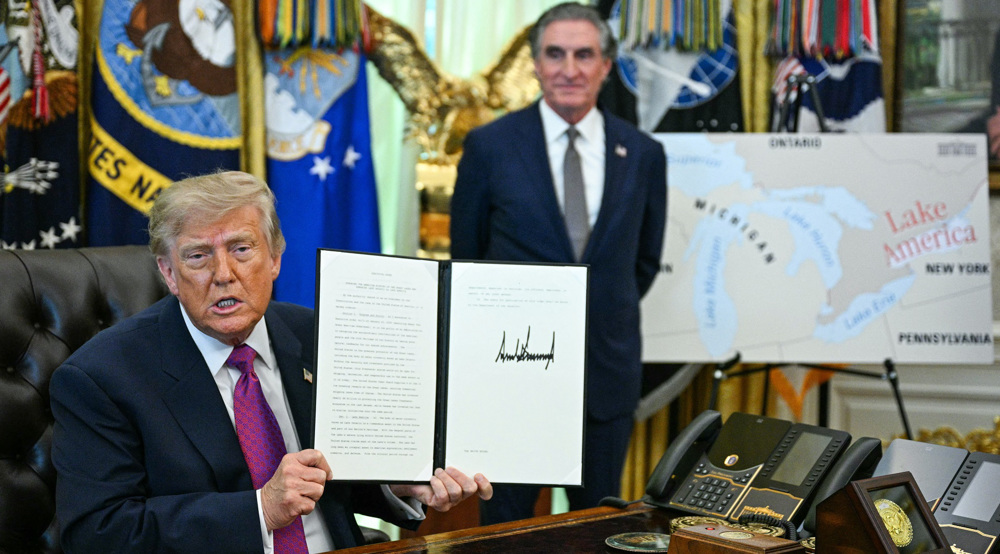
The dispute has also produced something far more unusual than tariffs: a fight over the name of a lake. As tensions with Canada escalated, Trump floated the idea of renaming Lake Ontario “Lake America.”
The proposal came amid the collapse of trade talks and Trump’s increasingly confrontational rhetoric toward Canada. The reaction in Canada was swift and largely dismissive.
Lake Ontario is one of the five Great Lakes and sits on the border between the United States and Canada. Its current name long predates both countries’ modern political relationship.
The proposal also echoed Trump’s earlier push to rename the Gulf of Mexico as the Gulf of America, a move that similarly generated political and cultural controversy.
For Canadians already angered by Trump’s repeated rhetoric about Canada becoming the 51st US state, the proposal became another symbol of what many see as an increasingly antagonistic relationship.
Trump on Thursday signed a directive changing the name of the lake and said the move would take place “effective immediately.”
The order signed by Trump said the Interior Department had 30 days to change the name in federal databases and materials.
Carney firmly stated that Lake Ontario will retain its original name, despite the executive order.
“The name Lake Ontario comes from the Wendat word Ontari’io, which, appropriately, means ‘the lake is beautiful, the lake is big,’” Carney posted on X. “The name is more than 400 years old, predating both the Confederation of Canada and the Declaration of Independence of the United States of America.”
New York Governor Kathy Hochul responded on social media: “New York won’t be calling it that.”
Phil Scott, the Republican governor of Vermont, which borders Canada and New York State, on Thursday called Trump’s decision “petty and disappointing” on the social media platform X.
Grand Chief Pierre Picard of the Wendat Nation in Quebec issued a statement condemning the change in name.
“President Trump is trying to erase our history,” he said. “Outraged, appalled, shocked: there are no other words to express how I feel following President Trump’s decision to rename Lake Ontario ‘Lake America.’”
What happens next?
For now, the next major deadline is September 8, when Canada’s retaliatory tariffs are scheduled to enter into force.
But the tariffs could still be changed, delayed or withdrawn if Washington and Ottawa return to the negotiating table.
That possibility matters because neither country has much to gain from a prolonged trade war.
Canada is heavily dependent on access to the US market, while American industries rely on Canadian energy, minerals, metals, agricultural inputs and manufacturing components.
 This makes it easy to access the Press TV website