Iran’s new food security milestone: Chicken self-sufficiency
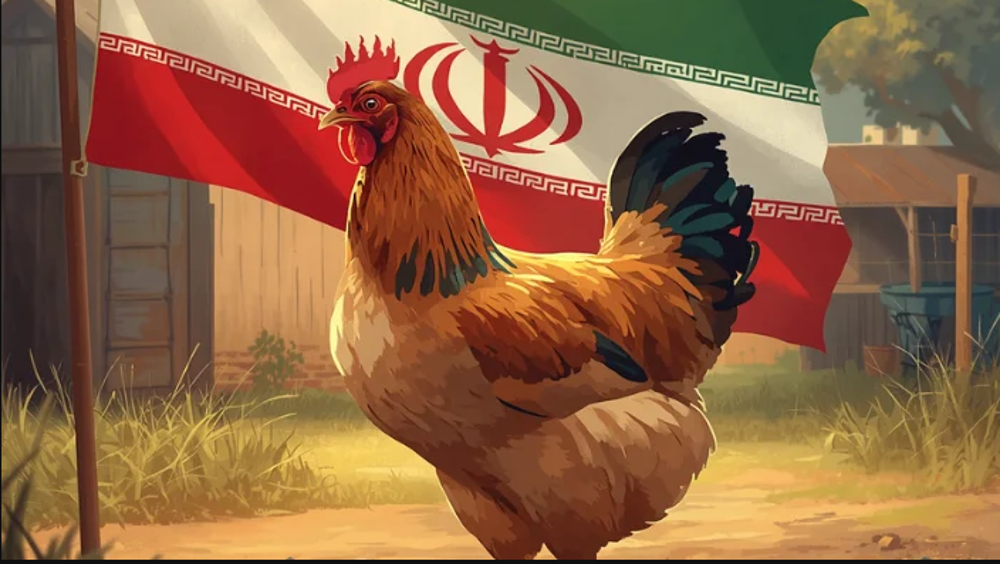
Iran has reached self-sufficiency in chicken production for the first time, producing more than two million tonnes of white meat a year against domestic consumption of about 1.6 million tonnes, according to the Ministry of Agriculture.
For a country with a population of more than 90 million, the significance extends well beyond the poultry industry. Chicken is one of Iran’s main sources of animal protein, while its relatively lower cost compared with red meat has made it an important component of household food consumption.
The Agriculture Ministry says poultry production has grown by 5% over the past two years, building on an extensive industrial base that includes breeding farms, hatcheries, feed mills, poultry farms, slaughterhouses, processing facilities and distribution networks.
The achievement is particularly significant because it has come under conditions that have put unusual pressure on Iran’s food supply.
The country has faced war, external pressure, trade and maritime restrictions, the return of sanctions and one of the most severe periods of drought in recent years. Yet, the flow of food supplies to the population has not stopped “even for one day or one hour”, according to state officials.
That resilience is central to understanding the economic importance of poultry self-sufficiency.
About 85% of Iran’s food security is based on domestic production, supported by nearly five million farmers, livestock producers, nomads, villagers and other participants across the agricultural value chain.
The remaining requirements, including certain inputs and raw materials, are covered through advance planning and measures to secure supplies.
Poultry is one of the clearest examples of how that domestic capacity can translate into food-security resilience.
The scale of today’s poultry industry is the result of decades of expansion. Production has developed into an integrated system in which breeding, chick production, feed supply, farming, slaughtering, processing and distribution are connected across Iran.
The recent increase in output has also coincided with changes in how the government manages the sector, particularly its approach to production inputs.
The Agriculture Ministry has focused on reducing production costs, improving productivity and making the supply of inputs more reliable, while encouraging larger production chains to take a more direct role in procurement.
Large poultry producers and integrated production groups have increasingly been allowed to import the feed ingredients they require themselves.
That is significant because feed represents one of the largest costs in poultry production and can determine whether farmers can maintain output at the required scale.
Instead of relying entirely on intermediary traders, larger producers can establish direct links with suppliers and organize procurement according to their production requirements.
The government has also sought to diversify the sources and composition of poultry feed. Alongside conventional imported ingredients, it has encouraged greater use of alternatives such as cottonseed meal, sunflower products and feed wheat, while promoting domestic production of oilseeds and forage crops.
The objective is to make the industry less vulnerable to disruptions affecting any individual feed source. The ability to secure feed supplies is therefore as important to self-sufficiency as the number of poultry farms themselves.
Iran’s food-supply chain remained operational despite the recent war and restrictions affecting trade, transportation and imports.
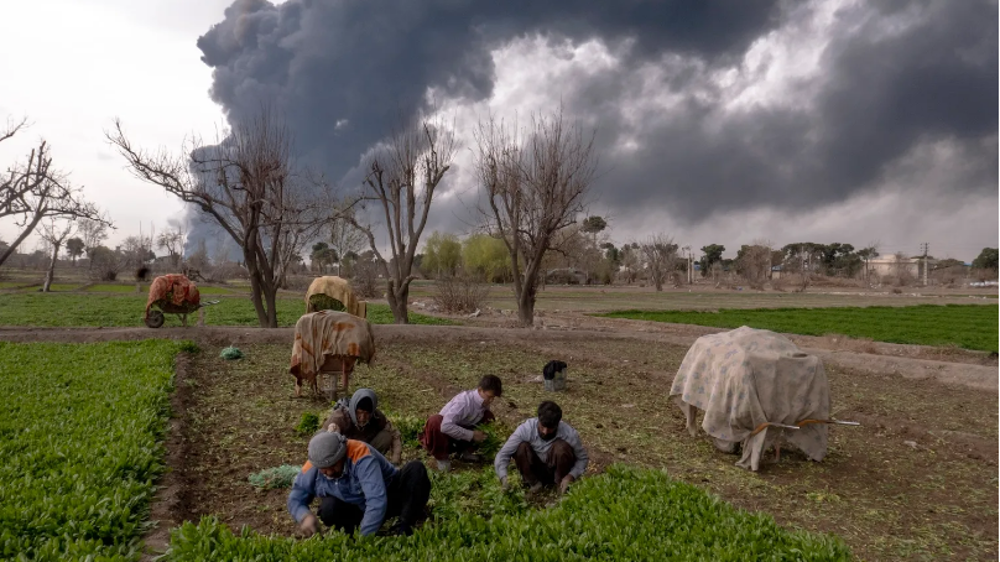
Food supplies remained available despite higher transportation and insurance costs, difficulties in bringing goods into the country and increases in global prices.
That distinction is economically important. Food security does not necessarily mean that prices remain unchanged during a crisis. War and trade restrictions can increase the cost of transporting and procuring food even when physical supplies remain available.
In that respect, poultry provides an important measure of resilience. A domestic industry capable of producing two million tonnes annually gives policymakers considerably more room to absorb external shocks than a market dependent on large-scale imports.
The poultry milestone forms part of a wider effort to expand domestic agricultural production and reduce dependence on imports.
Iran is geographically well positioned for such expansion. Iraq, the Persian Gulf, Afghanistan, Pakistan and markets across the Caucasus and Central Asia are within relatively accessible distance of Iranian production centers.
That proximity can reduce some of the logistical disadvantages faced by exporters competing in more distant markets.
The move toward exports also creates a stronger incentive to develop the industry beyond simply producing raw chicken meat. Processing, packaging, cold-chain infrastructure and integrated production can increase the value captured by the domestic agricultural economy.
The Agriculture Ministry says production of eggs, raw milk and red meat has also increased, while imports of some products have declined. Growth has also been reported in aquaculture, particularly shrimp production, horticulture, tropical crops and greenhouse cultivation.
The government is seeking to increase domestic production of products that have traditionally depended more heavily on imports, including bananas and hybrid seeds, while expanding greenhouse production, seedling production, agricultural mechanization, modern irrigation and biological pest control.
Officials have also linked greater agricultural resilience to the use of scientific and technical methods. Severe drought reduced wheat production, but comparisons with previous drought periods indicate that the sector has become more resilient through improved production methods, mechanization, changes in production patterns and the application of research.
That broader resilience is important because food self-sufficiency cannot be measured by a single commodity.
For poultry, however, crossing the self-sufficiency line represents a particularly tangible achievement. The industry now produces substantially more chicken than the domestic market consumes, while supporting a large network of farmers, feed suppliers, hatcheries, processors, transport operators and retailers.
The achievement is larger than the number of chickens produced.
It demonstrates that a major Iranian food industry can continue supplying a population of more than 90 million under severe external and climatic pressure, while generating enough output to look beyond the domestic market.
It is a measure of the growing capacity of Iran’s food economy to withstand shocks while creating new opportunities for production and trade.
Iranian researchers develop dual-purpose electrodes for storage of renewable energy
Iran’s oil sales to China hold steady despite US economic war
The illusion of ‘maximum pressure’: New Iran sanctions recycle failed strategy with same old results



President Pezeshkian joins SCO leaders in Kyrgyzstan to counter US influence
Iranian Army kamikaze drones target US forces at al-Minhad Air Base in UAE
Rogue supertanker brought to halt after hitting sea mines in Hormuz
IRGC shoots down another US MQ-9 drone over Strait of Hormuz
Pezeshkian: Iran seeks no war, but will respond firmly to any aggression
Iran’s new food security milestone: Chicken self-sufficiency
Trump calls plunder of Venezuelan oil a ‘gift’ as Washington tries to refill war-drained reserves
VIDEO | Press TV's news headlines


 PressTV NEWSLETTER
now
PressTV NEWSLETTER
now
 This makes it easy to access the Press TV website
