Iranian researchers develop dual-purpose electrodes for storage of renewable energy
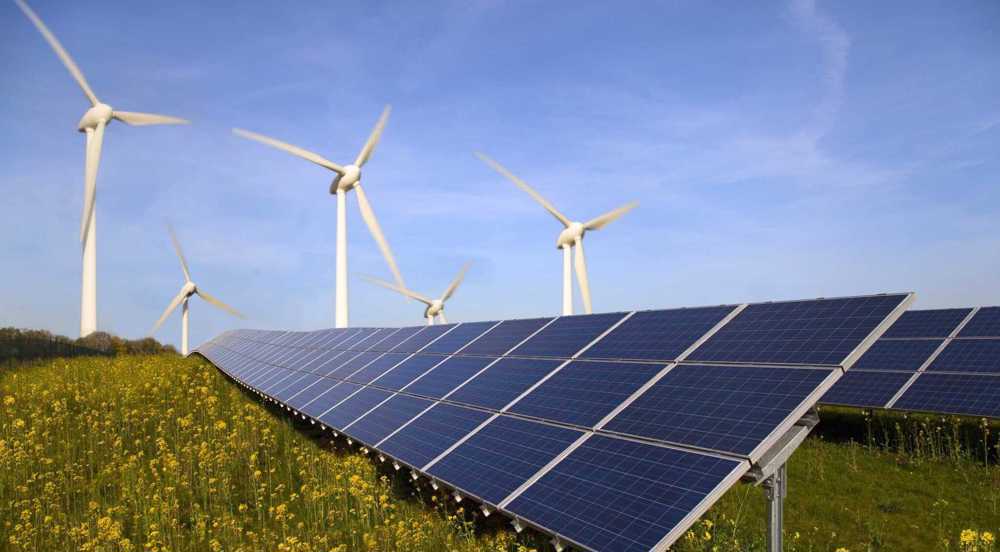
Iranian researchers have developed dual-purpose electrode materials that could help address the challenge of storing electricity generated from renewable sources such as solar and wind power.
The research was conducted by Maryam Farahmand-Habibi during her postdoctoral studies at the University of Gilan, focusing on the “design and development of dual-purpose electrodes for simultaneous application in microbial fuel cells and supercapacitors.”
The project seeks to develop high-performance electrode materials capable of supporting both energy conversion and energy storage, potentially helping reduce the cost and complexity of electrochemical energy systems.
“Decreasing non-renewable energy resources, environmental degradation and the need to develop energy storage systems have made research and development in energy conversion and storage technologies increasingly important,” Farahmand-Habibi was quoted as saying by Mehr news agency.
Microbial fuel cells are an emerging technology that uses microorganisms to break down organic matter and simultaneously convert the chemical energy contained in it into electricity, she explained.
Supercapacitors, meanwhile, have attracted considerable attention because of their high power density, suitable cycle life, safety and low maintenance requirements, she added.
Farahmand-Habibi stressed that the performance of both technologies depends heavily on the properties of their electrodes.
“The electrochemical properties of microbial fuel cells and supercapacitors are strongly dependent on the characteristics of the electrode used,” she said. “Therefore, designing and developing new high-performance electrode materials is one of the fundamental requirements for expanding the applications of these technologies.”
The research, she said, focuses on dual-purpose electrocatalysts that can perform two different functions.
🔰 Researchers at Iran’s University of Guilan develop dual-purpose electrodes for simultaneous use in microbial fuel cells and supercapacitors
— Iran First (@IranFirst_PTV) August 29, 2026
The ambitious project aims to improve clean energy conversion, storage, efficiency and affordability.#IranFirst pic.twitter.com/OUua2kyZmG

They can facilitate the oxygen reduction reaction, a key process in microbial fuel cells, while also providing energy-storage capabilities when used in supercapacitors, she noted.
According to the researcher, the approach aims to combine the catalytic activity required for energy generation with energy-storage capability in a single structure.
The team also focused on engineering the structure and morphology of the electrodes to improve their performance.
“Structure and morphology engineering of electrode materials plays an important role in enhancing their efficiency,” Farahmand-Habibi said. “For this reason, efforts have been made to design and fabricate electrodes with porous structures and high specific surface areas and to evaluate their performance in applications related to microbial fuel cells and supercapacitors.”
The development could be particularly relevant to renewable energy systems, where electricity generation from sources such as solar and wind naturally fluctuates.
“Electricity generation from renewable sources such as solar, wind and geothermal energy is always accompanied by the challenge of energy storage because of their natural fluctuations,” she said.
“Storing the energy produced at appropriate times and using it when generation declines is an important way to manage the energy crisis.”
Electrochemical technologies, including fuel cells and electrochemical capacitors, could therefore play an important role in storing and managing electricity generated from renewable sources, she highlighted.
‼️Iranian researcher has developed dual-purpose electrodes for microbial fuel cells and supercapacitors, aiming to boost clean energy storage.
— Iran First (@IranFirst_PTV) August 28, 2026
The research uses porous, high-surface-area structures and non-precious-metal catalysts as alternatives to costly platinum.#IranFirst pic.twitter.com/cTveAdBeY1
However, she noted, the widespread deployment of such technologies faces an important economic obstacle: many conventional electrocatalysts rely on precious metals such as platinum.
“Commercial catalysts based on precious metals such as platinum, due to their high cost and limited availability, have created challenges for the widespread use of these technologies,” Farahmand-Habibi said.
She noted that developing effective and economically viable electrocatalysts based on non-precious metals has consequently become an important direction in recent research.
Dual-purpose electrocatalysts could offer several advantages over conventional systems by reducing costs and system complexity, improving equipment durability and flexibility, and allowing a single electrode to perform multiple functions, she said.
Farahmand-Habibi pointed out that the development of efficient and stable electrodes is essential for moving microbial fuel cells and supercapacitors closer to wider economic and industrial applications.
“Given the broad economic and industrial applications of microbial fuel cells and supercapacitors, achieving efficient and stable electrodes is an essential step toward commercializing these technologies,” she said.
The research could thus contribute to the development of more affordable and versatile electrochemical systems for clean energy conversion and storage, helping pave the way for the broader integration of renewable energy into future energy systems, she stated.

Iran’s oil sales to China hold steady despite US economic war

The illusion of ‘maximum pressure’: New Iran sanctions recycle failed strategy with same old results

Iran announces discovery of major gas field in southern Fars province



Pezeshkian: Implementing MoU will prevent US, Israel from sowing chaos in region
Israel has made over 1,000 incursions into Syria since fall of Assad govt.: Report
VIDEO | Financial sharks: What Scott Bessent is remembered for in Italy
Israel’s undeclared nukes, Western complicity and case for dismantling its nuclear infrastructure
Iranian researchers develop dual-purpose electrodes for storage of renewable energy
Araghchi: US officials manipulating energy markets for personal gain
VIDEO | Iranians want vengeance (part 2)
VIDEO | Iranians want vengeance (Part 1)




 PressTV NEWSLETTER
now
PressTV NEWSLETTER
now
 This makes it easy to access the Press TV website
