
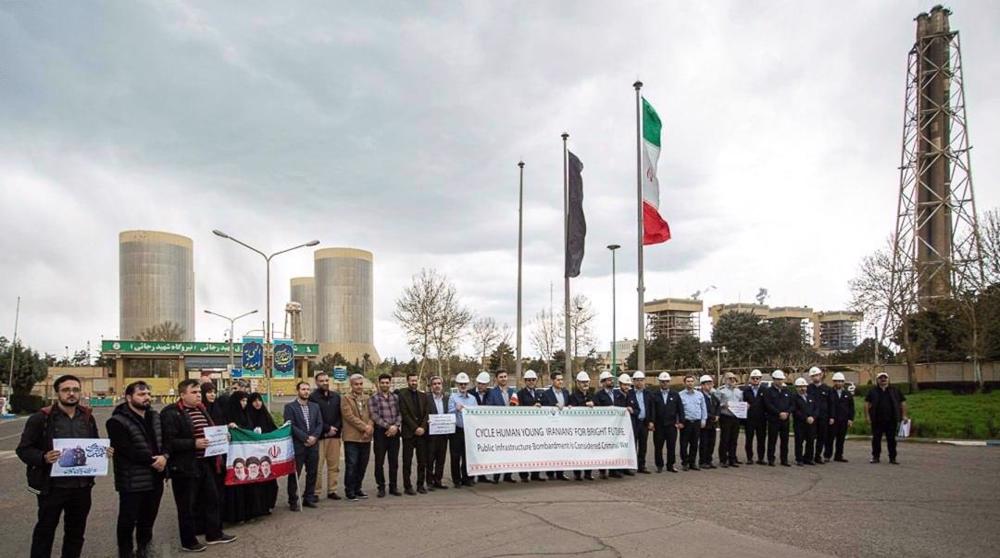
Energy Minister Abbas Aliabadi says Iran’s electricity network is among the most stable in the region and cannot be brought to a halt even if the enemy exhausts its entire arsenal.
In a televised interview on the occasion of Government Week, Aliabadi described Iran’s water and electricity industry as a strategic national strength, pointing to its significant advances despite years of sanctions, war and external pressure.
“The possibility of Iran’s electricity network collapsing does not exist,” Aliabadi said, stressing the country’s ability to produce all the equipment and components required by the electricity industry domestically.
He said Iran’s power network benefits from its geographical breadth and the distribution of generation facilities across the country.
“With more than 1,000 power-generating units across the country, even with the complete exhaustion of the enemy’s arsenal, it is not possible to bring the country’s electricity generation network to a halt,” Aliabadi said.
The minister said Iran’s electricity-generation capacity has expanded dramatically since the 1979 Islamic Revolution, increasing from about 7,000 megawatts at the beginning of the revolution to more than 103,000 megawatts today.
The country’s electricity industry has continued operating and expanding even under the most difficult circumstances, including during the recent war, he added.
“At the height of the war, none of the power-plant projects stopped,” Aliabadi said, adding that new generating units will soon be connected to the national grid.
Aliabadi also highlighted the capabilities developed by Iran’s water and electricity industries under sanctions, saying the country has continued to produce equipment and components domestically while also exporting electrical parts and water and electricity equipment to other countries.
The industry, he said, has been able to meet domestic needs and that neighboring countries and other nations have also benefited from its achievements.
The minister also praised the personnel of Iran’s electricity industry for their efforts during the war, recalling how technical workers and power-line crews moved quickly to restore damaged infrastructure.
“Immediately after any damage to the facilities, my colleagues went into action and quickly rebuilt them and restored the network,” he said.
Aliabadi cited the response to damage at the Karaj water-treatment facility, where workers rallied to restore electricity and water supplies to the public despite the release of chlorine gas.
The minister touched on the adversaries’ disregard for international rules by targeting vital infrastructure, citing the complete destruction of a desalination facility on Qeshm Island that has supplied drinking water to the population.
Despite the damage, he said operational units of the Energy Ministry worked to repair the losses in the shortest possible time, including damage extending for kilometers along the water network in the Tajrish area.
Alongside the emphasis on the resilience of the conventional electricity network, Aliabadi outlined plans for a major expansion of renewable generation.
He said Iran’s renewable electricity capacity is currently in the range of 5,000 to 6,000 megawatts and is approaching 7,000 megawatts, with the government planning to raise the figure to 12,000 megawatts by the end of the year.
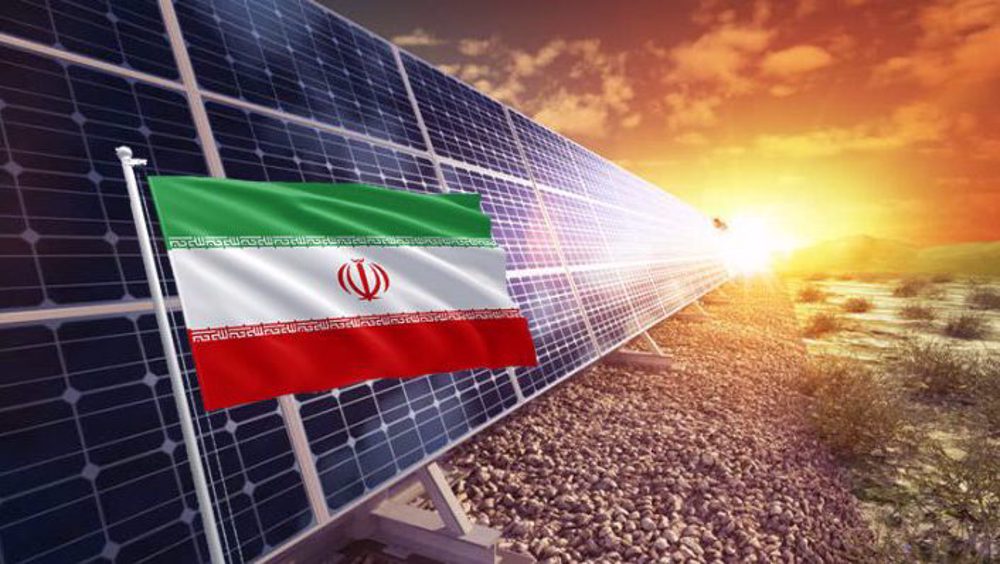
Aliabadi also said the government is targeting 30,000 megawatts of renewable electricity capacity by the end of its term.
Iran, he said, has entered the ranks of several leading countries in the development of solar electricity and praised President Masoud Pezeshkian for personally following the issue.
He also announced that new wind power plants will come online next year, saying wind generation could complement solar power because wind activity is more prevalent at night, helping improve grid reserves and stability.
The minister highlighted the inauguration of Iran’s first geothermal power plant in Meshginshahr, describing its technology as entirely domestic and calling the development particularly significant under wartime conditions.
He also pointed to a strategy of initially focusing on smaller renewable power plants because they require less investment in substations, transmission lines and network expansion and can generate electricity close to the point of consumption.
“Given the time constraints and the need to compensate for the electricity shortage and reduce fuel consumption, efforts were made to prevent the Energy Ministry from becoming involved in the time-consuming process of developing substations, lines and the network,” Aliabadi said.
He said the results of that decision will become more tangible for the public in the future.
The minister also said 10,000 megawatts of new power-generation capacity is gradually approaching connection to the national grid, adding that, following the peak of summer consumption, the electricity network was moving toward more balanced conditions.
 This makes it easy to access the Press TV website