By Ivan Kesic
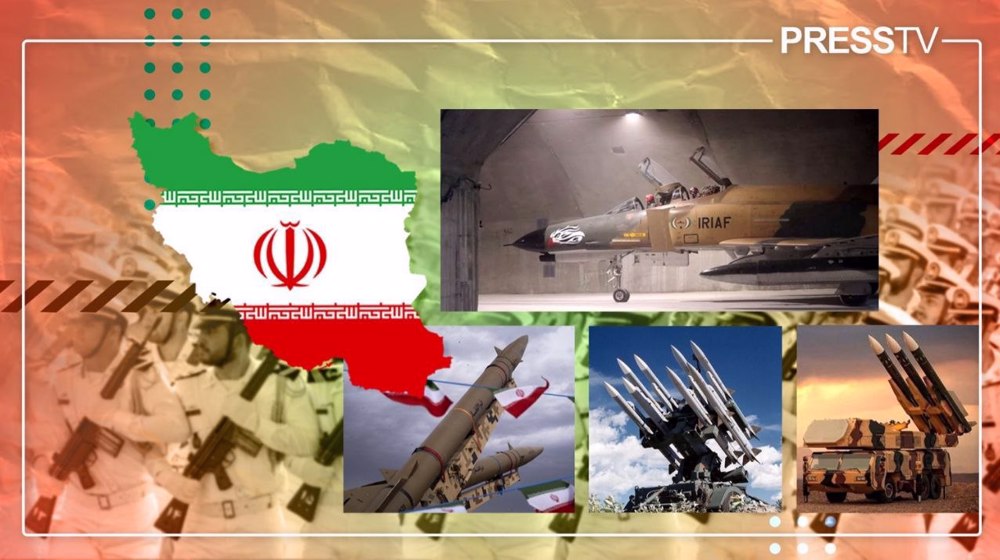
As Iran marks the National Day of Defense Industry – 47 years of resilience and innovation – the country’s transformation from dependence on foreign arms to a largely self-reliant military power with advanced capabilities in missiles, drones, and other defense technologies stands as a remarkable example of strategic adaptation under unjust sanctions.
The 31st of Mordad, observed as the National Day of Defense Industry, serves as an annual reminder of national self-confidence and the achievements of generations of talented young specialists who, under some of the most difficult conditions, chose to rely on indigenous capabilities, scientific expertise, and national determination.
The day commemorates a defining chapter in Iran’s modern history. During the Sacred Defense, the country confronted an enemy while even basic defensive equipment, including barbed wire, was subject to sanctions. Yet the very pressure and deprivation imposed on Iran became catalysts for a broader movement toward self-reliance, innovation, and technological independence.
From an era when Iran struggled to obtain even basic military equipment to today, when increasingly sophisticated defense systems are designed and manufactured domestically by Iranian specialists, the country has traveled a remarkable path of technological development and strategic adaptation.
Today, as the US and its allies are unleashing new forms of aggression against the country, extending across economic, political, media, cyber, and military domains, the mission of Iran’s defense industry extends beyond meeting immediate operational requirements.
Its broader objective is to develop an intelligent, adaptive, and comprehensive deterrent capable of addressing both conventional and emerging threats.
Drawing on faith, scientific expertise, technological innovation, and a vast pool of human capital, Iran’s defense industry has transformed the constraints of sanctions and external pressure into drivers of indigenous capability, strengthening the country’s defensive capacity and strategic deterrence.
Foundations of self-sufficiency
Before the Islamic Revolution, under the pro-American regime of Mohammad Reza Pahlavi, Iran’s reputation as a military power rested largely on imported weaponry rather than indigenous capabilities. The country purchased thousands of tanks and hundreds of aircraft and helicopters from Western suppliers, including the United States, while possessing little capacity to develop or manufacture advanced military systems domestically.
Meanwhile, Iran’s vast fossil-fuel reserves were extracted with the assistance of foreign companies and technology and exported for hard currency, much of which was spent on imported technology, weaponry, and the Pahlavi monarchy’s extravagant lifestyle.
The Iraqi Ba’athist military aggression against Iran in the 1980s, backed by the United States and other Western powers, exposed the vulnerabilities created by this dependence on foreign arms and technology.
After years of intense warfare, much of Iran’s imported military hardware became difficult to operate as spare parts grew scarce and Tehran was unable to replenish supplies because of the embargo and sanctions imposed on the country.
Iran ultimately repelled the brutal invasion through sustained resistance, battlefield improvisation, and the rapid development of indigenous capabilities. Yet it entered the 1990s militarily weakened and facing continued threats from the United States.
Today, Iran produces more than 90 percent of its defense equipment domestically and no longer relies on foreign suppliers for essential military hardware.
The Ground Forces produce a wide range of weapons and equipment; the Air Defense Force manufactures various radar and air-defense systems; the Air Force produces multiple types of aircraft; and the Navy manufactures rocket launchers, warships, and submarines.
Iran has also developed advanced capabilities in unmanned aerial systems, electronic warfare, and cyber technologies, further reducing its dependence on foreign suppliers for weapons, components, and critical technologies.
In contrast to the pre-revolution era, when roughly 90 percent of Iran’s military equipment was imported, the country now has around 90 percent self-sufficiency in defense production, with some domestically produced systems costing between one-tenth and one-twentieth as much as comparable foreign-made systems.
Despite the recent imposed war, Iran’s defense industry has doubled its arms production over the past year, with plans underway to increase output by another three- to fivefold.
Ballistic missile program: From Scud to hypersonic
The process of Iran's development of ballistic missiles kicked off in the mid-1980s as an urgent need, due to relentless Iraqi Ba'athist attacks on Iranian cities using weapons supplied by the West.
Ballistic missiles were a suitable retaliatory response since aerial bombardment risked the loss of valuable aircraft for which Iran was already grappling with the issue of spare parts.
Under the leadership of Hassan Tehrani Moqaddam, a celebrated engineer and manager from the Islamic Revolution Guards Corps (IRGC), Iran began ballistic development from scratch.
First, it imported older models of ballistic missiles from a few friendly countries, then copied them by reverse engineering, and continued to design and improve its indigenous missile models.
During the last two years of the imposed war, Iran had Oghab and Nazeat, short-range tactical ballistic missiles or rocket artillery systems, with 45-kilometer and 100-kilometer range, respectively.
After the eight-year-long imposed war ended, their development paved the way for the new Shahab and Zelzal missile families with a range of hundreds of kilometers.
By the late 1990s, Iran produced Shahab-3, its first medium-range ballistic missile with a range of over 2,000 kilometers, which brought all hostile foreign military bases in the region within its range.
Subsequent medium-range ballistic missiles such as the Ghadr-110, Fajr-3, Ashura, and Sajjil, introduced in the second half of the 2000s, brought significant improvements in solid propellant propulsion, shorter preparation, and accuracy.
The shortcomings with massive medium-range ballistic missiles were compensated during the 2010s, when new variants based on the Fateh-110, a short-range solid-fuel missile with an initial range of only 200 to 300 kilometers, entered operational service.
With the development of rocket engines and related technology, these new variants based on Fateh-110 increased the range over time: Fateh-313 to 500 kilometers, Zolfaghar to 700 kilometers, Dezful to 1,000 kilometers, and finally Kheibar Shekan to 1,450 kilometers.
Their range equaled that of older generations of missiles, and although they are equipped with somewhat smaller warheads, with 500 to 700 kilograms of high explosives, they are still lethal.
The newer and smaller missiles are also more mobile for transport, faster and simpler to launch, more maneuverable and harder to shoot down for enemy air defense systems, with high precision. In addition, they are easier to produce on a mass scale and can be assembled in huge numbers.
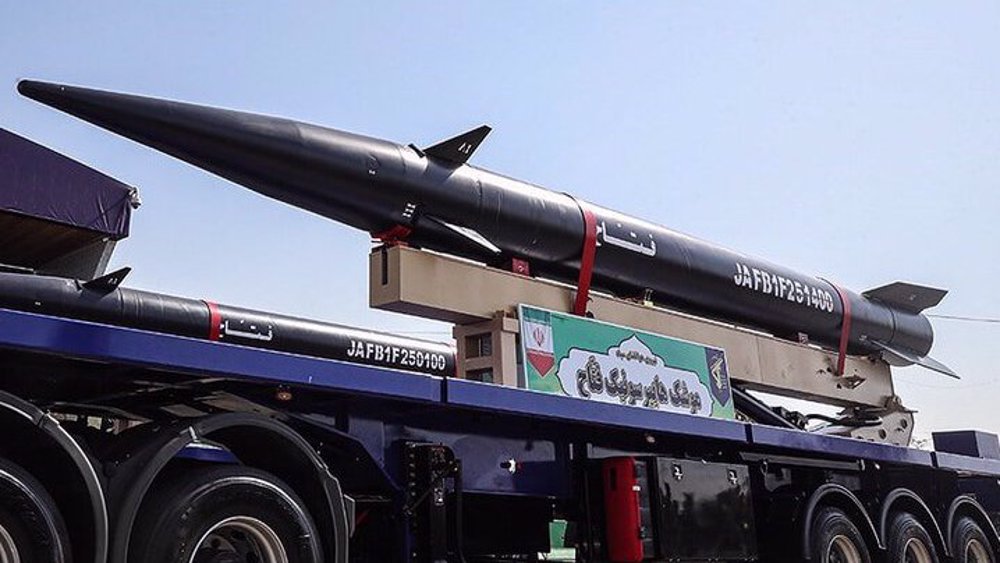
Iran today ranks among the top few countries in the world in missile technology. The country's entry into the limited club of hypersonic technology holders has been marked by the Fattah missile, unveiled in recent years, with a speed exceeding Mach 13 and the ability to maneuver in the atmosphere, effectively rendering advanced American defense systems such as Patriot and THAAD, as well as the Israeli regime's Arrow system, completely ineffective.
The Zolfaghar missile with a range of over 700 kilometers, the Haj Qasem missile with a range of 1,400 kilometers, and the Kheibar Shekan missile with the ability to maneuver in the dive phase and bypass defense systems are among the big achievements of the defense sector in this field.
Over ninety percent of the military products of the armed forces are manufactured in the Ministry of Defense and Armed Forces Logistics. The armed forces of the Islamic Republic of Iran use this technology to strike the sworn enemies of the Islamic Revolution.
Drone revolution: From reconnaissance to global leadership
Iran's drone program began from much more modest origins. During and after the Holy Defense War in the 1980s, Iranian institutions experimented with remotely piloted aircraft primarily for reconnaissance.
Over time, however, the country developed a remarkably diverse UAV ecosystem encompassing tactical reconnaissance aircraft, long-endurance surveillance platforms, armed drones, loitering munitions, one-way attack drones, target drones, electronic-warfare platforms, and increasingly sophisticated unmanned combat systems.
The Ababil and Mohajer families provided an important foundation. Later platforms such as Mohajer-6, Shahed-129, and Shahed-191 expanded the range of missions that Iranian UAVs could perform.
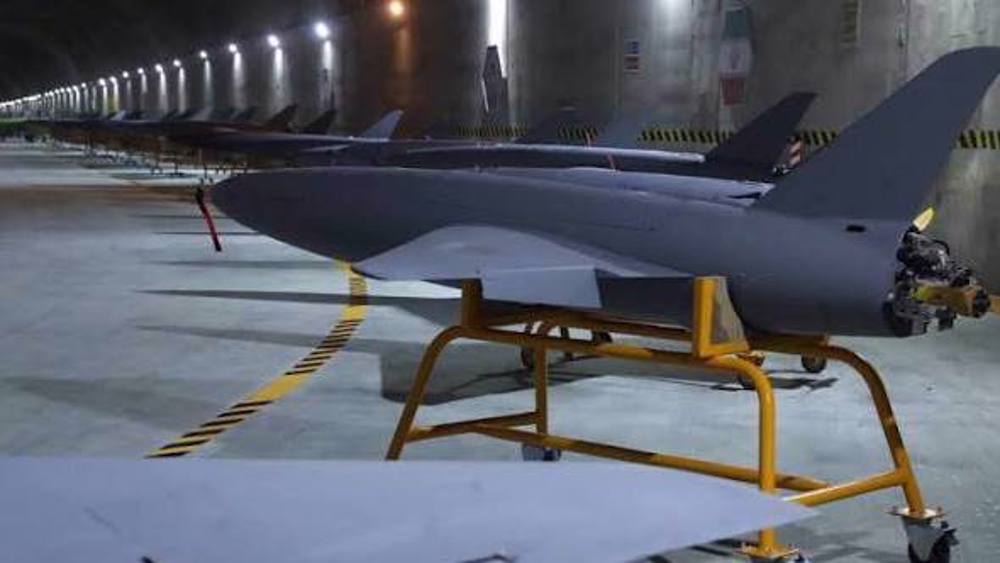
The Shahed-131 and Shahed-136 represented a different approach: relatively inexpensive, long-range one-way attack systems designed to be produced and employed in large numbers.
Iran is now among the world's leading countries in drone technology. The development and deployment of advanced drones on the battlefield has become a normal and common practice in the armed forces, and this process continues with speed and strength.
The Iranian armed forces have succeeded in penetrating the Zionist regime's anti-missile system, known as the Iron Dome, and reaching designated targets, emphasizing that the achievement is a testament to the country's possession of very strong and advanced drones with unique capabilities.
Drones such as the Shahed in various series, including the Shahed-136 as a loitering munition, Shahed-129 and Shahed-149 with weapons-carrying capability and long-endurance flight, and the combat drones Mohajer and Karrar, are among the products that have equipped the Army and the IRGC for extraterritorial operations and the defense of national interests.
The Arash-2 drone, used in the final days of the recent war of aggression, is much more sophisticated than previous generations, and its capabilities will be revealed in the future.
The Iranian Army also received large numbers of Ababil-4, Ababil-5, Arash, and Karrar UAVs, including reconnaissance, electronic-warfare, strike, and interception configurations.
Iranian defense officials say these systems have incorporated indigenous navigation, electronic-protection, and precision-strike technologies.
The strategic logic of these systems is very different from that of an expensive manned combat aircraft. A Shahed-type system does not need to outperform a fighter.
It needs to be sufficiently cheap, numerous, reliable, and accurate to impose a disproportionate defensive burden. That concept has now influenced military thinking well beyond Iran, with Iranian drone designs being adapted by other countries and studied by militaries worldwide.
Air defense and missile systems: Breaking the monopoly
The development of advanced and sophisticated air defense systems represents another major achievement of Iran's defense industry. For decades, Iran's air-defense network relied heavily on foreign systems, particularly American equipment acquired before 1979.
The country gradually developed domestic replacements and supplements, first by modifying legacy systems and eventually by designing entirely new missile and radar architectures.
The Mersad system was an important early step, using upgraded technology associated with Iran's legacy Hawk-derived air-defense infrastructure.
Later systems such as Raad, 3rd Khordad, Tabas, and other members of the Iranian air-defense family demonstrated increasing independence in radar, command-and-control, and missile technology.
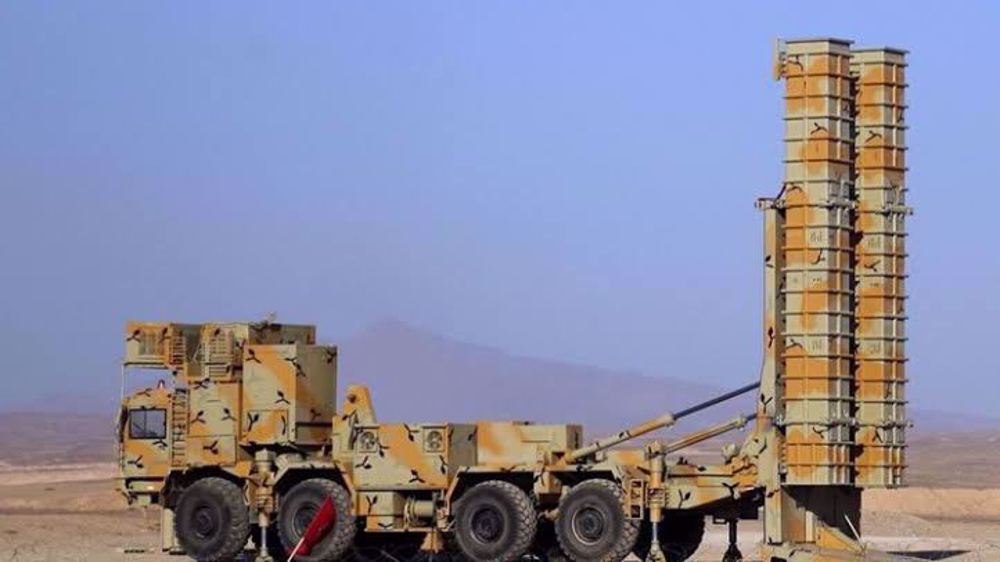
The culmination of this effort has been the Bavar-373 long-range system, developed after Iran faced difficulties obtaining the Russian S-300 system.
Bavar-373 is particularly significant because an air-defense system is more than just a missile; it requires radars, target tracking, fire-control systems, communications, launchers, a command-and-control architecture, and the ability to integrate multiple sensors.
The regular holding of various programs throughout the country, along with the complete security of the country's land and water borders and the absence of any hostile aerial vehicles in Iran's skies, indicate the dynamism, intelligence, and complete readiness of the integrated air defense network.
The use of modern, efficient, and effective equipment in battlefield and air battle management is a daily and permanent process within the Air Defense Force.
By relying on the scientific, industrial, and knowledge-based capacities of the Air Defense Force, the Ministry of Defense, and the armed forces, Iran is witnessing continuous leaps and developments in defense systems.
The Iranian Air Force has also been a frontrunner in this progress, with the country not only meeting its radar demands but also being capable of exporting science and technology.
Naval and ground forces: Expanding indigenous capabilities
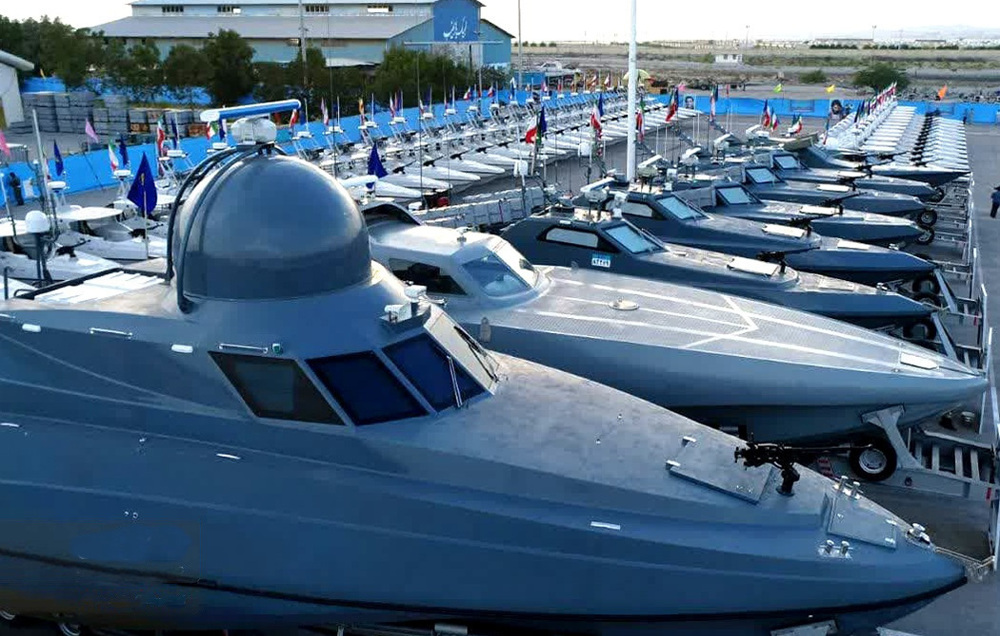
The naval sector provides another illustration of adaptation that lies at the heart of military innovation. Iran could not reproduce the American model of a blue-water navy with nuclear-powered aircraft carriers, large amphibious ships, and global logistics.
Instead, its defense industry concentrated on platforms appropriate to the Persian Gulf, Gulf of Oman, and Caspian Sea: missile boats, fast attack craft, corvettes, frigates, submarines, and unmanned naval systems.
The development of the Fateh-class submarine and the expansion of Iran's indigenous surface fleet represent particularly significant milestones.
Iranian shipyards have demonstrated the ability to construct increasingly large warships domestically, while the IRGC Navy has pursued smaller missile-armed vessels and asymmetric maritime systems.
More recently, Iran has also begun integrating increasingly sophisticated air-defense and unmanned systems onto naval platforms. Iran's ground-force industry has also undergone extensive indigenization. The country manufactures armored personnel carriers, artillery systems, rockets, anti-tank weapons, small arms, ammunition, and armored vehicles.
The Karrar main battle tank represents an effort to modernize the country's armored force through domestic production and extensive modification of existing technology.
The Army Ground Force has also announced that the Army Aerospace Force has achieved self-sufficiency in strategic components and increased its helicopter missile range sevenfold while enhancing night-vision capabilities and battlefield support.
The Iranian defense industry emerged from the illegal and draconian sanctions imposed against the country in a way that the country turned threats of sanctions into opportunities.
The experience of the past four decades has clearly shown that the resilient nation of Iran, whenever it relies on its own capabilities, has been able to overcome the most complex obstacles.
Industrial ecosystem: A revolution in defense production
The most important achievement of the Iranian defense industry after nearly five decades, however, may be found between individual programs.
Iran has gradually built institutions capable of supporting all fields simultaneously: missiles require propellant, guidance, electronics, launchers, and command networks; drones require engines, airframes, navigation, communications, and payloads; air defense requires radars, missiles, launchers, and command systems; satellites require propulsion, sensors, electronics, and launch vehicles; and naval systems require shipbuilding, propulsion, weapons, sensors, and communications.
More than nine thousand private and knowledge-based companies now work in the defense supply chain, up about twenty percent in one year. Two-thirds of defense equipment is produced by Iranian private-sector and knowledge-based companies.
Over the past year, the number of these companies has increased by twenty percent, while the volume of cooperation has grown by seventy percent. Seventy-six percent of research projects last year resulted in actual products.
Iran now builds more than one thousand types of advanced systems and weapons, compared with just thirty-one basic items before the 1979 Islamic Revolution.
Some Iranian weapons are produced at one-tenth or even one-twentieth the cost of foreign equivalents. Iran has maintained its advantage in prolonged wars through an extensive production network, a highly resilient supply system, and plans to triple production.
During the recent US-Israeli war against Iran, the enemies' military budgets, excluding covert assistance, were nearly one hundred times larger than Iran's, but Iran was able to thwart the enemy through localization, knowledge-based development, and its defense economy.
Iran is not holding military exhibitions or unveiling new equipment in order to maintain the element of surprise against the enemy.
This strategy of safeguarding defense information is a priority in preparation for future wars and to surprise the enemy, with plans to increase defense production three- to fivefold.
Stable deterrence and strategic authority
The country's defense industry, as an indispensable pillar of national power, plays a fundamental role in consolidating the security and dignity of the Islamic Republic of Iran.
What has been achieved in recent years transcends the mere production of military equipment, becoming an industrial revolution of defense, a strategic transformation that encompasses design, technology management, defense economics, a knowledge chain with a scientific base, and an intelligent production model that guarantees success on the battlefield.
It represents an intelligent response to the complexities of future wars. This great prosperity has been achieved through faith and the will of self-sufficiency inculcated by the great architect of the Islamic Revolution, Imam Khomeini, and the wise guidance of the martyred Leader Ayatollah Seyyed Ali Khamenei, who traced the path of deterrent power, emphasized scientific self-sufficiency, and paved the way for the emergence of formidable defensive and offensive capabilities.
Today, this has borne fruit in regional and extra-regional arenas, and in the fields of the Second and Third Sacred Defense against the US-Zionist war machine, clearly demonstrating Iran's strength.
The two recent imposed wars demonstrated that the deterrence of Islamic Iran is derived from an endogenous power relying on faith, knowledge, technology, and the country's immense human capital, the same young people and elites who today are crossing the frontiers of defense knowledge and technology and bringing a strong Iran closer from an ideal to a strategic reality.
 This makes it easy to access the Press TV website