
Iran’s Acting Defense Minister says the country has inflicted a “strategic defeat” on the United States and Israel, stressing that Iran’s defense industry had kept production lines operational during wartime and deployed new offensive and defensive systems on the battlefield.
Speaking on Saturday at a ceremony marking Iran’s Defense Industry Day, attended by foreign military attachés based in Tehran, Brigadier General Seyyed Majid Ibn al-Reza said Iran’s defense industry had strengthened the country’s armed forces despite sanctions and other challenges.
“Despite the enemy’s claim that Iran’s defense industry had been destroyed during the recent wars, we managed, through foresight and proper planning, to keep production lines for the equipment and weapons required by the armed forces operational,” he said.
“Beyond that, we succeeded in deploying new offensive and defensive systems on the battlefield under wartime conditions, and this process is continuing with strength.”
He said Iran’s strategic position and geopolitical weight had historically made it the focus of attention and pressure from major powers.
The acting defense minister said Iran would not yield to pressure, arguing that its resistance had created a strategic impasse and confusion for the administration of US President Donald Trump.
He noted that Iran’s performance in the war was due to the miscalculations by its enemies regarding Iran’s domestic conditions and its social, political and economic resilience.
“Iran’s deterrent and defensive power in this war was based on operational capabilities, many of which had not been incorporated into American and Israeli calculations,” Ibn al-Reza said.
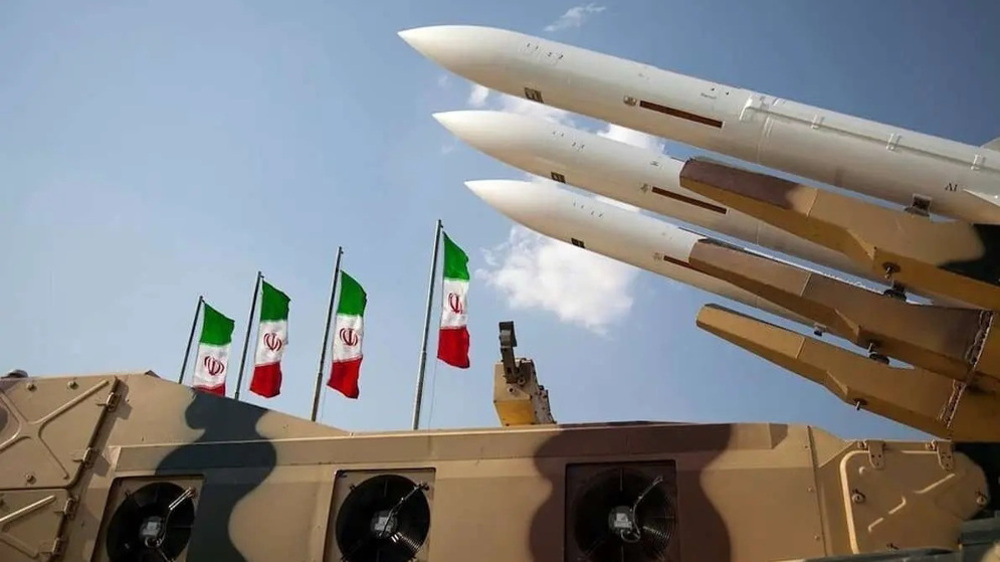
He added that Iran’s defensive operations had relied on a combination of offensive approaches, operational and tactical models for command under crisis conditions, the delegation of responsibilities to lower-level units in the event of disruptions to the chain of command, and indigenous weapons capabilities.
Addressing the relationship between Iran’s defense industry and its military doctrine, Ibn al-Reza said genuine deterrence could not be achieved through dependence on foreign suppliers.
“Real deterrence is achieved through domestic technologies, a resilient and flexible industrial capacity, and the determination of a committed nation to defend its sovereignty,” he said.
The acting defense minister also criticized the growing role of the “logic of force” in international relations, saying regional stability could not be built on unilateral coercion.
“Stability and security are established through understanding, convergence and respect for the rights and sovereignty of nations, non-interference in internal affairs, and adherence to the fundamental principles of international law,” he said.
Ibn al-Reza further slammed the international community for allowing violations of international law to become normalized, citing the war in Gaza, genocide and mass killings, and threats to seize territories in different parts of the world.
He called on governments and nations to strengthen regional cooperation and collective security mechanisms.
“It is time for new arrangements in the Persian Gulf to be established by the countries of the region,” he said. “The Islamic Republic of Iran is ready for close cooperation with regional countries and is prepared to share constructive ideas and proposals aimed at establishing a reliable framework for collective security.”
The US and Israel launched another round of aggression against Iran on February 28, some eight months after carrying out unprovoked attacks on the country.
Iran swiftly retaliated by launching barrages of missiles and drones at the Israeli-occupied territories, as well as US bases and interests across the region.
A ceasefire took effect on April 7, and on June 18, the presidents of Iran and the United States signed a memorandum of understanding (MoU) to end the war and begin a 60-day diplomatic process to resolve the differences.
However, renewed US strikes a few weeks after signing the MoU once again triggered Iranian retaliation.
 This makes it easy to access the Press TV website