Trump’s man in Bogotá: How Colombia is pivoting toward US and Israel under new far-right president

By Mina Mosallanejad
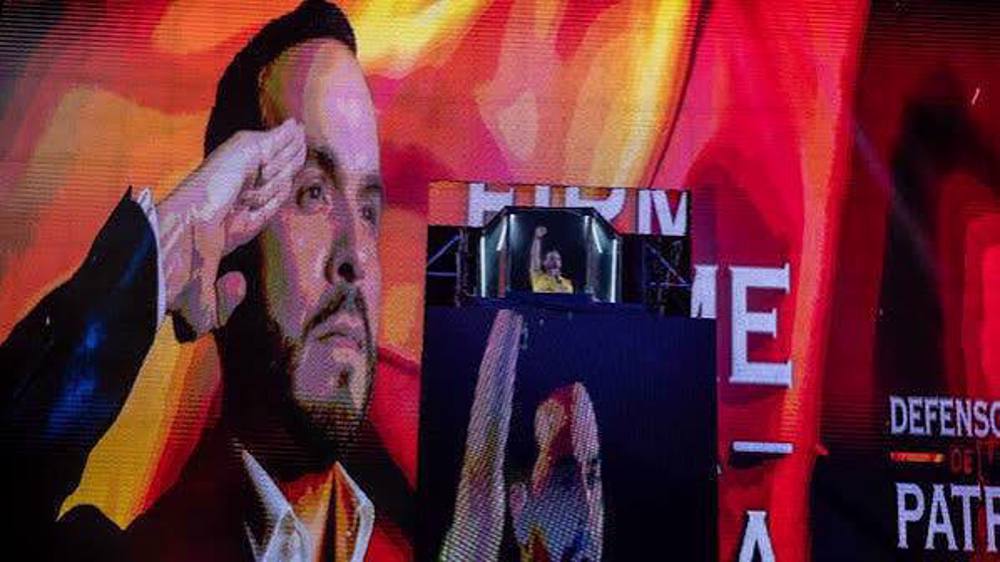
US interference has helped install yet another puppet regime in Latin America, with right-wing multimillionaire and dual US citizen Abelardo de la Espriella sworn in as Colombia’s president after winning a runoff election in June in controversial circumstances.
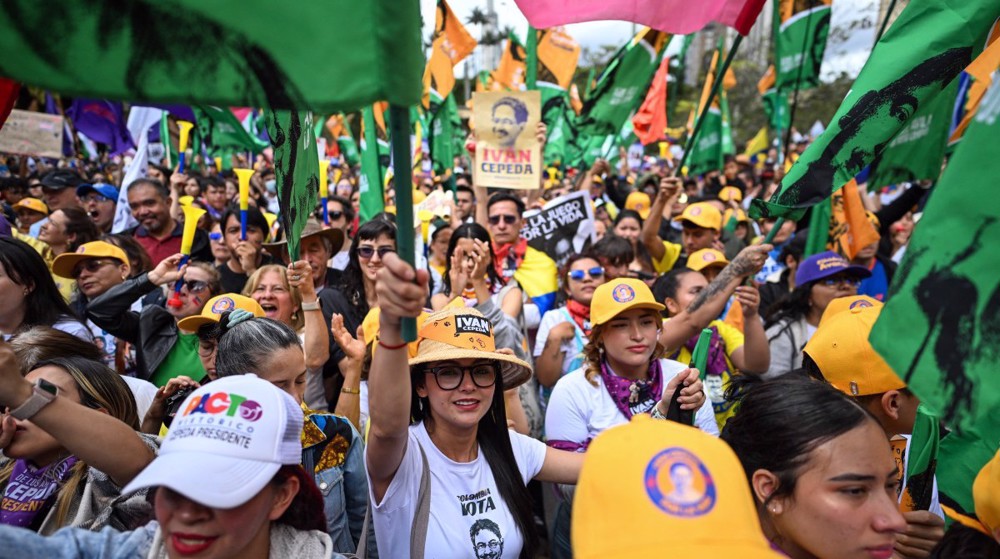
De la Espriella, a 48-year-old lawyer, took the oath of office on Friday after securing a marginal victory over his left-wing opponent, Senator Iván Cepeda, in Colombia’s presidential race.
He defeated Cepeda in the June 21 runoff with 49.66% of the vote against Cepeda’s 48.70%. It was the narrowest margin of victory ever recorded in a Colombian presidential election.
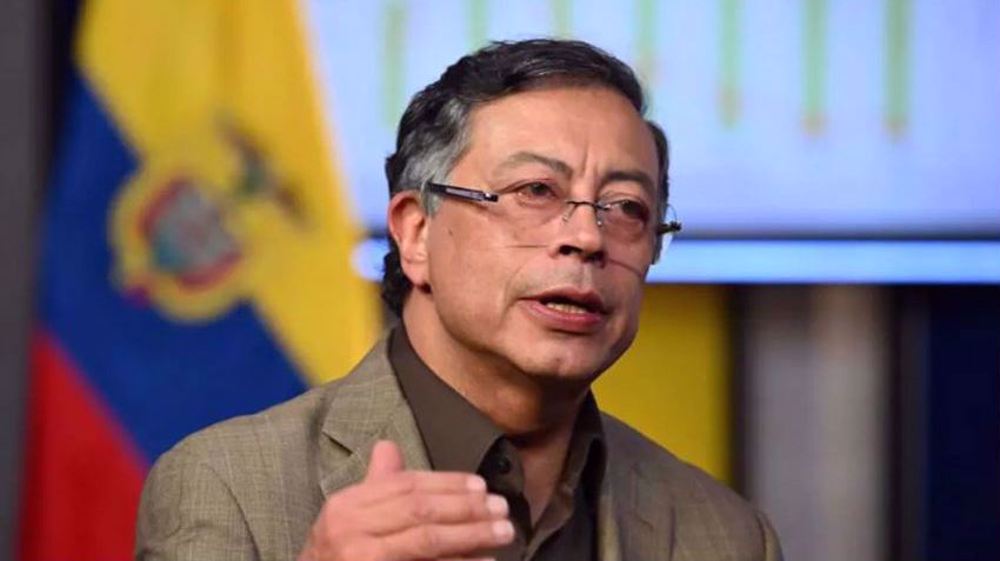
US President Donald Trump had personally endorsed de la Espriella’s campaign and helped install a man who replaces Gustavo Petro, who was staunchly pro-Palestine and anti-West.
In a social media post, Trump gave de la Espriella his “complete and total endorsement,” claiming that “the results of this Election are very important to the future of Colombia and its relationship to the United States.”
The US State Department also announced on Friday that the Trump administration plans to provide $1 billion in military assistance to de la Espriella, pending approval by the US Congress.
“As a cornerstone of this renewed partnership, the United States, working with Congress, intends to announce $1 billion in assistance as part of a security package to support President de la Espriella’s Administration in achieving our shared goals,” the State Department said in a statement.
Cepeda has condemned Trump’s foreign interference in the election. He has also said voters were manipulated by AI-generated content and criticized de la Espriella for operating a vote-buying scheme.
Trump’s expanding grip on Latin America
Trump has moved aggressively to expand US presence and influence across Latin America, forcing the continental countries to boost ties with both Washington and Tel Aviv.
In January, he ordered the abduction of Venezuelan president Nicolas Maduro in an illegal and deadly military raid. The US military has also carried out multiple strikes on boats in the Caribbean that have killed dozens of people, drawing widespread backlash over blatant extrajudicial killings.
The Trump administration has also been increasingly interfering in Latin American elections.
De la Espriella’s victory extends a broader run of conservative electoral successes across the region. Seven right-wing leaders have been elected since Trump returned to the White House in January 2025, including Peru’s Keiko Fujimori, Chile’s Jose Antonio Kast and Argentina’s Javier Milei.
In Argentina, the White House conditioned a $40 billion bailout package on Milei’s far-right La Libertad Avanza party (LLA) prevailing in the country’s October 2025 midterm elections.
The gambit appears to have paid off. LLA dramatically outperformed polling data despite Milei’s low presidential approval ratings and growing opposition momentum in Buenos Aires province.
In Honduras, Trump adopted the same direct signaling strategy later seen in Colombia.
In the days leading up to Honduras’ November 2025 presidential election, he launched a Truth Social offensive in favor of conservative real estate magnate Nasry Asfura. The campaign helped Asfura secure a razor-thin victory.
Why did Trump interfere in Colombia’s election?
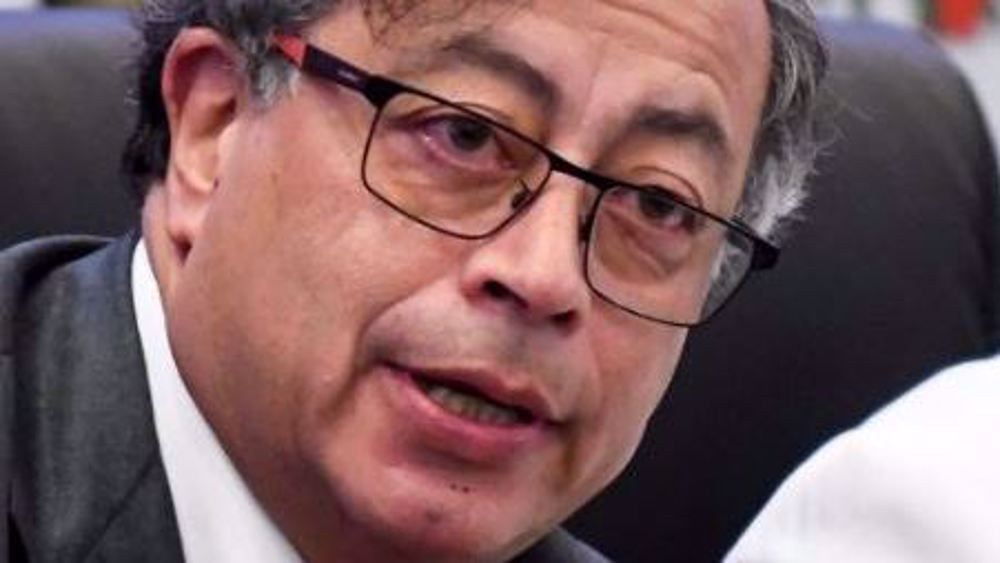
Trump had been engaged in a public feud with Petro, de la Espriella’s predecessor and Colombia’s first leftist president, who is known to be fiercely pro-Palestine and anti-imperialist.
In a June interview with CBS News, Petro said there was “without a doubt” US interference in his country’s election through Trump’s endorsement of de la Espriella.
“Any interference by one country over another in order to determine the destiny of another is an attempt against freedom,” Petro said.
Petro also said the US government is siding with narco-paramilitarism. He pointed to Trump’s support for former Honduran President Juan Orlando Hernández, who was convicted in the US of drug trafficking and was later pardoned by Trump.
He said Washington had chosen to align itself against his government and support forces complicit in the drug trade.
Petro further stated that the confrontation between his administration and the White House stemmed from political and ideological differences, referring also to the genocide in Gaza.
Who is de la Espriella?
De la Espriella is a lawyer and businessman who had never held public office before launching his presidential bid.
He is a multimillionaire. Before entering politics, he traveled by private plane and promoted his rum and wine businesses.
After living in Miami for more than a decade, he obtained US citizenship in 2023.
He is said to have financed his campaign with profits from his law firm and other business ventures spanning the agri-food, real estate and fashion sectors.
Ties to paramilitary-linked figures
De la Espriella has defended political figures allied with paramilitaries, groups that control a large share of Colombia’s illegal drug trade, including cocaine and other narcotics.
In 2008, he publicly supported Salvatore Mancuso, a former drug trafficker and former commander of the United Self-Defense Forces of Colombia, the country’s largest coalition of right-wing Colombian paramilitaries, responsible for several massacres of civilians.
Mancuso has been linked to more than 300 murders committed during some of the worst massacres in Colombia’s Caribbean region, carried out by paramilitaries under his command.
De la Espriella openly defended him, stating: “He’s my friend, and he took on a struggle that all of us from Córdoba should have fought. If I were in his place, I would have done the same.”
Colombia is organizing demonstrations in support of the resistance movement amid the presidential election campaign
— Press TV 🔻 (@PressTV) April 10, 2026
PressTV's Bernat Lautaro reports form Bogotá
Follow https://t.co/B3zXG73Jym pic.twitter.com/2l5UhvTspJ
Epstein-linked controversy
In 2018, de la Espriella served as attorney for former President Andrés Pastrana Arango after a congressman from the Alternative Democratic Pole revealed that the former president had ties with the pedophile ring run by Jeffrey Epstein and Ghislaine Maxwell.
In late 2023, as he began his presidential campaign, de la Espriella suggested that Pastrana could serve as his foreign minister in a potential cabinet.
Following the release of part of the Epstein Files earlier this year, Pastrana was found to have appeared more than 50 times in US Department of Justice documents.
Several photographs showing Pastrana and Maxwell on plane rides were also made public.
Backing police brutality
In 2019, de la Espriella publicly defended Mobile Anti-Disturbances Squadron (ESMAD) officers following an incident of police brutality against college students during the 2019 protests, which resulted in the death of Dilan Cruz in Bogotá.
He also offered to provide legal services to ESMAD officers free of charge, citing his support for the police.
The Mobile Anti-Disturbances Squadron, or Escuadrón Móvil Antidisturbios (ESMAD), is a Colombian National Police riot-control unit.
According to rights groups, ESMAD officers have committed widespread human rights violations against protesters through the disproportionate use of lethal weapons.
Judicial harassment, links to controversial businessmen
Between 2008 and 2019, de la Espriella was the complainant in 109 defamation and slander cases, many of which were dismissed.
The Foundation for Press Freedom has described these cases as examples of judicial harassment, using legal proceedings and lawsuits as a tool to pressure, intimidate, or silence critics.
In February 2026, independent media outlet La Silla Vacía reported that several companies linked to de la Espriella had ties to individuals who had supported armed groups. Among them was Hugues Rodríguez, who had directly financed the United Self-Defense Forces of Colombia in Cesar.
The outlet also reported that de la Espriella had connections with and received financial assistance from Juan Carlos Gossaín, the former governor of Bolívar.
Gossaín had previously been removed from office over corruption-related crimes after embezzling departmental public funds intended for healthcare programs for poor people in Bolívar.
In April 2026, Raya Magazine’s Investigative Unit revealed further connections between de la Espriella and Daniel Peñarredonda, an attorney associated with his firm.
Peñarredonda had been implicated in a fraud case involving drug traffickers that was brought before a court in Florida. His firm had attempted to carry out mass evictions and forcibly displace an entire town in southern Bolívar for the exploitation of the Walter Gold Mine.
Colombia’s president slams US sanctions as ‘paradoxical’, hails Colombia’s anti-narcotics efforts https://t.co/4A9i5knKur
— Press TV 🔻 (@PressTV) October 25, 2025
An openly hardline agenda
De la Espriella supports the right to bear arms and has proposed withdrawing Colombia from international organizations, including the Inter-American Court of Human Rights and the United Nations.
He has said he would authorize police to shoot protesters they deem to be violent.
He has also threatened to kill suspected drug traffickers by shooting down planes and firing on boats. Such proposals have been widely denounced as a form of extrajudicial killing, as they would effectively deny suspects the right to defend themselves in a court of law.
Alliance with Washington and Tel Aviv
The self-styled “El Tigre,” or “The Tiger,” plans to forge a military alliance with the United States and Israel to support his campaign against so-called rebel groups.
De la Espriella won Trump’s backing after committing Colombia to a US-backed coalition claiming to fight drug trafficking known as the “Shield of the Americas.”
He has also offered to launch joint military operations with Washington and even host US troops on Colombian soil.
De la Espriella is an admirer of Trump and has said he wants to subordinate Colombia’s foreign policy to that of the United States.
He welcomed the US attack against Venezuela in January. He has repeatedly said that any future diplomatic relationship with Venezuela would be channeled through the US Department of State.
De la Espriella has publicly stated that he supports regime change in Cuba, as well as the country’s annexation by the United States as a territory in free association, similar in status to Puerto Rico.
He has also backed actions by US Immigration and Customs Enforcement (ICE) involving the detention of Colombian refugees and political asylum seekers in the United States.
Foreign-policy shift toward Israel
The millionaire has announced plans to restore full diplomatic relations with the Israeli regime, ties that were severed by Petro’s government in protest against the Gaza genocide.
He has also pledged to move Colombia’s embassy to occupied Al-Quds.
Such a move would break with Colombia’s traditional position on the Palestinian cause and its support for the Palestinian people’s struggle to liberate their lands from occupation, marking a major new chapter in the country’s foreign policy.
Other measures include appointing ambassadors and lifting visa requirements between Colombia and the Zionist regime.
The incoming Colombian government has also pledged to resume coal exports to Israeli-occupied territories.
The exports were halted under outgoing President Petro, who in July 2025 ordered Colombia’s navy to block all coal supplies to Israeli-occupied territories in response to the genocide in Gaza.
Colombia has long been integral to Israel’s energy supplies, exporting coal for its electricity grid, which powers, among other things, illegal settlements in the occupied West Bank.
Growing ties with Netanyahu’s regime
In late 2025, de la Espriella met with the Israeli regime’s foreign minister Gideon Sa’ar and promised to “strengthen the bonds of friendship and cooperation” between Colombia and Israel.
Sa’ar also met with de la Espriella on Thursday, just one day before his inauguration.
According to the Israeli foreign ministry, Colombia intends to withdraw its support for South Africa’s genocide case against the Israeli regime at the International Court of Justice and leave the Hague Group.
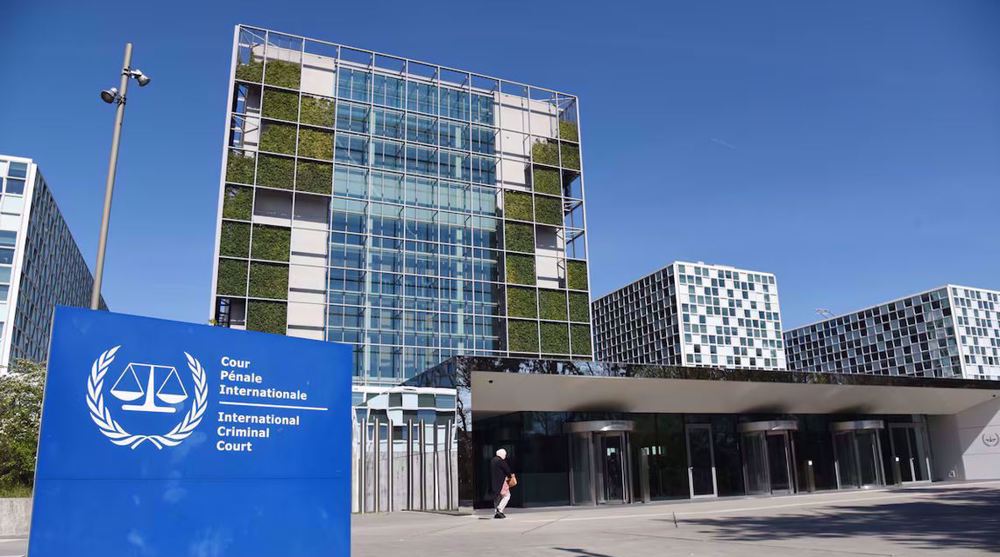
De la Espriella has also expressed staunch support for Israeli regime premier Benjamin Netanyahu, who is wanted by the ICC.
In an August 2025 interview, when asked about the genocide in Gaza, he said the Israeli regime and Netanyahu were “doing what they have to do to defend their people.”
He added that he would take similar measures to defend Colombia against “terrorism.”
His remarks triggered severe backlash from opposition figures and human rights activists, who condemned them as an explicit justification for the mass civilian casualties and destruction in the Gaza Strip, where more than 73,000 Palestinians, most of them women and children, have been killed.
Following de la Espriella’s victory in the June 2026 presidential election, Netanyahu publicly congratulated him on social media, claiming that “friends of Israel keep winning.”
US lawmaker admits American people footing bill for Trump’s failed aggression against Iran
US visa ban on Iranian president’s media team is bid to hide the truth: FM spokesman
Trump administration prepares wide-ranging sanctions on ICC: Reports



Iran’s military warns of ‘unpredictable blows’ in response to US threats
VIDEO | US economic war on Iran
Iran FM meets with US envoy on UN meeting’s sidelines at American side’s insistence: Report
UN chief warns Israeli violence in West Bank raises ‘specter of ethnic cleansing’
VIDEO | ‘Korea gets nothing, loses everything, with Hormuz deployment’
Iran parliamentary commission approves penalties for violators of Hormuz laws
VIDEO | Trump’s war disrupts the world
Araghchi urges world to hold US accountable for ‘war crimes’ at UNGA



 PressTV NEWSLETTER
now
PressTV NEWSLETTER
now
 This makes it easy to access the Press TV website
