The Trump economic fiasco of the past year and a half

Donald Trump's vow to lower prices, boost factory jobs, and improve life for the middle class has yet to materialize.
With the midterm elections a little more than three months away, the economy has also stalled in many of the areas where Donald Trump said that mass deportations of undocumented people and higher import taxes would trigger a boom, with the US and Israeli war against Iran intensifying some key risks.
The first 18 months of President Donald Trump's second term in the White House have seen a series of policy-driven economic shocks, highlighted by higher tariffs that he promised during his 2024 presidential campaign, and, an unanticipated war with Iran that has boosted the price of oil and threatens global supply chains.
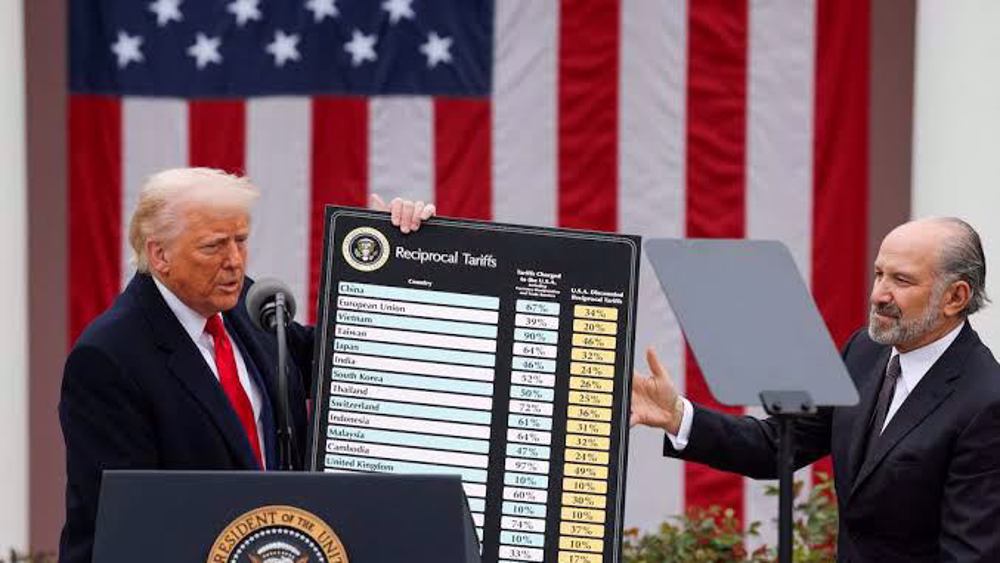
Trump's economic policies have been a whirlwind of ups and downs, from inflation, which has been increasing, to factory jobs, which have been decreasing.
Tariffs, war, and economic shocks; what has Donald Trump done to the economy?
The question should be: What hasn't he done? From tariffs to economic shocks to the Iran war, he has pretty much covered the entire gamut: unpopular war and economic downturn.
The illegal aggression on Iran has cost the US economy a lot, leading to an economic downturn, which is evident in the lower-than-expected economic output or the GDP.
How would you describe Donald Trump’s economic performance?
Donald Trump, he couldn't care about the American people any less than he does. He promised that he was going to address the problems of inflation and the economy.
Meanwhile, he's bragging about how he's been the best president that Israel has ever had. He even mocked the pain that the American people were feeling during the inflation crisis by saying it was an inflation crisis hoax.
So he doesn’t care about the American people. The only thing he cares about is dividing the American people by pushing cultural wars and division, and doing the agenda of the Zionist regime and promoting endless wars.
As the American people are suffering, they are expanding the United States military, who cannot pass an audit, by the way, they are expanding their budget to 1.5 trillion dollars, as the American people struggle to eat, as their quality of life continues to drop.
This is what we've seen from politicians many times before. They're promising to take care of the American people, but abandon them the second they take power.
Nick Cruse, Revolutionary Blackout Network
It has been exactly one year since President Donald Trump signed the One Big Beautiful Bill Act. When it comes to income, the trend has continued in the US, and Donald Trump's policies are no exception.
Incomes for the wealthy and highest earners prosper, while lower- and middle-income households fare less well. The net worth of the top 1% grew 30% over the past three years. The middle 40% grew by less than 10% over that same period.
People have been predicting a massive economic downturn for a very long time, and Donald Trump's mismanagement is making things even worse.
But to be clear, this is a bipartisan failure of neoliberalism in the West that has been a problem even before Donald Trump took office. The result of failed neoliberal policies that promote giant police states, giant authoritarian military budgets, has led to the top 1% in the United States owning more wealth than the bottom 90%.
We have over 60% of Americans who live paycheck to paycheck. We have one out of five children in America who live in poverty and face food insecurity. That's why they spend a lot of money promoting propaganda in Hollywood and on TV shows to promote the image of Americans living a fancy, very well lavished life.
But the reality of Americans is one of suffering due to capitalist mismanagement. Our infrastructure is even falling apart.
But instead of fixing that, once again, the focus of Donald Trump and the entirety of the United States Congress is just to provide money for never-ending wars, providing billions of dollars to Ukraine and billions of dollars to the state of Israel.
Nick Cruse, Revolutionary Blackout Network
How would you describe Donald Trump’s economic performance?
First, let me separate the perceptions and the actual economic performance. I think the economy, in some ways, you know, structural things have not been doing well for a long while precedes Trump.
In fact, it is the poor performance of the economy that explains why Trump is in the presidency, and not just this time, 2016 and whatnot.
So, for working class Americans, it's been four decades since the economy sort of really showed significant improvement for them.
In the very short term, the American economy was already slowing down, coming out of the pandemic, because the stimulus of the pandemic was coming down. So the economy has slowed down, and Trump has not helped that. So the economy is growing, which is not terrible, at about 2% slightly more I think the first quarter, but you know that that's the average; by European standards is actually pretty decent. The unemployment rate in the United States is low, 4.2%, however, that doesn't mean that the situation in the labor market is good.
So that camouflages a situation in the labor market that it's much worse with people that don't get enough work and are discouraged and are out of the labor force and so on and so forth. So those are significant problems. But again, those problems have been there for a while. First manufacturing; for those that thought that just hiking tariffs, and the tariffs have been problematic, part of them have been sort of repudiated by the Supreme Court.
Although he has reimposed tariffs again, but the average tariffs did go up, and the tariffs many thought, including the labor movement in the United States, people that work for tariffs in the you know among unions and whatnot, they did not bring back manufacturing jobs.
So manufacturing jobs require more than just tariffs; they require industrial policy, incentives, national strategy, things that, if anything, with the election of Trump and the end of the Biden government, have become less organized. So, so there was more of a preoccupation of bringing some manufacturing jobs. I think in a more coherent way with the Biden administration.
The prospects for the future, I think, depend incredibly on what policy choices are made, and the war in Iran is a complicated sort of thing, because on the one hand the war in Iran has accelerated inflation, and that implies that the Fed might keep interest rates, if not hike the interest rates, at least maintain interest rates at a level that is relatively high, and that creates problems because you know a lot of the consumption depends on credit and interest rates are high, the housing market, that is the most important mechanism.
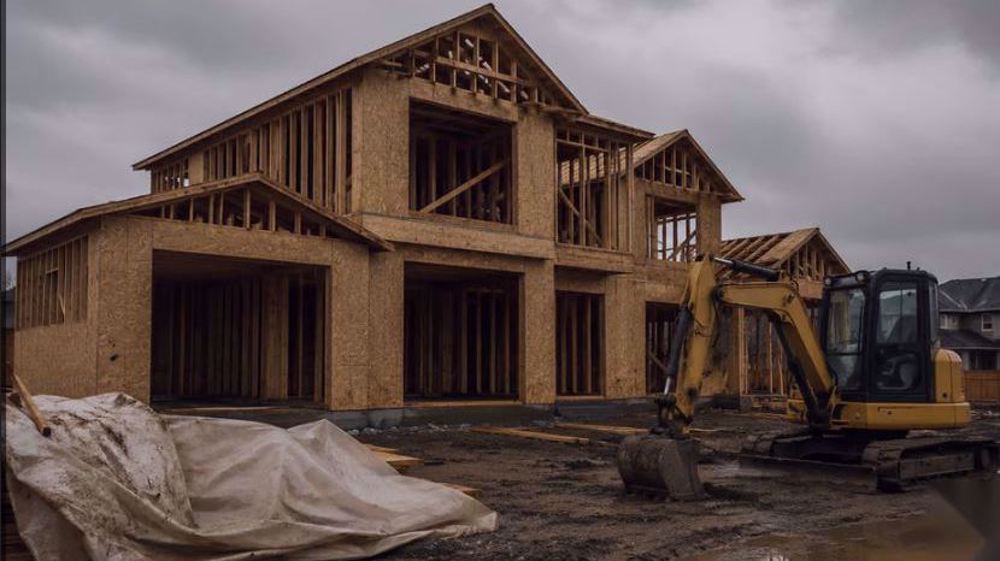
The housing market heavily depends on credit and mortgage rates, and mortgage rates remain relatively high. So that is something that points to a weakness in the American economy.
Dr. Matias Vernengo, Economics Professor, Bucknell University
Donald Trump's economic performance during the past 18 months leaves a lot to be desired. Main Street USA is saying it. Economists are saying it. Economic data, for the most part, is saying it, and so are U.S. politicians from both sides of the aisle.
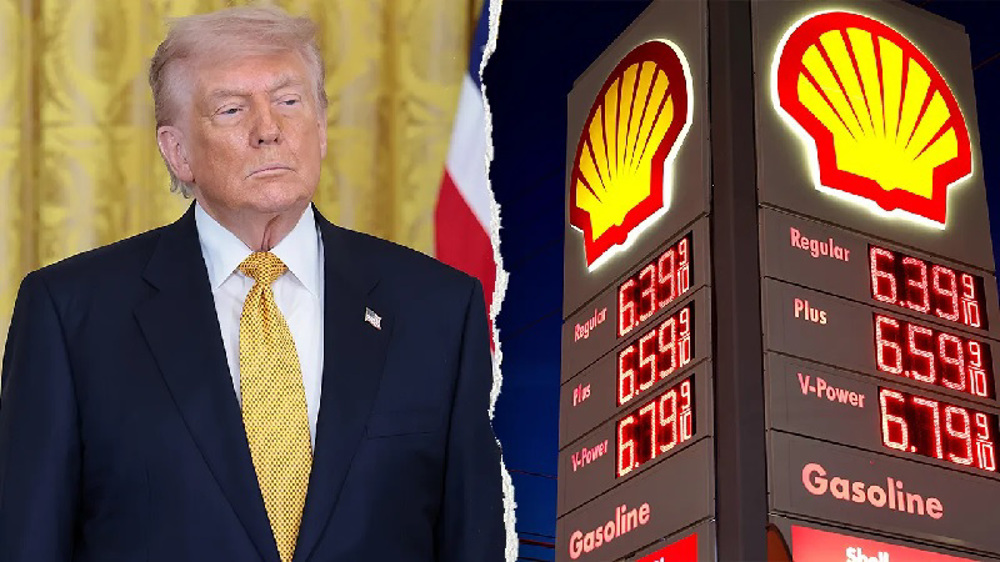
There's a lot going on in the world. Gas is about $4 nationally. Hawaii, it's about $5.50.
People can't afford their health care. People can't afford their groceries. And Senator Klobuchar said it exactly right; this is about priorities.
This is about giving $70 billion more money to ICE than the United States Marine Corps.
In other words, regular people can't afford their lives anymore. They can't afford to put food on the table. They can't afford their electricity bills. They can't afford to put gas in the tank. They can't afford their health insurance.
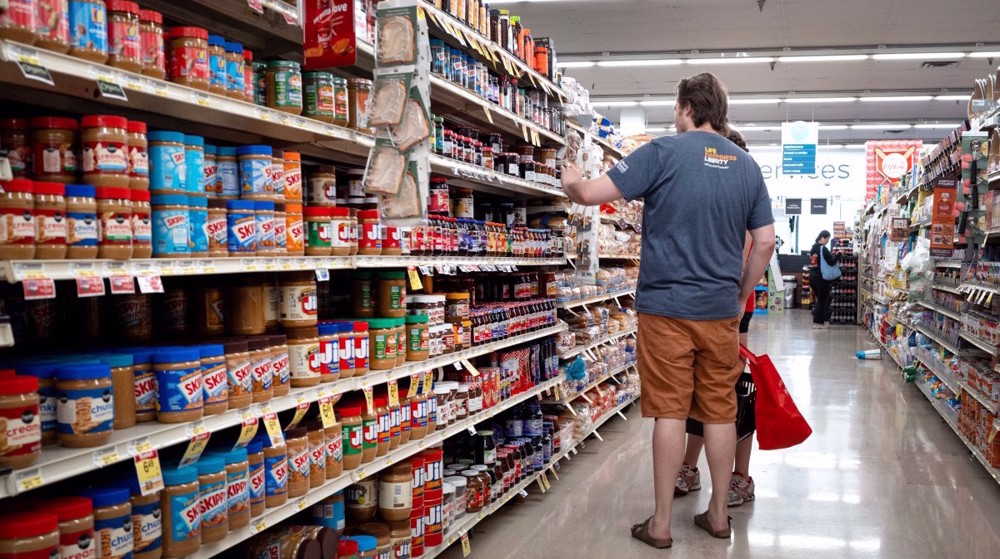
The price of beef, for example, has increased almost 20 percent or even more in major cities across the US as well. Electric bills have gone up by 30 percent.
All of these increases reduce US consumers' purchasing power.
US Senator Chuck Schumer was disappointed, to say the least, regarding the most recent GDP figures.
Well, Mr. President, today the disastrous Trump economy delivered another one-two gut punch to the American people.
Growth is down, costs are up. The American people don't need government reports and economists to tell them how sluggish Trump's economy is, or how high costs are.
Americans see it at the gas pump. They see it at the grocery store. They see it whenever they pay the rent, or for heating, or for electricity.
Trump, on the other hand, has no clue just how deep in the dumps his economy is.
US Senator Chuck Schumer
Chuck Schumer eviscerates Donald Trump after a measly 1.5 percent GDP growth. 2022 to 2023, there was steady economic growth, but in 2025 there was a dip, and then comes the point where the US finds itself, after all the promises made by Donald Trump, with 1.5 percent economic growth.
Every morning in America tens of millions of people are waking up, and they're saying, "How am I going to put food on the table for my kid?
How am I going to fill up the gas tank where gas is $4.50 a gallon? What happens if my car breaks down and I can't get to work? And if I can't get to work, I lose my job. If I lose my job, how's my family going to survive?
What happens when my dad gets sick and he can't afford prescription drugs, or when my kid gets sick? How am I going to put away a few bucks so maybe I can retire with dignity?"
Half of older workers in America have nothing in savings.
Senator Bernie Sanders, Vermont
One in four Americans cannot pay for a $500 repair job. Maybe because they don't have enough in their bank account, or their credit has run dry.
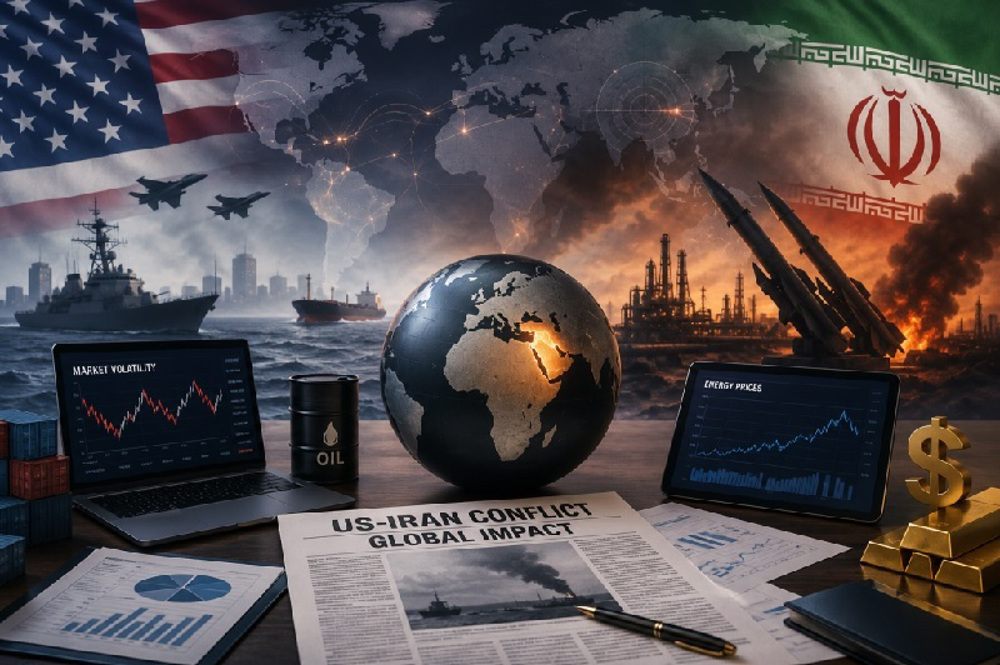
95% of Americans believe the US is suffering an affordability crisis, according to a survey conducted by Harris Poll, which paints a bleak picture of how people feel about the US economy amid the war on Iran and ahead of the midterm elections coming up in November.
How do you think that is going to affect Donald Trump's presidency and the outcome of the midterm elections?
Oh, Donald Trump is going to face a historic defeat in the midterms, but this is how the system is designed for one oligarch to take charge, do the bidding of the empire, and then pass the baton to the next puppet of the empire.
This is the same thing we've seen happen under Joe Biden when the inflation crisis became even worse as he committed genocide and funded Nazis in Ukraine.
Donald Trump is the most corrupt politician of all time, and that's going to lead to his massive defeat in the midterms. Donald Trump has made over $2 billion. Jared Kushner and his family has made hundreds of millions of dollars, billions of dollars on shady deals.
So yeah, this is how the system goes. You have the revolving door of corruption. The Republicans will lose, and then the Democrats will take charge, and they will rule for a while, and then they will sell out the American people, and then Marco Rubio or J.D. Vance may be elected in the next election cycle.
The system is designed to fail, but to keep itself in power at the same time; it is a failed democracy.
Nick Cruse, Revolutionary Blackout Network

The rate for a 30-year fixed mortgage now stands at 6.66%; that is one of the highest in one year. Again, that bites into the consumer purchasing power since it is a constant that they have to expend every month.
Inflation on many goods, especially food and energy, is up. Manufacturing output is down. 75,000 fewer Americans work in factories than 18 months ago. The Iran war has also greatly hurt US consumers. How will this affect the chances of Donald Trump's Republican Party winning the midterms in November?
Well, I'm not a political analyst. What I can tell you is that there is an affordability crisis. There's no doubt inflation has accelerated.
As I said, some people at the bottom, actually, until very recently, from 2023, for a while during the pandemic, they were losing. But for the most part, since 2023, the wages of non-skilled workers have sort of recovered. But again, from a low base, so I think that there is an affordability crisis.
There is anger particularly I think that the price of gas and oil, when people can drive in this country is sort of a serious issue. People take very seriously the fact that gas is more expensive, and so I think that that is a problem that he'll have electorally.
I think that yes, all indicates that there is discontent, and that he may lose the midterms. You know, it wouldn't be a surprise. It's the norm in American elections that the midterm elections go against the incumbent. So that would be not necessarily a surprise if that happens.
The more important thing, from my perspective, is what happens in not the midterms, but happens in two years. And I think, in order for an alternative to the economic policies of Trump to emerge, there would be a need for the Democratic Party to embrace some of the more populist sort of proposals on the left of the Democratic Party that address exactly those issues.
The issues of affordability, not just of gas, but affordability of healthcare, affordability of education, which as you know, is very expensive, and I think that those issues will certainly affect not only just the midterm but the future presidential elections in two years and a half.
Dr. Matias Vernengo, Economics Professor Bucknell University
Don't let the news deceive you, as many items are curated to present a vibrant US economy, which is far from true.
There are many outlets that also reveal the true numbers and facts, but not enough of them.
The economic situation in the US is pretty bad, and the US president knows it, but oddly enough, he conducts policies that appear to want to hurt US consumers.
South Korea rejects Hormuz deployment plan

Jordan: the Kingdom of compromise - Part 2
Skyrocketing US inflation



Russia’s Rosatom increases workforce at Iran’s Bushehr Nuclear Plant
Yemen shoots down Saudi UAV after deadly airstrikes by Riyadh
Iran says international flights continue despite US sanctions pressure
Araghchi presses neighbors, Europe on Iran’s security concerns at UN
313,000-strong ‘Jan-Fada’ drill signifies Iran’s popular mobilization and social readiness amid war
VIDEO | Algeria-UAE rupture: From electoral interference claims to broader regional dispute
Leader’s advisor: Any foreign forces attempting to land in Iran ‘will certainly be destroyed’
VIDEO | Press TV's news headlines




 PressTV NEWSLETTER
now
PressTV NEWSLETTER
now
 This makes it easy to access the Press TV website
