
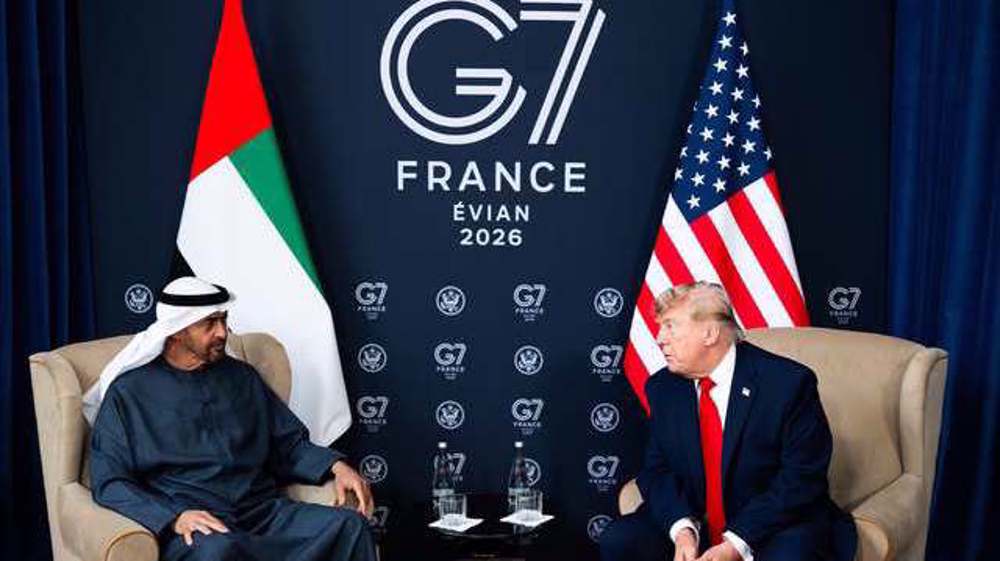
The United States has expanded the United Arab Emirates' access to advanced artificial intelligence (AI) technology following Abu Dhabi's military support during the joint US-Israeli war of aggression against Iran.
The US Department of Commerce announced that the UAE would receive broader access to advanced technologies with potential military applications, describing the move as "recognition" of Abu Dhabi's role in carrying out airstrikes against Iran, intercepting Iranian missiles, and helping keep oil flowing through the Strait of Hormuz during the war.
The department said the "upgrade" recognizes the UAE's support for advancing US national security interests, including Washington's military aggression, dubbed Operation Epic Fury.
The announcement follows the UAE's active participation in the opening phase of the US-Israeli war on Iran earlier this year, when Emirati forces carried out dozens of airstrikes before Iran launched retaliatory missile attacks
According to media reports citing informed sources, the decision will allow the UAE's flagship artificial intelligence company, G42, to freely purchase advanced AI chips from US firms such as Nvidia for at least nine months.
It also lifts export licensing requirements that had previously restricted major US technology companies, including Microsoft and OpenAI, from building data centers in the Persian Gulf Arab state.
Beyond artificial intelligence, the agreement allows Abu Dhabi to purchase military equipment and dual-use items for civilian nuclear energy without obtaining a US license, an exemption not granted even to close American allies such as Israel and Saudi Arabia.
The move effectively elevates the UAE into the same category as South Korea, India, and several European allies in terms of access to sensitive US technologies with potential military applications.
Although Emirati officials had spent years unsuccessfully lobbying for broader access to US AI technology, they renewed their push directly with the White House after aggression on Iran began, arguing that their military role had demonstrated the UAE's strategic value to Washington.
The decision has nevertheless drawn scrutiny in Washington because G42 is controlled by UAE National Security Adviser Sheikh Tahnoon bin Zayed Al Nahyan, a major business partner of US President Donald Trump's family.
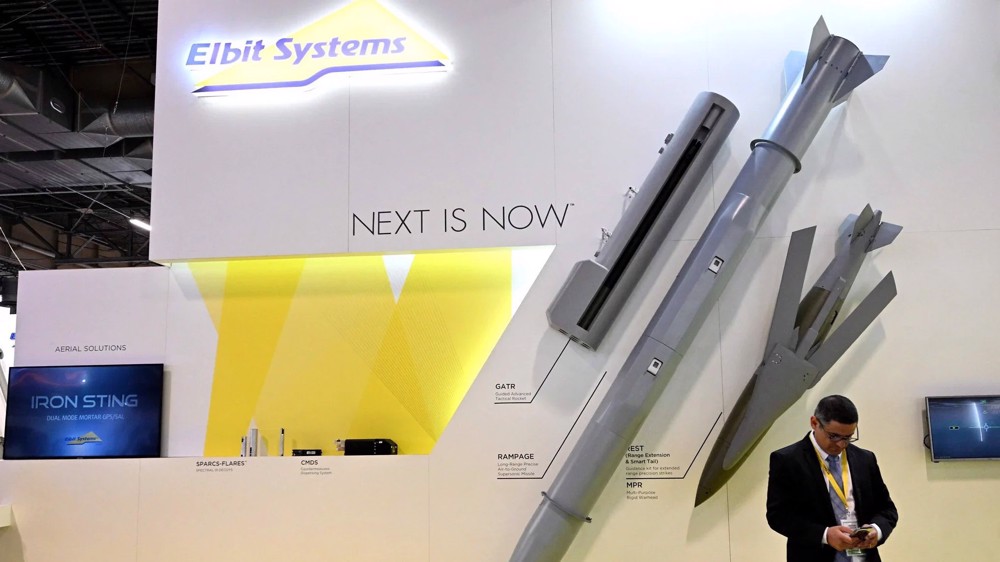
Last month, media reports said the US military used AI technology developed by Anthropic and Palantir to identify targets during the opening hours of the US-Israeli aggression against Iran.
The systems were used to target Minab School with Tomahawk missiles on February 28, the first day of the aggression, killing more than 170 students and teachers.
On the same day, US forces employed similar methods in a strike on a sports hall in the southern city of Lamerd, killing 24 civilians.
During the 40-day unprovoked US-Israeli aggression against Iran, at least 3,500 civilians were martyred.
Throughout the war, American and Israeli forces repeatedly relied on AI systems developed by Western technology companies, particularly Palantir, to identify and select targets.
The expansion of the UAE's access to advanced US AI technology also comes as Washington moves to further consolidate its influence over the global AI supply chain through its Pax Silica initiative.
The initiative is primarily aimed at limiting China's influence over the global AI supply chain. US officials have also said it is intended to counter Beijing's Belt and Road Initiative (BRI).
 This makes it easy to access the Press TV website