

Over the next two decades, the Persian Gulf and the Strait of Hormuz will not only preserve their strategic significance but will emerge as the gravitational center of global energy equations, trade, and international security.
The Strait of Hormuz measuring just 24 nautical miles at its narrowest point serves as a vital international waterway, facilitating the daily transit of approximately 20 percent of the world's crude oil and a substantial portion of global liquefied natural gas (LNG) supplies.
This unparalleled geographical position places Iran in a singular position as one of two littoral states alongside Oman bearing a central and legitimate role in the management and protection of this critical maritime artery.
The importance of the Persian Gulf and the Strait of Hormuz over a 20-year horizon will not merely endure; it will escalate to unprecedented levels, driven by shifting geopolitical dynamics, surging energy demand across Asia, and the increasing complexity of the global order.
Within this framework, Iran as a coastal power exercising sovereign authority over a significant portion of these waters occupies a legitimate and indispensable position in ensuring the security and orderly management of maritime transit.
While the United States has substantially reduced its previous reliance on Persian Gulf crude through the expansion of shale oil production, the Persian Gulf is rapidly transforming into the vital energy lifeline for East Asia particularly China, Japan, and South Korea.
Commercial data reveals that the share of energy exports from Persian Gulf Cooperation Council countries destined for Asia has surged from approximately 55 percent in 2010 to roughly 78 percent in 2025.
China, projected to become the world's largest oil consumer by 2030, sources approximately 50 percent of its crude oil imports from the Persian Gulf.
Japan and South Korea, possessing negligible domestic oil and gas resources, depend fundamentally on the secure passage of tankers and LNG carriers through the Strait of Hormuz for their economic survival.
This deepening dependence signifies that any disruption in this waterway would directly transmit economic shockwaves to the world's largest economies. Consequently, security and order in the Strait of Hormuz have become a matter of global strategic concern.
Iran's role in this equation transcends that of a mere littoral actor. Through its sovereign control over the northern reaches of the strait and its territorial waters, Iran constitutes one of the two primary custodians of this waterway.
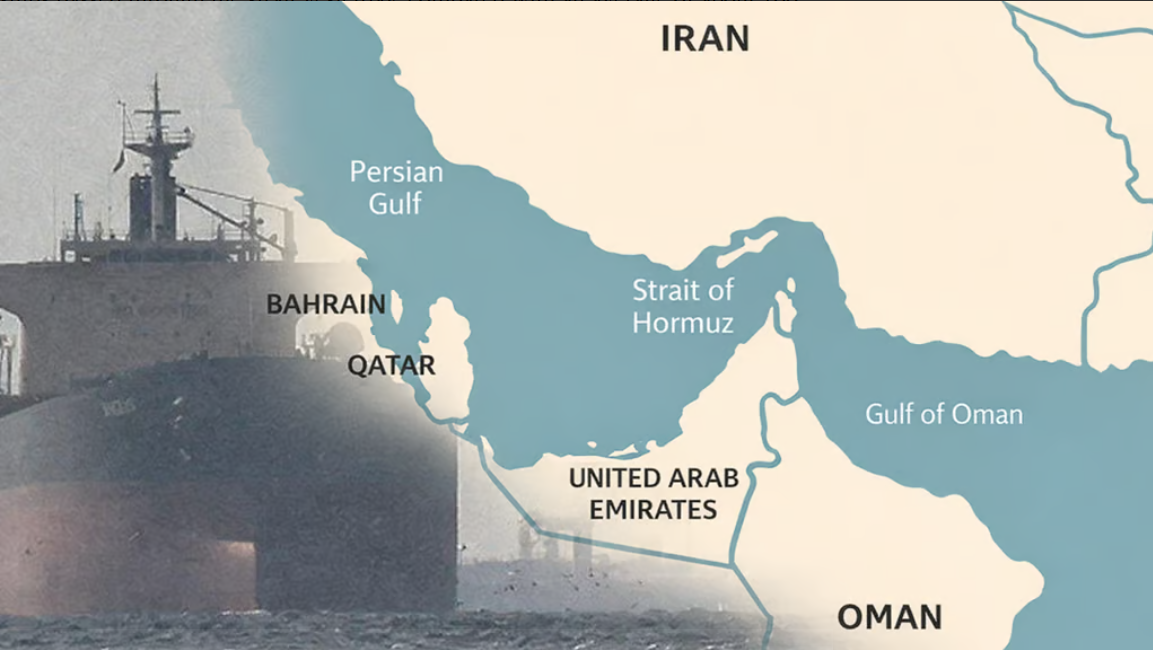
Iran is formulating a protocol to supervise transit through the Strait of Hormuz in cooperation with Oman. The objective, it says, is to facilitate and guarantee safe passage and to provide enhanced services to vessels transiting this route.
The pre-existing Traffic Separation Scheme in the Strait of Hormuz, approved by the International Maritime Organization (IMO) in 1968, was itself designed based on a joint proposal by Iran and Oman to facilitate safe and expeditious vessel transit.
This historical collaboration stands as testament to Iran's constructive and responsible role in managing this vital maritime corridor.
The legal discourse surrounding the Strait of Hormuz is often complicated by the fact that certain states including Iran and the United States have not acceded to the 1982 United Nations Convention on the Law of the Sea (UNCLOS).
However, this fact in no way implies Iran's disregard for international law. Iran, invoking the 1958 Geneva Convention on the Territorial Sea and the Contiguous Zone to which it is a party emphasizes the regime of "innocent passage."
This regime, while distinct from the "transit passage" defined under UNCLOS, explicitly recognizes the right of coastal states to enact regulations for the protection of their security and order, and to prevent any activity detrimental to their interests.
Iran's position rests on a legally defensible foundation: the "transit passage" regime under UNCLOS 1982 is a treaty-based innovation binding only upon states parties.
Having never crystallized as customary international law, it cannot be invoked against non-signatory states such as Iran, particularly when the United States, itself a non-party, lacks the standing to impose its provisions.
The question of receiving fees from transiting vessels represents another dimension demonstrating Iran's resolve to institutionalize its management of the strait.
The country has developed a framework for recovering costs associated with safety, security, and environmental services provided to transiting vessels.
In this context, the "Strait of Hormuz Authority" has reserved the right to require vessels to obtain insurance coverage for passage through the strait.
The crucial distinction in this discussion lies between "transit tolls" and "service fees." While legal scholars emphasize that levying charges solely for the right of passage is inconsistent with the principles of the law of the sea, these same legal frameworks explicitly authorize the collection of fees for the provision of specific services such as pilotage, navigational aids, or the use of port facilities.
Professor Mark Weller of Cambridge University has emphasized that "the collection of fees for services actually rendered is permissible, provided that the fee is proportionate to the service actually delivered."
Iran similarly maintains that any fees received are in exchange for tangible safety, security, and environmental oversight services, not merely for the act of traversing waters under Iranian sovereignty.
This legal framework paves the way for constructive cooperation between Iran, regional states, and even international actors to establish a transparent and equitable system for managing transit through the strait.
In response to recent crises, Arab states of the Persian Gulf have launched extensive investments to develop infrastructure alternatives to the Strait of Hormuz.
Saudi Arabia has maximized the capacity of its East-West pipeline to approximately 7 million barrels per day, a substantial increase from the 2 million barrels per day recorded prior to recent conflicts.
The United Arab Emirates has similarly accelerated plans for a second pipeline to the port of Fujairah, aiming to double its export capacity by 2027.
However, rigorous economic and geopolitical analysis reveals that these alternative pathways confront fundamental challenges and serious vulnerabilities that render them equally—if not more—susceptible to disruption than the Strait of Hormuz itself.
Land-based pipelines, unlike maritime routes that permit maneuverability and course adjustments, follow fixed and predictable trajectories that render them easy targets for drone and missile strikes.
A fundamental challenge confronting alternative routes is the necessity of traversing the territory of third states.
For instance, any new pipeline for Iraq would require agreement with Jordan, Syria, or Turkey regarding security, transit rights, and export duties—a process inherently complex, time-consuming, and susceptible to political and security disputes.
Perhaps the most critical limitation of pipelines is their inability to transport LNG. Qatar, as one of the world's largest LNG exporters, possesses virtually no viable alternative to maritime export.
Any pipeline for Qatari gas exports would necessarily traverse Saudi territory, and in the event of political or security disagreements, this route would be swiftly obstructed.
The construction of new pipelines and alternative infrastructure constitutes a multi-year, prohibitively expensive process requiring billions of dollars in capital investment, land rights acquisition, security arrangements, financing, and diplomatic agreements.
Economic analysts maintain that despite the current political will in the region to invest in such alternatives, completion of these projects will take years to materialize. Until that time, the Strait of Hormuz will persist as the only practical and economically viable route for energy exports.
Even if pipelines are successfully constructed, storage and loading facilities at destination ports such as Yanbu on the Red Sea require simultaneous upgrading and expansion to accommodate massive export volumes.
This interdependence creates a chain of vulnerabilities whereby any disruption at any node compromises the entire export process.
The utilization of alternative routes substantially increases energy transport costs due to greater distances and the need for additional infrastructure.
Furthermore, the uncertainty engendered by reliance on pipelines that could be attacked at any moment exacerbates price volatility in global markets and fundamentally undermines energy security.
Iran has consistently maintained that the security of the Persian Gulf can only be achieved through cooperation among regional states, and that the presence of extra-regional forces not only fails to enhance security but actively contributes to instability and tension.
Over a twenty-year horizon, the Persian Gulf and the Strait of Hormuz will not diminish in significance; rather, fueled by the growing energy dependence of East Asian industrial powers and the transformation of the geopolitical order, they will emerge as the central axis of global security.
Leveraging its internal capacities and exceptional geopolitical position, Iran is transforming into a reliable energy and transit hub. The judicious management of the Strait of Hormuz will cement Iran's position as an irreplaceable economic and security partner in the region.
 This makes it easy to access the Press TV website