Trump's meltdown and America's war on Iran's Eurasian connectivity
In the early hours of Thursday, while Iran remained in deep mourning for the loss of Leader of the Islamic Revolution Ayatollah Seyyed Ali Khamenei, US forces launched extensive missile strikes against the country's vital transportation infrastructure.
The Aq Taka Khan railway bridge in Golestan province, which connects the Gorgan-Incheh Borun rail line to Turkmenistan and Kazakhstan; the Torbat-e-Jam station in Khorasan Razavi; the Shahid Beheshti and Kalantari docks in Chabahar; a fishing dock in Bandar Abbas; and the vessel traffic control tower were all targeted in a coordinated attack.
These attacks constitute a clear violation of the Islamabad Memorandum of Understanding, signed just three weeks earlier on June 17 between Donald Trump and Masoud Pezeshkian with Pakistan's mediation.
The agreement, which had been welcomed by China and Russia, included commitments to the immediate and permanent cessation of military operations on all fronts and mutual respect for sovereignty.
However, Trump declared on Tuesday, on the sidelines of the NATO summit in Ankara, that the memorandum was "over." He stated, "I don't want to deal with them anymore."
These remarks served as a prelude to the strikes carried out this morning.
What drove Trump's anger to the point of madness and compelled him to breach the memorandum and attack Iran's infrastructure were the viral images from the funeral procession for Iran's martyred Leader.
Tens of millions filled the streets of Tehran, Qom, Najaf, Karbala, and Mashhad to pay tribute to their leader, in a ceremony unprecedented in history and a demonstration of national and Islamic unity.
Amidst the surging crowds, thousands pelted large images of Donald Trump, which had been placed on bridges and along the routes, with stones. Videos of the scenes, accompanied by chants of "Death to America" and "Death to Trump," quickly went viral on social media.
In response to these images, Trump made shocking remarks, calling Iranians "scum" and "sick," stating that they were "led by sick people" and needed to be punished. These statements, which violated even the usual standards of American diplomacy, demonstrated the depth of anger and moral collapse at the highest levels of US power.
The insults, which no individual with the slightest sense of decency could utter, proved that the White House no longer even maintains the appearance of a civilized government.
Trump's reaction was not a calculated decision but an emotional and vengeful response to the public humiliation that had occurred during the funeral ceremonies.
Beyond personal anger, the strikes on Iran's infrastructure carry profound strategic dimensions. Washington is well aware that Iran is the beating heart of the Global South's transit corridors.
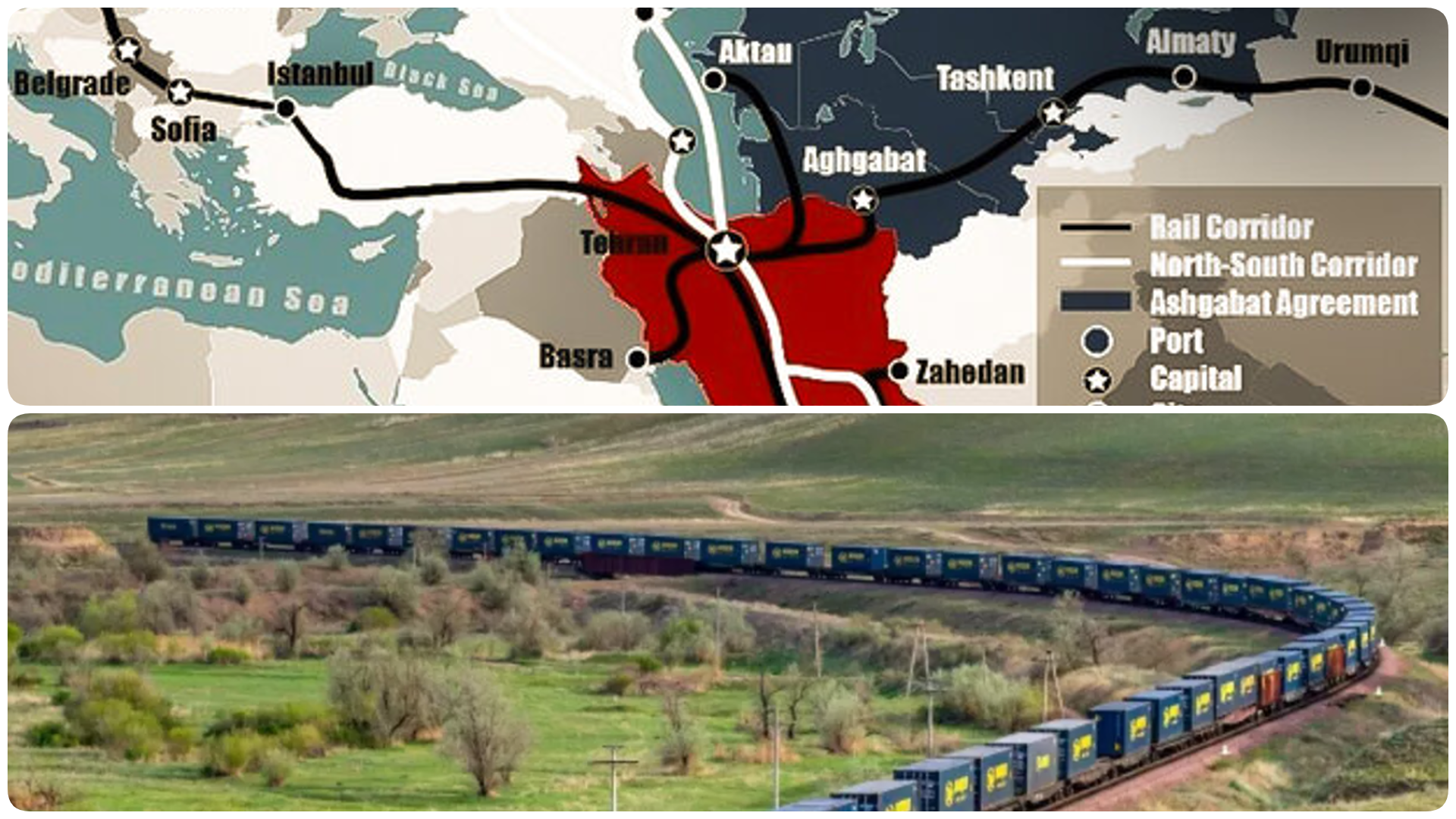
The Aq Taka Khan bridge, which was targeted, is part of the Gorgan-Incheh Borun rail line connecting Iran to Turkmenistan and Kazakhstan, feeding the International North-South Transport Corridor.
Chabahar, whose docks have been destroyed, is Iran's only oceanic port and the primary gateway for goods entering Afghanistan and Central Asian countries. Torbat-e-Jam station, as a rail hub in the country's east, fed the lines leading to Mashhad and played a key role in the movement of pilgrims and goods.
However, the American strikes have produced a counterproductive result. The nations of the Global South have come to understand that they cannot rely on transit routes exposed to Washington's military threats. Consequently, the activation of alternative corridors is proceeding at an unprecedented pace.
The Middle Corridor, the route extending from China through Kazakhstan, the Caspian Sea, the Caucasus, Turkey, and then to Europe, has experienced a remarkable surge in demand following the strikes on Iran's southern ports.
Russian and Kazakh shipping companies have announced their readiness to increase capacity for transporting cargo to Caspian Sea ports. Moscow and Baku, in an emergency meeting, emphasized accelerating the completion of the western route of the North-South Corridor, which enters Azerbaijan from Russia and connects to the Persian Gulf via Armenia, as a safer option for shipments previously destined for Chabahar.
Pakistani transport companies, welcoming increased transit through the Mirjaveh border crossing, have declared their readiness to compensate for the reduced rail capacity in Iran.
India, which has made substantial investments in Chabahar, has proposed transferring cargo via temporary roads to Zahedan and then to Herat.
China, through the Middle Corridor and its rail routes, is playing a central role in building a transit network that reduces dependence on routes under American control.
The European Union, on June 23, 2026, launched the "Connectivity Agenda" platform to develop the Middle Corridor. This initiative, aimed at coordinating infrastructure investments along the Trans-Caspian route, demonstrates Europe's serious determination to create alternative routes.
What further compounds Trump's anger is the fact that his military strikes have not halted the Global South's trade corridors but have instead prompted regional countries to accelerate their efforts to diversify their routes.
Rather than isolating Iran economically, the Global South is now more than ever considering alternative strategies independent of Washington. The strikes on Iran's infrastructure have, in effect, have backfired against the United States, demonstrating that Washington is an unreliable partner for transit cooperation.
The early morning strikes on Iran's rail and port infrastructure represent the confluence of Trump's personal anger at being humiliated during the funeral ceremonies and Washington's inability to accept the new geopolitical reality.
America, having failed to remove Iran from emerging trade corridors through economic sanctions and diplomatic pressure, resorted to military action.
But this action has not only failed to halt or reduce regional commercial activity but has also prompted the nations of the Global South to accelerate the activation of corridors independent of the United States.
The unpleasant reality for Washington is that in the war of corridors, the era of unilateral American hegemony is over.
The Global South, understanding that its economic security depends on diversifying trade routes and avoiding nodes under American influence, is now moving at an unprecedented pace toward a multipolar future.
Trump's vulgar insults to the Iranian people and the missile strikes on the country's infrastructure have not only exposed the American president's moral vacuum but have also reinforced the Global South's determination to achieve independence from the dollar system and routes controlled by Washington.
Iran announces discovery of major gas field in southern Fars province
Desperate Washington turns economic war into economic terrorism
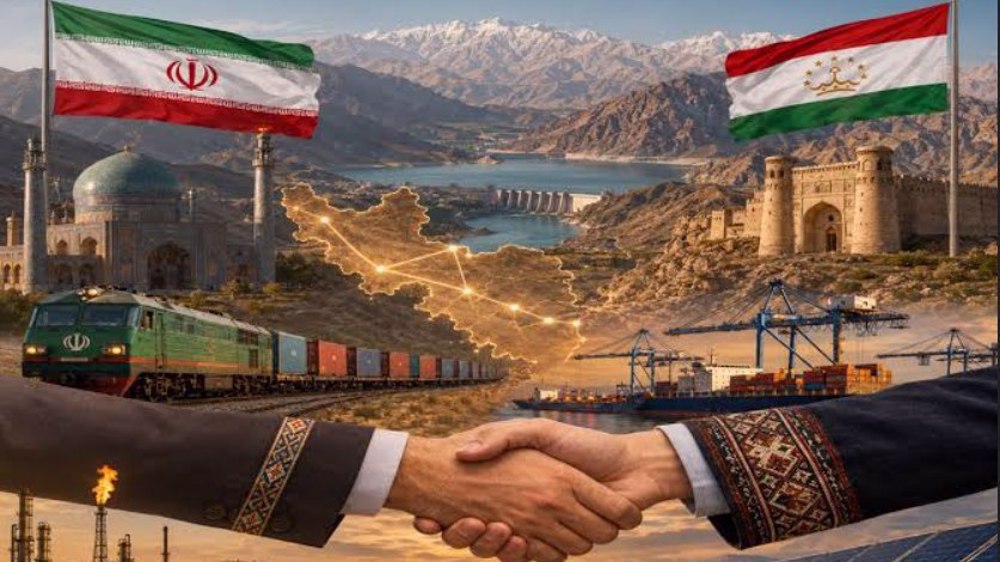
Iran, Tajikistan move to build biggest Persian economic bloc yet



Bolivia’s former president hails Iran as ‘model of sovereign resistance against US empire’
Iran’s trade partners won’t listen to US ‘big talk’: Qalibaf
Iran’s top security official says US must change its behavior
Israel denies Swedish MEPs entry to occupied lands over criticism of Gaza genocide
Israeli court extends detention of Palestinian doctor despite heart catheterization
VIDEO | Iran court orders $37 million in US oil funds for Butterfly Patients
VIDEO | Press TV's news headlines
Iran pursues implementation of MOU; US bad faith prevented regional stability: Qalibaf


 PressTV NEWSLETTER
now
PressTV NEWSLETTER
now
 This makes it easy to access the Press TV website
