Remembering Martyr Leader’s legacy of defeating the politics of hunger
Iran is currently in a period of profound mourning for the martyred Leader of the Islamic Revolution, Ayatollah Seyyed Ali Khamenei, one of whose lasting legacies is the economic and strategic resilience he instilled in the nation.
Chants of revenge are the recurring refrain among the mourners, who demand the most dastardly ruler of our time face justice for his crimes not only against Iranians, but against all those who have suffered under his reign of arrogance, corruption and aggression.
They mean Donald Trump, the criminal US president whose typical egregious rambles have taken a new low, most recently claiming that Iranians "need food" from American farmers, specifically corn, wheat, and soybeans.
These offensive remarks are the words of a crazy man to whom human life means nothing beyond profit, a man ready to go to any length to starve, eliminate, and deprive entire nations for his own gain.
The strategic foresight of the martyred Leader has been starkly highlighted by recent American overtures. In the aftermath of the war, Trump proposed that Iranian assets held in the US be used exclusively to purchase agricultural products from the United States.
The proposal was framed by the Trump administration as a "win-win" solution to address what Trump described as Iran's "hunger problem" while enriching American farmers, a key political constituency.
Yet to Iranian officials and citizens, the proposal represented the very threat that Ayatollah Khamenei had warned against for decades, the transformation of a nation's food supply into an instrument of foreign control.
Iran's rejection of the proposal was swift, decisive, and rooted in the strategic doctrine of the martyred Leader. Iran's lead negotiator, Mohammad Baqer Qalibaf, dismissed the US claims with pointed sarcasm.
"The only crop we're harvesting is what you planted: decades of mistrust. It's organic, abundant, and homegrown. But apparently the US only exports GMO soybeans, broken promises and trash talks," he wrote on X.
Foreign Ministry spokesman Esmaeil Baghaei noted the bitter irony: "It is interesting that the philosophy and goal of the war, which was the destruction of the Iranian civilization and the collapse of Iran, has become enriching American farmers."
The rejection was not an act of pride alone; it was a declaration that Iran has achieved the very food security that Ayatollah Khamenei had prioritized.
Agriculture Minister Gholamreza Nouri Ghezeljeh announced that Iran has achieved 85 percent food self-sufficiency, with agricultural production rising from 28 million tons before the Islamic Revolution to 139 million tons today.
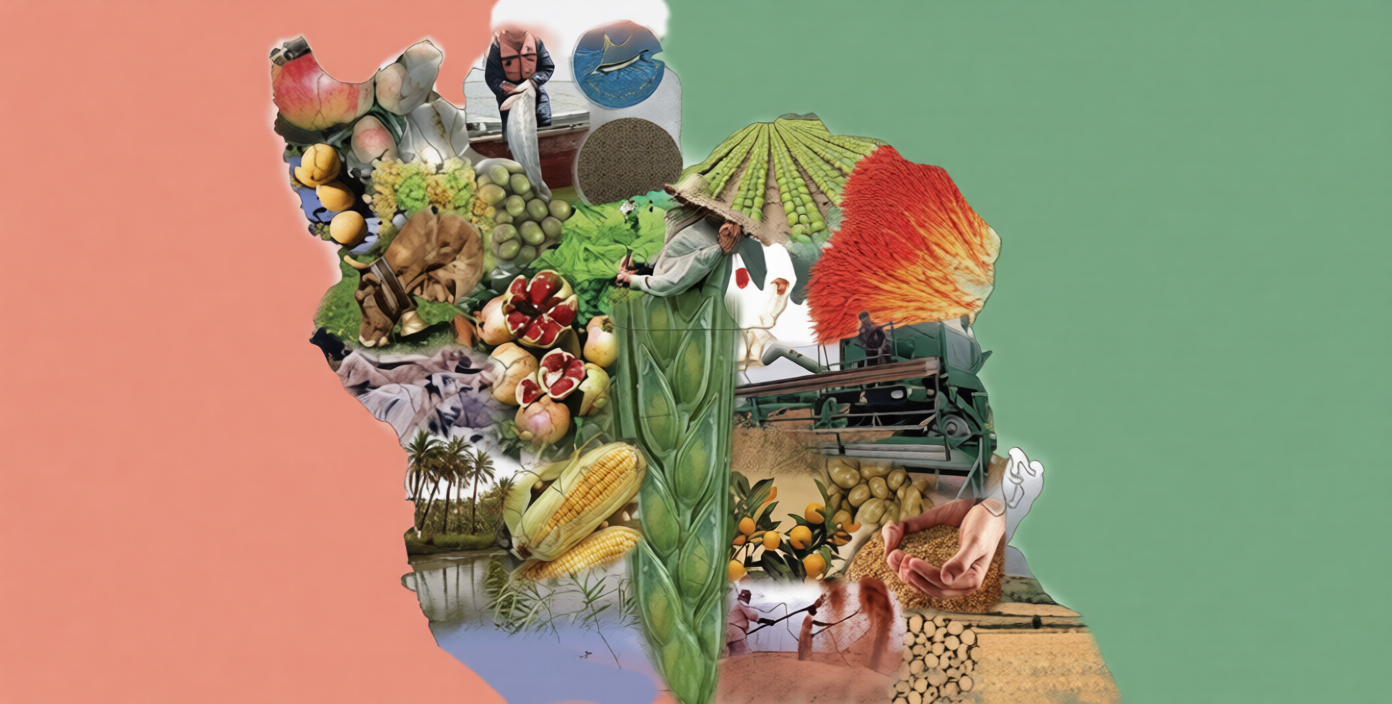
During the months of wartime conditions, no disruption occurred in the supply of essential goods or the country's food security; the Iranian people were not starving, the supermarket shelves did not empty, and the strategic reserves held.
Ayatollah Khamenei's vision for Iran's food sector was explicitly and consistently articulated over decades.
Self-sufficiency was a recurring theme in his speeches, a priority that was institutionalized through official "upstream documents" such as the "1404 Perspective Document" and the "General Policies of the Resistance Economy".
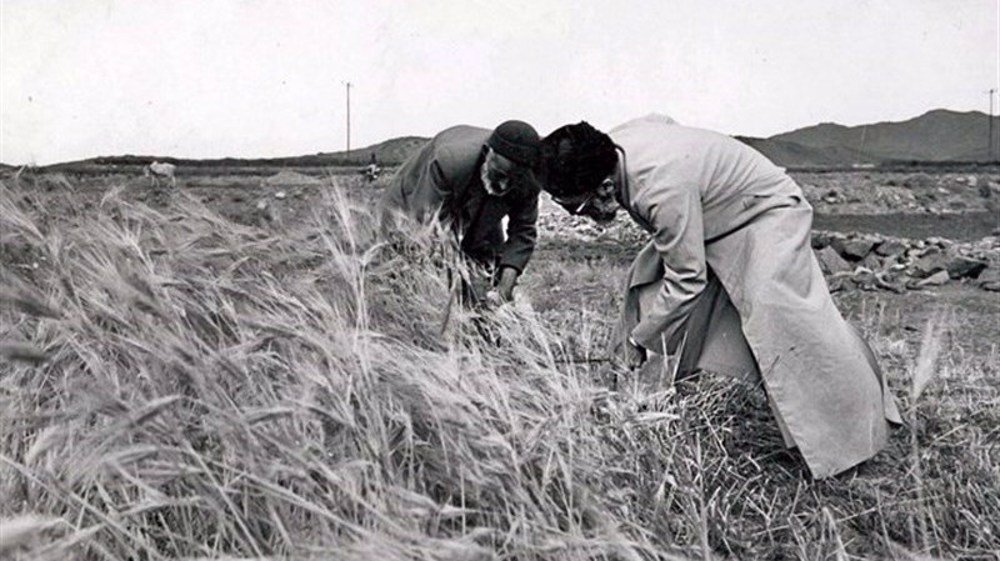
The Leader fundamentally rejected the economic orthodoxy that prioritizes "efficiency" through reliance on global markets. In a 2019 speech, he explicitly challenged officials who argued that importing wheat was more economically viable than domestic production.
"What sane government in the world would make such a decision? They [officials] said, for example, planting saffron instead and importing wheat is better because saffron fetches a higher price globally; that's where economic efficiency lies. ... But what will you do when they [foreign powers] prevent you from acquiring wheat? When they block imports and refuse to sell you wheat?"
This was the core of his argument. He viewed dependence on foreign food as a direct vulnerability that adversaries could exploit.
The "Resistance Economy" doctrine, which he launched and championed, was designed not just for survival under sanctions but to build a system resilient enough to endure them.
It was a doctrine based on diversification, domestic production, and strategic self-reliance across all critical sectors, including food, fuel, and defense.
The ultimate test of Ayatollah Khamenei's strategic doctrine came during the recent imposed war.
According Agriculture Minister Nouri Ghezeljeh, the Leader's emphasis on "doubling efforts" in food security, laid out months before the war, created a buffer that shielded the country from chaos.
The enemy explicitly targeted food security as a tool of war, aiming to create psychological and food insecurity. Yet Iran's success in navigating the crisis is directly attributed to the policies championed by the martyred Leader.
Despite US naval blockades and thousands of airstrikes targeting infrastructure, Iran maintained stable food and fuel supplies. The Financial Times attributed this resilience to Iran's decades-old strategy of encouraging domestic production.
Iran diversified its trade routes, utilizing both northern and southern ports simultaneously, and activated the North-South Transport Corridor to bypass Persian Gulf chokepoints.
The market did not collapse. The "calm market" was a direct outcome of strategic foresight and preparedness, validating the Leader's long-standing warnings about the dangers of dependency.
As the nation bids farewell to its martyred Leader, his vision for food security has been formally institutionalized as the "roadmap" for the country.
Over 100 economists from Iran's seminaries and universities have released a formal statement reaffirming their allegiance to the Leader's vision, with a central focus on the "resistance economy" and "achieving self-sufficiency in food security".
The government is now tasked with implementing a directive based on self-sufficiency and increased production, protection of basic resources, rural development, and other strategic objectives.
Ayatollah Khamenei built an economic bulwark that allowed Iran to withstand the shameless boasts and economic terrorism of its adversaries. By rejecting the trap of dependency, he preserved the nation's dignity and operational freedom.
The Trump proposal, born of both hubris and desperation, was rejected not out of spite but out of strategic clarity—the clarity that a nation that feeds itself cannot be coerced.
The Leader also provided a clear, actionable model that links science, technology, and domestic production to the ultimate goals of national security and independence.
The emphasis on "knowledge-based agriculture" and the use of advanced nuclear technology in farming are active pillars of the nation's future agricultural policy.
The farewell ceremonies are a "renewed covenant" to continue this path. As millions take to the streets, they are reaffirming the principle that Iran's strength lies in its self-reliance.
The martyred Leader's commitment to agricultural self-sufficiency was the constitution of a nation determined to feed itself, no matter the cost or the enemy.
His teachings on food security and resistance will undoubtedly light the path forward, ensuring that the nation he led remains sovereign, dignified, and unbroken.
Desperate Washington turns economic war into economic terrorism
Iran, Tajikistan move to build biggest Persian economic bloc yet

Iran’s economy has moved past ‘war shock,’ chamber chief says



VIDEO | Humanoid games showcase China’s AI rise, raising US concerns
Hamas condemns Zionist Regime’s use of children’s kites as flimsy pretext for genocide in Gaza
Iran’s heroic defense, assertive diplomacy source of pride for allies: Lebanese MP in meeting with A
Supporting US economic war is an 'act of war': Iran’s top security official warns
VIDEO | US-Canada trade war
Ayatollah Khamenei ‘awakened consciences’ in defense of faith and dignity: PMU chief
Iran to detain, confiscate violating ships in Strait of Hormuz: PGSA
VIDEO | Press TV's news headlines


 PressTV NEWSLETTER
now
PressTV NEWSLETTER
now
 This makes it easy to access the Press TV website
