

By Alireza Hashemi
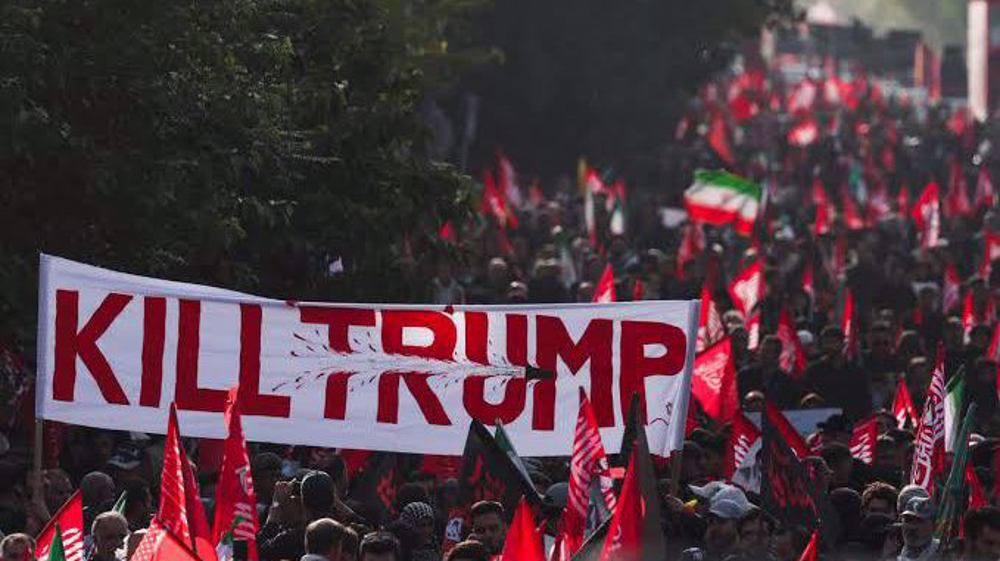
On Tehran’s Azadi Street, where millions of people gathered on Monday to bid farewell to their beloved Leader, Ayatollah Seyyed Ali Khamenei, the whole stretch was dominated not by black, the traditional color of mourning, but by a sea of red.
Red flags bearing the phrase "Ya Latharat al-Hussein" ("O Avengers of Hussein"), a rallying cry rooted in Shia commemorations of Imam Hussein's (AS) martyrdom at Karbala in 680 AD, appeared throughout the procession. Alongside them, mourners carried a newly coined variant: "Ya Latharat al-Khamenei." This adaptation fused the funeral of Iran's martyred leader with one of Shia Islam's most potent symbols of injustice and the demand for retribution.
The color and the chant were not incidental. In Shia tradition, red flags signal blood unjustly spilled and an unfulfilled obligation to avenge it. Their prominence at the martyred Leader of the Islamic Revolution’s funeral marked a conscious departure from customary mourning imagery, a signal aimed as much at Washington and Tel Aviv as at Tehran itself.
Sounds of procession
Most banners and placards in the massive crowd called for the deaths of US President Donald Trump and the Israeli regime’s premier Benjamin Netanyahu. One banner, written in English, read simply, "The US killed our father. We won't let you go."
"We don't want a deal. We want Trump's head!" mourners chanted repeatedly as the procession moved through different streets in central Tehran before converging at the iconic Azadi Square. Elsewhere, the chant shifted register to a line that echoed through the ceremony in waves, "No compromise, no surrender, revenge, revenge!"
Aerial footage captures massive crowds of mourners filling Tehran's streets for the martyred Leader's funeral procession.
— Press TV 🔻 (@PressTV) July 6, 2026
Follow: https://t.co/mLGcUTS2ei pic.twitter.com/D8J9rgwMlk
At the most intense moments, as mourners beat their chests in grief, the chanting consolidated into a single, roaring voice: "Our word is one! Revenge! Revenge!" and "We will kill, we will kill those who killed our Imam."
A day before the funeral procession, on Sunday morning, before the congregational funeral prayers at Tehran's Grand Mosalla, young and revolutionary Persian poet Mohammad Rasouli gave voice to this collective sentiment from the podium.
"Whoever killed my Imam, why don't we kill him? It is our disgrace if we do not kill his murderer. From now on, the shroud will be our garment. I swear by your blood: Trump's murder is our duty," he recited. The crowd's response was immediate and thunderous.
'Losing a father'
Along the procession route on Monday, the unanimous demand for revenge translated into raw, deeply personal grief and resolve. Conversations with mourners – young and old – showed how intimately and profoundly the loss was felt across generations and geographies.
For a generation that had never known Iran without him, the Leader's martyrdom meant the end of the only political reality they had ever experienced.
Amir, 35, from the capital Tehran, put it simply: "I was born during his leadership of the country. I never knew another Iran. This is like losing a father, a grandfather."
Fatemeh Ghasemi, 65, from Tehran, linked the length of Imam Khamenei's leadership to her own sense of lifelong stability. "For 37 years, he was our refuge," she told this reporter. "They killed him in his own home. This is not something we will ever forget."
Among younger mourners, the anger carried a sharper, more mobilizing edge. Mohammad Jafari, 22, a university student from Mashhad, said: "Every time I see Trump's face on the news, my blood boils. I am ready to go to the border. I am ready to fight. I am ready to die for my Imam."
Saeed Rahimi, 31, from Tehran, framed the moment in existential terms: "We have nothing left to lose. Our leader is gone. Our neighborhoods have been bombed. The only path forward is resistance."
Others channeled their grief into moral outrage. Hossein Karimi, 39, from Qom, pointed to the youngest casualties of the strikes that led to the assassination of the Leader, including his granddaughter. "They murdered our 14-month-old Zahra. A baby. These are not soldiers. They are monsters. How can anyone speak of peace with murderers?"
Zahra Hosseini, 41, from Tehran, walked seven kilometers with her young daughter to join the procession. "I held her hand every step of the way," she said. "I want my children to know their mother stood before her Imam today and swore to avenge him."
Amid the mourning, a cleric from the holy city of Qom addressed the crowd's grief with a historical reminder: "If the enemy believes that assassinating a Leader ends the movement, they do not understand Islamic history. Ali (AS) was assassinated. Hassan (AS) was poisoned. Hussein (AS) was martyred. Yet Islam endures. So will our revolution," he said.
The official line
The powerful chorus on the streets was closely matched by statements from high-ranking officials. Mohammad Bagher Zolghadr, Secretary of Iran's Supreme National Security Council, described the scene in terms that directly mirrored the crowd's own chants.
"This roaring sea of people is now shouting two slogans: resistance against enemies and revenge for the blood of Iran's martyred Leader," he said.
In a separate statement, Zolghadr was more explicit about revenge: "The file of avenging the pure blood of the Great Khamenei and the oppressed martyrs of Iran remains open. The perpetrators and those who ordered these crimes will, at the right time, which will not be long, face their just punishment."
Qalibaf vows those behind Ayatollah Khamenei’s assassination will be punishedhttps://t.co/zLn24SitGq
— Press TV 🔻 (@PressTV) July 7, 2026
Parliament Speaker and lead negotiator Mohammad Baqer Qalibaf framed the promised retaliation in broader, ideological terms, tying it to the transnational Axis of Resistance narrative.
"The blood of the martyred leader of the Islamic Revolution will be avenged by liberating all Muslims around the world from US-Israeli oppression," Qalibaf declared during a bilateral meeting with a representative from Lebanon's Amal movement.
From mourning to foreign policy
Some regional analysts argue that the sheer scale and intensity of public sentiment on display could push Iran's foreign policy establishment toward a more assertive posture than in past cycles of retaliation.
For years, Tehran's strategy has rested on a doctrine of absorbing tactical setbacks to avoid direct, large-scale confrontation. However, the unprecedented public calls for retribution may narrow the political space for restraint by reinforcing the view that failing to impose a visible cost on adversaries invites further aggression.
Analysts also suggest Iran could further deepen its coordination with allied regional resistance groups as part of a layered forward-defense strategy.
Under such a framework, pressure on Iranian interests could increasingly generate responses across multiple theaters, with allied groups exercising greater operational flexibility while remaining broadly aligned with Tehran's strategic objectives.
The call for revenge, according to experts, makes the containment of any future war to a single geography increasingly unlikely.
 This makes it easy to access the Press TV website