Iran warns ships off unauthorized Hormuz routes amid talk with Oman

Iran has warned vessels operating in the Strait of Hormuz against using routes not approved by its maritime authorities, saying ships outside the designated framework will not receive safety guarantees or insurance coverage, as Tehran and Oman agreed to hold talks on the strategic waterway's future administration.
The Persian Gulf Strait Authority (PGSA) said Thursday that any transit outside approved routes would be considered unauthorized, with responsibility for any consequences placed on the vessel owner, operator and captain.
"The consequences of transiting unauthorized routes shall be borne by the vessel owner, operator and master," the PGSA warning said.
The warning came as the United Kingdom Maritime Trade Operations (UKMTO) agency reported that a cargo vessel was struck approximately 7.5 nautical miles southeast of one of Oman's ports.
The master reported no casualties and no environmental impact from the attack, though the vessel sustained physical damage to its hull from the unknown projectile.
The incident comes after multiple oil tankers and commercial vessels reportedly changed course at the entrance to the Strait of Hormuz due to security concerns, with at least three ships, including two large tankers, altering course and aborting their transit, according to Bloomberg.
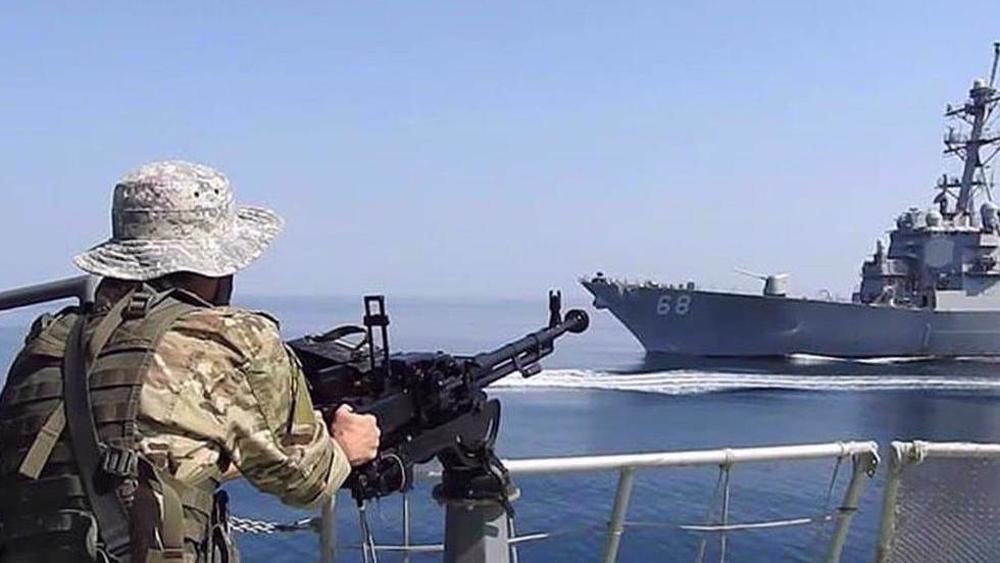
The developments coincide with Iranian Foreign Minister Abbas Araghchi holding a "productive" telephone conversation with his Omani counterpart Badr bin Hamad al-Busaidi, during which the two sides agreed to hold discussions on establishing a framework for the future administration and maritime services of the strait.
Araghchi said the two countries are determined to advance the process "in coordination and consultation with neighboring states
"We re-emphasized that Iran and Oman will conduct dialogue 'to define future administration and maritime services in Strait of Hormuz.' We're determined and will do so in discussion with our neighbors," he wrote on X.
After recent Joint Statement in Muscat, had productive call with @badralbusaidi
— Seyed Abbas Araghchi (@araghchi) June 25, 2026
We re-emphasized that Iran and Oman will conduct dialogue "to define future administration and maritime services in Strait of Hormuz." We're determined and will do so in discussion with our neighbors pic.twitter.com/1ezYYoC4ri
The initiative follows recent diplomatic engagements between Tehran and Muscat and reflects the two neighbors' commitment to strengthening regional cooperation over the management of the vital waterway, through which a significant portion of global energy shipments passes daily.
The PGSA, which Iran established last month to oversee new transit procedures in the strait, has mandated a compulsory online clearance system requiring all vessels intending to transit to register passage requests through its official website.
The authority has also mandated a 48-hour pre-arrival notice for all vessels approaching the waterway.
The latest developments come as the PGSA previously warned that any passage through the Strait of Hormuz without permission from Iranian authorities would be considered "illegal".
Iran has long maintained that the security and administration of regional waterways should be handled by regional countries without foreign interference.
Iran and Oman, which share coastlines along the strait, affirmed their commitment to guaranteeing safe passage through the waterway in accordance with international law, while emphasizing "their sovereignty and sovereign rights over their territorial waters in the strait".
Earlier this week, Oman's Foreign Minister said future arrangements related to the strait would not involve imposing any transit fees, reaffirming Muscat's commitment to maintaining free and secure passage.
Media reports on Qatar-mediated talks ‘baseless speculation’: Baghaei
Media reports of Iran showing nuclear flexibility false; US trapped in Hormuz Strait: Source
Iraqis hold nationwide rallies against suspension of Iranian flights



Iran warns regional states of Israel’s malicious intents following reports of Netanyahu UAE visit
Army spox: Saudi Arabia launches over 30 airstrikes across Yemen in 24 hours
VIDEO | News Review: Israel settlement expansion
Israel violates Gaza ceasefire over 5,100 times, kills 1,421 Palestinians: Gaza Media Office
VIDEO | Russia holds events under title of Iran’s Culture Week
Republicans distancing themselves from Trump ahead of US midterms
Pezeshkian: Expanding Iran-Azerbaijan rail, air links key to strengthening ties
Iranian engineering students hold lectures at US-bombed B1 mega-bridge


 PressTV NEWSLETTER
now
PressTV NEWSLETTER
now
 This makes it easy to access the Press TV website
