Iran's orbital game-changer: Martyr Soleimani constellation heralds new era of indigenous space power
By Ivan Kesic
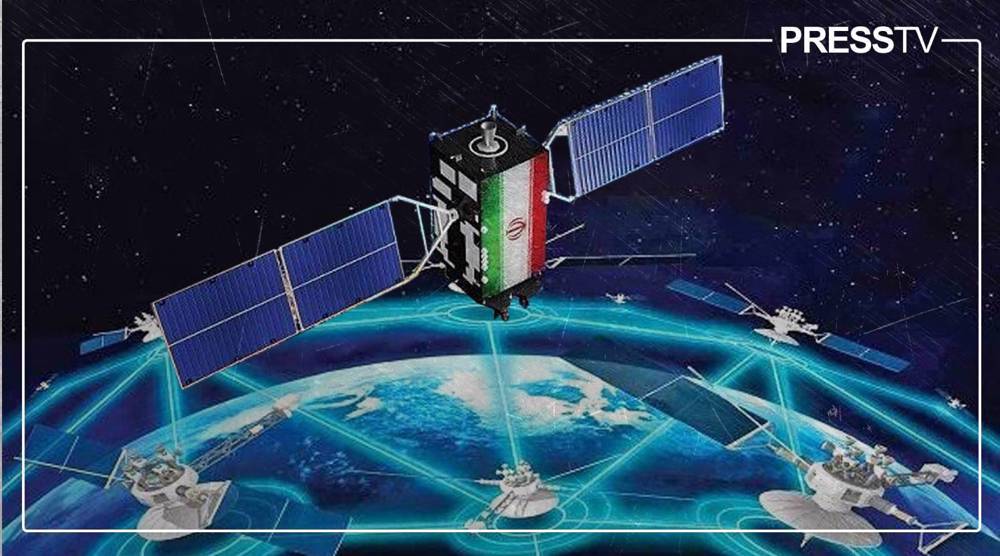
Despite the challenges posed by the recent American-Israeli military aggression, Iran’s space program continues to make rapid advancements, with work steadily progressing on the Martyr Soleimani Satellite Constellation – a 24-satellite narrowband communications network that represents the country’s first satellite constellation rather than a standalone spacecraft mission.
First unveiled publicly in January 2023 as a centerpiece of Iran’s ten-year national space strategy, the project marks a major evolution in the country’s space ambitions.
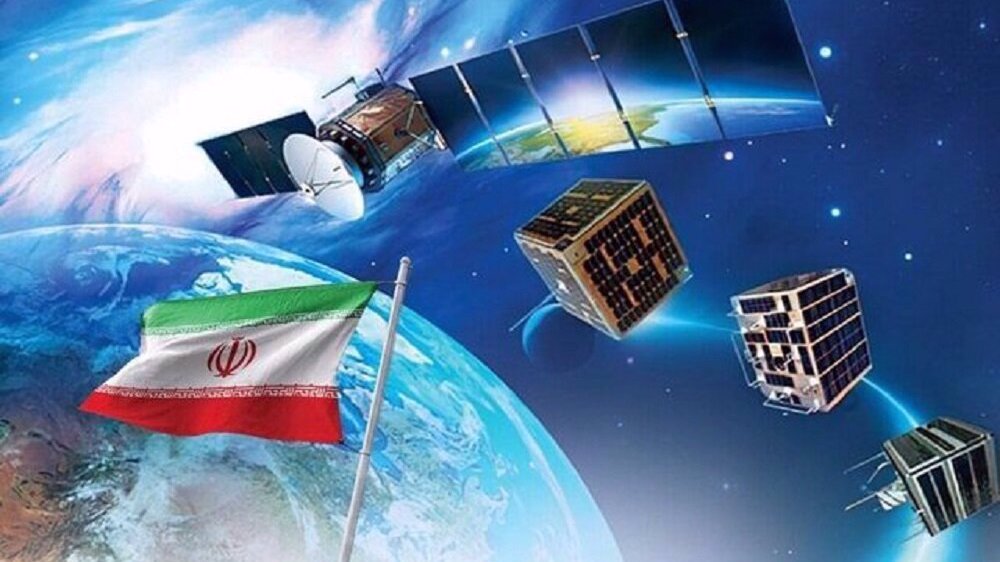
Unlike earlier initiatives that focused primarily on launching individual satellites, the Martyr Soleimani Constellation is designed as an integrated network of approximately 24 low Earth orbit (LEO) satellites, providing narrowband telecommunications services with a particular emphasis on Internet of Things (IoT) connectivity.
Beyond its technological significance, the constellation reflects a broader transformation within Iran’s aerospace sector. The project is being developed through a consortium of public and private entities, signaling a strategic shift toward industrial-scale satellite production, large-scale systems integration, and sustained operational management of orbital assets.
The program’s momentum has endured despite the recent American-Israeli aggression that lasted nearly 40 days and the subsequent damage inflicted on portions of the country’s space infrastructure, including an attack on the space agency’s research center in Tehran.
Rather than slowing development, Iranian officials note that work on the constellation has continued largely uninterrupted.
In his remarks earlier this week, Hassan Salarieh, head of the Iranian Space Agency (ISA), announced that the constellation’s first dedicated launches are scheduled to begin by the end of the Iranian year 1405, corresponding to early 2027.
Construction of all 24 satellites, he noted, is moving forward without major disruption, underscoring the resilience of Iran’s long-term space ambitions in the face of external pressures.
The constellation bears the name of top anti-terror commander Lieutenant General Qassem Soleimani, with each satellite in the network designated sequentially from Qasem 1 through Qasem 24 – a symbolic tribute to the legendary icon and a project intended to serve as a cornerstone of the nation’s next generation of space-based communications capabilities.
Origins of the Martyr Soleimani constellation
The Martyr Soleimani Satellite Constellation was formally unveiled in January 2023 as a flagship component of Iran’s ten-year national space development plan, signaling a significant evolution in the country’s long-term space ambitions.
The initiative represents a fundamental departure from Iran’s earlier space activities, which largely revolved around the design, launch, and operation of individual satellite missions.
Rather than placing a single spacecraft into orbit, Iran is seeking to deploy an integrated constellation of satellites operating cooperatively as a unified communications network. This undertaking demands a substantially higher level of technological sophistication and organizational capacity.
Building and maintaining such a constellation requires expertise far beyond conventional satellite development. It entails mastery of satellite mass production, constellation management, inter-satellite networking, orbital coordination, and the provision of large-scale telecommunications services across a distributed space-based infrastructure.
In practical terms, it moves Iran from conducting isolated space missions toward establishing a persistent and operational space architecture.
Equally significant is the organizational model underpinning the project. The constellation is being developed through a consortium that brings together government institutions and private Iranian aerospace companies, reflecting a notable shift from earlier programs that were primarily driven by state agencies and academic institutions.
This consortium-based approach is intended to achieve more than the successful deployment of satellites. Iranian planners view it as a mechanism for cultivating a sustainable domestic commercial space sector – one capable of supporting research, manufacturing, operations, and technological innovation over the long term.
By expanding the role of private industry, the ambitious project seeks to create an ecosystem that can underpin future generations of space activities and reduce reliance on purely state-led initiatives.
Iranian officials have repeatedly emphasized that the constellation serves as a strategic vehicle for developing indigenous expertise across several critical domains, including satellite mass production, constellation operations, satellite networking, large-scale telecommunications services, and Internet of Things (IoT) connectivity.
Collectively, these capabilities are regarded as essential building blocks for any nation seeking to establish a modern and resilient space-based communications infrastructure.
In this respect, the Martyr Soleimani Satellite Constellation follows a developmental trajectory similar to that pursued by countries that have successfully established low Earth orbit communications networks, albeit on a more modest scale.
Beyond its immediate telecommunications objectives, the project is therefore intended to accelerate the maturation of Iran’s broader space industry and lay the groundwork for a new era of indigenous space capabilities.
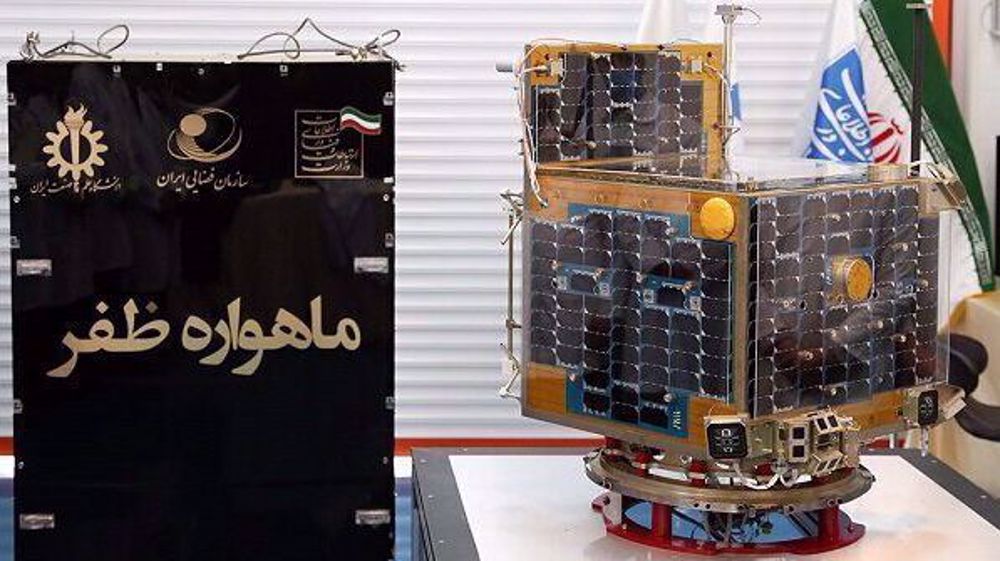
Iran unveils Hatef-3, the flight model satellite of the Martyr Soleimani satellite constellation.
— Press TV 🔻 (@PressTV) February 3, 2026
Follow: https://t.co/mLGcUTS2ei pic.twitter.com/IszSprDxy0
Technical architecture and purpose
Every official Iranian description of the Martyr Soleimani Satellite Constellation identifies it as a narrowband telecommunications network primarily intended to support Internet of Things (IoT) services. This distinction is crucial to understanding the project’s true purpose: the constellation is not designed to serve as an Iranian equivalent of broadband mega-constellations such as Starlink.
Rather than delivering high-speed internet directly to individual consumers, the system is conceptually closer to established low-bandwidth communications networks such as Iridium’s Short Burst Data service, Orbcomm, Globalstar’s IoT platforms, or Swarm Technologies.
These constellations are optimized for transmitting small packets of data between remote assets and centralized networks, enabling connectivity for industrial sensors, logistics tracking systems, environmental monitoring stations, agricultural equipment, pipelines, utility infrastructure, and military platforms operating in isolated or difficult-to-reach environments.
Because such applications require only modest data throughput, the bandwidth demands are dramatically lower than those associated with broadband internet services. This substantially reduces satellite complexity, launch requirements, and overall system costs.
Iranian officials have consistently emphasized this role, repeatedly describing the project as a “narrowband constellation” rather than a broadband communications network.
Current plans envision a constellation of approximately 20 to 24 satellites operating in low Earth orbit (LEO) across multiple orbital planes with varying inclinations.
The reference to different orbital inclinations is technically significant, as it suggests the network is being designed to provide broad national – or potentially regional – coverage rather than concentrating service along a limited latitude band.
Although precise orbital parameters have not been publicly disclosed, the satellites are expected to operate at altitudes ranging from roughly 500 to 800 kilometers, a regime commonly used for low-latency communications constellations and Earth observation systems.
Development timeline and progress
The constellation formally entered its operational development phase in 2023 when it was incorporated into Iran’s national space roadmap.
During the second half of that year, engineers began detailed constellation design and system architecture work, laying the foundation for what would become one of the most ambitious space projects in the country’s history.
Throughout 2024 and 2025, development accelerated as engineers produced subsystem prototypes, engineering models, and experimental spacecraft. By 2025, construction of most major subsystems was reportedly underway, reflecting a transition from conceptual design toward full-scale implementation.
Iran has already launched sub-scale and prototype spacecraft intended to validate the technologies required for the future constellation. According to the head of the Iranian Space Agency (ISA), these experimental missions successfully tested and functionally evaluated a substantial portion of the technologies, software systems, and operational concepts needed for the network’s deployment.
A major milestone was reached on February 3, 2026, when the Hatef-3 flight model was unveiled during National Space Technology Day celebrations attended by senior government officials, including the head of the ISA and the ministers of defense and communications.
Hatef-3 is designed to validate critical hardware and subsystem performance, onboard software, and the procedures required for constellation deployment using indigenous launch vehicles. As such, it serves as a key stepping stone toward the operational satellite network.
The naming convention adopted for the program reflects a deliberate phased-development strategy. In December 2025, the head of the Sairan Space Group announced that construction of the 24 satellites intended to complete the Martyr Soleimani System was underway, with the operational spacecraft designated Qasem 1 through Qasem 24.
Notably, prototype and test satellites have been assigned the designation “Hatef.” Iranian officials have explained that the name of Lieutenant General Qasem Soleimani will be reserved exclusively for the final operational flight models once their technologies and performance have been fully validated.
The latest official assessment indicates that the project remains firmly on track. On June 17, 2026, Hassan Salarieh confirmed that development was progressing successfully and that launches for the constellation are expected to begin by the end of the Iranian year 1405, corresponding to early 2027.
While acknowledging that wartime conditions had caused some delays in certain areas of work, Salarieh emphasized that the country’s space industry had suffered no crippling setbacks and that development activities continued uninterrupted overall.
His assessment is consistent with the distributed structure of Iran’s space program, whose research centers, manufacturing facilities, testing sites, and operational infrastructure are dispersed across multiple locations throughout the country, enhancing resilience against external disruption.
Iran’s space program moving ahead with launch of Pars-2 satellite, Shahid Soleimani constellation deployment: Ministerhttps://t.co/Syy9Xsf4oj
— Press TV 🔻 (@PressTV) June 17, 2026
Applications of the constellation
The Martyr Soleimani Satellite Constellation is intended to provide Internet of Things (IoT) connectivity across a broad range of civilian, industrial, and infrastructure sectors. At its core, the system is designed to enable the collection and transmission of small packets of data from geographically dispersed sensors and devices, creating a nationwide communications network capable of operating far beyond the reach of conventional terrestrial infrastructure.
In practice, data generated by ground-based sensors is transmitted to satellites passing within line of sight, which then relay the information to central control stations. This architecture allows authorities and operators to gather information rapidly from virtually any location, including remote deserts, mountainous regions, offshore installations, and other areas where traditional communications networks are unavailable or unreliable.
Among the system’s anticipated civilian applications are environmental monitoring, agricultural management, and critical infrastructure oversight. Officials have identified potential uses including water resource monitoring, soil analysis, forest surveillance, air temperature monitoring in wildfire-prone regions, assessment of soil moisture and drought conditions, and the monitoring and management of oil and gas transmission networks.
For operators of critical infrastructure, the constellation could provide a valuable means of monitoring remote assets in real time. Pressure levels, operational status, and maintenance data from pipelines and transmission lines could be transmitted via satellite from locations far beyond the coverage of terrestrial communications networks, enabling more efficient management and faster responses to technical problems.
The system may prove particularly valuable during emergencies and natural disasters. Earthquakes, floods, wildfires, and other crises often damage terrestrial communications infrastructure precisely when reliable connectivity is most needed.
A space-based IoT network offers a resilient alternative channel for transmitting critical data, maintaining situational awareness, and supporting emergency response operations under adverse conditions.
Like virtually every modern communications constellation, however, the system possesses inherent dual-use potential. The same technologies that enable civilian monitoring and industrial management can also support a range of military applications.
Potential defense-related uses include the tracking of military vehicles and logistics assets, monitoring of remote sensor networks, border surveillance, maritime domain awareness, and the transmission of distributed battlefield telemetry from geographically dispersed units.
Nevertheless, the Martyr Soleimani Constellation is primarily a civilian infrastructure and national development project, with a key role in telecommunications, industrial modernization, and technological self-sufficiency.
Comparison with international constellations
The Martyr Soleimani Constellation differs fundamentally from broadband mega-constellations such as Starlink. While Starlink is designed to provide high-speed internet access directly to millions of individual users through thousands of satellites, Iran’s system is intended for low-data-rate machine-to-machine communications, transmitting small packets of information rather than broadband internet traffic.
As a result, the constellation is more accurately compared with established narrowband communications networks such as Iridium’s Short Burst Data service, Orbcomm, and Globalstar’s IoT platforms. These systems specialize in connecting remote sensors and industrial equipment rather than delivering consumer internet services.
The scale of the Iranian constellation is also considerably more modest than that of its international counterparts. Iridium operates 66 active satellites, Orbcomm maintains roughly 35 spacecraft, and Globalstar’s constellation consists of 48 satellites.
By comparison, Iran’s planned network of approximately 24 satellites is relatively small, yet it nevertheless represents a significant technological leap for a country that only recently transitioned from individual satellite missions toward constellation-based operations.
Iran is far from alone in pursuing narrowband IoT capabilities. Governments and commercial operators across the world have increasingly recognized the value of low Earth orbit communications networks for industrial monitoring, logistics management, and infrastructure connectivity. What makes the Iranian project particularly noteworthy, however, is the extent to which it relies on indigenous capabilities.
These satellites, ground infrastructure, communications architecture, and user terminals are all being developed domestically. Achieving self-sufficiency across every major component of a satellite communications ecosystem is a demanding undertaking that only a limited number of countries have managed to accomplish.
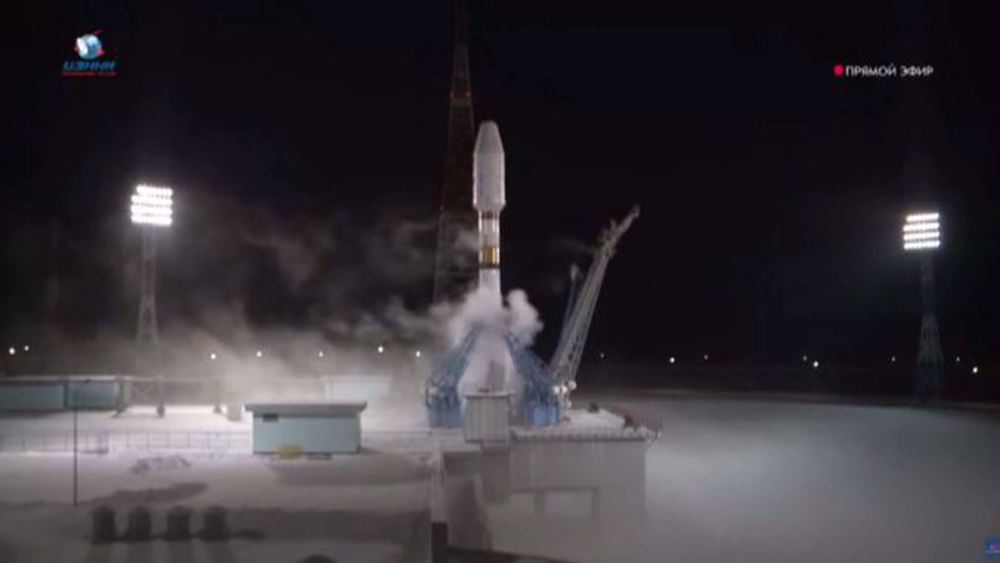
Equally important is the fact that the constellation is expected to be launched using Iranian launch vehicles. Over the past decade, Iran has steadily expanded its independent launch capabilities. The development of the Simorgh launch vehicle has enhanced the country’s ability to place heavier payloads into higher orbits, while the Aerospace Force of the Islamic Revolution Guards Corps (IRGC) has developed solid-fuel launch systems such as Qased and Qaem-100.
The combination of indigenous satellite manufacturing, domestic ground infrastructure, and independent launch capability lies at the heart of Iran’s long-term space strategy. By controlling every major stage of the process – from satellite production and launch to network operation and data management – Iran seeks to ensure that critical national space capabilities remain insulated from foreign restrictions, sanctions, and external political pressures.
Viewed in this broader context, the Martyr Soleimani Satellite Constellation is more than a telecommunications project. It represents an effort to establish a fully integrated national space ecosystem, one capable of supporting both technological development and strategic autonomy for years to come.
✍️ Feature - Islamic Revolution at 45: Iranian space industry’s phenomenal feats despite odds
— Press TV 🔻 (@PressTV) February 5, 2024
By Ivan Kesic#IslamicRevolution45https://t.co/DK60FZNC2Z pic.twitter.com/DNPqoT1yPN
Resilience during the aggression and future plans
The recent American-Israeli aggression targeted a range of civilian and scientific infrastructure across Iran, including facilities associated with the country’s scientific and technological sectors. Yet despite the damage inflicted on certain sites, the space program has continued to operate without interruption, highlighting the resilience built into the country’s space architecture.
According to Salarieh, research, development, satellite operations, and communications activities have continued despite the imposed war, reflecting a system that was deliberately structured to withstand disruption.
A key factor behind this resilience is the decentralized nature of Iran’s space sector. Rather than being concentrated within a single complex or organization, the country’s space capabilities are distributed across numerous companies, universities, research institutes, manufacturing centers, and operational facilities located throughout the country.
Iranian officials report that communications and data reception from both national and locally developed satellites continued throughout the imposed war, with satellite services remaining available during wartime conditions. Such continuity reflects the growing maturity of the country’s space infrastructure and its increasing integration into broader national communications networks.
The Iranian Space Agency had also prepared contingency plans to mitigate the effects of potential attacks. According to officials, alternative facilities and replacement capabilities had been identified in advance, allowing critical activities to be relocated if specific sites were targeted. This redundancy forms part of a broader effort to ensure operational continuity under adverse conditions.
While some buildings, laboratories, and equipment were damaged, the most important asset of the space industry remains intact: the indigenous expertise accumulated over decades of research and development. The technical knowledge, engineering experience, and specialized human capital that underpin the program reside not in physical infrastructure alone but in the scientists, engineers, and technicians responsible for its advancement.
The broader significance of the Martyr Soleimani Satellite Constellation extends well beyond its immediate telecommunications applications. The head of the Sairan Space Group has described the project as a “transformational” undertaking for Iran’s space industry, largely because of the unprecedented scale of the program.
For decades, Iranian space activities focused on the development and launch of individual satellites, each effectively treated as a standalone project.
The Martyr Soleimani Constellation introduces an entirely different operational model. Deploying a network of 24 satellites requires repeated launches, standardized production methods, coordinated deployment strategies, and long-term constellation management capabilities that go far beyond the requirements of a single spacecraft mission.
Perhaps the most important shift lies in manufacturing itself. The ability to produce satellites on an assembly-line basis rather than as bespoke, one-off systems represents a major industrial milestone.
Such a transition demands standardized designs, streamlined production processes, reliable supply chains, and quality-control procedures capable of supporting sustained output.
This evolution mirrors the developmental trajectory followed by more mature space powers, where operational constellations gradually replaced isolated satellite missions as the foundation of national space capabilities.
In practical terms, the Martyr Soleimani Constellation is intended to move Iran from a research-oriented space program focused primarily on technology demonstration toward a more operational model centered on sustained service provision and large-scale space infrastructure.
The project represents not merely the deployment of a new communications network but the emergence of new industrial and organizational capabilities within Iran’s aerospace sector.

Iran breaks new ground with locally manufactured high-tech turboexpander despite sanctions
Iran’s Royan Institute ranked among world’s top 10 institutions in male infertility research
Iranian students shine at global Chemistry, Biology Olympiads with eight medals



Iran unveils homegrown technology to design, produce targeted cancer-killing viruses
Israel strikes southern Lebanon after US-mediated talks in Rome
Saudi-Turkish-Pakistani military alliance shaped by fear of Israel, not Iran: Analyst
Bulgaria summons Ukrainian envoy after drone explodes on its territory
Iran won’t hold new talks as long as US violates war-ending understanding: FM Araghchi
Yemeni forces launch fresh missile, drone strikes on Saudi-backed mercenaries
VIDEO | Press TV's news headlines
President Pezeshkian meets Leader as he begins his third year in office



 PressTV NEWSLETTER
now
PressTV NEWSLETTER
now
 This makes it easy to access the Press TV website
