Saudi-Turkish-Pakistani military alliance shaped by fear of Israel, not Iran: Analyst
By Press TV Website Staff
Underlying regional calculations behind the new military alliance between Saudi Arabia, Turkey and Pakistan have been shaped by fear of Israel, not Iran, says an analyst.
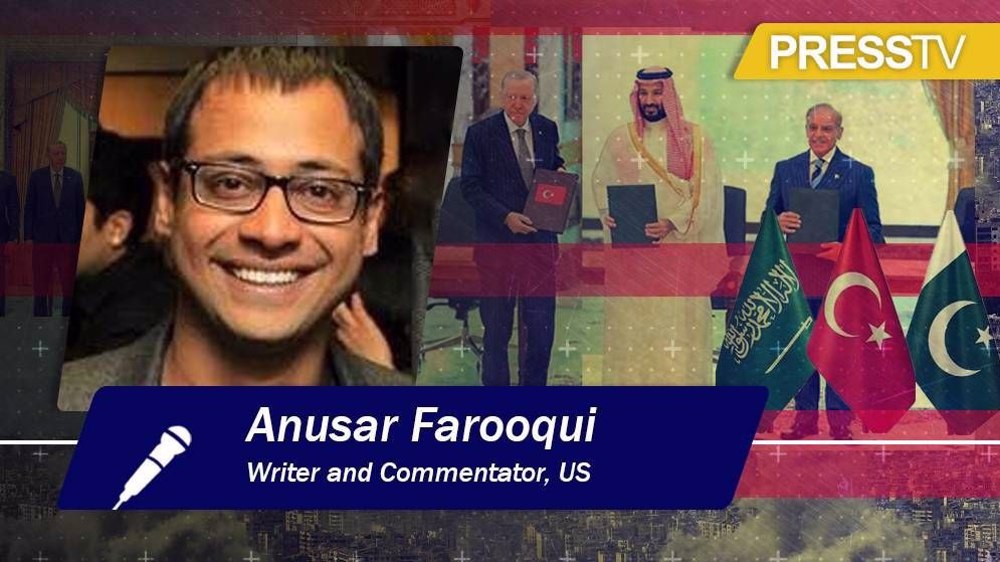
Speaking to the Press TV website, Anusar Farooqui, a US-based writer and commentator who is also the founder and CEO of Systematic Portfolios LLC, said the newly signed “Mecca Joint Defense Agreement” is aimed at the Israeli regime.
“The alliance politics of the Sunni Arab powers is driven by fear of Israel, not Iran,” he said.
“The Saudis and especially the Turks are very fearful of Israeli plans,” he added, noting that Israeli discussions about confronting Turkey, including talk of a possible surprise attack intended to cripple the Turkish air force, had contributed to Ankara’s concerns.
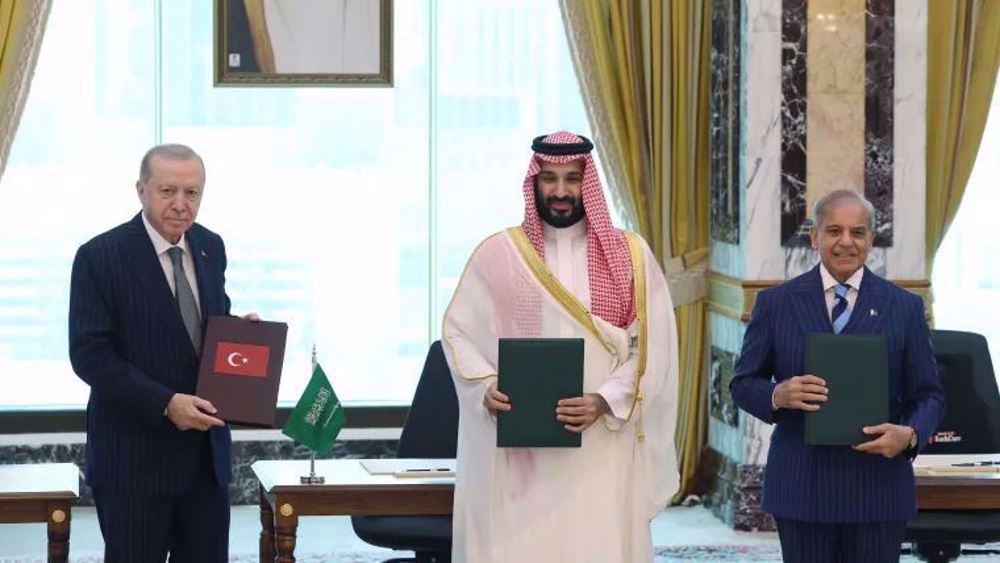
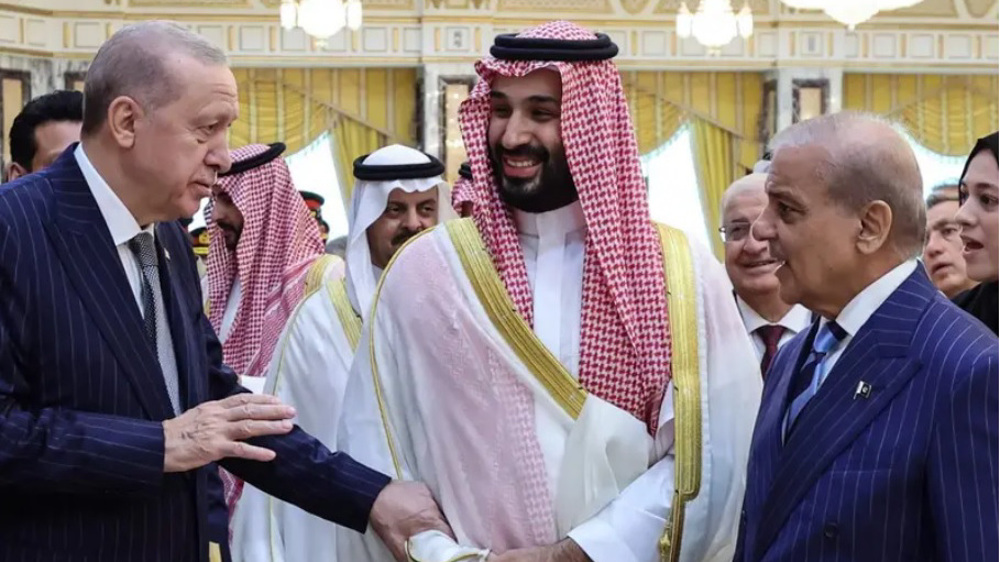
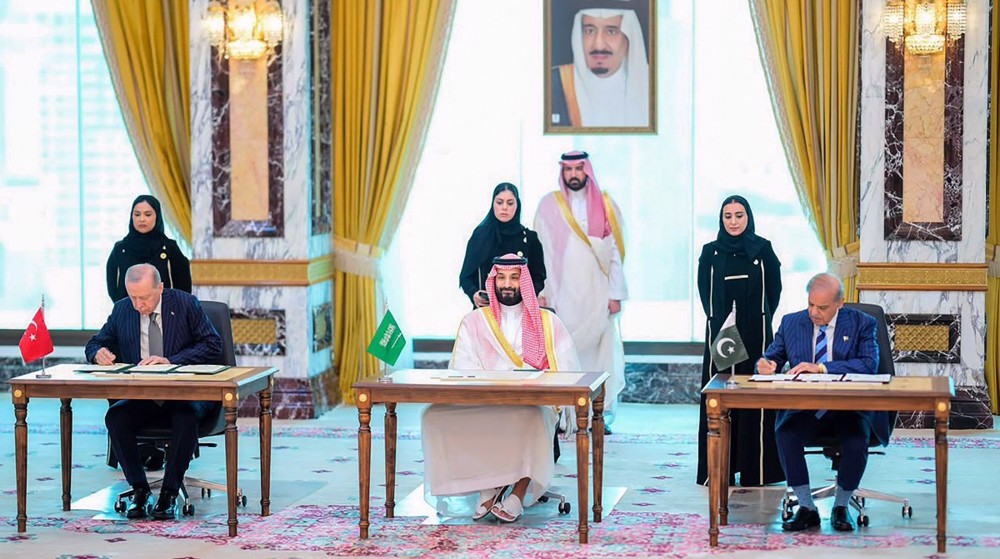
The agreement was signed on Friday in Mecca by Turkish President Recep Tayyip Erdogan, Saudi Crown Prince Mohammed bin Salman and Pakistani Prime Minister Shehbaz Sharif.
The three countries said an armed attack against any one of them would be regarded as an attack against all, while describing the pact as a means of strengthening collective deterrence and regional stability.
The agreement did not specify the practical obligations of its members. A Turkish official said it was not directed against any particular actor, remained open to other regional countries and did not replace existing bilateral or multilateral arrangements.
Farooqui said the absence of Egypt from the initial agreement was particularly significant.
“The important thing about the announcement is the conspicuous absence of Egypt,” he told the Press TV website, adding that the possibility of a Turkish-Egyptian military pact was central to understanding the regional balance.
“The Egyptian question is paramount: why has it taken a pass,” the analyst asked.
He added that such a pact would represent a much stronger counterweight to Israel and said the United States understood the implications.
“So it seems to have intervened to prevent the nightmare from happening,” he said.
Egypt’s position, however, has not been presented as permanently outside the arrangement. Turkish Foreign Minister Hakan Fidan said Saturday Egypt could eventually join the pact after several technical issues were resolved.
He described Egypt as Ankara’s “natural partner” and said other countries had also expressed interest in joining, although the founding members were still discussing how expansion should be handled.
The new military alliance comes amid US-Israeli destabilizing actions in the region. Since October 2023, Israel has waged a genocidal war on Gaza, invaded southern Lebanon and occupied territory in Syria, while also launching two wars of aggression with the United States against Iran that triggered massive retaliatory strikes against US and Israeli assets in the region.
Meanwhile, the regime’s bellicose agenda has raised concerns about the so-called “Greater Israel” scheme that regards Israeli-occupied Palestinian territories as well as parts of Egypt, Jordan, Syria, and Lebanon as part of the Zionist entity.
Israeli regime prime minister Benjamin Netanyahu said in October 2025 that he feels a deep connection to “this vision”, describing it as “a historical and spiritual mission.”
On the other hand, some analysts have linked the growing Turkish-Israeli rivalry to a broader contest over regional influence. Turkey and Israel have maintained diplomatic relations since 1949 and their strategic and commercial ties have survived tense rhetoric.
Yet tensions seem to have intensified recently over Gaza, Syria, energy routes, maritime issues and Ankara’s expanding regional role.
Pakistan’s position has added another dimension to the emerging security alignment.
Pakistani Defense Minister Khawaja Asif said on Saturday, following the signing of the agreement, that Israel was “a threat to the entire Muslim world” and called for “a united military front” against it, while noting that the regime poses a direct threat to countries across the region.
The broader security environment has also been affected by changes in the US military posture. Washington has reportedly withdrawn warplanes and other military equipment from countries including Qatar and the United Arab Emirates following Iranian retaliatory strikes.
Asked whether the new alliance could eventually contribute to a region without US military presence and with Israel more contained, Farooqui said the current arrangement is insufficient.
“Not without Egypt,” he told the Press TV website. “The Saudi-Turkish-Pakistan pact is mostly for show. By itself, it is not an effective balancing coalition against Israel.”
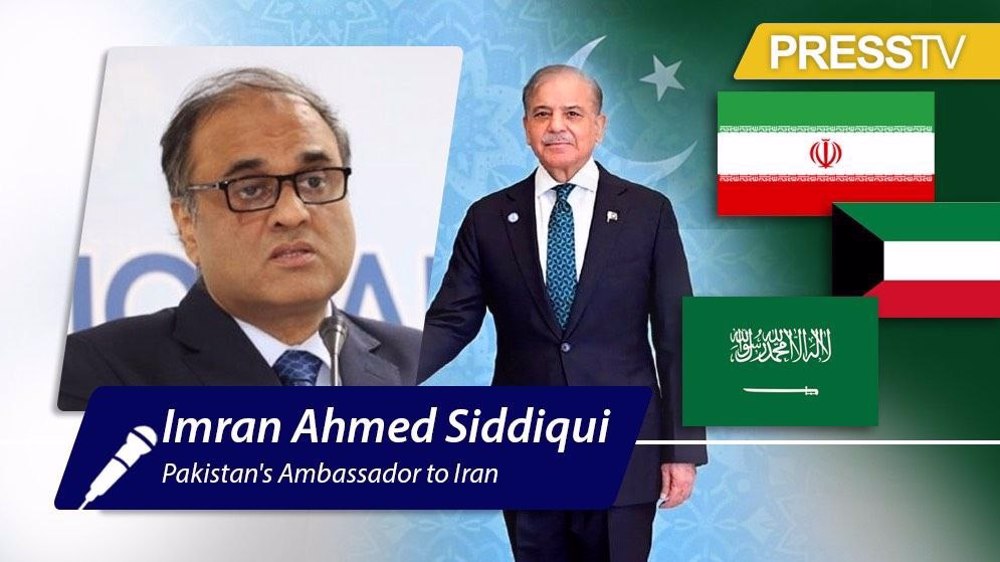
Pakistan committed to promoting peace and security through dialogue in West Asia: Envoy
No question of surrendering weapons; proposal only covers heavy weapons storage: Hamas envoy
Response to US-Saudi aggression must protect Iraq’s sovereignty, deter future attacks: Analyst



Israel strikes southern Lebanon after US-mediated talks in Rome
VIDEO | Hormuz crisis
Saudi-Turkish-Pakistani military alliance shaped by fear of Israel, not Iran: Analyst
Bulgaria summons Ukrainian envoy after drone explodes on its territory
Iran won’t hold new talks as long as US violates war-ending understanding: FM Araghchi
Yemeni forces launch fresh missile, drone strikes on Saudi-backed mercenaries
VIDEO | Press TV's news headlines
President Pezeshkian meets Leader as he begins his third year in office


 PressTV NEWSLETTER
now
PressTV NEWSLETTER
now
 This makes it easy to access the Press TV website
