Iran rolls out new agricultural trade phase after US-Israeli war

Iran's Agriculture Minister Gholamreza Nouri Ghezeljeh has announced a new phase in the country's agricultural trade and export sector, stressing that food security has remained intact despite months of wartime conditions.
Nouri told the opening of Iran Agrofood 2026 in Tehran on Thursday the new phase is built on three pillars of the removal of subsidized foreign exchange from production chains, the strategic utilization of Iran's geographical position along key transit corridors, and substantial industrial overcapacity in food processing.
"During the past nearly four months, when the country faced wartime conditions and various restrictions, no disruption occurred in the supply of essential goods or the country's food security," the minister stressed.
He added that producers and suppliers had faced additional costs but continued to ensure uninterrupted distribution of basic commodities.
The minister's remarks come as Iran emerges from a military confrontation with the United States and Israel that began in late February.
Despite the sustained military aggression and US naval blockades, Iran has maintained stable supplies of food and fuel, supported by what analysts describe as a "resistance economy" policy of self-reliance.
British newspaper the Financial Times has attributed this resilience to Iran's decades-old strategy encouraging domestic production.
Central to the new agricultural trade phase is the government's decision to end the controversial subsidized dollar allocation system, which had long been criticized for encouraging rent-seeking and failing to protect households.
Economists have long faulted the subsidy distribution system, noting that the huge gap between subsidized and open-market rates incentivized arbitrage and corruption.
The unified exchange rate policy was described by Central Bank Governor Abdolnaser Hemmati during a visit to Moscow as "a good policy that has been implemented," with traders raising no complaints about exchange rates during recent business meetings.
Nouri said Iran aims to become a regional hub for food trade by leveraging its strategic location along the North-South Transport Corridor, a 6,000-kilometre multimodal route linking India's Mumbai port to Russia's St Petersburg via Iran and Azerbaijan.
"Our planning has been carried out on the basis of utilizing the capacity of transit corridors and the country's geographical position to develop trade in agricultural products and strengthen Iran's role in the regional food supply chain," the minister stressed.
Iran's industrial overcapacity provides the foundation for this ambition. According to Nouri, processing industries operate at three times domestic demand in key sectors.
The minister also revealed that for the first time this year, Iran has utilized both its northern and southern ports simultaneously for cargo shipments, with 25,000 tonnes of goods moving through northern ports, reflecting a strategy of diversifying trade routes.
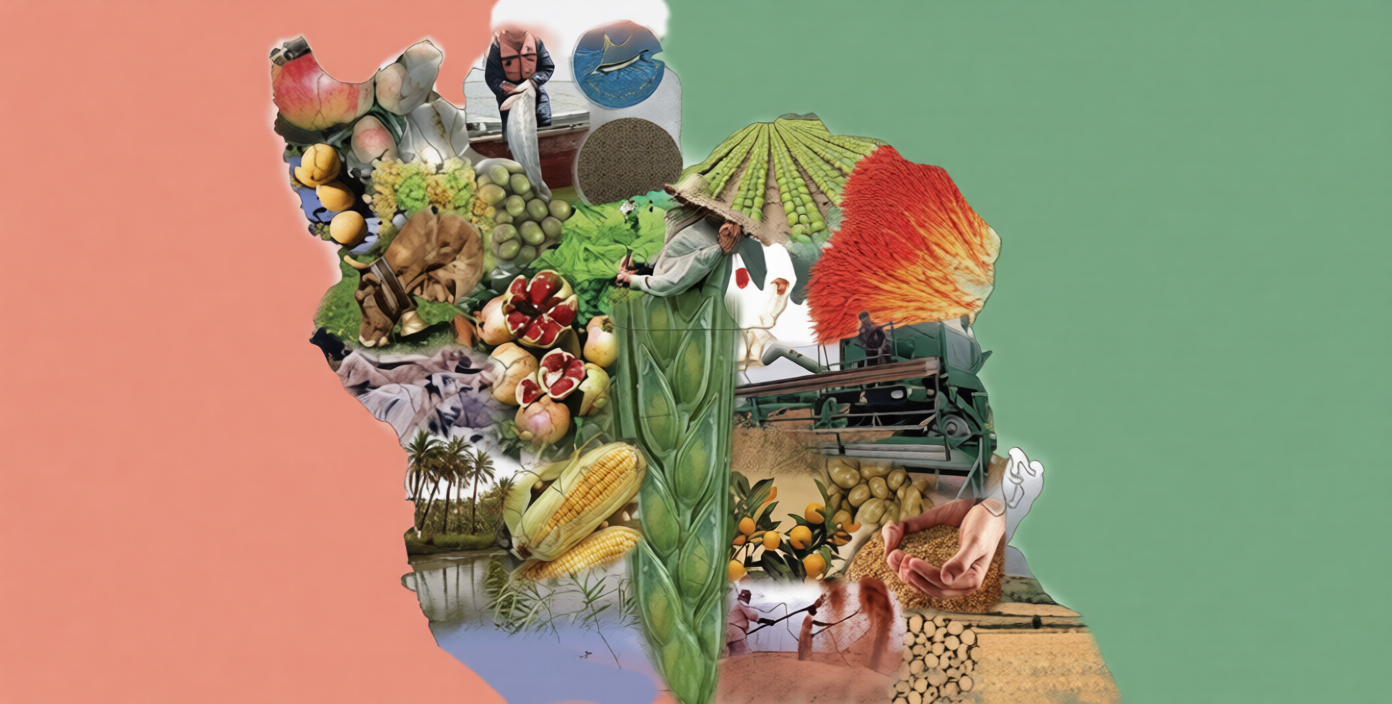
The Iran Agrofood 2026 exhibition, which opened on Thursday at the Tehran Permanent International Fairgrounds, brings together 484 domestic companies and 15 foreign firms from Spain, Italy, Turkey and China.
The exhibition covers approximately 47,000 square meters and runs through June 21, with expanding trade cooperation, introducing new technologies, attracting investment and boosting exports among its main objectives.
Growing Russia ties
In a separate development, Central Bank Governor Hemmati announced from Moscow that the third and final phase of linking Iran's Shetab interbank network with Russia's Mir payment system is being implemented and expected to be completed within two months.
Russian banks have also started processing letters of credit issued by Iranian banks, significantly reducing import costs for Iranian businesses.
The Central Bank chief noted that official trade between Iran and Russia currently stands at around $6 billion but stated that the figure should increase.
“Our approach is to make maximum use of the capacities of the North-South Corridor to expand relations between the two countries; in addition, there are good opportunities in Russia and we also possess significant resources,” Hemmati stressed.
Grand Ayatollah Shobeiri Zanjani passes away at age of 98
Iran must fight US blockade with energy blockade: Deputy speaker
Iran’s president to attend UN General Assembly in New York



US aggression, economic warfare amount to crimes against humanity: Iran's UN envoy
Protests erupt in US as ICE agent shoots Venezuelan driver
US pressure fuels cooperation among Muslim states: Pezeshkian
Major TV networks suspend White House pool coverage after Trump ban
US visa ban on Palestinian UN delegation violates international agreements: Hamas
VIDEO | Press TV's news headlines
Iran calls on France to respect law after suspending French cultural institute in Tehran
Israel lobby no longer shy about its grip on US policy on Iran: Araghchi


 PressTV NEWSLETTER
now
PressTV NEWSLETTER
now
 This makes it easy to access the Press TV website
