Wildfires leave a trail of destruction across North America and Europe
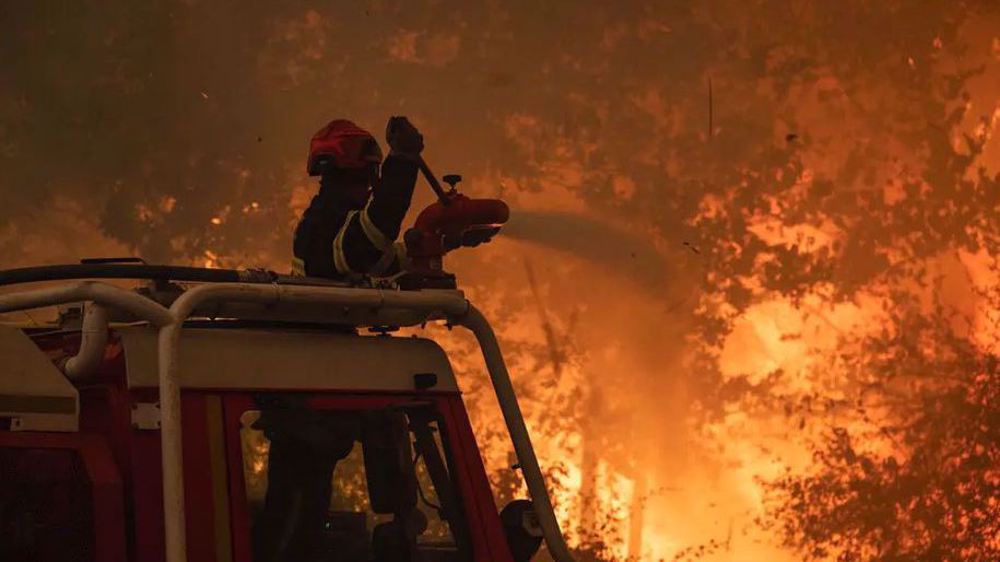
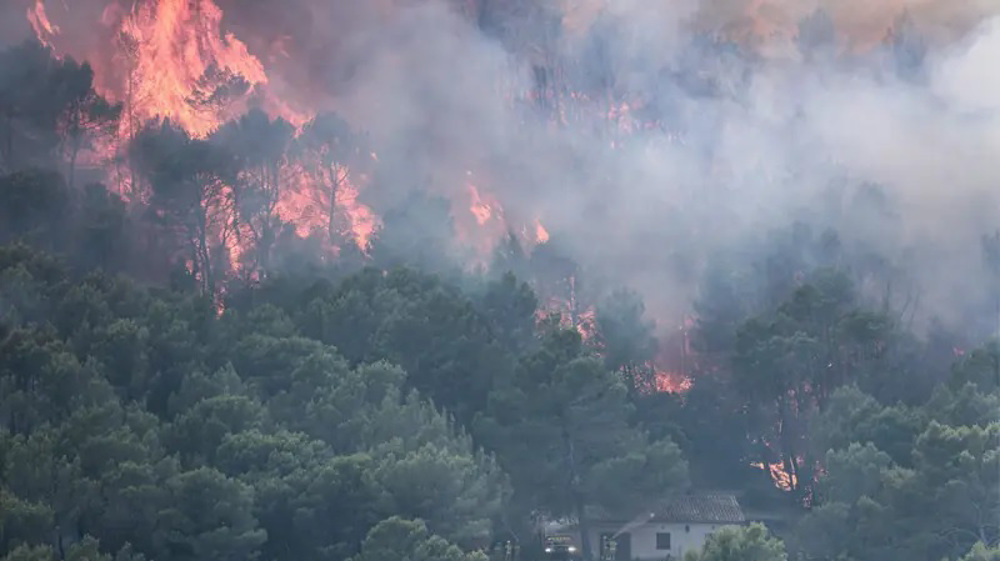
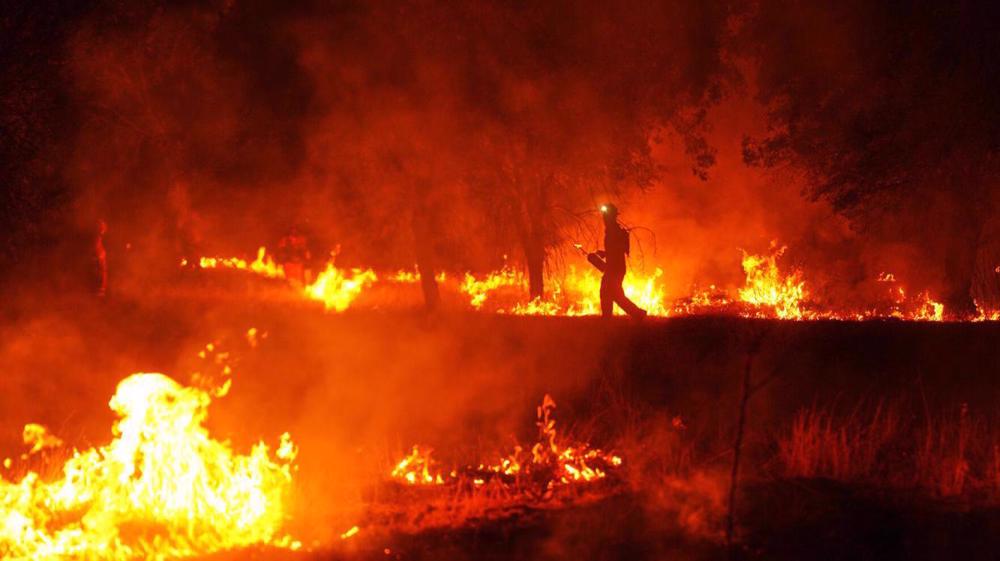
Wildfires have swept across North America and Europe, burning vast areas of land, forcing thousands of people from their homes, and destroying countless buildings on both sides of the North Atlantic.
In the United States, the northwestern State of Washington is witnessing one of the worst fire seasons on record, according to media reports on Monday.
Tens of thousands of people evacuated their homes in the Pacific Northwest as firefighters battle separate wildfires driven by hot winds and dry conditions.
Washington State Commissioner of Public Lands Dave Upthegrove said there are currently 15 wildfires burning across the state.
A trio of blazes along the Old Trails Fire, the Fairview Fire and the Autumn Lane Fire joined at the city of Spokane, the worst hit region in the area.
The Spokane Complex Fire forced more than 60,000 people to evacuate the area.
Spokane Mayor Lisa Brown called the situation “really the worst natural disaster our region has faced” as she thanked the first responders who, she said, had worked for 30 hours straight in many cases.
City officials estimated that at least 600 homes, businesses, and other structures had been destroyed, though no deaths or injuries had been reported.
Washington's Governor Bob Ferguson declared a statewide wildfire emergency on Sunday, warning that the blazes extend far beyond Spokane.
He mobilized National Guard personnel, and imposed restrictions on outdoor burning while also requesting federal emergency assistance.
Approximately 4,000 firefighters are battling the wildfires. It is the fourth consecutive year of statewide drought in Washington.
Climate experts say the extreme weather conditions driving these wildfires is part of a broader pattern affecting the American West.
The "heat dome" covering the area has brought temperatures surpassing 40 degrees Celsius across much of the region, with some areas in Arizona and California approaching or exceeding 50°C.
United Nations Economic Commission for Europe (UNECE) estimates that across the United States, approximately 1,849,000 hectares have burned in 2026, so far.
UNECE says, in Europe, the situation is equally as bad with estimated 434,000 hectares burning across the continent this year.
The country worst hit in Europe is Spain which has experienced record wildfires unprecedented in decades.
Spain's State Meteorological Agency (AEMET) estimated 180,000 hectares had been incinerated, so far. This is about six times the area burned by wildfires during the same period in 2025.
Next in line is France, where nearly 100,000 hectares burned. This included the wildfires in the Gironde region which destroyed around 42,000 hectares of pine forest.
French Interior Minister Laurent Nunez confirmed that fires have affected 119,000 hectares in the country, so far this year.
Greece witnessed a major blaze near Athens and another on the island of Crete, forcing mass evacuations, with firefighting efforts hampered by gale-force winds and intense heat.
At least 18 people have died in northern hemisphere fires since June 1, including several firefighters.
In addition to the human toll, the economic and environmental costs of the wildfires are equally severe.
In the European Union alone, wildfires are estimated to cost around 2.5 billion euros ($2.88 billion) annually through infrastructure damage, lost tourism revenue, and disrupted economic activity.
The environmental toll of the wildfires includes the release of huge amounts of dangerous gases including carbon dioxide — nearly 275 million tonnes from fires across Canada, the United States, Russia, France, and Spain — creating a dangerous feedback loop that accelerates global warming.
In addition, a blanket of black carbon left by these wildfires can settle on Arctic ice, darkening its surface and speeding up melting.
Climate experts see global warming as the driving force behind this unprecedented fire season.
Spanish climate experts noted that Western Europe is warming faster than many other parts of the world, making the region increasingly prone to heatwaves and the extreme fire conditions they create.
"Some studies show that Western Europe -- including the United Kingdom, France, Italy, Spain and Portugal -- is warming faster than many other parts of the world, and that we are also more prone to heatwaves," said AEMET's spokesman, Ruben del Campo.
According to the AEMET spokesperson, countries around the Mediterranean "are among the most vulnerable to heatwaves under the new climatic conditions."
He noted that temperatures in parts of Spain had already reached 35 degrees Celsius by the end of May.
The World Meteorological Organization said in July that Europe as a whole has warmed by around two degrees Celsius since the historic heatwave of 1976. It attributes the sustained rise in summer temperatures largely to climate change, a conclusion del Campo shares.
"There is a clear link with climate change. A rise in average temperature always leads to an increase in episodes of extreme heat, and this is exactly what we are seeing," he said.

US man standing trial for shooting three Palestinian students says CIA, Mossad instructed him

‘I support Israel’: Comedian’s opening line prompts audience walkout

When motherhood loses its meaning: Lindsay Clancy case and the moral decay of American society



Iran’s president to attend UN General Assembly in New York
Hamas condemns Netanyahu’s illegal entry into Al-Aqsa Mosque
Iran dismantles terrorist cells in three provinces
VIDEO | Claim that new deal won’t undermine Greenland sovereignty is a lie: Author
VIDEO | Press TV's news headlines
Iranian lawmakers push for NPT withdrawal, submit bill to Parliament's Presiding Board
Persian Gulf markets plunge as Yemeni forces strike Riyadh
VIDEO | Iran war will break America


 PressTV NEWSLETTER
now
PressTV NEWSLETTER
now
 This makes it easy to access the Press TV website
