Lebanon files complaints with UN Security Council over Israeli attacks
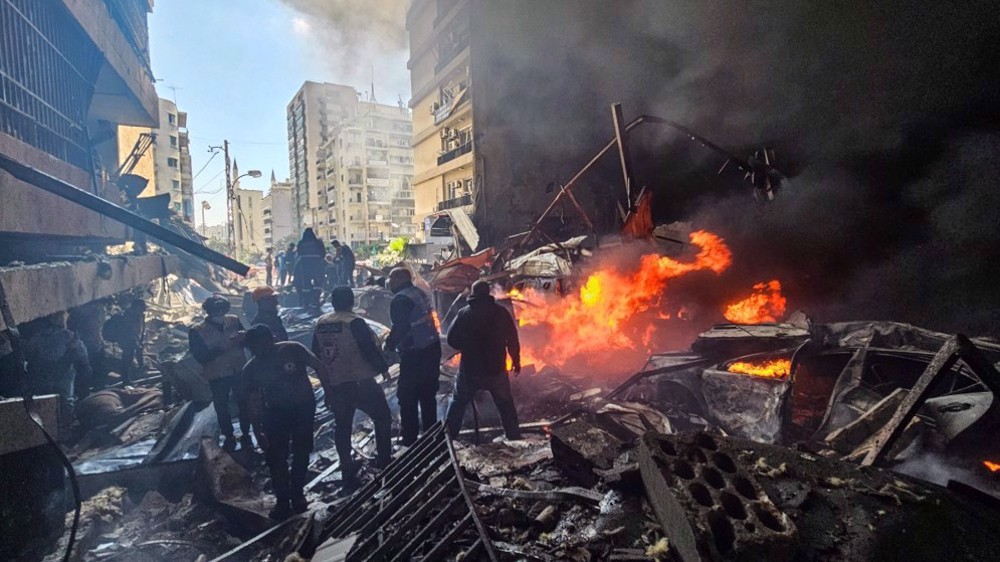
Lebanon has filed two separate complaints with the United Nations Security Council and the UN Secretary-General over Israeli attacks on its territory.
In a statement released on Sunday, the Lebanese Foreign Ministry said it had submitted an official letter based on a report by Lebanon’s National Council for Scientific Research, saying the Israeli military has sprayed the herbicide glyphosate on several border villages in southern Lebanon in February 2026.
According to the statement, chemical analyses conducted on soil samples collected from the areas of Aita al-Shaab, Ras al-Naqoura and Dhayra confirmed the presence of glyphosate at unusually high concentrations.
The ministry further said recorded levels reached as high as 22,750 micrograms per gram, significantly exceeding concentrations associated with normal agricultural use.
Lebanon argued in its complaint that the Chemical Weapons Convention prohibits the use of herbicides as a means of warfare, calling on the United Nations to address the violation.
The ministry further noted that it had also submitted a second complaint in June concerning continuing Israeli attacks inside Lebanon, including a strike on a Lebanese Army vehicle along the Kfartebnit–Khardali road in southern Lebanon.
According to the ministry, the attack killed three Lebanese military personnel, including two officers and a soldier, while they were carrying out duties in the south of the country.
Lebanon urged the United Nations to condemn the incident and take immediate steps to prevent similar attacks from recurring, while ensuring implementation of international commitments, including UN Security Council Resolution 1701, which ended the 2006 war between Israel and the Lebanese resist movement Hezbollah.
The ministry went on to say that the incidents occurred while negotiations between Lebanon and Israel, mediated by the United States, were underway in Washington.
It further warned that military action targeting the Lebanese Army could undermine efforts to maintain a ceasefire, strengthen state authority in Lebanon and advance a sustainable political solution.
The complaints come amid continued tensions along the Lebanese-Israeli border.
Since March 2, the Zionist occupation regime has been waging a brutal offensive against Lebanon, resulting in the martyrdom of more than 3,700 individuals and the injury of over 11,480 others, while forcibly displacing more than one million Lebanese people.
Even after a ceasefire was declared on April 17, Tel Aviv has persisted with the offensive, engaging in daily shelling and the extensive destruction of homes across numerous villages.
Israeli attacks escalate in Lebanon as US-brokered deal yields only concessions: Press TV reporter

Hezbollah leader: Iran thwarted US-Israeli war goals; ultimate victory belongs to resistance
Remembering Sabra and Shatila massacre: Why memory is the ultimate shield against erasure



Eight US sailors of USS Abraham Lincoln attempted suicide during war on Iran: Navy
Tehran blasts Canada for downplaying Trump’s threat to ‘annihilate’ Iran
VIDEO | Tunisia fuel truck drivers go on strike over social rights
Bahraini demonstrators censure Khalifah regime’s detention, trial of Shia scholars
'We fight for Iran': Female athletes win two rowing golds, silver at 2026 Asian Games
VIDEO | From blockade to harvest: Yemen's push for agricultural independence
2026 Asian Games: Iran secures one wushu gold, three silvers
VIDEO | Press TV's news headlines


 PressTV NEWSLETTER
now
PressTV NEWSLETTER
now
 This makes it easy to access the Press TV website
