How Iran turned battlefield gains and regional power into strategic postwar leverage against US
By Press TV Strategic Analysis Desk
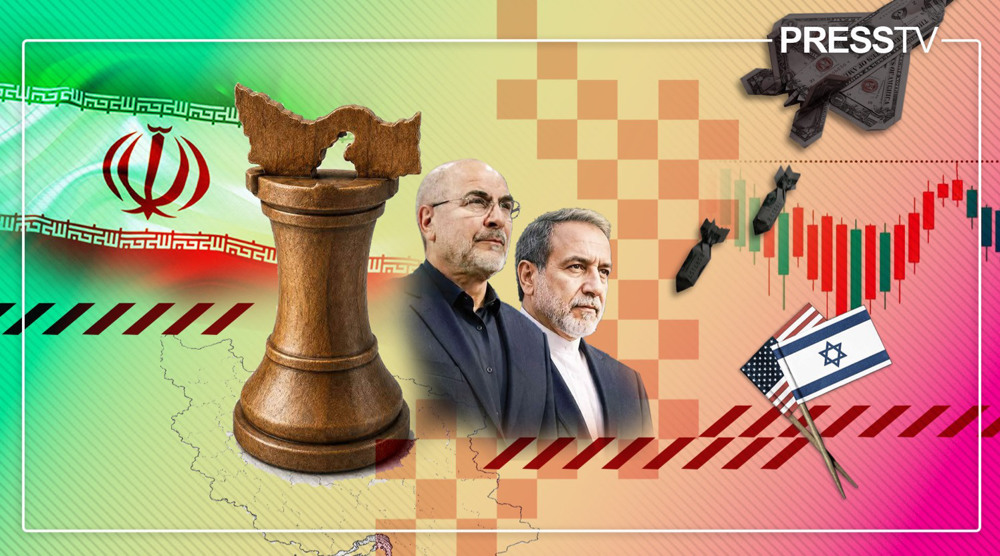
In the annals of modern military and political history, wars are typically defined by territorial shifts, casualty counts, or treaty signings. Yet a rarer kind of war also exists, one in which a nation is reforged in the crucible of illegal and unprovoked aggression.
The aftermath of the recent war imposed on the Islamic Republic of Iran has exposed a truth that Washington and Tel Aviv are loath to admit: despite immense military pressure, sweeping psychological warfare, and repeated claims of victory, the aggressors failed to achieve a single strategic objective.
What emerged from this third imposed war in less than a year was not the collapse or fragmentation of the Islamic Republic that Western pundits and policymakers had envisioned, but a more cohesive, battle-hardened, and assertive nation, one now operating from a position of undeniable strength, enhanced deterrence, and regional power.
The enemy designed this war as a knockout blow, but it became the canvas for Iran’s emergence as a regional superpower. This is not simply a story of survival, but a tale of strategic inversion, where the hunter becomes the hunted, and the architect of destruction finds itself scrambling for a desperate exit.
As we reflect on the events leading to a ceasefire and a prospective deal, we are witnessing not merely the end of an imposed war but the transformation of the West Asia region and the decisive end of American hegemony.
The anatomy of a defeated enemy
For the past year, and especially during the recent imposed war, the world watched as a coalition of aggressors, led by the American regime and its auxiliary, the Zionist entity, unleashed what they believed would be a fatal trilogy of blows: two full-scale military assaults bookending a period of internal subversion or "quasi-coup."
Their aim was the destruction of the Islamic Republic of Iran, the dismemberment of its territory, and the looting of its wealth. Yet the enemy failed catastrophically. It failed despite unleashing its full arsenal of military, economic, and psychological warfare as it confronted a powerful, united, cohesive and resilient Iran.
The Iran that has emerged from this third imposed war is profoundly different from the Iran that entered it. The ultimate deterrent against future aggression is no longer merely a missile inventory or a nuclear program, but it is the demonstrated, living reality of national unity. The wicked enemy bet on internal fracture but it came across internal fusion.
As a result, the American president and his circle find themselves trapped in a hall of mirrors, peddling exaggerated and hollow claims that the world no longer believes. The reality on the ground, visible to every observer from the Persian Gulf to the Mediterranean, speaks louder than any propaganda spectacle manufactured by the enemy.
The fact of the matter is that America has failed to produce a single tangible achievement from this war. Its narrative is a castle built on sand, and the tide has already swept it away.
✍ Analysis - One year after 12-day war: Iran rises as regional superpower while US Empire slips into oblivion
— Press TV 🔻 (@PressTV) June 12, 2026
By Press TV Strategic Analysis Deskhttps://t.co/eHWJw8DYJz
The strategic retreat: From confrontation to pleading
The most humiliating indicator for the American regime during this period has been its repeated retreat from renewed confrontation. The enemy turned to negotiations not out of moral awakening, but out of defeat – and the fear of more crushing blows.
If victory on the battlefield against Iran had been possible, America would never have accepted a ceasefire. Its declared goal was the destruction of the Islamic Republic and to abandon that goal for a diplomatic off-ramp is not statecraft but a confession of bankruptcy.
America launched an unprovoked and illegal war to force Iran into submission, and it is now ending the war by surrendering to Iran. This inversion of fortune is the central analytical theme of Khordad 24. The enemy, which sought salvation through destruction, is now seeking "salvation from war through pleading diplomacy."
Let us dissect the American retreat to see how Iran forced a superpower to capitulate.
The Strait of Hormuz: The Inverted Leverage
The enemy launched the war to destroy Iran and partition its territory. Today, it "begs Iran to restore the Strait of Hormuz to its pre-war condition." Let that sink in.
The aggressor is now the supplicant. Not only did Iran not lose an inch of soil, but the arrogant aggressor never dared set foot on Iranian territory – except to leave in humiliation, as witnessed in the plains of Isfahan, where the enemy suffered a historic disgrace.
A new and permanent reality has taken shape, which means that Iran has added the Strait of Hormuz to its sphere of power as a strategic weapon, capable of switching from safety to automatic fire mode at any moment, whenever the situation demands.
In the event of any future aggression, energy markets, shipping routes, insurance systems, and global economic confidence will be affected, as Iran has warned.
Unlike the Arak heavy-water pipes, which were filled with concrete, this strategic waterway is a living, breathing lever of power. It is now the guarantor of America's exit commitments. This is the true geometry of superpower status: forcing the world's sole hegemon to accept a new permanent reality on the hegemon's most vital energy artery.
✍️ Analysis - The tide has turned: Iran’s strategic control of the Strait of Hormuz crushes American naval supremacy
— Press TV 🔻 (@PressTV) June 6, 2026
By Press TV Strategic Analysis Deskhttps://t.co/fpVqRHqVRD
The Resistance Front: Compelling the superpower to restrain its rabid dog
Perhaps the most astounding shift concerns the Axis of Resistance. During the silent battlefield phase, America had arrogantly demanded that Iran dissociate itself from Hezbollah and halt all political, financial, and military support to its regional allies.
Not only did Iran refuse, but today, it is Iran that compels America to restrain its rabid dog – the Zionist regime in Lebanon. This is a seismic shift in regional polarity. A dying superpower is now being forced by the rising Iran to halt a war in a third country, merely to salvage its own exit strategy from a dangerous quagmire of its own making.
Iran's superpower status is demonstrated not by what it does on its own soil, but by its ability to dictate terms on a battlefield hundreds of miles away. American power projection in West Asia was previously treated as an untouchable reality. Now, the region is witnessing the gradual erosion of that dominance and the emergence of a new balance of power.
The illegal Israeli occupation of Lebanese territory is ending not because of European diplomacy, but because Tehran turned the screws on Washington.
The nuclear dossier: From destruction to dilution
America's military strategy has been largely consistent. During the 12-day war last year and the Ramadan war this year, it bombed nuclear sites, facilities, and installations, repeatedly claiming to have destroyed Iran's nuclear infrastructure.
Today, that same America is forced to back down completely. It is now requesting that Iran permit – under IAEA supervision – the dilution of nuclear materials on its soil. More importantly, the US has been forced to recognize Iran's right to enrichment and its nuclear needs as a signatory to the Nuclear Non-Proliferation Treaty (NPT).
The enemy's only talking point is Iran's commitment not to build nuclear weapons. But the fact is, Iran has been telling the world this for years. This is not an American achievement but an Iranian baseline. And crucially, this commitment is reversible.
If the enemy breaches its obligations, like it has several times in the past, the commitment becomes null and void. The enemy has traded the substance of its war aims – the destruction of facilities – for a rhetorical ghost: a pledge already given.
✍️ Analysis - Lessons of war: Strait of Hormuz control and nuclear sovereignty define Iran’s inviolable redlines today
— Press TV 🔻 (@PressTV) May 27, 2026
By Press TV Strategic Analysis Deskhttps://t.co/BhrkiZkPqO pic.twitter.com/4dlI6dlWCn
Sanctions: The broken shackles
For decades, successive American administrations imposed every form of unjust, illegal, and draconian sanctions on the Iranian people. These economic sanctions served as one of Washington’s primary instruments of pressure against Iran and the goal was economic collapse to force the country’s political surrender.
After military, reputational, and prestige defeats, America is now forced to pledge the removal of all primary and secondary sanctions in every form. Even if America fails to honor this commitment, the scene itself reveals the winner and the loser.
The loser is the one who promises to remove sanctions as a reward for the other side's survival. The winner is the one who survived – and now holds a disciplinary stick.
Should America renege – and it cannot be ruled out – the Strait of Hormuz will once again descend upon it like a rod, and Iran's non-weaponization pledge will evaporate.
War reparations: The billion-dollar irony
There is an irony in the financial outcome. Trump famously humiliated Barack Obama for allegedly sending Iran one billion dollars following the signing of the JCPOA in 2015.
Now, to escape the quagmire he walked into, Trump has been forced to commit hundreds of times more than what Obama was compelled to give Iran. These post-war economic arrangements represent a reversal of historic power dynamics.
The idea that the enemy, after seeking to weaken Iran through bombings and bloodshed, now faces pressure to facilitate economic recovery is proof of strategic endurance.
Billions of dollars will be pouring into Iran at the very first moment the war’s end is announced. The enemy that came to plunder and loot has ended up emptying its pockets. This is the cost the enemy has to pay for resorting to foolhardy military adventurism.
The guarantor: Iran’s inherent power
The guarantor of America’s commitments is not its good faith, and it never was.
The guarantor is Iran’s own inherent power: the Strait of Hormuz, defensive military capabilities, the united and resilient Resistance Front, a mobilized populace, and the correct calculations of its officials. These elements consolidate the enemy’s humiliation.
The political defeat merely formalizes the military defeat already suffered on the ground.
Negotiations are not alternatives to resistance, but instruments made possible by resistance. Diplomacy succeeds only when backed by battlefield power and demonstrated deterrence.
✍️ Analysis - Strategic imperative: Iran's dual approach blends robust military readiness with assertive diplomacy
— Press TV 🔻 (@PressTV) May 28, 2026
By Press TV Strategic Analysis Deskhttps://t.co/poZtRiWlz1 pic.twitter.com/WJEEqLx9VI
The trajectory of collapse
The American Empire has entered the beginning of its decline toward collapse. The Zionist regime, too, has embarked on the path to collapse sooner than anticipated. In fact, the gradual erosion of US hegemony is tied to the deepening strategic vulnerability of Israel.
The accounts remain open: from the blood of the martyred Leader, to senior commanders, to the soldiers of the Dena frigate, to the children of Minab and Lamerd – the free peoples of the region and the resistance movements have many unsettled scores.
This is not a final victory, but a stage. Greater humiliations for the enemy are still in store.
The mighty hand of God and the emerging order
The enemy that came to destroy a sovereign and independent country has been forced to legitimize and acknowledge that country's superpower status. The enemy that came to impose another illegal blockade has been forced to become a supplicant for the reopening of a strait. The enemy that came to dismantle a peaceful and legitimate nuclear program has been forced to recognize Iran's right to enrichment.
This victory is not magic or miracle, but the product of a solid barrier of resistance – and the revelation that Iran's unrevealed surprises are far greater than what has already been exposed. The enemy saw a house of cards and found a mountain range.
The mighty hand of God is with those who believe in Him. The message is clear: on Khordad 24, the balance of power in West Asia did not merely shift, but inverted. America sought a new regional order and ended up confronting a new and resurgent Iran. And that Iran – powerful, united, and resilient – is now dictating the terms of the future.
The path to greater humiliations for the aggressors and greater victories for the Resistance Front has only just begun.
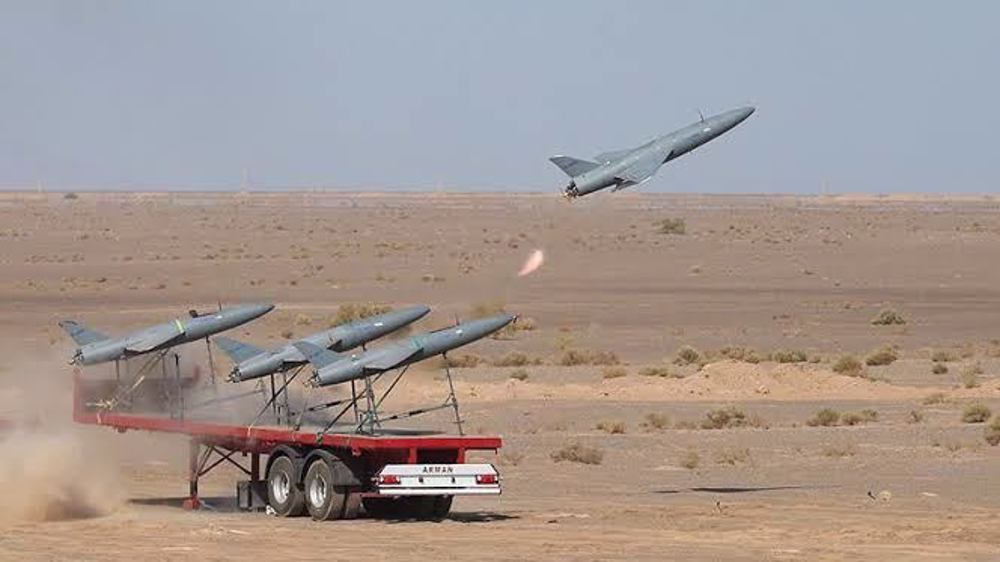
Iran reconfigures military capabilities, upgrades Arash drone for battlefield: Army
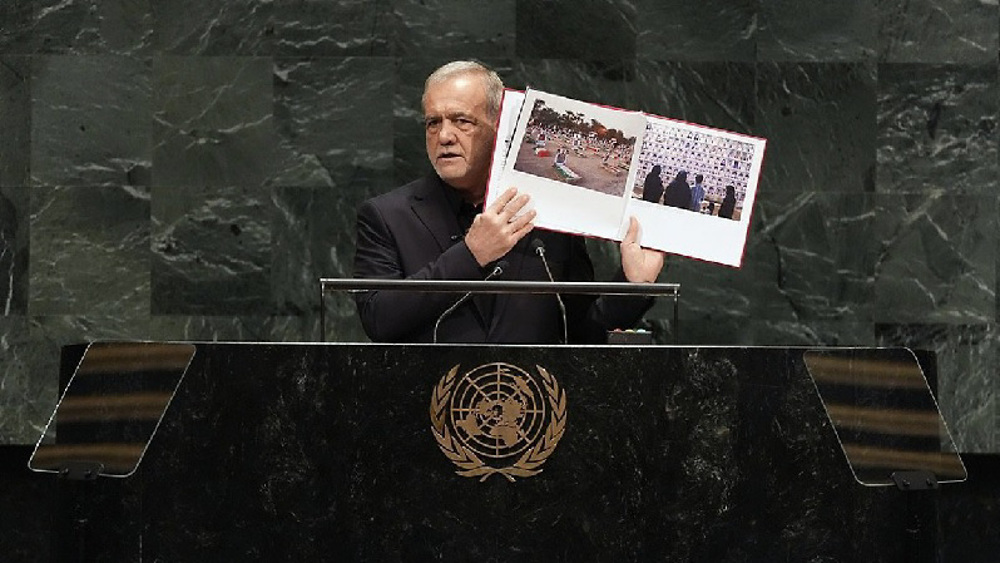
President Pezeshkian UN speech
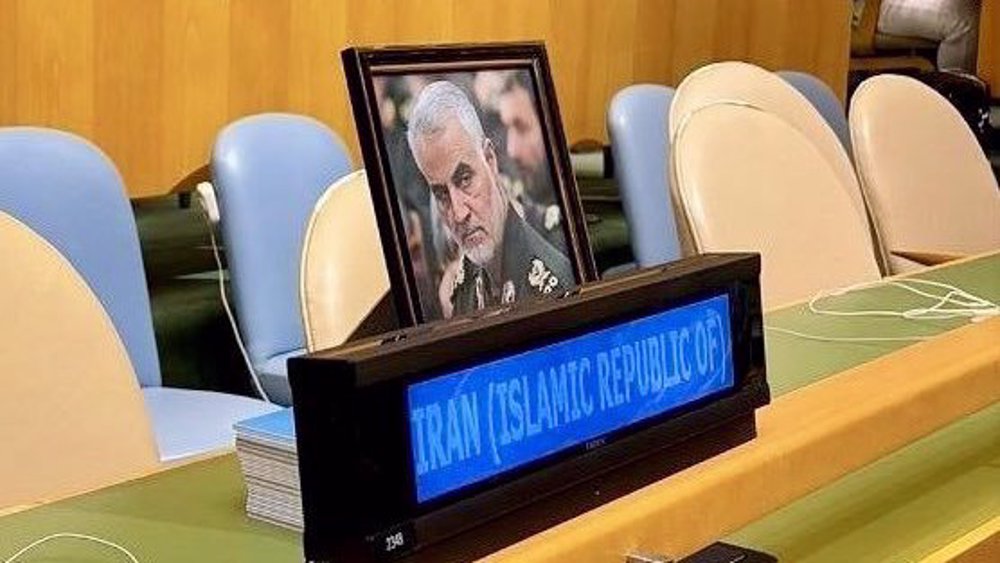
Martyr Soleimani’s portrait confronts Gaza butcher as world walks out on Netanyahu at UN



IRGC: Iran will continue punishing US until Tehran’s conditions are met
VIDEO | German teens skip schools nationwide in protest at compulsory military service
VIDEO | Tehran children center marks 1,000th stem cell transplant
VIDEO | Palestinians decry world officials' inaction on Israeli crimes at UNGA
VIDEO | 'We’re seeing a replay of the US-backed 1964 coup in Brazil': Analyst
Iran FM outlines seven-day plan for conditional reopening of Strait of Hormuz
Saudi Arabia has kept nuclear weapons option open: Report
VIDEO | 26th ICCU focuses on future of cardiovascular medicine


 PressTV NEWSLETTER
now
PressTV NEWSLETTER
now
 This makes it easy to access the Press TV website
