'Unified Resistance Front': Iran recasts region’s balance of power, security paradigm with Operation Nasr
By Press TV Strategic Analysis Desk
For far too long, the balance of power in West Asia followed a grim and predictable pattern: the Zionist regime would strike first, resistance movements would respond within measured limits, and the world would watch the dangerous spectacle unfold from a safe distance – detached, indifferent, and with no direct consequences to bear.
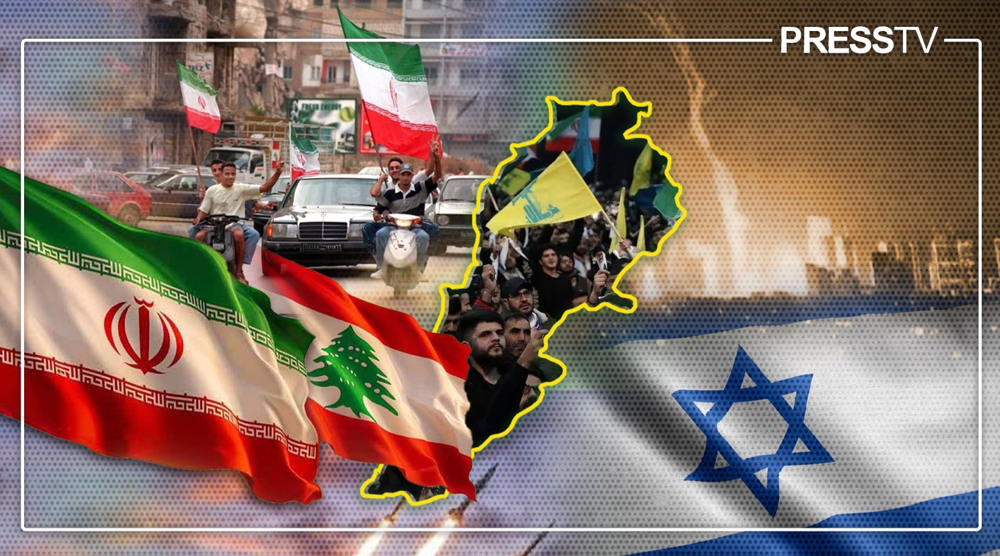
That era ended on the night Iran launched "Operation Nasr" against the Zionist regime over its relentless aggression against Lebanon, including the Dahiyeh suburb of Beirut.
What began as a defensive operation in response to the regime's unprovoked attack on Dahiyeh, the pulsating heart of Hezbollah's resistance movement in Beirut, crystallized into something far more significant than a single military operation.
Operation Nasr, a powerful sequel to Operation True Promise 4, was not merely a retaliatory military operation against Israel but the public unveiling of a new regional doctrine: the "Unified Resistance Front." Under this doctrine, the old rules no longer apply.
The true significance of the operation lies not only in the barrage of missiles and drones launched toward Israeli targets, but in the political and military message embedded within them. Iran was effectively declaring that attacks on any component of the resistance axis – whether in Lebanon, Iraq, Yemen, or elsewhere – would no longer remain geographically isolated. Any aggression against one front would now trigger reactions from other fronts.
The Israeli aggression on Dahiyeh became the immediate trigger for this transformation. Iranian officials and military commanders had repeatedly warned that Beirut and Dahiyeh represented clear red lines. When Israel breached the red line, Iranian armed forces responded the way they should have, targeting Israeli military infrastructure, including the strategically important Nevatim and Tel Nof airbases, with pinpoint accuracy.
New resistance front and clear red lines
The most immediate signal of this seismic shift came from the strongly worded statement issued by the Khatam al-Anbiya Headquarters, the top military command, announcing the suspension of Operation Nasr on Monday.
Military analysts who parsed the language of the statement noted something unprecedented: Iran was not declaring a one-time retaliation but a permanent posture.
The message made it unmistakably clear that any continuation of the Zionist regime's aggression, even attacks confined to southern Lebanon, would now be considered Iran's red line, not only Hezbollah's red line. This distinction is strategically significant.
For years, the enemy operated under the cynical assumption that it could surgically degrade resistance forces without provoking a direct Iranian response. The logic was to strike Hezbollah and expect Hezbollah to strike back within the unwritten rules of limited engagement. And it was also expected that Iran would remain behind the horizon.
Operation Nasr obliterated that assumption completely and carved out new rules of engagement. When the regime bombed Dahiyeh on Sunday, the writing was on the wall. And Iran's promised response was not a warning, but a powerful demonstration of what the Unified Resistance Front looks like when one of its members is attacked.
In practical terms, this means any future Israeli or American act of aggression against one member of the resistance front will invite a coordinated response from all members of the front. Iran’s message is that the battlefield can no longer be confined to one member.
✍ Analysis - Iran’s strikes on Zionist entity in defense of Lebanon and the recalibration of regional deterrence
— Press TV 🔻 (@PressTV) June 8, 2026
By Press TV Strategic Analysis Deskhttps://t.co/uBUQMyJwBr pic.twitter.com/K7JyHO0j3d
The Yemeni equation: New front, same doctrine
Even as the dust settled over Operation Nasr, another piece of the puzzle fell into place. The Yemeni military announced a new field policy in support of Lebanon and the wider resistance front. The declaration was characteristically blunt: Zionist vessels in the Red Sea would be targeted if the regime's aggression against Lebanon continues.
Yemeni military spokesman Brigadier General Yahya Saree announced that Yemen launched a missile barrage targeting the occupied Yaffa region in rejection of the Zionist project aimed at establishing “Greater Israel” under the banner of a so-called “New Middle East.” He added that the operation also sought to break the “unjust and oppressive siege imposed by the American enemy” on Yemen and the resistance axis in Lebanon, Gaza, and Iran.
According to Saree, the operation was conducted within the framework of the “unity of fronts” doctrine and in direct response to Israeli aggression against Lebanon, Iran, and Gaza.
Saree further stressed that Yemen “will respond to escalation with escalation,” adding that military operations would intensify in line with battlefield developments and in coordination with the broader axis of resistance, which proves the point.
Yemen has already proven, through months of blockade and missile strikes, that it could close the Red Sea to enemy shipping with devastating effect. The new policy simply extends that capability into the service of the resistance front's strategic logic.
The equation could not be clearer. Geographical limitations no longer protect the enemy. The Red Sea, the Mediterranean, and the Persian Gulf are facets of a single front.
Enemy front vs. the resistance front
This brings us to the heart of the new balance. The enemy front, which includes the United States, the Zionist regime, and certain regional states whose territory and facilities enable aggression, has long operated as a unified front of its own.
American intelligence supports Israeli targeting of the resistance, Persian Gulf airspace is opened for acts of aggression and European capitals provide diplomatic cover to both.
The resistance, historically, responded asymmetrically. Hezbollah fought in Lebanon. Iran maneuvered in the shadows. Yemen defended its own waters. There was solidarity, but not the full synergy required to counter and neutralize the enemy's united front.
That asymmetry has now been corrected. The new equation pits the unity of the enemy front directly against the unity of the resistance front. And critically, not all components of the resistance have yet entered the battlefield, nor has any single component deployed its full arsenal. Many surprises remain in the offing.
This is a strategic reserve. The enemy now understands that every aggression carries the risk of escalation, not just against the immediate target, but against a coalition whose full capabilities remain unseen, unfired, and patiently waiting.
✍️ Analysis - The indivisible front: Why Iran rejects – and warns against – any war-ending deal that excludes Lebanon
— Press TV 🔻 (@PressTV) June 7, 2026
By Press TV Strategic Analysis Deskhttps://t.co/v5xGTU2Cb0
Asymmetric response: The guarantee that no treaty can provide
Meanwhile, the diplomatic track between Iran and the United States remains intact. Messages continue to be exchanged through mediators, and conditions are also being discussed. But here, we must grapple with an uncomfortable truth: if the mischievous enemy violates its commitments before an agreement is even signed – as it has done repeatedly in the past – what guarantee exists for any future deal?
The ceasefire in Lebanon provides a grim case study. The Zionist regime has repeatedly violated the terms of the ceasefire, striking southern Lebanon with impunity while the international community issues little more than carefully worded condemnations.
This is happening while diplomatic channels between Tehran and Washington remain open, channels that have supposedly produced an understanding on ending the war that was unfairly and illegally imposed on the Islamic Republic of Iran and its allies in late February.
If the US and its Zionist proxy cannot respect the very first clause of any potential agreement – a ceasefire in Lebanon – then what hope is there for the subsequent clauses? The lifting of the naval blockade. The removal of all sanctions. The release of Iran's frozen assets. The revocation of anti-Iran resolutions. Compensation for war damages.
All of these commitments could meet the same fate as Lebanon's ceasefire: violated at the enemy's convenience and enforced by absolutely nobody.
The only credible guarantee: Unpredictable response
This is why Iran's strategy has shifted decisively away from reliance on paper guarantees. The only credible mechanism for ensuring the enemy's compliance with any agreement – both in the text of any understanding and, more importantly, on the ground – is an asymmetric and unpredictable response from the resistance front.
Operation Nasr demonstrated this principle in practice. When the regime struck Dahiyeh despite clear warnings, it expected Iran to respond with a calibrated, limited strike, one that could be absorbed and followed by American-backed retaliation.
Instead, Tehran disrupted the enemy's entire battlefield calculus. The response was neither predictable nor symmetric. It was designed to overturn the board, and that is precisely what it did. It threw the enemy into complete disarray.
That same logic now applies to southern Lebanon. The enemy continues its occupation and aggression, calculating that international pressure will eventually force Hezbollah to accept a flawed ceasefire. But the united resistance front has already proven that it will not wait for diplomacy to fail. It will act with every ounce of its might against every act of mischief.
✍️ Analysis - End of 'tit-for-tat' era: Iran’s broad, asymmetric response to US attacks redraws the deterrence equation
— Press TV 🔻 (@PressTV) June 3, 2026
By Press TV Strategic Analysis Deskhttps://t.co/MVDp8qqOZQ
A strong guarantee for the resistance front
The most significant clause in Iran's published conditions for ending the war – repeatedly emphasized by the Islamic Republic and the Leader of the Islamic Revolution – is also the simplest and clearest: the war imposed on the Islamic Republic will not end unless the war against the Unified Resistance Front ends simultaneously.
This is not a procedural demand but a logical and structural guarantee. By tying America's exit from the third imposed war against Iran to America's cessation of support for aggression against Hezbollah, Hamas, and other resistance components, Tehran has ensured that the enemy cannot surgically de-escalate while continuing its proxy warfare.
If the United States wants its illegal war against Iran to end, it must also end its illegal war against the resistance front. There is no separate peace and there is no carve-out for Lebanon, Gaza, or Syria. The front is unified, and the terms are equally unified.
What comes next
The practical implementation of this strategy has already begun. During the third imposed war – the American-Zionist aggression against Iran that led to the assassination of the Leader of the Islamic Revolution and many top-ranking officials and military commanders – the Lebanese and Iraqi components of the front entered the battlefield in support of Iran.
That was the first proof of this unified front concept. Operation Nasr was the second proof when Iran intervened to prevent the regime's aggression against Beirut and Dahiyeh.
The next step will be southern Lebanon. If the regime's violations continue and its occupation of Lebanese territory persists, the resistance front has every right to intervene, using any of its components, together or independently, to support Lebanon with all available capacities.
The direction is now irreversible. The old rules are dead, and the new equation is written in the powerful responses the enemy has already failed to predict. And that, more than any missile or maneuver, is why the Unified Resistance Front changes everything.
Iran retains initiative in Strait of Hormuz despite US claims: Armed Forces
New images reveal severe destruction at US base in Kuwait after Iranian strikes
‘Live with it’: Era of US F-35s being ‘hunted down’ has begun, Qalibaf says



Persian Gulf markets plunge as Yemeni forces strike Riyadh
VIDEO | Iran war will break America
Iran Open RoboCup brings together 700 teams and around 2,000 young robotics innovators
VIDEO | News Review: Trump’s move to ban several media outlets from WH draws condemnation
VIDEO | US uses threat of drug cartels to justify Venezuela invasion: Commentator
VIDEO | Police clash with far-right protesters in The Hague
How Iran turned US military and economic aggression into strategic leverage to dictate terms
‘No restraint’ against any aggression: Iran's top military command warns US, its regional allies



 PressTV NEWSLETTER
now
PressTV NEWSLETTER
now
 This makes it easy to access the Press TV website
