Leader commemorates President Raeisi, warns of historic resistance against US-Israeli aggression
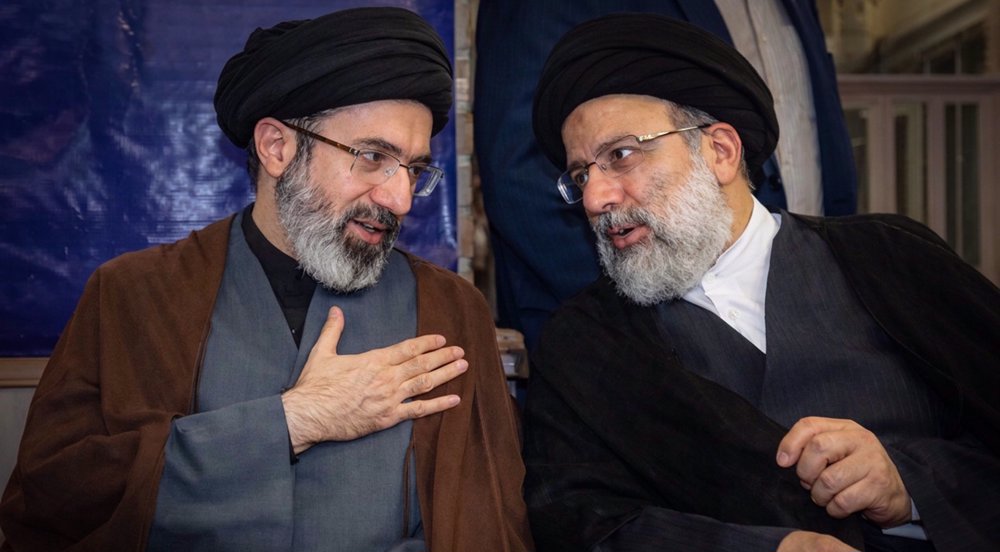
Leader of the Islamic Revolution Ayatollah Seyyed Mojtaba Khamenei has issued a message marking the second anniversary of the martyrdom of former President Ebrahim Raeisi praising his sense of responsibility, attention to justice, active diplomacy, and particularly his closeness to the people.
The message, released by the Leader's office on Wednesday, paid tribute to the martyrs of the April flight - at their head President Raeisi - saying they are "a reminder of the martyrdom of a multitude of servant-martyrs in the Islamic Republic of Iran".
"From Motahhari, Beheshti, Raja'i, and Bahonar, to Raeisi, Ale-Hashem, Amir-Abdollahian, and Larijani – hundreds of prominent figures nurtured by the school of the great Khomeini and dear Khamenei (may God elevate their noble stations), who adorned the record of sincere and mujahid-like service of the officials of the Islamic Republic with their bloody signatures," the Leader said.
Shortly after the Islamic Revolution, Morteza Motahhari, a prominent philosopher, was assassinated in 1979. Mohammad Hosseini Beheshti, the first chief justice, was killed in the 1981 Hafte Tir bombing. Mohammad-Ali Raja'i, the second president, and Mohammad-Javad Bahonar, the second prime minister, were both assassinated in a separate bombing in August 1981.
In the 2024 helicopter crash, Mohammad Ali Ale-Hashem, the Leader's representative in East Azarbaijan Province, and Hossein Amir-Abdollahian, Iran's foreign minister, were both killed alongside President Raeisi when their helicopter went down in mountainous terrain near Varzaqan in northwestern Iran.
Ali Larijani was martyred in a US-Israeli terrorist strike on March 17, 2026, while serving as Secretary of Iran's Supreme National Security Council.
Among President Raeisi's outstanding characteristics, Ayatollah Khamenei enumerated "a sense of responsibility, youth-orientation, attention to justice, active and beneficial diplomacy, and especially closeness to the people."
These qualities, the Leader said, encouraged Iran's friends including the mujahideen of the powerful resistance front and many who are concerned for the system, noting that these traits were of course combined with a spirituality rooted in the depths of President Raeisi's being.
"Regarding the relationship between officials and the people, positive and influential qualities give rise to mutual gratitude," Ayatollah Khamenei said.
"Thus, his farewell procession to the presence of his master and lord, Abi al-Hasan al-Ridha (peace and blessings of God be upon him), took place with unparalleled grandeur," he said, referring to massive parades held for Raeisi in Tabriz, Tehran, and Mashhad where he was buried at the shrine of Imam Reza.
The Leader said President Raeisi's unfinished presidential term provided a measure of effort and compassion for the nation and the country while maintaining its independence.
"Now, we stand before the epic-making feats of the Iranian nation in their unique historical resistance against the two global terrorist armies," Ayatollah Khamenei said, in an apparent reference to the United States and Israel.
"This matter makes the weight of duty upon the officials of the Islamic Republic from the leadership and heads of the branches of government down to all levels of management heavier than ever before."
The blessing of Iran's national unity, the Leader said, now demands that officials redouble their efforts to resolve the public's economic concerns, make direct and on-the-ground appearances, and define a serious role for the Iranian people in the country's progress toward a bright future.
The message comes as Iran continues to face heightened threats from the United States and Israel, following their unprovoked terrorist strikes in late February and ongoing threats of renewed aggression.
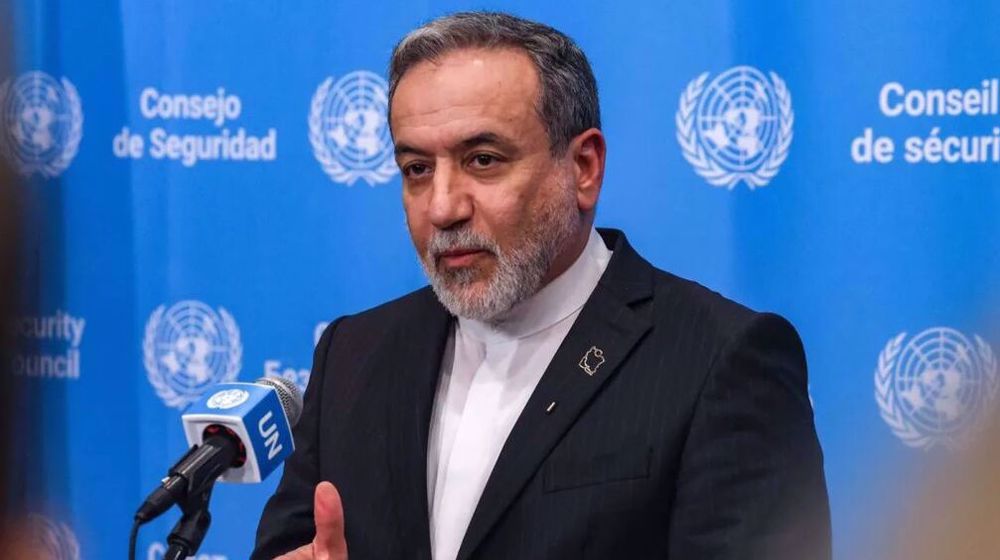
Iran FM outlines seven-day plan for conditional reopening of Strait of Hormuz
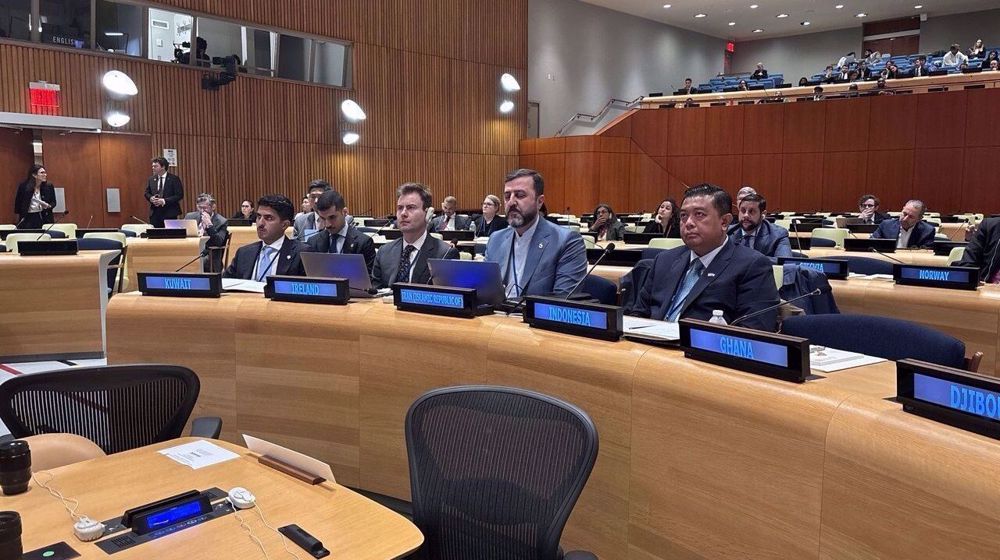
Gharibabadi: International law’s credibility hinges on states’ equality before the law
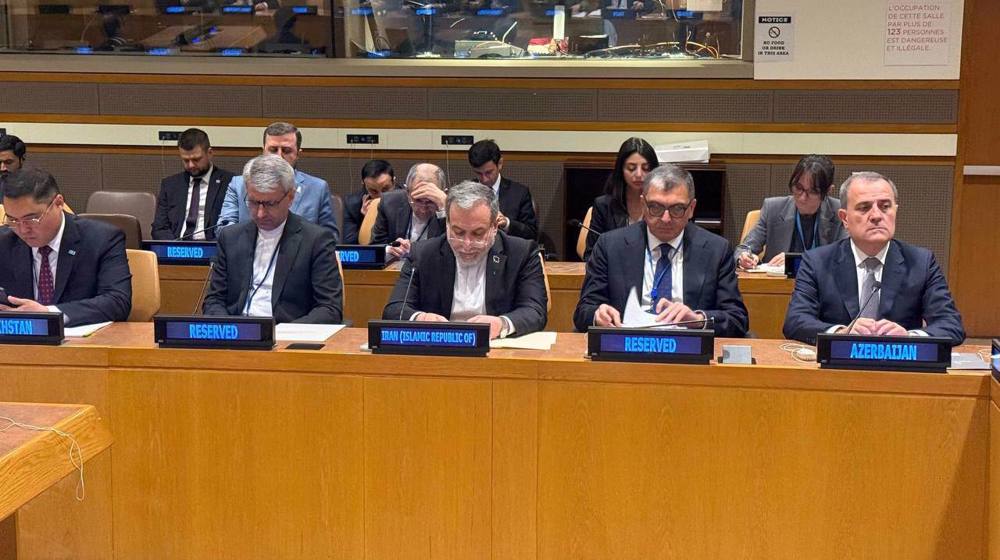
ECO can play greater role in regional peace, economic integration: Araghchi



IRGC: Iran will continue punishing US until Tehran’s conditions are met
VIDEO | German teens skip schools nationwide in protest at compulsory military service
VIDEO | Tehran children center marks 1,000th stem cell transplant
VIDEO | Palestinians decry world officials' inaction on Israeli crimes at UNGA
VIDEO | 'We’re seeing a replay of the US-backed 1964 coup in Brazil': Analyst
Iran FM outlines seven-day plan for conditional reopening of Strait of Hormuz
Saudi Arabia has kept nuclear weapons option open: Report
VIDEO | 26th ICCU focuses on future of cardiovascular medicine


 PressTV NEWSLETTER
now
PressTV NEWSLETTER
now
 This makes it easy to access the Press TV website
