‘People’s president’: Ebrahim Raeisi’s legacy of service, sacrifice, and strategic vision
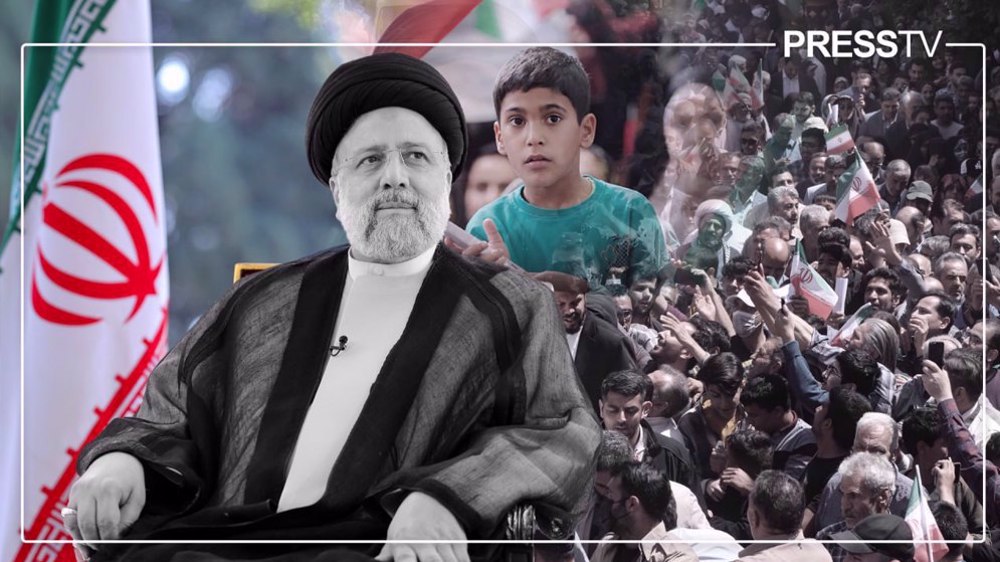
By Press TV Website Staff
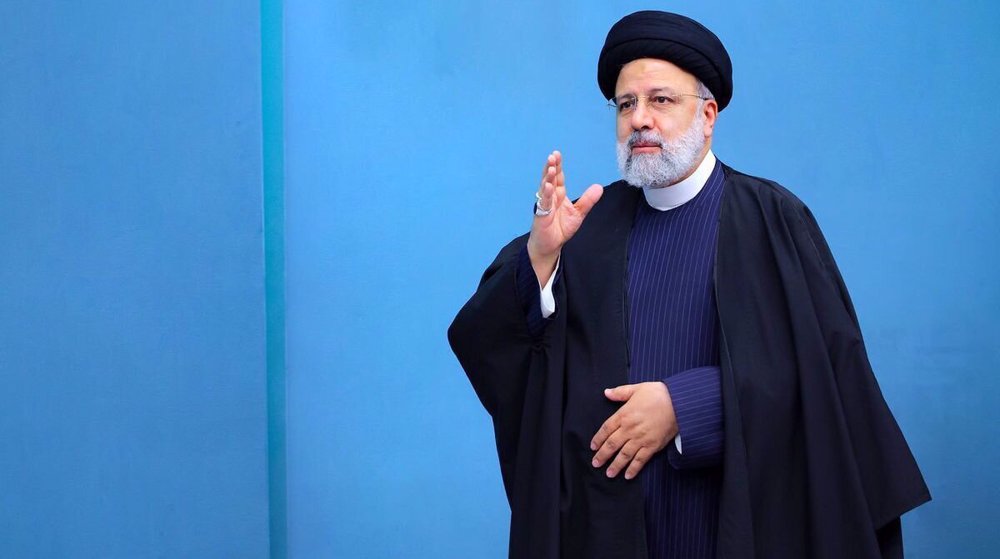
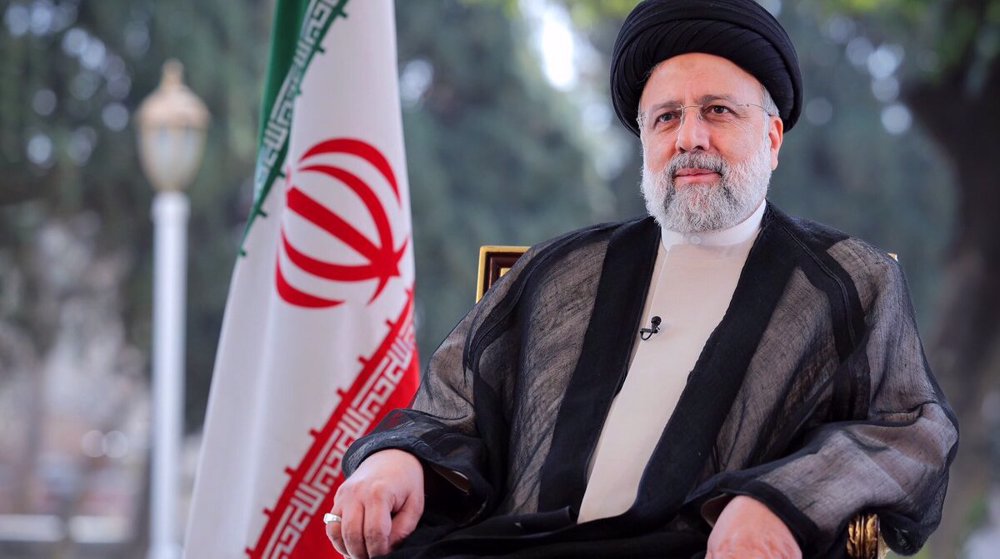
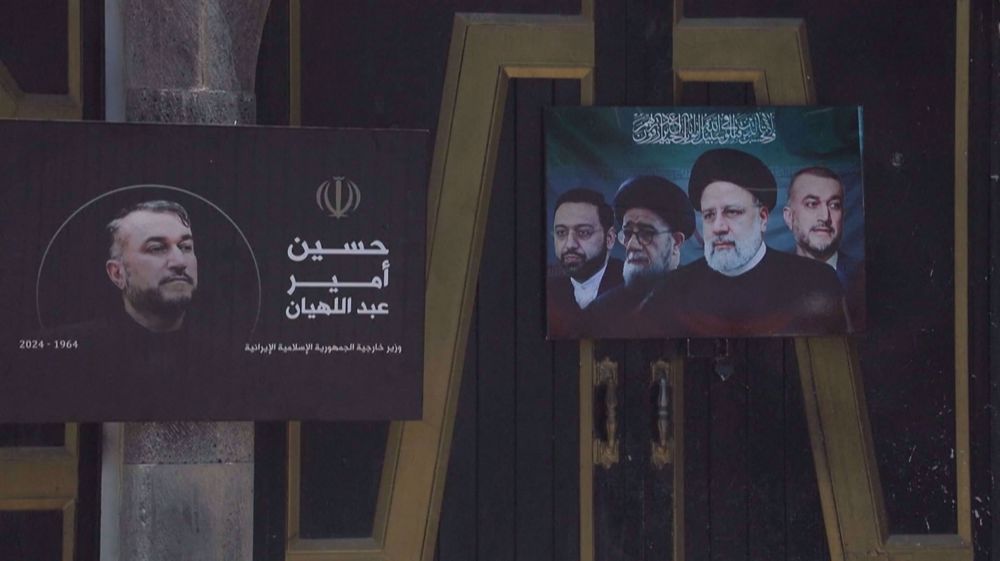
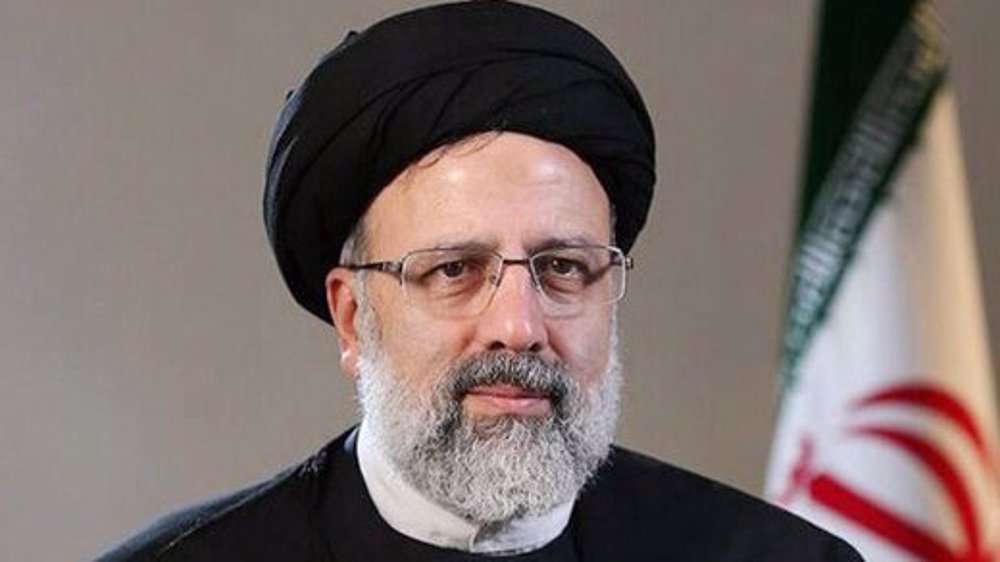
Two years ago today, former President Ebrahim Raeisi and his companions were martyred in a helicopter crash in northwestern Iran when returning from Azerbaijan, where he had travelled to inaugurate a dam along with his Azerbaijani counterpart.
Raeisi was the second president of Iran to pass away in office, after Mohammad-Ali Rajai, who was martyred by the MKO terror cult in a 1981 bombing in Tehran.
Known for his gentle demeanour and selfless service, his memory endures as a testament to public welfare, justice-centered governance, and unwavering commitment to Palestine.
On the second anniversary of his martyrdom, the Iranian nation remembers a leader described by Ayatollah Seyyed Ali Khamenei, the martyred Leader of the Islamic Revolution, as one who “did not distinguish between night and day and worked round the clock to resolve people’s problems.”
Leader called the loss “heavy… that can’t truly be compensated for,” using a phrase of admiration – “dear and tireless leader” – as a mark of tribute to the martyred president.
President Raeisi was not merely a political figure but a leader who redefined politics and public service through a distinctive governance model rooted in Islamic-Iranian tradition.
His philosophy rested on viewing the human being as a responsible, justice-seeking entity – not a mere consumer – and prioritizing direct field presence over office decision-making.
A boy from Mashhad
Born on December 14, 1960, in Mashhad – the holy city home to the shrine of Imam Reza – Raeisi rose through the ranks of the Islamic Republic’s judicial system with a reputation for fairness and humanity.
From 2004 to 2014, he served as deputy chief justice, earning admirers across the political spectrum for his humane approach.
As attorney general (2014-2016) and later as custodian of Imam Reza’s holy shrine, he accomplished works that had not been done before in that holy institution.
His most notable appointment came in March 2019, when Ayatollah Khamenei chose him to lead Iran’s judiciary. As judiciary chief, Raeisi launched a much-lauded anti-corruption campaign and enacted laws to protect women against domestic violence.
His popularity rose tremendously during this stint as the head of the country’s judiciary, paving the way for his political innings as the president.
Iran marks the second anniversary of the martyrdom of late President Ebrahim Raeisi and his companions, who tragically lost their lives in a helicopter crash in 2024.
— Press TV 🔻 (@PressTV) May 20, 2026
Follow: https://t.co/mLGcUTS2ei pic.twitter.com/w21tN39Pkf
The presidential election that changed everything
In 2017, Raeisi had run against Hassan Rouhani, securing 15.7 million votes to Rouhani’s 23.5 million – a respectable second-place finish that established him as a national figure.
By 2021, the political landscape had shifted. Raeisi won a landslide victory, pocketing 17.9 million votes out of 28.9 million cast, becoming Iran’s eighth president and officially beginning his tenure on August 3, 2021.
His election came at a time of significant challenges: economic hardships exacerbated by illegal US sanctions, heightened tensions with Washington, and the lingering effects of the COVID-19 pandemic.
Yet Raeisi approached these challenges with the same tireless spirit that had defined his entire career. “I will not waste a single moment,” he vowed.
The 20-day tour that showed his leadership
The Leader recounted a telling moment that captured Raeisi’s essence as a leader.
After returning from a twenty-day provincial tour at 3 a.m., the president found it impossible to sleep in Tehran. Rather than rest, he drove to Karaj the same night for a morning stone-laying ceremony, managing just one or two hours of sleep.
“All this work,” the Leader remarked following Raeisi’s martyrdom two years ago, marveling at a man who treated exhaustion as irrelevant.
This was not an exception but the rule. In his brief three-year presidency, Raeisi traveled nearly 40,000 kilometers across the country, covering every province – most of these trips reserved for Fridays, his “weekend.”
While other officials rested, the president walked among farmers, factory workers, and villagers in Iran’s most remote and deprived areas.
Why the Leader called him “dear and tireless”
Ayatollah Khamenei’s use of the phrase “dear and tireless leader” was unprecedented. The martyred Leader of the Islamic Revolution had never before used such language for any official, revealing the depth of his admiration for Raeisi’s work ethic and integrity.
In an August 2023 meeting, the Leader had already noted: “The simple lifestyle and minimum formalities in the personal and working behavior of the Raeisi administration, especially about the president himself, are impressive to me.”
This simplicity was not performative, but the natural expression of a man who saw himself as a servant of the people, not a political leader.
When news of the helicopter crash broke on May 19, 2024, Iranians gathered at Tehran’s Valiasr Square, praying for their president’s well-being. When martyrdom was confirmed the next day, the whole nation wept for a man who had given everything – including his life – in service to his country and the people.
According to Press TV's @NahidPoureisa, the martyred President Ebrahim Raeisi turned the reality of enduring sanctions into a policy drive toward regional and global partnerships, such as the SCO and BRICS, while seeking practical measures to ease Iranians' daily lives. pic.twitter.com/1JqCwj69ZT
— Highlights (@highlightsnews1) May 17, 2026
The servant of the people: An unbreakable bond with the masses
What truly distinguished Raeisi was his unbreakable bond with ordinary Iranians.
He gave up all ceremonial protocols and chose to walk among the ranks of ordinary people. His provincial trips were not photo opportunities but working visits to deprived areas, where he personally listened to grievances and followed up until solutions were found.
Raeisi believed that meeting people, seeing their living conditions, and talking to them were prerequisites for understanding their concerns.
According to his close aides, he rejected filtered reports and bureaucratic summaries. A manager, he insisted, must witness realities firsthand.
This philosophy manifested in constant motion. He traveled during COVID-19, visiting hospitals and pharmacies across the country. He stood in factory assembly lines, not VIP lounges. He ate simple meals with workers, not state banquets.
He visited villages so remote that presidential protocol officers had never before mapped routes to them, according to those who knew him or worked with him.
A cinema artist’s testimony
Mahmoud Gabarlo, an Iranian cinema artist and film critic, wrote movingly about his encounters with the martyred former president. Invited to an Iftar dinner for artists and cultural figures, Gabarlo arrived with critical views of the 13th government’s cultural policies. What he found disarmed him.
“Regardless of my critical writings… I witnessed President Raeisi’s honest and benevolent behavior with all the people of culture and art whose spectrum of thought was different from the President,” Gabarlo wrote. “One can never forget his warm and sincere greetings.”
As an Iranian, Gabarlo added, it is “not possible for me not to mourn the passing away” of a president who “carried the personal traits of compassion, simplicity and sincerity while working for the people of the country.”
A labor activist’s story
Syed Amir Meernaseri, a labor activist at Hapco freight company, met the late president at least five times. His account reveals Raeisi’s distinctive approach to power.
“Ayatollah Raeisi spoke very informally and softly to make us comfortable and lessen our hesitation. He would bring himself to the level of the workers so that the workers open up and share their problems,” Meernaseri recounted.
When Raeisi visited the Hepco factory, hierarchical protocol would have dictated that the CEO report first. Instead, the president asked for ordinary workers.
“He made sure that we do not consider ourselves strangers at the place or feel any form of anxiety in the presence of high-ranking officials.”
Meernaseri revealed that Raeisi had been pursuing Hepco’s issues since his tenure as judiciary chief, long before becoming president.
“The workers credited the non-closure of the factory to this high-ranking martyr.
Unveiling of Martyr Raeisi’s bust at Pasteur Square, Tehran.
— Press TV 🔻 (@PressTV) May 20, 2025
On the first anniversary of the martyrdom of President Ebrahim Raeisi, a ceremony was held for the unveiling and installation of his bust at Tehran's Pasteur Square. pic.twitter.com/3sEX8SSZgZ
What colleagues and officials said
Ayatollah Abdol-Ali Gawahi, then-director of political beliefs at the Iranian Army’s general headquarters, noted that Raeisi “worked for the deprived and never showed any signs of exhaustion.”
Judiciary chief of Kerman province, Ebrahim Hamidi, described “people-oriented leadership” as the president’s primary characteristic. “The most important sign of his moral character was a good relationship with people and a revolutionary spirit.”
Dr. Muhammad Dostar, head of Guilan University, observed that Raeisi “did not adhere to the formalities that people follow when appointed to a high position.”
He was, Dostar said, “a leader of the people,” fully aware of their issues because he took regular trips to different provinces and “made sure that people’s problems are followed till a solution is reached.”
Mother’s simple house: A testament without words
Perhaps the most powerful testament to Raeisi’s personal austerity emerged only after his martyrdom. A video circulated across social media showing the simple home of his elderly mother, Seyedeh Esmat Khodadad Hosseini, in a lower-middle-class neighborhood of Mashhad, his hometown.
The octogenarian lived among ordinary people, unknown to most of her neighbors.
Many neighbors had not known she was the president’s mother until mourners flocked to her door to offer condolences.
A woman who had known the family for decades revealed, “President Raeisi never came to visit his mother’s house with his entourage. He would often visit her during late hours to avoid trouble to neighbors.”
The video went viral, sparking reflections across political and national boundaries.
“Watch on enemy,” a user on X, posted: “This is not just a lesson for Iran but for all of us, whether in Europe, Pakistan, or anywhere else. Unlike some politicians who fake poverty to win hearts, President Raeisi never spoke about his personal life.”
Margarita Barnard, a social media user, compared Raeisi to Western heads of state.
“This is how President Raeisi of Iran’s own mother lived. A poor woman. Unlike Western leaders, he never paid himself a huge salary while his people starved in a gutter. THAT’S a true leader.”
Rosa Rafiey, a peace activist, wrote: “All the economic power and facilities of the country were at the disposal of this honorable martyr as the first executive person, but his mother’s house was so simple. Raeisi didn’t take anything for himself, unlike many other presidents in the world. Divine man.”
The COVID-19 management
President Raeisi’s bond with the masses was tested early by the COVID-19 pandemic.
One of Raeisi’s most concrete economic achievements was the localization of COVID-19 vaccine production. When Western sanctions hindered imports, his government mobilized domestic pharmaceutical companies, research institutions, and manufacturing capacity.
Iran succeeded in producing indigenous vaccines, containing the pandemic, and demonstrating self-sufficiency under pressure.
This achievement had symbolic as well as practical importance. It proved that the “resistance economy” was viable, that Iran could not only survive sanctions but innovate because of them. For Raeisi, this was not merely economic policy but a statement of national sovereignty.
The successful localization of vaccine production became a point of national pride. Iran bypassed sanctions that were designed, as the Leader noted, to “hinder the easy flow of medical supplies.”
Raeisi’s government turned a vulnerability into an achievement, demonstrating that the “resistance economy” was not just rhetoric but a practical strategy for survival under pressure.
Leader of the Islamic Revolution Ayatollah Khamenei attends the martyrdom anniversary ceremony of the late Iranian President Ebrahim Raeisi in Tehran.
— Press TV 🔻 (@PressTV) May 20, 2025
Follow: https://t.co/mLGcUTS2ei pic.twitter.com/F9zW014ffv
The economic steward: Revival amid sanctions
When Raeisi took office in August 2021, he inherited an economy in critical condition. US President Donald Trump had withdrawn from the JCPOA nuclear accord in 2018 and reimposed “maximum pressure” sanctions. The COVID-19 pandemic had further crippled economic activity. Inflation was high, unemployment was rising, and factories were closing.
Yet within three years, Raeisi’s administration achieved results that surprised even his critics.
Official figures showed average annual economic growth of 5.5 percent (including oil) and 4.5 percent (excluding oil) during his tenure. The unemployment rate fell to 8.1 percent, the lowest in decades. Most significantly, 8,000 factories were revived under his leadership.
The factory revival: A matter of pride
Ayatollah Khamenei noted this achievement with particular pride: “That was one of the proud achievements of that dear martyr.”
The revival of 8,000 factories represented not just economic statistics but jobs restored, families supported, and industrial capacity reclaimed.
Raeisi’s approach combined active economic diplomacy with domestic production incentives. He pursued the neutralization of sanctions “by all means necessary,” as the Leader had mandated.
His government regarded Iran’s neighboring environment as a vast market with cultural affinity, contiguous borders, and fewer sanctions controls than international corridors. This provided the most suitable context for sanctions circumvention.
Combating corruption and bureaucratic inertia
Raeisi’s election campaign had centered on combating corruption and alleviating economic hardships. As president, he stressed the need to overhaul the bureaucratic system, combat corruption and bureaucratic inertia, and pledged to reduce inflation to single digits by boosting production.
His record as the judiciary chief had already demonstrated his seriousness about corruption. He pursued economic corruptors regardless of their political connections. As president, he continued this fight, believing that economic justice was inseparable from political integrity.
The youth as Iran’s most valuable asset
President Raeisi frequently hailed Iranian youth as the country’s most valuable asset and the economy’s driving force.
He committed to addressing their primary concerns, particularly unemployment.
The fall in unemployment to 8.1 percent was not an abstract statistic for him. It represented young Iranians who could now marry, start families, and contribute to their society.
✍️ Feature -A life in service: The legacy of Martyr Raeisi in the words of his daughter Reyhaneh Sadat
— Press TV 🔻 (@PressTV) May 19, 2025
By @HumairaAhad_83 https://t.co/moaBk5i78o pic.twitter.com/RPNl2Kdol8
Justice-centered economics
President Raeisi, however, viewed economics through a lens that transcended mere growth figures. His frequent provincial trips to impoverished areas, efforts to reform banking and taxation systems to prevent wealth concentration, and focus on underprivileged regions demonstrated his conviction that genuine progress requires fair distribution of opportunities.
He believed that unjust economic structures must be reformed, not merely managed. Efficiency without justice, in his view, was not progress but exploitation in a different form.
This justice-centered approach sometimes meant prioritizing long-term structural reform over short-term growth, a political risk that President Raeisi accepted willingly.
The balance between domestic and foreign policy
A distinctive feature of Raeisi’s economic approach was his insistence on balance between domestic and foreign policy. From his perspective, foreign policy should serve to strengthen the domestic economy. If foreign policy did not contribute to strengthening the country’s economy and consolidating its position, it was deemed incomplete and ineffective.
This profoundly illuminating philosophy guided his “Look to the East” policy and his emphasis on economic corridors.
Rather than waiting for Western sanctions to be lifted, a process dependent on American political whims, President Raeisi pivoted toward Asia, Africa, and Latin America.
Iran gained full membership in the Shanghai Cooperation Organization (SCO) and BRICS under his leadership, opening new trade and investment pathways.
Why neighourhood policy mattered
At the heart of Raeisi’s foreign policy was the doctrine of “good neighborliness and convergence.” This doctrine, alongside unwavering support for Palestine and the “Look to the East” policy, fundamentally reoriented Iran’s international relations.
President Raeisi understood that Iran’s neighborhood, comprising 25 countries, is one of the most conflict-ridden regions in the world.
After the dissolution of the Soviet Union in 1991, numerous border changes sparked tensions between new countries like Azerbaijan and Armenia. The Arab Spring (2010-2011) impacted Iran’s neighboring environment. The Daesh terrorist group emerged and developed in this region. Civil wars, coups d’état, and intergovernmental disputes over resources and borders have made this one of the most volatile regions on earth.
Given this precarious situation, his government decided to base foreign policy on “capitalizing on opportunities and managing challenges” rather than confrontation or isolation. The purpose was to appropriately reorient the country’s foreign policy toward pragmatic engagement.
In international relations, the concept of “neighborliness” goes far beyond mere geography. While being neighbors is simply a matter of borders, neighborliness marks the beginning of a political relationship based on trust and mutual respect.
The principle requires refraining from any action that might disturb relations between neighboring countries and actively developing normal, peaceful relations.
Raeisi placed this principle at the core of his foreign policy. At his inauguration ceremony, he declared: “I extend my hand in a sign of friendship and fraternity to all countries in the region, especially to our neighbors, and warmly embrace them. The Islamic Republic of Iran regards neighboring countries and peoples as relatives, and its main priority in foreign policy is to improve relations with them, wishing for their dignity and progress.”
From Anwar Ibrahim to Vladimir Putin— See how world leaders honored Martyr Ebrahim Raeisi
— Press TV 🔻 (@PressTV) May 20, 2025
Follow: https://t.co/mLGcUTS2ei pic.twitter.com/R9s8AshELS
Three fundamental principles of balance
The “neighborhood and convergence” doctrine promoted by the Raeisi government operated on three fundamental principles of balance.
First was balance in the foreign relations system. From President Raeisi’s perspective, the foreign relations system could not be homogeneous. Balance meant global interaction based on justice. Any country that aligned more closely with Iran’s logic and interests held greater strategic importance.
Second was balance across the fields of foreign policy. The focus was not exclusively on military-security realms but encompassed economic, cultural, and technological domains equally.
Third was the balance between domestic and foreign policy. Foreign policy must serve to strengthen the domestic economy, reinforcing internal policy rather than operating independently of it.
The historic UN General Assembly address
President Raeisi’s most comprehensive articulation of neighborhood policy came during his speech at the seventy-eighth session of the United Nations General Assembly in 2023.
For the first time, he emphasized “neighborhood” alongside “convergence,” providing a clearer perspective on policy frameworks.
“At a time when some powers are leading the world towards more wars, the Islamic Republic of Iran has raised the policy of ‘neighborhood and convergence’,” he asserted.
Neighborhood policy was not simply about relations with neighboring countries but rather a broad, comprehensive, result-oriented, and mutually beneficial regional policy.
He elaborated: “Neighborhood policy is a benevolent policy for the region. In this sense, comprehensive economic cooperation and strengthening of infrastructural ties are at the forefront of regional priorities.”
Security without foreign interference
Crucially, Raeisi emphasized the need for a joint regional security strategy based on intra-regional solutions without foreign interference.
“From the Caucasus to the Persian Gulf, any foreign presence was not only part of the solution but itself a problem. We considered our neighbors’ security as our own, and any insecurity for them was insecurity for us,” he said.
This position directly challenged the US strategy of securitization, creating a perception of regional threat to justify American military presence. Raeisi’s neighborhood policy aimed to halt the American project in the region and reposition Iran as a main proponent of stability.
Remembering late president Raeisi on the Day of the Martyrs of Service. pic.twitter.com/YvVb35UEqI
— Press TV 🔻 (@PressTV) May 20, 2025
SCO, BRICS, and Saudi reconciliation
The results of President Raeisi’s foreign policy were substantial. Iran gained full membership in the Shanghai Cooperation Organization (SCO) – a strategic alignment with China, Russia, and Central Asian states. It also joined BRICS alongside Brazil, Russia, India, China, and South Africa, opening new economic cooperation frameworks.
Most dramatically, relations with Saudi Arabia were restored after years of hostility. The Saudi reconciliation was a breakthrough that Raeisi personally followed, dispatching a delegation to Riyadh and monitoring their daily briefings.
Engagement with Egypt also advanced significantly, with Cairo’s foreign minister attending Raeisi’s funeral, a remarkable sign of normalized relations.
The economic corridor vision
Despite Iran’s exceptional geopolitical capacity to connect to economic corridors, spanning east to west and north to south, the country had been practically excluded from this field while global powers competed for influence.
Neighboring countries like Pakistan, Turkey, Azerbaijan, Iraq, Qatar, the UAE, and Saudi Arabia were actively involved in designing and executing economic corridors
Raeisi’s government worked to address Iran’s exclusion and marginalization. Their approach involved not only revitalizing and developing relations with neighbors but also playing a central role in corridor projects within the framework of neighborhood policy.
FM Amir-Abdollahian’s role
Foreign Minister Hossein Amir-Abdollahian, who was also martyred alongside Raeisi, was at the forefront of implementing this foreign policy vision.
He consistently emphasized the comprehensive development of relations with neighbors as a fundamental axis of the Raeisi government’s doctrine.
His diplomatic energy and strategic vision complemented Raeisi’s direction, making the president-foreign minister partnership one of the most effective in Iran’s modern history.
The Palestine cause: The first issue of the Islamic world
For President Raeisi, Palestine was not a secondary diplomatic concern but “the first issue of the Islamic world and of humanity itself.”
Raeisi championed the Palestinian cause from his first days in office, following in the footsteps of Imam Khomeini and Ayatollah Khamenei – the two figures he most admired.
At his swearing-in ceremony in August 2021, Raeisi declared: “Despite all the pressures and restrictions imposed against Iran, we are fulfilling our religious and humanitarian duty in defending the rights of the Palestinian people. We expect Muslim and Arab countries to play a leading role in this regard.”
Three days later, he held an official meeting with Hamas leader Ismail Haniyeh, Islamic Jihad leader Ziyad al-Nakhalah, and Popular Front leader Talal Naji.
In these meetings, he stressed: “We have never had any doubt about this policy. In our view, Palestine has been, and will be, the first issue of the Islamic world.” He praised Palestinian resistance movements for bravely defending their people’s rights and declared that the power to determine Palestine’s fate lies in the hands of the resistance.
WATCH: Newly released footage from the meetings of Martyr Raeisi and Ayatollah Khamenei
— Press TV 🔻 (@PressTV) May 22, 2025
Follow Press TV on Telegram: https://t.co/boCY50qfi9 pic.twitter.com/9HxQTtAvZA
Response to Operation Al-Aqsa Storm
Two days after the start of Operation Al-Aqsa Storm in October 2023, Raeisi held telephone conversations with Haniyeh and Nakhalah, discussing developments in Gaza and reaffirming Iran’s support. He expressed confidence that Palestinians would emerge victorious.
In a formal message, Raeisi invited the world to observe that “oppression and injustice exercised against the oppressed Palestinian nation, the continuation of insults and desecration to women and prisoners, and the desecration of holy Quds… cannot continue forever.”
He declared, “Iran supports the Palestinian nation’s legitimate defense. The Zionist regime and its backers bear responsibility for endangering the security of the nations of the region, and they must be held to account.”
He also urged Muslim governments to join hands in supporting the Palestinian nation.
“The Zionist enemy should also know that the balance of power has changed.”
He offered greetings to resistance forces across the region, from Palestine, Lebanon, and Syria to Iraq and Yemen, recalling the efforts of General Qassem Soleimani, as well as Imam Khomeini and Ayatollah Khamenei in supporting the resistance.
The ten-point proposal at the Riyadh Summit
One month after Israel launched its genocidal aggression on Gaza, Raeisi was among 57 Muslim leaders attending an extraordinary summit on Palestine in Riyadh.
Originally planned for the 22 Arab League members, the summit was expanded to include all 57 OIC members, and Raeisi stood out among them.
Unlike other leaders who delivered measured, diplomatic statements, Raeisi minced no words. He unequivocally condemned the genocide in Gaza and urged the world community to boycott and prosecute what he called an “illegitimate child of the US.”
“What has happened in the past five weeks in Gaza and parts of the occupied West Bank is a historic source of shame for ethics, law, and humanity,” he asserted, urging the OIC to act as a unifying force.
He reiterated Iran’s long-standing position on holding a referendum in which all Palestinian Muslims, Jews, and Christians – from the river to the sea, including those expelled – would participate and decide their destiny.
Then he proposed ten concrete measures: Points 1-3 called for an end to the massacre of civilians in Gaza; complete lifting of the humanitarian blockade; immediate withdrawal of the Zionist regime’s military from the area.
Points 4-6 called for the suspension of political and economic relations with the Zionist regime; designation of the Israeli army as a terrorist organization; and establishment of an international court to punish Israeli crimes.
Points 7-10 urged reconstruction of infrastructure through a dedicated fund; continued humanitarian aid; declaring the date of the Al-Ahli Hospital bombing as a day of genocide in official Islamic country calendars; and arming the people of Gaza if Israeli crimes continued.
People’s President: Life and legacy of Ebrahim Raeisi, who redefined politics
— Press TV 🔻 (@PressTV) May 20, 2025
Follow: https://t.co/mLGcUTSA3Q pic.twitter.com/CQM8tR7dNF
Exposing Israeli fragility
In November 2023, Raeisi declared that Israel’s brutal crimes in Gaza stemmed from frustration after suffering a humiliating military defeat and failing to achieve any strategic goals.
“Killing of women and children does not translate into victory,” he said, noting that these massacres had “created an unprecedented atmosphere of anti-Zionist hatred across the world.”
Speaking at a conference on the Constitution in early December of that year, Raeisi noted that Iran’s support for Gaza aligns fully with the Constitution, which obligates the Islamic government to back the oppressed.
In the following days, he visited the UAE, Saudi Arabia, and Russia – on his own initiative, ensuring Palestine was a main discussion point.
He also discussed the issue with officials from Egypt, Pakistan, Malaysia, and Algeria, strengthening bilateral relations while keeping Palestine at the center.
Condemning hypocrisy
President Raeisi unequivocally condemned certain Islamic countries maintaining clandestine economic relations with Israel despite the ongoing genocide, urging them to change course.
He condemned the US for vetoing UN ceasefire resolutions, describing Washington as “the center of the Axis of Evil.” He slammed Western media for distorted coverage of what he called “the Israeli-American genocide in Gaza.”
He also condemned Western countries that project themselves as human rights protectors while openly or silently supporting Israel, calling them accomplices in Zionist crimes.
In his final weeks, he condemned the brutal crackdown on anti-Zionist student protests at Western universities, especially in the US.
“Today, thanks to the clean blood of the oppressed martyrs of Gaza, the true face of Western civilization has been revealed more than ever,” he said.
“Those who make claims about advocating freedom of speech are not committed to any morality but attempts to preserve their hegemony over others.”
At the height of Islamophobic acts in Western countries where the holy book of Muslims was subjected to countless acts of sacrilege, President Raeisi emerged as a beacon of faith at the UN.pic.twitter.com/GVqgYCwDsI
— Press TV 🔻 (@PressTV) May 19, 2025
The final words on Palestine
In early May 2024, just two weeks before his martyrdom, Raeisi issued a statement marking World Red Cross and Red Crescent Day, calling upon world bodies and all awakened human consciences to help the oppressed people of Gaza and facilitate humanitarian aid.
Days later, at the 35th Tehran International Book Fair, he called on Iranian writers and artists to “depict the conflict between honor and evil in Gaza.”
At the 5th International Congress of Imam Reza (AS) in mid-May, just days before his martyrdom, he delivered what would be his final public words on Palestine.
“The blood of 15,000 martyred Gaza children is so powerful that it would not only end the Zionist regime but also lead to an end to global injustices.”
The final journey and enduring legacy
On May 19, 2024, President Raeisi, Foreign Minister Hossein Amir-Abdollahian, East Azerbaijan Governor Malek Rahmati, Friday Prayer Imam Mohammad Ali Ale-Hashem, and their companions were returning from inaugurating two hydraulic dams on the border with Azerbaijan.
Their helicopter crashed in mountainous forests between Varzaqan and Jolfa due to inclement weather – heavy rain and dense fog.
Search and rescue teams worked through the night. In the early hours of May 20, the wreckage was discovered. Pir-Hossein Koulivand, head of the Iranian Red Crescent Society, announced no sign of life. The nation mourned.
A pall of gloom descended on Iran as people took to the streets. Billboards across Tehran hailed the late president as one who “worked indefatigably and tirelessly for the people.”
The cabinet’s statement lauded the “indefatigable and hard-working president who made the ultimate sacrifice on the path of serving his nation.”
Commemorations extended beyond Iran. At the Iranian Cultural Centre in Karachi, religious leaders described the loss as “not only for the Iranian nation but a big loss for the whole Muslim ummah.” Similar ceremonies were held in other countries as well.
Two years after his martyrdom, Raeisi’s legacy endures in different ways. He was a president who visited 28 countries in less than three years while simultaneously pursuing domestic economic revival. He was a leader whose mother lived in a simple home unknown to her neighbors, a quiet testament to a man who took nothing for himself.
And he was a martyr – one who achieved what his administration’s motto proclaimed: service to Islam and Iran, culminating in the ultimate sacrifice.
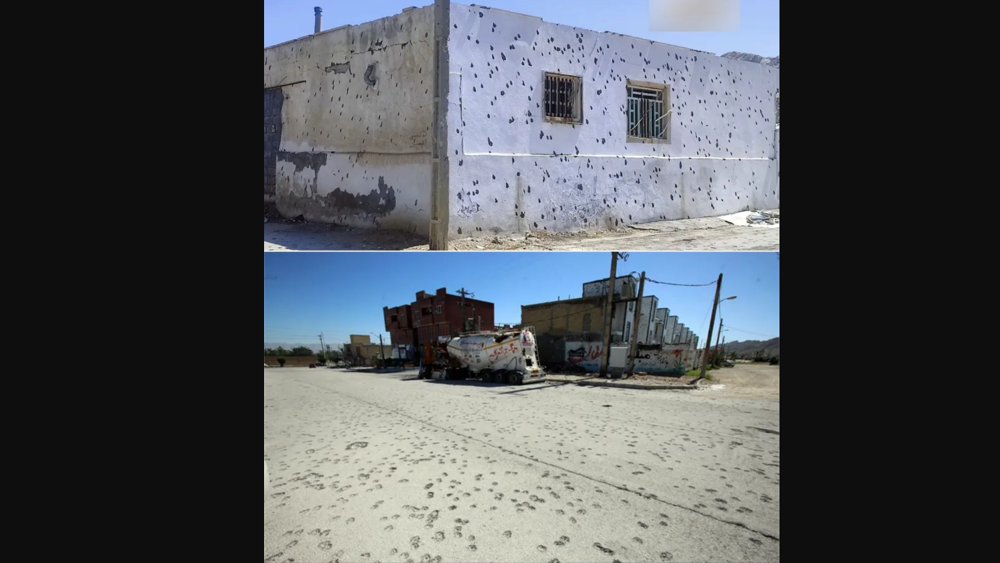
Iran: US cannot evade responsibility for war crimes by leaving UN rights council
US leaves UN Human Rights Council after probe finds possible American war crimes in Iran
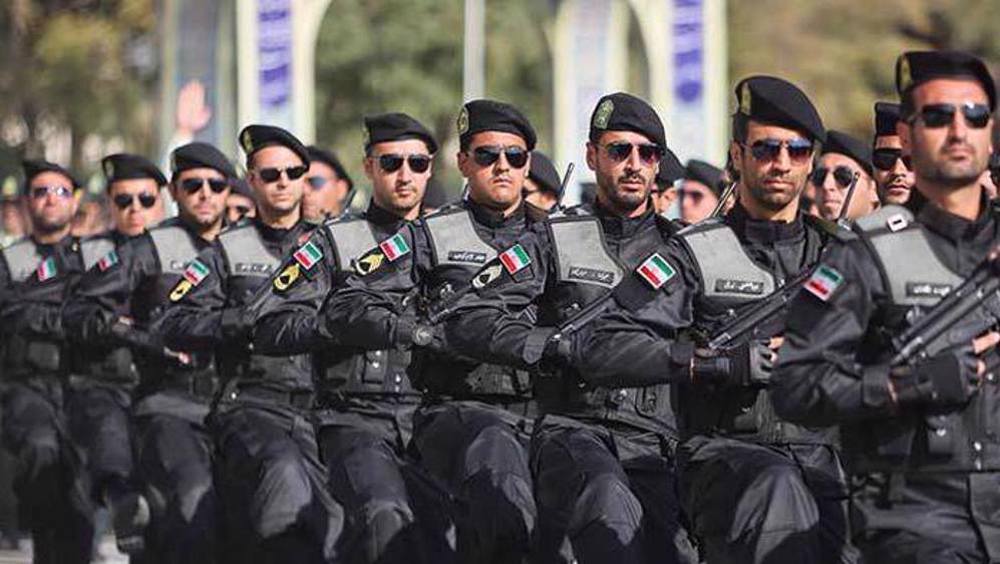
IRGC intelligence forces eliminate two terrorists in southeast Iran



German chancellor says era of unconditional US friendship is ‘probably over’
VIDEO | Iran presents joint statement on attacks against nuclear facilities to IAEA conference
VIDEO | Pakistan and China secure strategic trade corridors via new border mechanism
VIDEO | Russian probe rejects Western-Ukrainian ‘fabrication’ over Bucha killings in 2022
71% of US voters say Trump lacks strategy to end war on Iran: Fox News poll
VIDEO | Press TV's news headlines
Israel seeks US 'compensation' over Saudi F-35 deal: Report
Saudi Aramco halts European crude supplies amid disruption to key oil route


 PressTV NEWSLETTER
now
PressTV NEWSLETTER
now
 This makes it easy to access the Press TV website
