
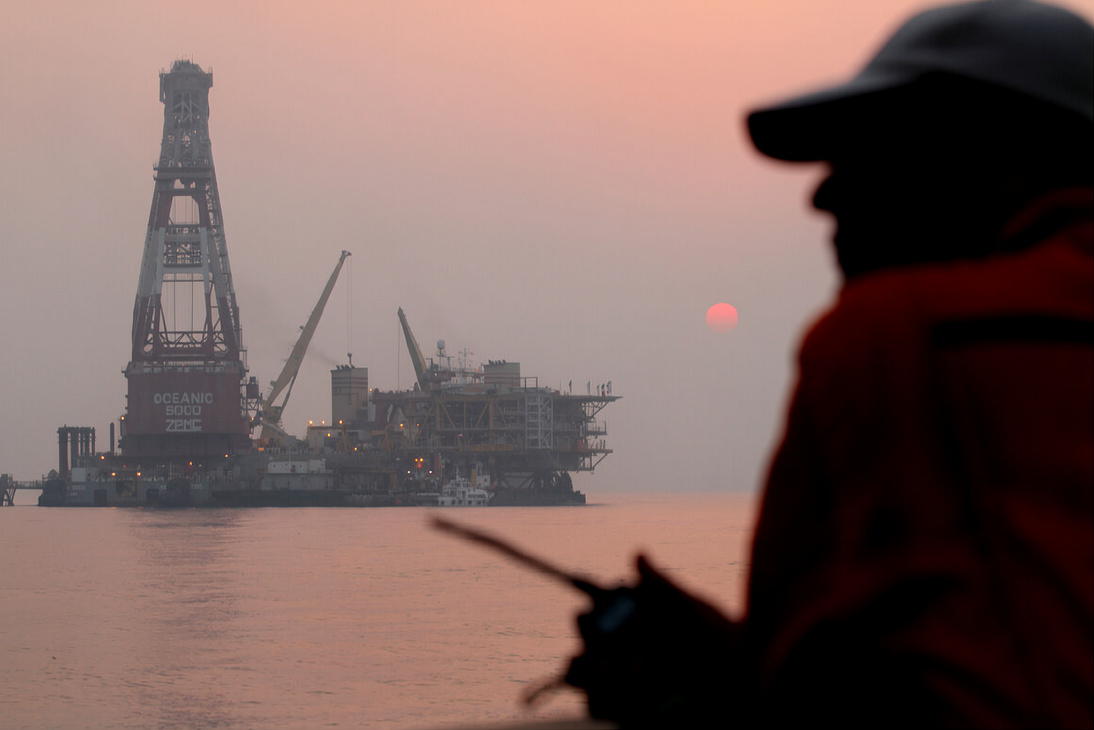
US President Donald Trump recently made a startling claim that Iran had only three days of storage left for its crude oil, after which the country's oil wells would simply explode.
Within hours, traders and analysts on leading energy news providers and social media were dissecting the bizarre logic that storage tanks reaching capacity could somehow trigger underground detonations.
To any petroleum engineer, that claim ranks alongside boiling the ocean or extinguishing the sun with a bucket of water.
But beyond the technical absurdity, the allegation reveals a deep information gap about the real capabilities of Iran's oil industry in the face of a naval blockade that the US and Israel have intensified as part of their broader war of terrorism against the Islamic Republic.
This article uses technical data, official statements, and expert analysis to show why Iran is not facing well explosions and why it has successfully maintained crude production even during the most difficult days of the war.
Trump claimed that Iran lacks sufficient storage capacity for its extracted oil and that once the tanks are full, the wells will explode.
His assertion contains two fundamental errors. First, shutting in a well is a routine technical procedure in the global oil industry. When storage tanks are full or pipelines are blocked, the wellhead valve is closed and the flow stops. This happens thousands of times a day around the world, with no explosion whatsoever.
Second, even if a well remains shut in for an extended period, the worst possible outcome is gradual damage to the reservoir rock structure, not an explosion.
Iran’s Petroleum Minister Mohsen Paknejad responded to the claim by saying that the enemy is pursuing some raw fantasies with unrealistic claims and that those who know the technical details know very well that such statements are untrue.
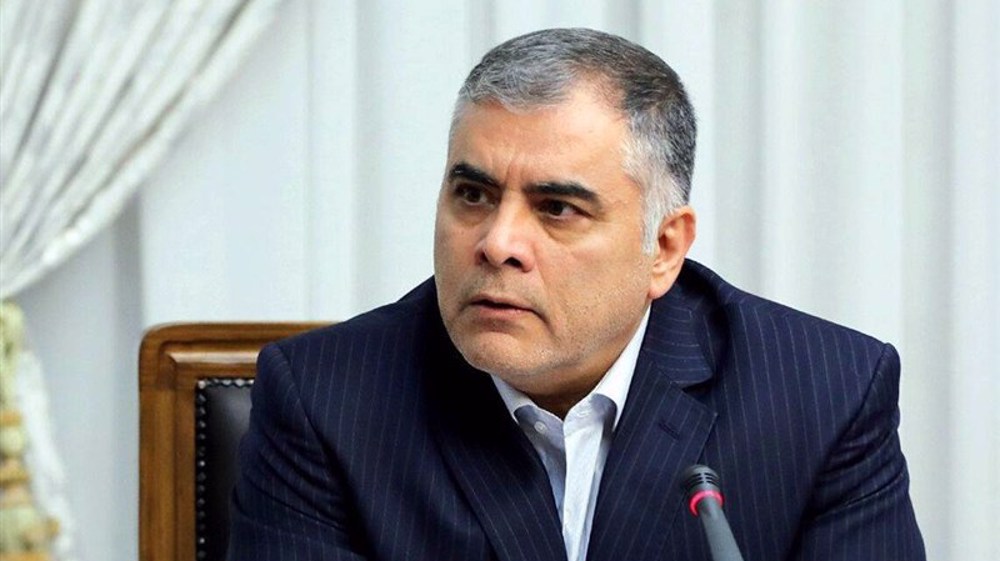
The minister stressed that during the 40 days of the recent war, Iran's oil production did not decline and the export process continued in a favorable and appropriate manner. In practice, the blockade has not disrupted a single day of Iran's production.
To understand this resilience, one must look at Iran's storage infrastructure. Contrary to Trump's claim, Iran possesses some of the largest oil storage facilities in the region.
The Iranian Oil Terminals Company, which manages the massive Kharg Island terminal, has announced that there is no leakage in the infrastructure, storage tanks, jetties, or pipelines.
Abbas Asadrouz, the company's managing director, noted that the international MEMAC center, representing the International Maritime Organization, has recorded no pollution reports in the region.
He emphasized that satellite images published by foreign media lack technical details and are inconsistent with meteorological data.
According to him, the wind direction in the region is such that if an oil slick existed, it would have drifted toward the coast rather than out to sea. This simple contradiction proves the images were fabricated.
One of the key concepts in the blockade debate is shutting in wells. Trump and some media outlets have tried to portray this technical action as equivalent to destroying the well or causing explosions, but the reality is quite different.
A short term shut-in of a few weeks to two months not only causes no problems, but in some cases actually improves pressure distribution within the reservoir.
In Iran's major fields such as Ahvaz, Marun, and Gachsaran, production after reopening can sometimes be even more efficient.
A medium term shut-in of two to six months may cause some issues such as sediment buildup or increased water production, but these are fully resolvable with standard technical operations such as acidizing. Nothing is permanently lost.
A long term shut-in of six to twelve months is the most challenging scenario. Some oil may become trapped in the rock and certain wells may require major repairs. But even in this case, the vast majority of production can be restored. The oil is not lost forever.
In simple terms, an oil well is like a water tap. If you close the tap, the pipe does not explode. You may need to service it after a long time, but that is all.
Perhaps the most important factor invalidating Trump's claim is the structure of Iran's internal oil consumption. Iran produces approximately 3.2-3.6 million barrels of oil per day. Of this, about 1.8-2.0 million barrels are consumed inside the country.
This means that even in the scenario of a complete halt to exports, which has not happened, Iran would still use the majority of its oil for its refineries, power plants, and domestic needs.
The oil wells in the south and west would remain active to supply the refineries in Isfahan, Tehran, Tabriz, and Abadan. There is no reason to shut in all wells.
Iran's petroleum minister has stressed that the oil industry, relying on experience, readiness, and planning, did not allow any disruption to the country's production and export process, and that this stable path will continue.
Many analyses focus only on maritime exports, but Iran has alternative routes. In recent years, fuel has been transported via the Khaf-Herat railway to Afghanistan. Limited fuel exports to Pakistan via land routes have also taken place.
These routes alone cannot replace maritime exports, but they show that Iran's energy flow is not dependent on a single path.
Domestically, fuel is moved between refineries and consumption centers using a combination of rail and road transport. This means Iran's transport infrastructure has meaningful flexibility to manage difficult conditions.
In recent days, some foreign media published images of an oil slick in the Persian Gulf and claimed it was the result of an explosion or a leak from Iranian facilities. Iranian officials and technical data have completely rejected the claim.
Head of Iran's Department of Environment (DoE) Shina Ansari said that based on monitoring, no oil leakage has been reported from ships or pipelines and that the situation is under control.
The managing director of the Iranian Oil Terminals Company, citing the MEMAC center and satellite data, confirmed that no pollution has been recorded in the region.
He explained that the published images lack precise geographic coordinates and technical details, and that the wind direction in the region is inconsistent with the alleged slick.
Simply put, if a real slick existed, the wind would have pushed it toward the coast rather than out to sea. This simple contradiction proves the images were fabricated.
That said, Trump's claim that Iran's oil wells would explode due to a lack of storage capacity is technically, scientifically, and operationally baseless. There is no explosion, production has not declined and Iran's oil infrastructure is under continuous monitoring and control.
Petroleum Minister Paknejad noted that the enemy, through its controlled media space, has raw fantasies and that technical experts laugh at claims about oil well explosions.
During 40 days of war, Iran's oil production did not fall, and exports were maintained at favorable levels. Wells are operating and Iranian engineers, with years of experience managing mature carbonate fields, know how to handle any scenario.
That is the reality that global markets are gradually coming to understand.
 This makes it easy to access the Press TV website