How 'Iran International' fanned flames of war but lost to Iranian people's wisdom and resilience
By Y. P. Rāzi
A few days ago, I pulled my car to the curb outside the neighborhood supermarket in Tehran, where I live, running a routine errand for my wife.
No sooner had I closed the door than the thunder of anti-aircraft batteries snapped my gaze skyward. Only after a moment of reassurance – nothing falling, nothing burning – did I lock the vehicle and head toward the store.
The asphalt at the roadside was scarred and crumbling, still bearing the marks of a recent fire. A few paces farther stood a branch of Bank Sepah, from which – even after several months – the stubborn stench of smoke hurts.
On January 8, I watched with my own eyes as armed rioters set that bank and the adjacent shop ablaze. In the heart of the inferno, they dragged desks and chairs from the bank into the middle of the street and torched them.
Of course, before reaching this location, they had also burned down the local fire station, ensuring that no one would come to put out the flames.
That day, I told myself this was nothing more than a spasm of anger, a reaction to the government's painful but necessary economic reforms.
Surely, I thought, it would soon fade. But the violence did not fade. It spread. And just as the riots began to lose momentum, within less than two months, the United States and Israel launched their unprovoked and indiscriminate war of aggression on Iran.
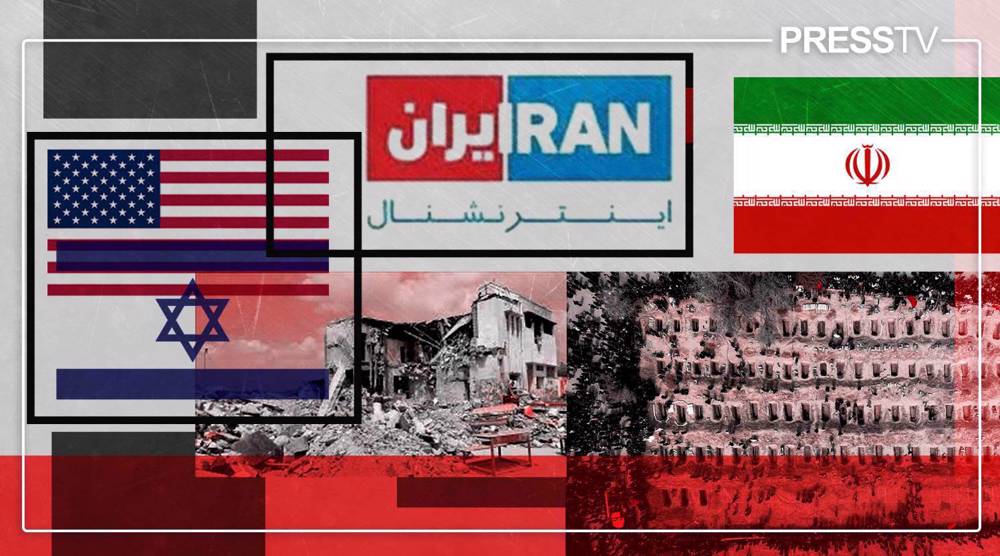
Looking back, I now recognize that a substantial portion of those rioters had been deliberately incited by a coordinated media operation by the war propaganda machine known as “Iran International,” a satellite network that thrives on the media illiteracy of its audience and functions as little more than Israeli propaganda.
The architecture of addiction
Persian language speakers who remember the network's early years recall with unsettling clarity how it dismantled traditional news formats to forge an intimate, almost conversational relationship with its viewers.
By assembling a "newsroom" of ordinary young people – most of them amateur “journalists” – the network produced a daily program that mimicked a real office. Several people would report various news items from Iran to a figure posing as their editor.
The common thread running through every story was unrelenting negativity: price shocks, corruption scandals, economic stagnation, political gaffes. Anything that might make the audience feel ashamed or sorry for Iran. Positive developments – construction, innovation, improvement – simply did not exist. Over time, this gradual infusion of pessimism rendered viewers immune to any good news about Iran that might reach them from other outlets.
Using a method that was not particularly inventive but chillingly precise in its execution, the network injected poison into the eyes and ears of its audience, then harvested what it had sown. Viewers were actively encouraged to send in homemade reports about everyday failures: a broken escalator on a footbridge, a clogged drain in a distant town, interminable traffic lights, choking air pollution, or filthy roadside restrooms.
Gullible contributors were instructed to state only their first name and to explicitly name the outlet for which they were filming. In this way, a network that employed no actual reporters inside Iran – no one to verify claims, pursue follow-ups, or quote officials – managed to make its audience addicted to hearing, and even enjoying, bad news about their own homeland.
Before long, in taxis, on buses, and in the subway, if you asked one of these addicts – many of whom had legitimate grievances about high prices – where they had heard some outlandish claim, they would look at you with pity and say, "Iran International said so."
And how exhausting it was to convince them that credible journalism requires something more than flashy graphics, a colorful studio, and women in Western costume reading a teleprompter without even knowing what they were reading.
A nation under fire, shelves still full
As I wandered the aisles searching for the specific brand of cheese my wife had requested, I suddenly remembered that we are, in fact, in the middle of another imposed war.
Yet this section of the store – like every other – looked no different from the prewar era in terms of the variety and quantity of goods on offer.
Alongside the assassination of top political and military figures, Israel and the United States also targeted residential areas, bridges, sports facilities, hospitals, schools, communication routes, and factories. Many workshops have since shut their doors.
And yet, essential goods remain available. The distribution of perishable items with expiration dates – milk, meat, dairy – continues without delay, even during the Nowruz (Persian New Year) holidays, when most companies operate with skeleton crews.
Sustaining this system of production and distribution is no minor achievement. But “Iran International” has worked tirelessly to make its audience indifferent to that reality.
By constantly reminding viewers of every flaw and failure, while conveniently omitting the fact that everything Iran has accomplished has been achieved under 47 years of illegal and crippling US sanctions, the network tries to convince younger generations – who never experienced pre-revolution Iran – that there was once a golden age when everyone lived in luxury and progress was unstoppable.
Through slick, one-sided documentaries, young people born two decades after the 1979 Islamic Revolution see images of a beautiful and flourishing Iran where everyone was content. The implication is that people were so content that they inexplicably decided to rise up against the Shah.
This myth-making has produced real consequences. When a social media post falsely claimed that no hospitals have been built in Iran since the 1979 Islamic Revolution, many young people who have no real knowledge of the Pahlavi era enthusiastically liked and shared it.
A simple internet search would have revealed that Iran had 550 hospitals and medical centers in 1979. Today, there are more than 49,000. Seven medical universities have grown to 47, with 180,000 medical students currently enrolled.
The sound of defense, the spirit of resistance
While hunting for fabric softener, several loud concussions suddenly startled the other customers, sending a ripple of anxiety through the store.
Everyone exchanged uneasy glances. Nothing had exploded. They reassured one another that the sounds were merely anti-aircraft fire – successfully intercepting enemy drones – and returned to their shopping.
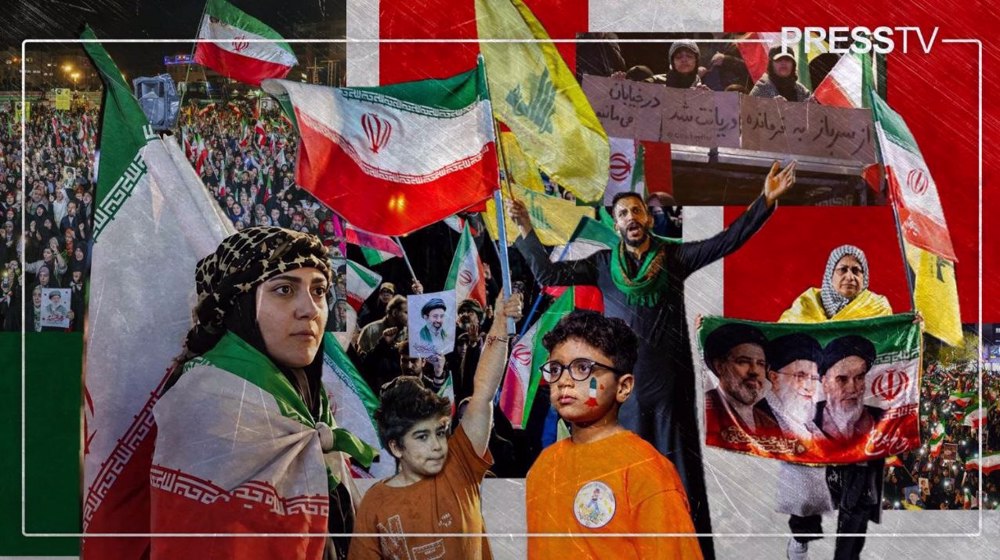
Moments later, the chanting of young men and women carrying Iranian flags, marching toward the town square to protest against the United States and Israel, drew my attention outside. I found myself marveling at how these young people had managed to resist the psychological warfare of the “Iran International” project, slipping free of its seditious spell.
But those caught in that spell had learned a different ritual. They pointed their phone cameras at every corner of the country, magnifying every flaw. They had become an invaluable asset in the hands of “Iran International,” a self-trained cult inside Iran that filmed and photographed every incident.
By 2026, the network was ready to harvest what it had sown.
Through this carefully groomed cult, “Iran International” could trigger devastating events. By encouraging protesters to riot and destroy anything associated with the government, the project transformed ordinary protests into violent insurrections that resembled coups.
Brutal, armed attacks on police stations, government buildings, mosques, schools, banks, and shops inevitably provoked a response. Many rioters were killed, and so were the security personnel.
At that precise moment, the project leaders stepped in to claim their reward. Before any credible statistics existed – from either the government or reliable international institutions – the network's employees added thousands to the death toll each day. This time, however, the Iranian government set aside its usual caution and published a complete list of casualties, a substantial portion of whom were its own security forces.
And yet, the Western disinformation machine grinds on, unchanged.

Mossad's blueprint
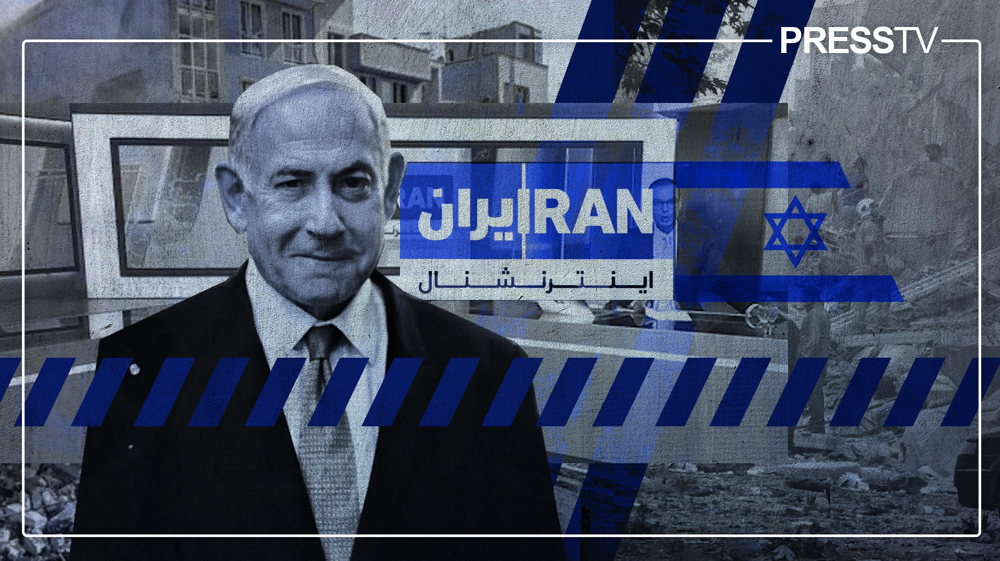
As a primary owner and stakeholder of “Iran International,” Mossad has sought to accomplish several strategic objectives through this propaganda network:
1. Addicting the audience to a steady diet of negative news about their own country.
2. Eroding trust in domestic media and any positive reporting on Iran.
3. Recruiting disaffected Iranians to supply video footage of everyday service failures.
4. Forging a cult that accepts whatever "Iran International" says without question or critique, lacking any capacity for independent analysis.
5. Weaponizing any protest by the Iranian people, transforming it into insurrectionist demonstrations led by cult members.
6. Teaching weapons manufacturing techniques specifically designed to kill government forces.
7. Encouraging rioting and the systematic destruction of government property.
8. Collecting videos, photographs, and audio of riots sent by cult members to the project's headquarters.
9. Conditioning cult members to believe that the United States and Israel are the only saviors of the Iranian people.
10. Preparing cult members to accept a Mossad-CIA puppet named Reza Pahlavi as ruler after the government's overthrow.
11. Normalizing mass casualties in the minds of cult members, so that during a US-Israeli aggression, the addicted audience would murmur that the government's killings had not yet reached the number the government itself had supposedly committed.
12. Implanting the delusion that US and Israeli weapons are so precise that not a single civilian would be killed in their attacks.
13. Normalizing the destruction of military, law enforcement, scientific, educational, industrial, commercial, and service centers by claiming they served only the government, not the people.
14. Normalizing treason by arguing that "Iran" is somehow distinct from the "Islamic Republic."
The aerial leaflet and the satellite broadcast
In conventional warfare, it is standard practice for aircraft to drop leaflets on civilians and military personnel, demonstrating power, issuing threats, and encouraging surrender.
In the recent war of aggression on Iran, “Iran International” played precisely that role. The network's agents, having long since abandoned any pretense of professional journalism, tried to incite disobedience and treason.
Although their attempts to sway the majority of the population have largely failed, the cult they so carefully trained managed to execute a significant portion of the enemy's psychological operations from inside the country.
A quiet transaction, a lasting hope
The salesgirl's voice cut through my thoughts. She asked whether I wanted to pay for my purchases using the government subsidy or with cash.
By "subsidy," she meant the monthly credit that the Iranian government allocates to every citizen, a benefit still in place even in the midst of war.
Despite the war and the commotion it brings, the government continued its plan to eliminate indirect subsidies and convert them into direct, targeted assistance.
Implementing this policy required considerable political courage, as it raised the price of some essential goods. I chose to use the subsidy and walked out of the store without spending any of my own money.
Prices have indeed risen. But this credit compensates for a portion of the increase. The government's continued commitment to subsidy reform – and the visible satisfaction of the people with its implementation – fills me and many others with hope.
A sizeable section of Iranian society, untouched by the enemy's psychological and physical warfare, remains optimistic about a future defined by independence and relative prosperity.
That is something that none of the enemy's media outlets have yet managed to undermine.
Y. P. Rāzi is a Tehran-based senior journalist and political commentator.
(The views expressed in this article do not necessarily reflect those of Press TV.)
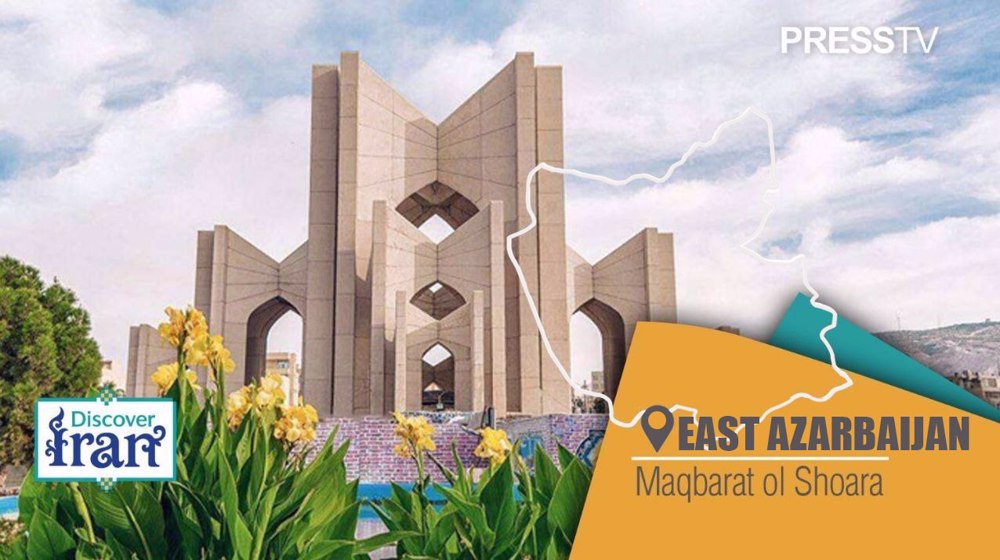
Discover Iran: Tabriz’s ‘Mausoleum of Poets,’ where centuries of Persian literary history live on
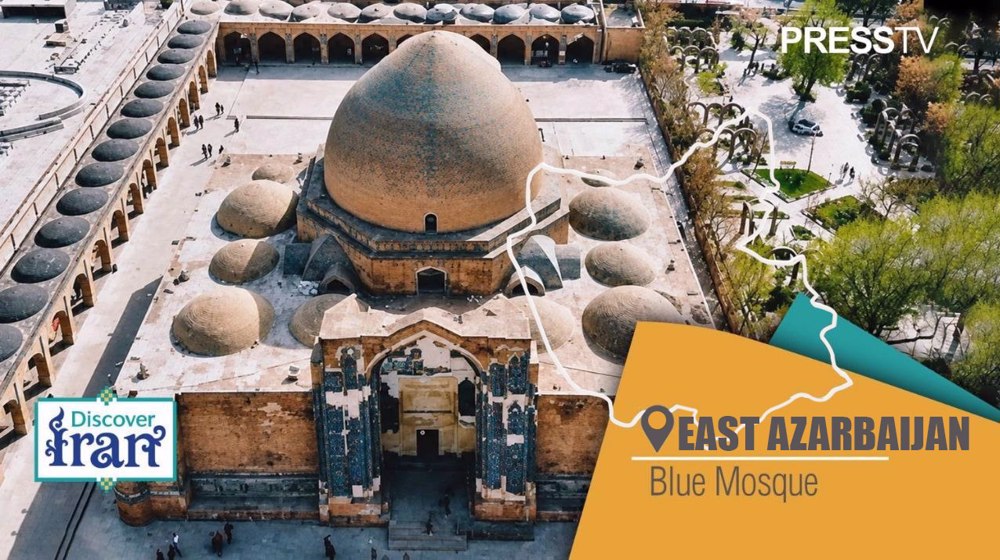
Discover Iran: Tabriz’s Blue Mosque, where glorious history meets timeless Iranian architecture
200 nights, one resilient nation: Iranian people’s epic in defense of homeland and Revolution



US aggression, economic warfare amount to crimes against humanity: Iran's UN envoy
Protests erupt in US as ICE agent shoots Venezuelan driver
US pressure fuels cooperation among Muslim states: Pezeshkian
Major TV networks suspend White House pool coverage after Trump ban
US visa ban on Palestinian UN delegation violates international agreements: Hamas
VIDEO | Press TV's news headlines
Iran calls on France to respect law after suspending French cultural institute in Tehran
Israel lobby no longer shy about its grip on US policy on Iran: Araghchi



 PressTV NEWSLETTER
now
PressTV NEWSLETTER
now
 This makes it easy to access the Press TV website
