Iran's Air Force conducted sorties to strike US bases in Iraq, Kuwait, Qatar early in war: Army
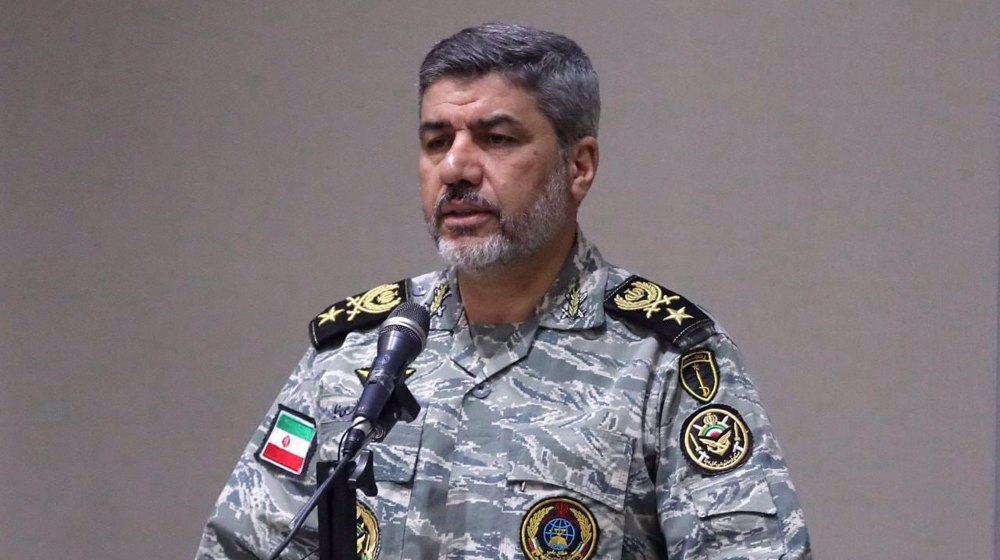
The Iranian Army’s Air Force carried out multiple sorties against enemy bases in regional countries, including an anti-Iran group’s base in Erbil, Iraq, as well as targets in Kuwait and Qatar, at the outset of the US-Israeli war, an Army spokesman said on Tuesday.
Brigadier General Mohammad Akraminia, the Army spokesman, detailed the Air Force’s role in the war, which began on February 28 with an unprovoked US-Israeli aggression that included the assassination of Iran’s late Leader, Ayatollah Seyyed Ali Khamenei.
“Our Air Force, at the beginning of the war, carried out several sorties and attacked enemy bases in regional countries, including the counter-revolutionary base in Erbil, Iraq, Kuwait and Qatar,” General Akraminia said.
He noted that a recent report by an American media outlet had examined an operation conducted by F-5 fighter jets, describing it as a rare and in some respects unprecedented success.
“That successful operation managed to penetrate various layers of defense that the Americans had designed there and hit the US base,” he said.
Air defense downed 170+ aircraft
The spokesman also praised the performance of Iran’s integrated air defense network, which includes Army and IRGC units operating under the national air defense headquarters.
“Our air defense force performed well in the face of enemy threats. According to reports, more than 170 enemy aircraft were hit, including 16 fighter jets,” General Akraminia said.
He emphasized that many of the downed drones were highly advanced, with some having capabilities exceeding those of fighter jets and representing significant financial value.
Iran remains on war footing
Akraminia stressed that Iran does not consider the war to have ended, despite the current fragile ceasefire brokered by Pakistan.
“We do not consider the war to have ended. From the day the fighting stopped, or as some call it, a ceasefire or silence on the battlefield, due to our lack of trust in America and our enemies, we have continued updating our targets, completing our target bank, continuing our training, and benefiting from wartime experiences,” he said.
“We have produced and upgraded our equipment. For us, the situation remains a war situation.”
The Army spokesman warned enemies that any new aggression would be met with even more crushing responses.
“If the enemy again commits aggression and threatens the security of this land, they will face a more crushing response than before. We have many winning cards that we have not yet used,” Akraminia said.
“Relying on experiences from the two past wars, we possess modern combat tools and methods that will enable us to deliver a more decisive and crushing response to the enemy.”
He assured the Iranian nation that the armed forces remain fully prepared for a long-term war.
“We are ready to fight in the long term, until the enemy is completely regretful and no longer dares to attack our country.”
Increased synergy between Army and IRGC
The spokesman highlighted the enhanced coordination between the Army and the IRGC during the recent conflict, particularly in the strategic Strait of Hormuz.
“In this war, the level of coordination and synergy has increased dramatically. We conducted joint operations with our dear brothers in the IRGC, designed and executed in a way that achieved maximum synergy,” he said.
“In the maritime domain, our brothers in the IRGC are responsible for the security west of the Strait of Hormuz, while the Army’s naval forces control the east of the strait. This coordination exists in all arenas, including aerospace and air defense.”
The United States and Israel launched their unprovoked war of aggression against Iran on February 28, assassinating then-Leader of the Islamic Revolution and striking nuclear facilities, schools, hospitals and bridges.
Iran’s armed forces responded with 100 waves of retaliatory strikes under Operation True Promise 4, launching hundreds of ballistic and hypersonic missiles, as well as drones, against American military bases across West Asia and Israeli positions throughout the occupied territories.
A two-week ceasefire brokered by Pakistan took effect on April 8, but the truce has been violated by US actions, including a naval blockade of Iranian ports, which Tehran considers illegal.
Iran has not yet decided whether to attend another round of talks, citing contradictory US behavior and bad faith.
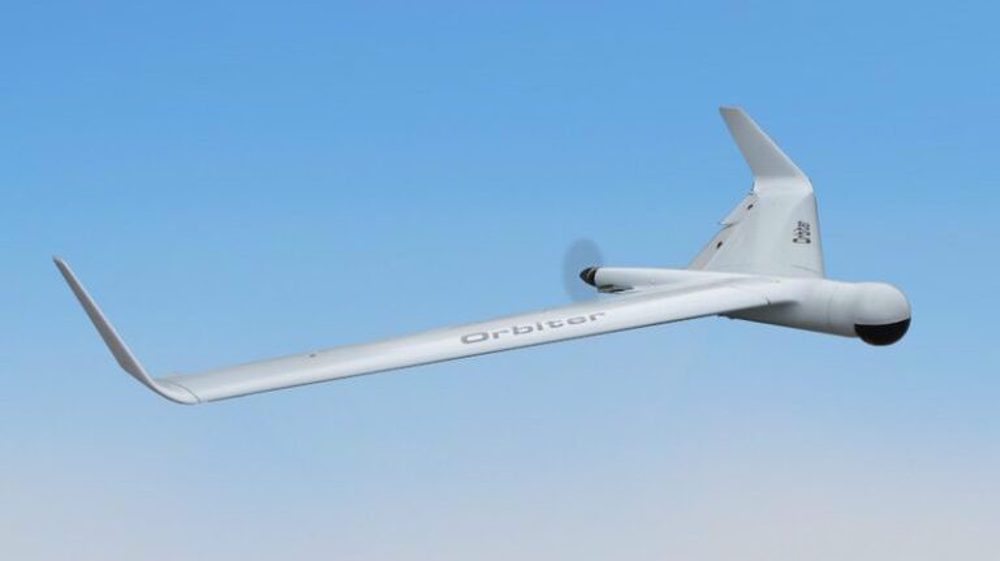
Iran Army downs US Orbiter reconnaissance drone over Strait of Hormuz
Iran dismantles terrorist cells in three provinces
How Iran turned US military and economic aggression into strategic leverage to dictate terms



US visa ban on Iranian president’s media team is bid to hide the truth: FM spokesman
US aggression, economic warfare amount to crimes against humanity: Iran's UN envoy
Protests erupt in US as ICE agent shoots Venezuelan driver
US pressure fuels cooperation among Muslim states: Pezeshkian
Major TV networks suspend White House pool coverage after Trump ban
US visa ban on Palestinian UN delegation violates international agreements: Hamas
VIDEO | Press TV's news headlines
Iran calls on France to respect law after suspending French cultural institute in Tehran


 PressTV NEWSLETTER
now
PressTV NEWSLETTER
now
 This makes it easy to access the Press TV website
