How Iran's Strait of Hormuz card trumped sanctions-addicted US and brought it to heel
By Y. P. Rāzi
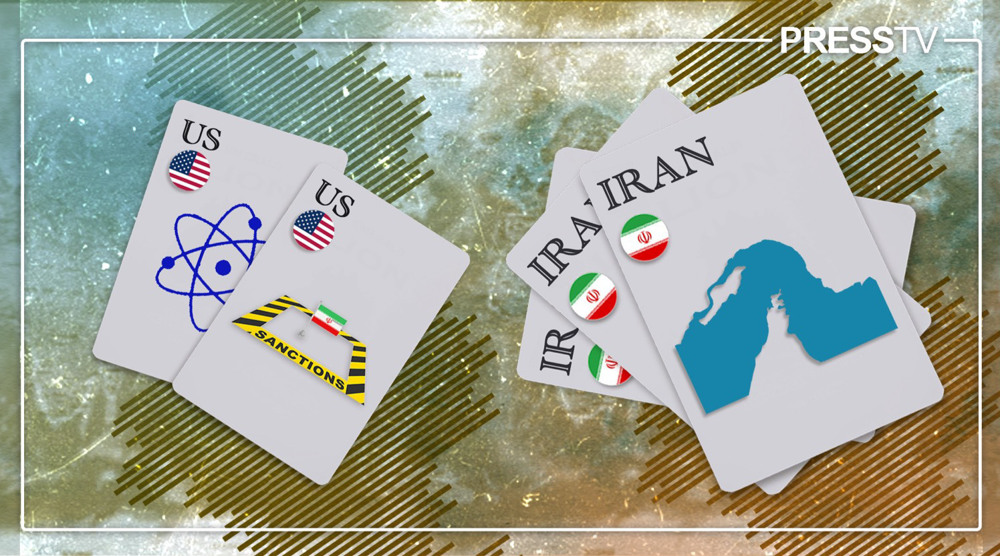
In the ongoing confrontation between the United States and Iran, which was triggered by the unprovoked war of aggression against the Islamic Republic, various playing cards have been used. Many have already been played, and some have only recently been introduced.
Naturally, compared to America's political, economic, and military power, Iran possesses a more limited set of cards. To prevent collapse or disintegration and preserve and protect the strategic objectives of the Islamic Revolution, Iran has sought to play its cards at the right time and place.
The problem, however, was that most of these cards, once played, would lose their value and credibility. Restoring them required considerable time and effort.
Within America's hostile strategy against Iran, the sanctions card has been extremely powerful over the decades. This includes various forms: UN Security Council sanctions, direct US sanctions, sanctions by American allies, EU sanctions, and most importantly, US secondary sanctions targeting Iranian individuals and entities.
Over time, as these sanctions expanded, their weight was increasingly felt. Most of these sanctions were ostensibly designed to counter Iran's natural right to enrich uranium, but their true purpose was to cripple Iran's economy.
The West added a "nuclear" label to its sanctions to discredit Iran's nuclear enrichment and stockpile card. In reality, the goal was the destruction of Iran's economy.
These two cards have a fundamental difference. Iran's stockpile of enriched material was an exhaustible strategic asset, extremely costly for Iran to rebuild. In contrast, the West's sanctions represented a renewable asset, cheap for the United States and its allies to reapply.
We all saw clearly how these cards were laid on the table in 2015. Under the JCPOA, also known as the Iran nuclear deal, Tehran agreed to drastically reduce its stockpile and increase IAEA monitoring in exchange for the removal of all nuclear-related sanctions.
Iran played its card. But even before Barack Obama's term ended, the unique feature of America's card, its renewability at negligible cost, caught the attention of American players.
Then came Donald Trump, the maddest player of all, bound by no rules or commitments. The entire game was upended. America's card was back on the table, more powerful than before.
Meanwhile, Iran would need years of effort and expense to restore the power of its card. Washington's threat to sanction any company in the world that did business with Iran nullified even Europe's nominal commitment to suspending sanctions. Mechanisms like INSTEX, despite the perpetual US threat and the renewability of the sanctions card, turned into a worthless joke.
✍️ Analysis - Iran's new calculus: Full Strait of Hormuz control, no retreat on nuclear rights, and unused cards – including NPT
— Press TV 🔻 (@PressTV) April 25, 2026
By Press TV Strategic Analysis Deskhttps://t.co/JuJnfEKf7O pic.twitter.com/QnkIprd2g4
Soon after, European countries, at the national level, violated their own commitments made at the EU level. The spectacle at the UN Security Council on September 26, 2025, and the indefensible collaboration of France and Britain with the United States in triggering the snapback mechanism showed everyone something important.
Even though this move faced opposition from China and Russia, two veto-holding players, it proved that no moral constraint or international commitment would stop Western players from exploiting the power their cards give them.
In the language of game theory, a card that can be used repeatedly at negligible cost is called a credible threat in a repeated game. Conversely, a card that disappears after a single use is a terminal move. It generates no long-term bargaining power.
During the recent American and Israeli aggression against Iran, the cards of war, assassination, and destruction of the Iranian industry were played. In response, Iran used a card that the West had not expected. Iran struck all of America's allies in the region and managed to raise the cost of the game so high that the renewability of the war card for the other side diminished.
To this Iranian card, we must also add the ambiguity surrounding the type and range of its military equipment. In fact, Iran had hidden several cards under the table.
Then, suddenly, Iran revealed a card that, in game theory, can only be called a payoff structure shifter. Iran closed the strategic chokepoint of the Strait of Hormuz. Against the full spectrum of American and Western threats, all of which were cheap and endlessly repeatable, Iran introduced a threat with unlimited repeatability and a declining marginal cost.
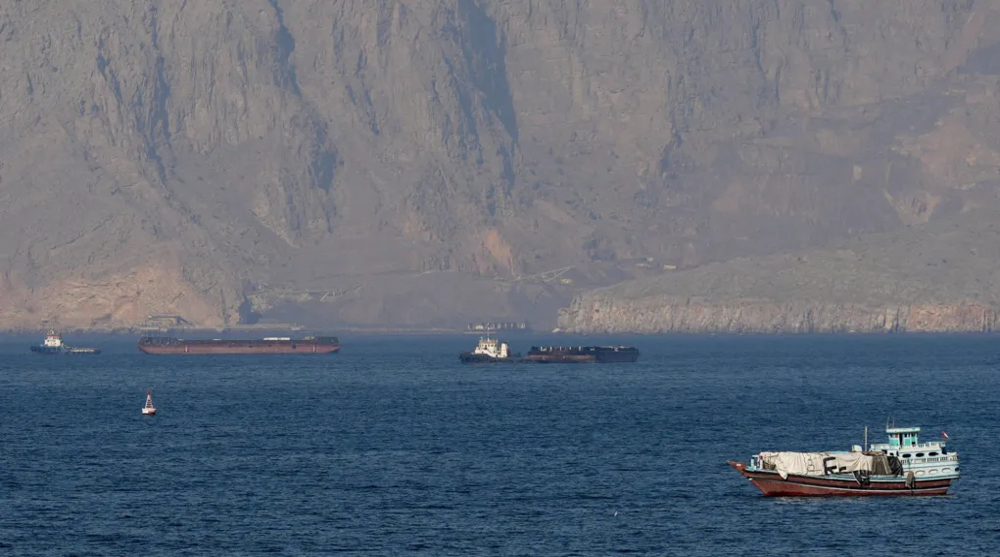
The scale and persistence of this card are such that some Western political and economic analysts now speak of a fundamental change in the game. If you divide the world's total energy needs into five parts, one-fifth of that energy, after extraction, refining, and dozens of other processes, is ultimately loaded onto ships and passes through the Persian Gulf.
But in the middle of this route lies a highly sensitive chokepoint. For the giant tankers to pass through it, they need something far beyond international insurance or the firepower of American warships. They need Iran's permission.
America's military superiority over Iran could deliver devastating blows to the country and might even lead to the temporary occupation of some areas. But let us not forget that Iran does not need extraordinary or unimaginable weapons to close the Strait. Perhaps the Strait could be reopened for a while, but would the threat disappear forever?
Money is cowardly. Just as it fled from the risk of US sanctions and refrained from accumulating as foreign capital and investment in Iran, it will also flee from a Strait that could be threatened at any moment by a drone, a sea mine, or a speedboat costing a few thousand dollars.
WATCH: Simulated video of Press TV investigation exposing the failure of US destroyers' Strait of Hormuz transit stunt, in which they came close to destruction.https://t.co/zVeCCKGbwg https://t.co/moCyVQGE0Z pic.twitter.com/1JN5MCPdCX
— Press TV 🔻 (@PressTV) April 14, 2026
Investors, with rational expectations, quickly understand that this threat, unlike previous ones, does not disappear after being used once. Therefore, the risk-adjusted value of all maritime routes in the Persian Gulf is permanently reduced.
Trump's bluster and his ill-informed ministers will not reassure investors. Everyone knows that repairing the damage America has caused will require a fundamental agreement. In such an agreement, the Hormuz card will stand opposite the US sanctions and threats.
These are two cards, both highly renewable and cheap for their holders, but costly for the other side. Will negotiations succeed in neutralizing both cards?
Trump is desperate to end this game, but his hand is now fully exposed. Granting major concessions to Iran would be a historic defeat for a right-wing extremist who accused all previous presidents of treason and stupidity toward Iran.
On the other hand, the beating that America's regional allies have taken from Iran, along with their expectation of retaliation or at least the reopening of the Strait, and America's inability to deliver, forms the other blade of the scissor closing around Trump's neck.
Recently, in a desperate move, the United States tried to halt Iran's maritime trade. But this card lacks the necessary power, and its worthlessness will soon become clear to everyone. The reason is simple. The United States entered the scene to break a blockade, hoping to relieve pressure on the maritime trade structure and push prices downward.
Now, however, the US itself has become a factor in escalating tensions. This may inadvertently serve Iran's goal of using the blockade to exert economic pressure on America's allies.
The sanctions card against Iran required time to prove its weight. Over the years, Iranians faced growing shortages in industry, raw materials, medicines, and more. In Hillary Clinton's words, they felt the sting. That was one of the sanctions card's key features.
Remarkably, the Hormuz card has the same property, and perhaps it will sting in a fraction of the time the sanctions took. In this round of the game, the passage of time does not work in the West's favor. It works against it.
Remember that Trump came planning to “change the regime” in three days. There was never supposed to be a negotiation table where Iran could state its terms. So, what has made the Americans beg for talks? The credibility of Iran's card and the sting of Hormuz.
And this is Washington's greatest strategic puzzle. A card that cannot be destroyed by war and cannot be neutralized by sanctions can only be answered through reluctant negotiation.
Y. P. Rāzi is a Tehran-based journalist and commentator.
(The views expressed in this article do not necessarily reflect those of Press TV.)
Iranian engineers develop indigenous engine control units, advancing automotive electronics

Understanding Iran’s tourism momentum amid war and sanctions

BRICS paving way for alternative world order, not a war machine against West: Analyst



Iran’s military warns of ‘unpredictable blows’ in response to US threats
VIDEO | US economic war on Iran
Iran FM meets with US envoy on UN meeting’s sidelines at American side’s insistence: Report
UN chief warns Israeli violence in West Bank raises ‘specter of ethnic cleansing’
VIDEO | ‘Korea gets nothing, loses everything, with Hormuz deployment’
Iran parliamentary commission approves penalties for violators of Hormuz laws
VIDEO | Trump’s war disrupts the world
Araghchi urges world to hold US accountable for ‘war crimes’ at UNGA


 PressTV NEWSLETTER
now
PressTV NEWSLETTER
now
 This makes it easy to access the Press TV website
