US-Israeli war on Iran disrupts global circuit board supply, raises tech costs: Report

The US-Israeli war on Iran has caused a disruption in supplies of crucial raw materials and triggered a sharp spike in prices of the printed circuit boards (PCB) used in nearly all electronic devices, ranging from smartphones and computers to AI servers, according to a report.
Reuters reported on Monday that the disruption delivers a fresh blow to electronics manufacturers already struggling with increased memory chip costs and exposes the broad impact of the US-Israel war against Iran that has wreaked havoc on supply chains, plastics, and oil supplies.
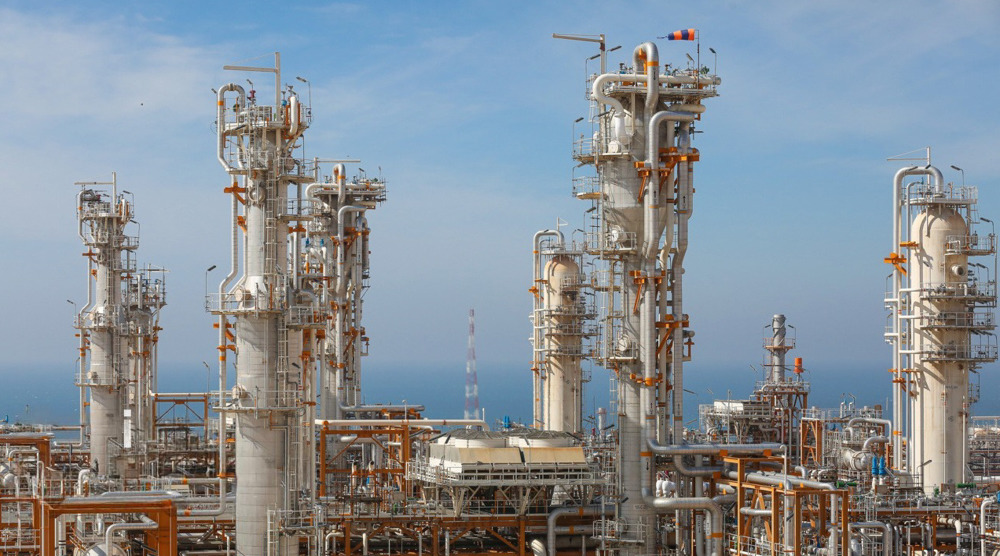
Iran’s retaliatory attack on the Jubail petrochemical complex in Saudi Arabia in early April forced a halt in production of high-purity polyphenylene ether (PPE) resin, a critical base material used to manufacture PCB laminates.
SABIC, a company that operates in the Jubail complex, accounts for approximately 70 percent of the world's high-purity PPE supply. According to one source, SABIC has failed to resume output, which has severely tightened the global availability of the material.
The prices of PCB have been increasing since late last year, driven by a growing demand for AI servers. However, three industry sources told Reuters that demand has been accelerating sharply since March as manufacturers rush to secure raw material supplies and reduce the impact of skyrocketing costs.
In the month of April alone, PCB prices surged as much as 40 percent compared to March, analysts at Goldman Sachs said in a recent note. The analysts added that cloud service providers are keen to accept further price increases because they expect demand will outstrip supplies in the coming years.
According to a recent report from Prismark, the global PCB industry is projected to grow by 12.5 percent, reaching $95.8 billion in 2026.
A senior executive at Daeduck Electronics, a South Korean PCB maker whose customers include Samsung Electronics, SK Hynix and AMD, said discussions had begun with its customers over price increases.
That executive, who declined to be named because of the sensitivity of the issue, said his priority has now shifted.
"My priority has now changed from meeting customers to suppliers," the executive said.
He explained that the waiting times for chemical materials such as epoxy resin have stretched to 15 weeks, compared to just three weeks previously.
One source told Reuters that the sharp rise in PCB prices is also being driven by a shortage of other key materials, including glass fiber and copper foil. The source added that copper foil prices have soared as much as 30 percent so far this year, with the rally gaining momentum in March.
Victory Giant Technology, a major Chinese PCB supplier for Nvidia, said Copper accounts for approximately 60 percent of total raw material costs in PCB manufacturing. Earlier this month, the firm warned that the conflict in the region could push up prices for key materials, including resin and copper.
Victory Giant also said that that multi-layer PCBs can cost around 1,394 yuan (equivalent to $204) per square meter, while higher-end models designed for AI servers cost around 13,475 yuan.

Iran FM hails China consultations as ‘successful’
Pezeshkian: Iran ready to resolve issues with neighbors through diplomacy

Pezeshkian hails 200 nights of rallies, reaffirms support for Iranian armed forces



North Korea rejects IAEA denuclearization calls, says nuclear status ‘absolute’
Israeli court sentences man to over 13 years in prison for allegedly spying for Iran: Report
US trapped in Strait of Hormuz 'quagmire' after war on Iran: Libya’s Grand Mufti
Yemen dismisses Mecca drone allegation, says kiswa donors to Epstein target sanctities
US extends ban on Palestinians scheduled to attend UNGA
VIDEO | ‘Geneva conventions ban providing arms to war criminals’: Political commentator
VIDEO | Press TV's news headlines
Iran FM hails China consultations as ‘successful’


 PressTV NEWSLETTER
now
PressTV NEWSLETTER
now
 This makes it easy to access the Press TV website
