
The head of Hezbollah's Loyalty to the Resistance bloc in the Lebanese Parliament says Iran's continued defiance in the face of the US-Israeli war has exposed the limits of US power in the world.
In an article published in Al-Akhbar, Mohammad Raad said US President Donald Trump reacted with "astonishment, shock, and anger" when Iran refused to surrender during the recent US-Israeli aggression.
He emphasized that Tehran instead responded with "unwavering confidence and unprecedented popular participation."
The lawmaker noted that this resilience stems from a US misreading of Iran's internal structure, which is built on tightly woven ideological, organizational, and societal ties between the leadership and the public.
He stressed that the Iranian people are not merely a population manipulated by politicians but rather "an active and serious producer of power."
He cited Trump's threats—including that Iranian civilization would "die"—as evidence that Washington had stripped away any pretense of superiority and revealed itself as a force for threatening and destruction.
A new report says during early days of the recent aggression against Iran, an Iranian fighter jet breached US air defenses and hit a major American military base for the first time since the Korean War.
— Press TV 🔻 (@PressTV) April 27, 2026
Follow: https://t.co/B3zXG73Jym pic.twitter.com/0ZRp8JlKBs
He said that cohesive ideological environments are far more capable of sustaining prolonged confrontation than "artificial systems."
He added that the severe pressures experienced in Gaza, as well as what Hezbollah and Iran endured, would have caused any artificial or fragile state to completely collapse.
"Yet events have taken a different course—one that defies conventional expectations," he noted.
He further added that the core failure of US policy lies in "the fundamental imbalance between power and values," which continues to undermine American influence despite its military capabilities.
The United States and Israel launched a joint military aggression against Iran on February 28 by assassinating the Leader of the Islamic Revolution, Ayatollah Seyyed Ali Khamenei, along with senior military commanders.
During the 40-day war, the enemies launched a wave of attacks against Iran, which also targeted critical energy infrastructure, including oil depots, gas refineries, and power plants.
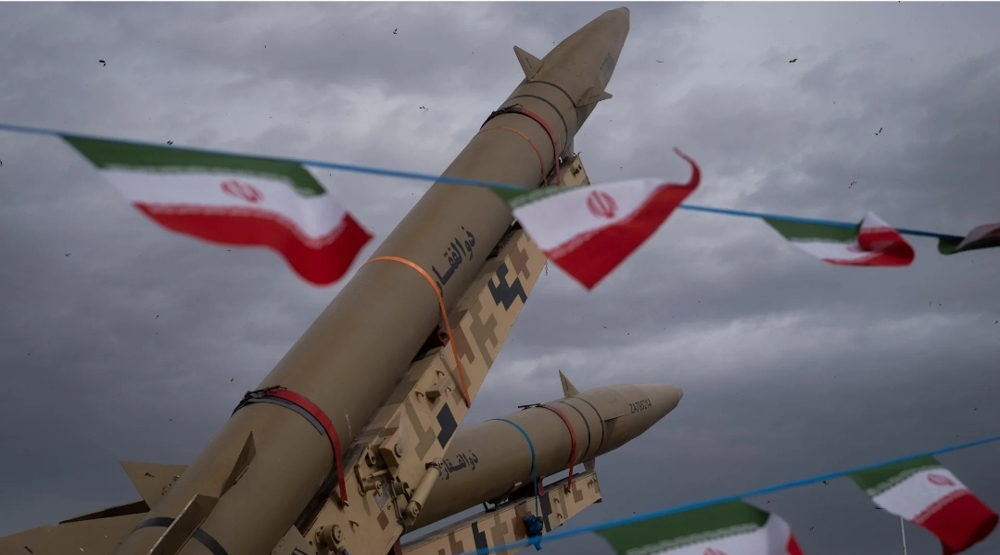
Iranian armed forces responded by launching almost daily missile and drone operations targeting locations in the Israeli-occupied territories as well as US military bases and assets across the region.
Furthermore, Iran retaliated against the strikes by closing the Strait of Hormuz, which resulted in a significant increase in oil prices and its by-products.
Despite one round of intensive discussions following a temporary ceasefire, the negotiations between Iran and the US ended without an agreement, with Iran citing “excessive demands” from Washington.
 This makes it easy to access the Press TV website