The urea factor: How war on Iran is starving the world
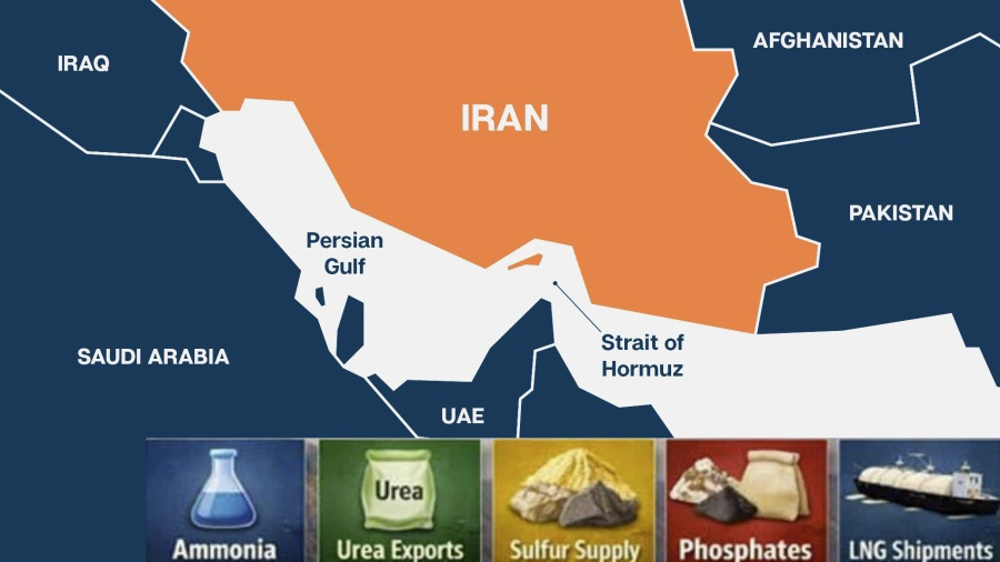
Iran sits at the heart of the world's most important fertilizer passage because urea, a substance modern agriculture cannot live without, travels through the Strait of Hormuz in quantities that feed entire continents.
Thirty-five percent of global urea trade passes through the strait. Saudi Arabia, the world's largest urea exporter, sends its shipments past Iranian shores, so does Oman, the third largest, with Qatar and the UAE following close behind.
Every one of these vessels sails within range of Iranian territory. This has been true for years, but it has become urgent only now because the US-Israeli terrorist war on Iran has turned the strait into a danger zone.
No formal blockade has been declared and no official closure has been announced, yet insurance premiums have skyrocketed, shipping lines have begun rerouting or suspending services, and fertilizer traders have started hoarding supplies.
The result is a quiet catastrophe, with global fertilizer prices jumping by more than a quarter in a single month. According to the UN's Food and Agriculture Organization, if the crisis persists, prices could rise another 15 to 20% by midsummer.
The crisis is the direct consequence of a terrorist war launched by Washington and Tel Aviv, that was supposed to cripple Iran's economy and force it to capitulate.
Instead, it has strangled the global fertilizer trade, pushed American farmers to the edge of bankruptcy, and raised the real possibility of famine in some of the world's most vulnerable countries.
The Financial Times, in a sober assessment of the war's trajectory, recently warned that "hunger and even famine are foreseeable consequences of the war on Iran."
And the only country that can help the world avoid “the coming global food crisis”, as titled by the leading British daily, is the one being bombed.
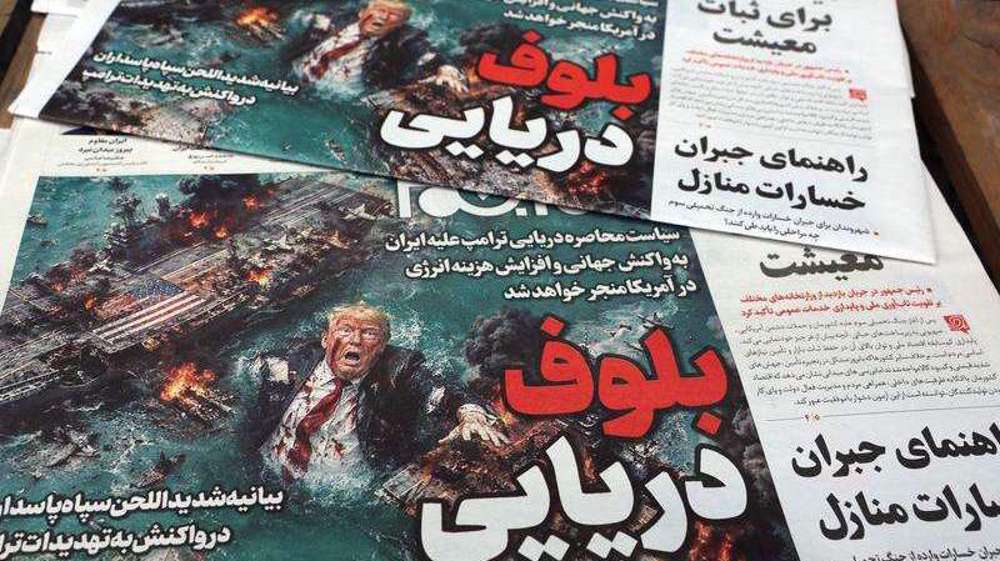
To understand why Iran matters so much to the world's food supply, you have to go back to the middle of the twentieth century, when the Green Revolution transformed global agriculture and new high-yielding varieties of wheat and rice emerged from laboratories.
Synthetic fertilizers flooded onto fields and chemical pesticides and pumped irrigation followed. India, once stalked by famine, more than doubled its wheat output between the mid-1960s and the early 1970s.
Across Asia and Latin America, the new crops pushed back hunger and supported a rapid expansion of population.
But these miracle crops came with a hidden condition. They needed large, repeated applications of industrial fertilizer to deliver their promised yields, especially nitrogen-based products like urea and ammonium nitrate.
Those fertilizers are made from natural gas, and that is how the Green Revolution secretly turned agriculture into a branch of the fossil fuel industry, leaving the world's fields to rise and fall with the price of natural gas.
That was when the Persian Gulf states began investing their hydrocarbon wealth in downstream chemical industries, with Saudi Arabia, Qatar, the UAE and Oman moving beyond crude oil to become major producers of ammonia, urea and other fertilizers.
By 2024, Persian Gulf countries accounted for 35 percent of global urea trade, with Saudi Arabia the world's largest exporter and Oman ranking third.
This downstream expansion made the Persian Gulf states rich, but it also meant that almost all of those exports must pass through the Strait of Hormuz, and in a time of war, the strait is Iranian waters.
With the US waging a war of terror on Iran, the first signs of trouble have appeared not in Tehran, but in the American Midwest, where farmers are preparing for spring planting season and discovering that they cannot afford the fertilizer they need.
According to the American Farm Bureau Federation, nearly seventy percent of respondents in its early April survey reported that they are unable to buy all the fertilizer their fields require, as urea prices have climbed to the highest level ever recorded.
Farmers are reportedly being forced to under-fertilize their fields, which means smaller harvests, lower incomes and eventually higher food prices for American families.
The irony is in full view. The same Washington that launched this war of aggression to cripple Iran is now watching its own agricultural sector buckle under the weight of unintended consequences.
The country that the United States and Israel have been bombing is not the cause of this crisis but its victim, for Iran did not close the Strait of Hormuz, drive up insurance premiums, or hoard fertilizer and manipulate markets.
Iran is simply trying to fight back an unprovoked war of aggression, a terrorist war launched without international mandate and justified by shifting rationales.
But resistance comes with an extraordinary side effect, because every tanker must pass within range of Iranian shores, placing Iran at the guard post of the world's most important fertilizer passage and giving Tehran an unexpected key to the entire crisis.
This is not a weapon Iran chose to acquire, but a responsibility the world's dependency has thrust upon it.
In other words, the United States launched a war without considering the consequences for global fertilizer supply chains, and now everyone is looking to Iran, the country that has been bombed and blockaded and vilified, to provide a solution.
Iran has consistently described its role in the strait as a defensive one, aimed at protecting its own waters. For the panic that has seized the fertilizer trade to subside, Iran does not need to abandon its defensive posture.
Rather, the US and Israel must be made to understand that they cannot bomb their way out of a crisis they created, and the American allies must recognize that the country they have tried to isolate is the one they most need to talk to.
This is about recognizing that the country being bombed today is, by its very geography and through its urea leverage, the one that can save the world from famine.
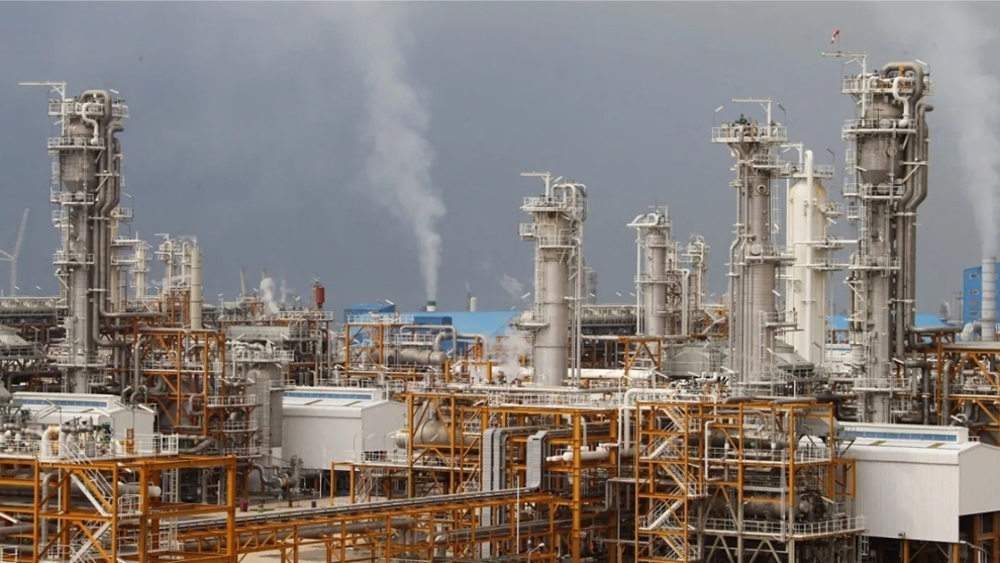
Iran restores half of damaged South Pars production capacity
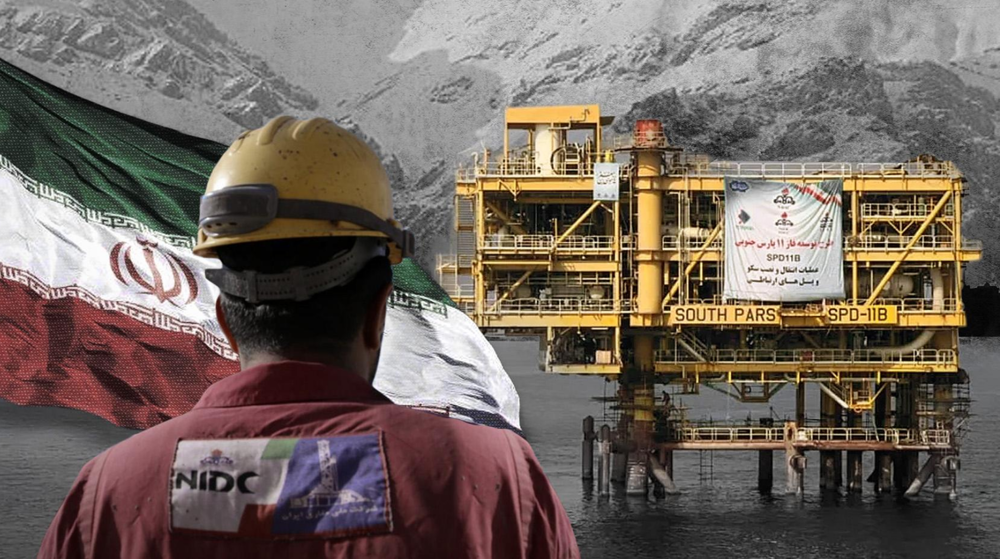
Iran’s energy rebuild sparks unprecedented industrial shift
War spurs Iran’s push to develop Caspian energy frontier



VIDEO | East Azarbaijan: The land of firsts and opportunities
Iran will resist pressure, force-based policies, President Pezeshkian tells Swiss counterpart
Top commander calls President Pezeshkian’s UN address ‘resounding voice of the proud Iranian nation’
IRGC dismantles terrorist team in southeastern Iran, killing five
Iran’s top security official says no return to pre-war diplomacy with US
‘We don’t seek permission to defend our country’: Snippets from President Pezeshkian’s UNGA address
VIDEO | Kargil protest demands justice, constitutional safeguards for Ladakh
Pezeshkian spoke for Iran’s 3,000-year-old civilization at UN: Qalibaf


 PressTV NEWSLETTER
now
PressTV NEWSLETTER
now
 This makes it easy to access the Press TV website
