As war on Iran fails, Trump ousts his own generals: Navy Secretary latest casualty of purge
By Mina Mosallanejad
As Washington’s costly war against Iran sinks deeper into strategic failure, the Trump administration has turned inward – purging senior military and security figures in a frantic attempt to contain mounting dissent, operational chaos, and the visible collapse of confidence inside the US war machine.
The widening personnel bloodbath inside the Trump administration is exposing a reality the White House has tried to conceal: the US-Israeli war of aggression against Iran is not only faltering abroad, but also splintering the command structure tasked with sustaining it.
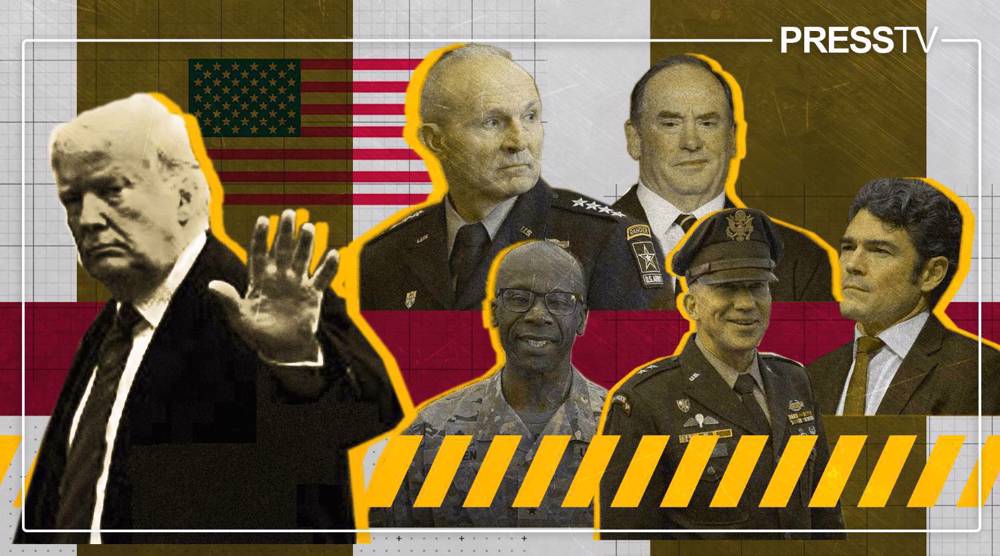
Within the span of just a few weeks, the administration has fired Navy Secretary John Phelan, Army Chief of Staff General Randy George, Army Transformation and Training Command chief General David Hodne, and Army Chaplain Corps head Major General William Green Jr., while National Counterterrorism Center Director Joe Kent resigned in protest.
The unprecedented wartime shake-up – one of the most severe in recent American history – has unfolded with virtually no coherent public explanation, a silence that has only amplified speculation that the dismissals are tied to growing internal opposition over Trump’s illegal, reckless and increasingly unpopular war against Iran.
The war against Iran has failed, by nearly every measurable strategic yardstick, to produce the political or military outcomes Washington and Tel Aviv promised at its outset, according to various political and military assessments.
Despite weeks of indiscriminate bombardment, coercive diplomacy, and maritime pressure, Iran neither collapsed internally nor submitted at the negotiating table.
Tehran refused to negotiate under duress, rejected demands for unilateral concessions over its peaceful nuclear program, and signaled after the ceasefire that it remained unwilling to accept the US-Israeli formula of surrender through pressure.
At the same time, the war generated blowback that extended far beyond Iran itself.
Iranian countermeasures in the Persian Gulf and the tightening of control over the Strait of Hormuz disrupted one of the world’s most sensitive oil corridors, rattling tanker traffic, pushing up shipping insurance costs, and sending ripples through global energy markets.
Persian Gulf Arab partners aligned with Washington found themselves economically exposed, while the ripple effects of rising crude prices quickly fed into wider inflationary pressures across transportation, manufacturing, and food supply chains.
Equally embarrassing for Washington was the inability of its much-publicized naval blockade to fully isolate Iran.
Though presented by the Trump administration as a decisive mechanism for economically suffocating the Islamic Republic, maritime tracking data showed that Iranian-linked tankers continued to bypass or outmaneuver US interdiction efforts through alternate routing, foreign flags, and the exploitation of patrol gaps.
Instead of demonstrating uncontested American dominance, the so-called blockade increasingly came to symbolize the limits of US coercive power: capable of disrupting world trade, but unable to force “Iranian capitulation” without inflicting major costs on allies and international markets alike.
And now the unceremonious sacking of US military and security officials suggests panic at the top: a White House and Pentagon scrambling to eliminate dissenting voices as battlefield objectives remain unmet, the naval blockade of Iran produces international backlash, and sections of the US military establishment grow uneasy over the administration’s willingness to push the region toward a wider conflagration.
A closer review of the names involved and the details surrounding each departure helps illuminate the deeper institutional tensions emerging from Washington’s failed war on Iran.
John Phelan
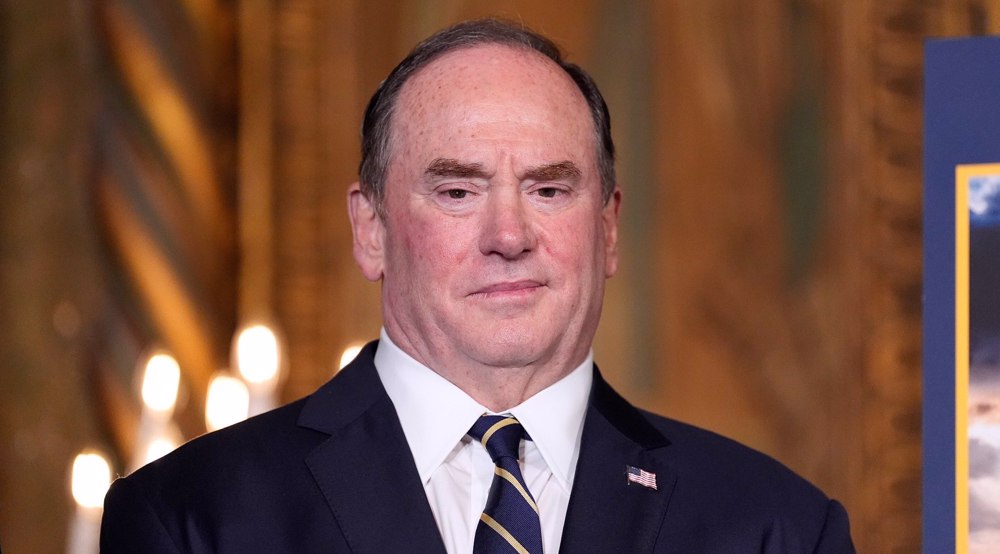
Phelan was Secretary of the Navy, overseeing the naval branch directly involved in enforcing Washington’s blockade and maritime aggression against Iran in the Strait of Hormuz.
He was abruptly fired on April 22 and ordered to leave “effective immediately,” with Pentagon officials refusing to provide any formal explanation.
His removal came while the US Navy was actively implementing one of the most dangerous components of Trump’s war against Iran: the interdiction of Iranian-linked shipping and the enforcement of a so-called blockade on Iranian ports and vessels.
American outlets have framed the dismissal as a bureaucratic feud over shipbuilding and clashes with War Secretary Pete Hegseth.
But the timing is politically revealing. Phelan was one of the few service secretaries with a direct communication line to Trump, and reports indicate Hegseth was angered by his independent channel into the White House.
At a time when naval operations against Iran were becoming central to the US war, consolidating control over the Navy under more obedient loyalists appears to have become urgent for the incumbent government.
This was not a random management dispute, according to US media reports.
The administration removed the official overseeing naval warfare precisely while the Navy was prosecuting an internationally condemned blockade of Iran.
That points less to procurement frustration than to an attempt by Hegseth and Trump to tighten political control over the service branch most directly responsible for the war’s maritime escalation.
General Randy George
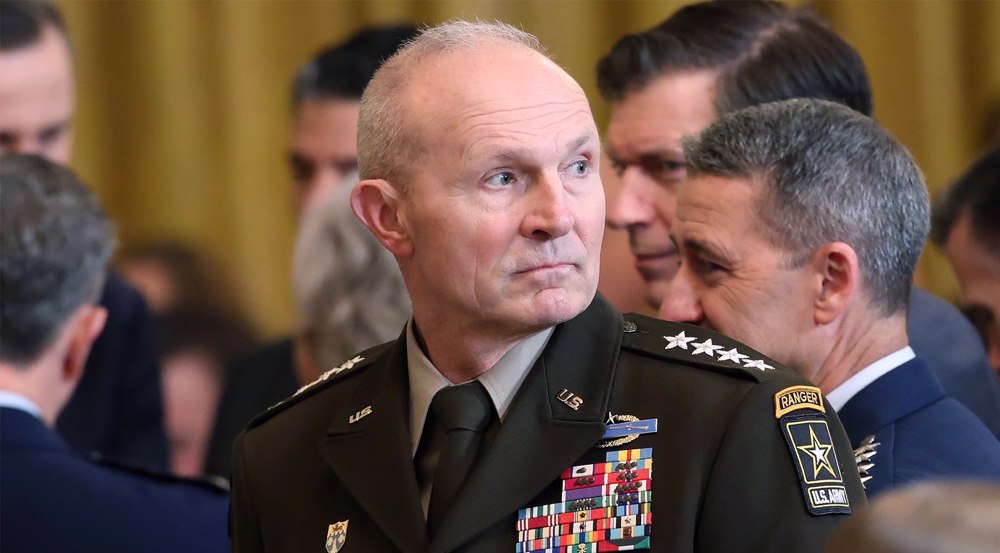
Randy George was the Chief of Staff of the Army, the highest-ranking officer responsible for force readiness, troop deployments, and ground-force planning.
On April 2, Hegseth forced Randy George into immediate retirement, roughly a year and a half before the normal end of his term.
No official reason was offered, an extraordinary omission considering the United States was in the middle of an active war against the Islamic Republic of Iran.
Removing the Army’s top uniformed commander during wartime is almost unheard of unless there is either catastrophic operational disagreement or a breakdown in trust between military leadership and civilian officials, according to military experts.
George had been deeply involved in moving additional personnel and air defense assets to West Asia even before the war was launched on February 28.
His abrupt ouster suggests a conflict over force posture, strategic planning, or the administration’s insistence on politically convenient narratives that contradicted military realities.
Analysts in the US media openly noted that such leadership continuity is considered vital during combat, meaning Trump knowingly chose disruption over stability.
The message was unmistakable: officers who provide inconvenient battlefield assessments or resist reckless escalation are expendable.
General David Hodne
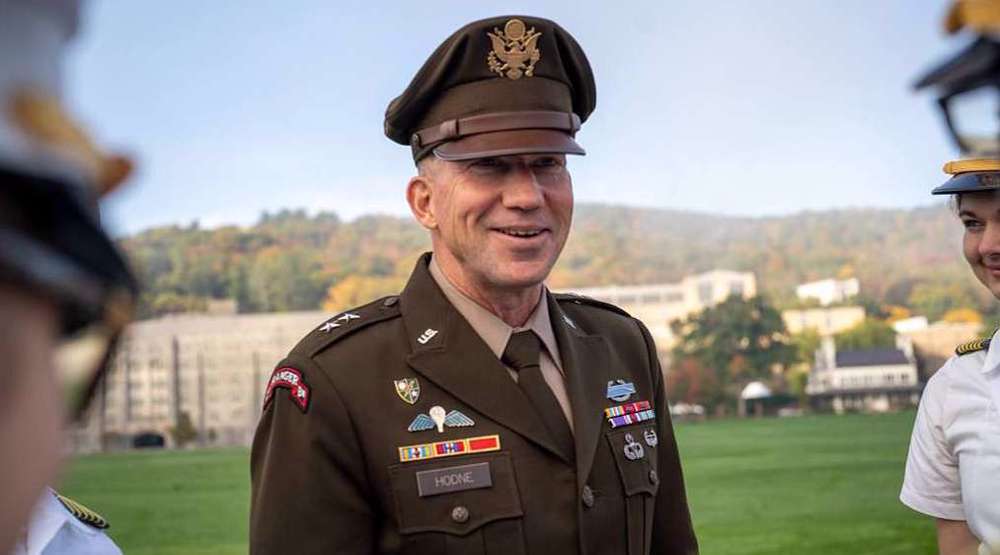
He was Head of Army Transformation and Training Command, responsible for doctrine modernization, force adaptation, and preparing US troops for future combat demands.
Hodne was fired the same day as Randy George, again with no substantive Pentagon explanation.
His command is not ceremonial; it shapes how the Army adjusts to battlefield lessons, casualty expectations, and doctrinal shortcomings.
During an expanding war of aggression with Iran, Hodne would have been central to assessing whether US force design was adequate for a prolonged regional confrontation.
His dismissal suggested dissatisfaction not merely with personalities but with institutional assessments emerging from within the Army amid the failed war, according to analysts.
If Hodne’s command was producing analyses that contradicted the administration’s rosy claims about readiness or sustainability, his removal would fit the broader purge pattern: suppress professional military judgment in favor of political obedience.
Major General William Green Jr.
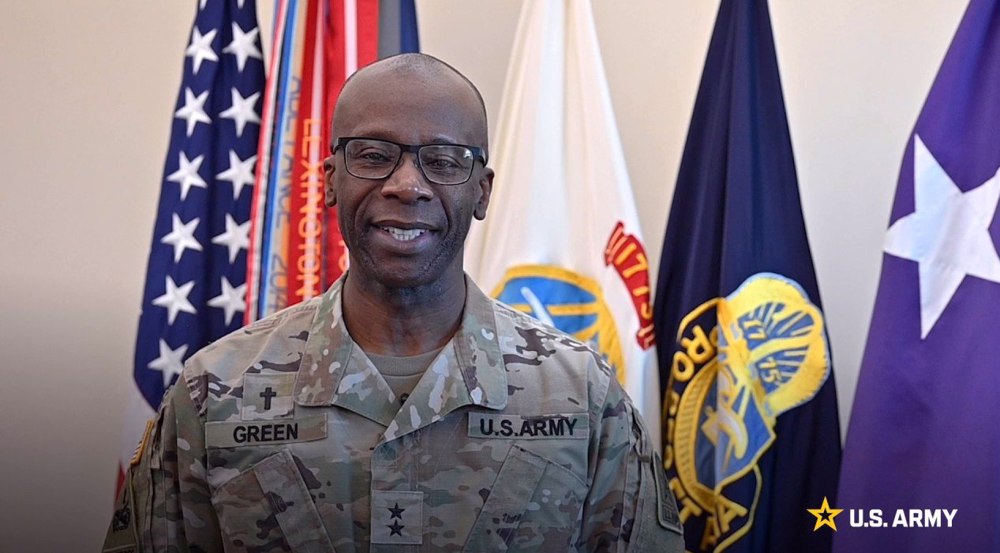
Green Jr. was Chief of Chaplains of the US Army, overseeing religious support, troop welfare, ethical counseling, and morale structures.
The removal of the Army’s senior chaplain in wartime was deeply symbolic, according to observers who expressed serious concern over the decision.
Chaplain leadership is closely tied to soldier morale, psychological resilience, casualty management, and ethical concerns among deployed personnel.
As casualties mount, deployments drag on, and troop unease grows over the purpose of the war, morale management becomes politically sensitive.
Analysts say Green’s firing indicates deepening internal friction over how severe the strain inside the ranks had become—or over the ethical discomfort generated by a war increasingly viewed as elective, destabilizing, and strategically incoherent.
In simpler terms: when even the institution tasked with tending to soldiers’ conscience and morale is swept aside, it suggests the Pentagon no longer wants honest readings from within its own ranks.
Joe Kent
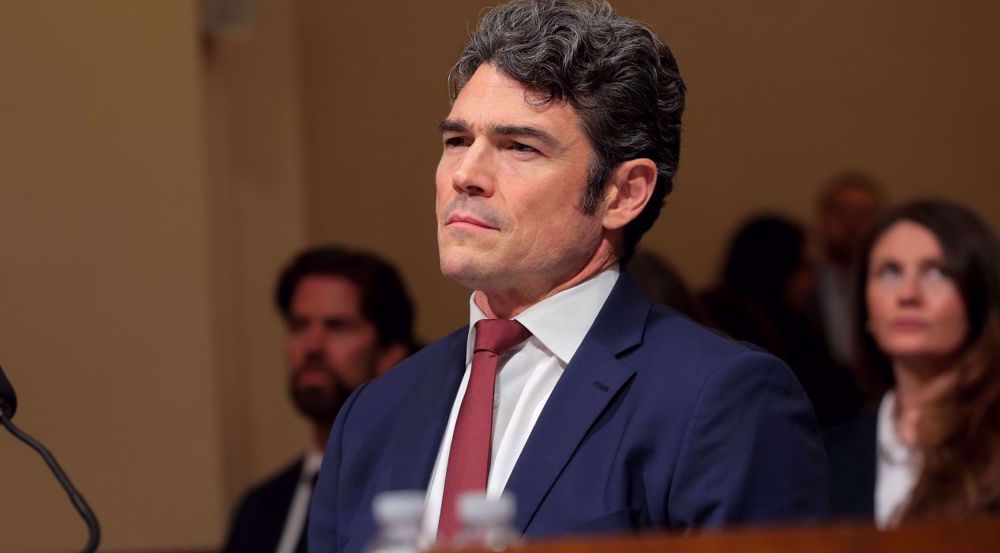
Kent was Director of the National Counterterrorism Center, one of the highest-ranking intelligence officials in the Trump administration and a principal adviser on so-called "terrorism threats" and foreign retaliation scenarios.
Kent resigned on March 17 in what became the first major senior-level defection from inside Trump’s national security establishment over the disastrous war against Iran.
In his resignation letter, he flatly rejected the White House’s central justification for launching the unprovoked military aggression, writing that he could not “in good conscience” support the war because “Iran posed no imminent threat to our nation.”
But Kent did not stop at resignation. He vocally opposed the Trump administration's foreign policy centered on unprovoked wars, from Iran to Lebanon and beyond.
In a series of media appearances after leaving office—including his extended interview with Tucker Carlson in which he spoke openly about the internal decision-making process—Kent effectively slammed the administration for manufacturing consent for war while silencing officials who questioned the rush to confrontation.
Kent said dissenting voices inside intelligence and security circles were largely frozen out before Trump ordered strikes on Iran, describing an atmosphere in which the administration had already committed itself politically to war and was no longer interested in sober threat assessment.
He noted that the claim of an urgent Iranian danger had been deliberately inflated, while officials who warned that Tehran did not pose an immediate attack threat were ignored.
More explosively, Kent said the administration had been swept into war by what he described as a sustained Israeli and pro-war media pressure campaign that “short-circuited” diplomacy and replaced intelligence analysis with ideological demands for confrontation.
In his interview after resigning, he said that the same "regime-change" fantasies that destroyed Iraq, Libya, and Syria were now being recycled against Iran despite the catastrophic record of US interventionism.
Kent’s remarks amounted to an extraordinary insider indictment: according to one of Trump’s own top intelligence chiefs, the war was not the result of unavoidable national defense, but of political manipulation, exclusion of contrary assessments, and a deliberate march toward escalation.
This transforms Kent’s resignation from a symbolic protest into documentary evidence of fracture inside the intelligence bureaucracy itself.
He was not merely uncomfortable with the war’s optics; he was warning that the intelligence process had been subordinated to propaganda.
When the official tasked with evaluating terrorism threats says Iran was not an imminent danger, says dissent was frozen out, and says Washington was pushed into war by outside pressure, it severely undercuts every public claim that the administration was acting from strategic necessity, according to experts.
In effect, Kent confirmed that the White House’s Iran narrative was being held together less by facts than by coercion, messaging discipline, and the suppression of unwelcome intelligence.
The atmosphere of instability inside Trump’s national security apparatus appears to be widening still further.
'Drunk and erratic' FBI chief Kash Patel likely next cabinet-level official to be fired: Reporthttps://t.co/DVbMrGHdFt
— Press TV 🔻 (@PressTV) April 26, 2026
Kash Patel 'likely' on his way out too
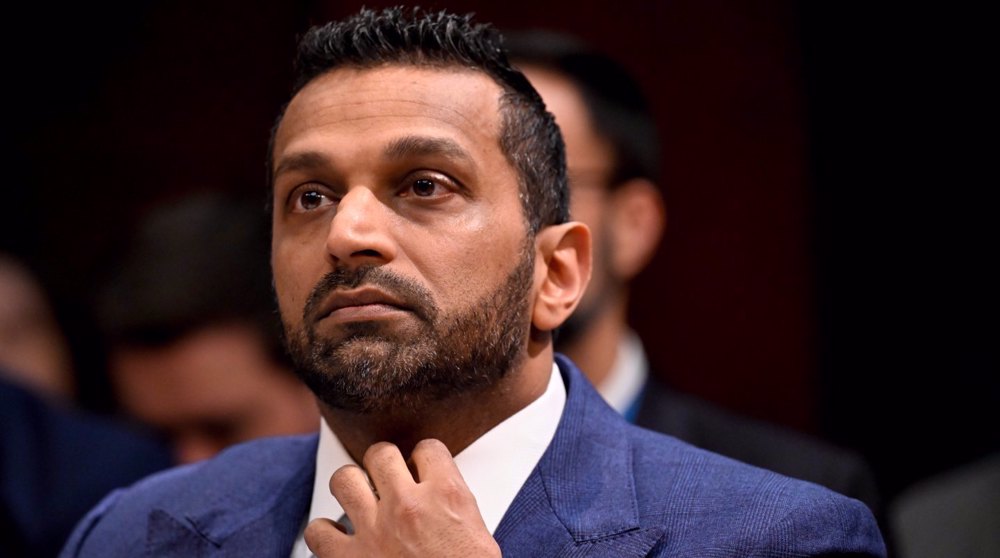
On Saturday, Dasha Burns, White House Bureau Chief for the American website Politico, reported that a senior White House official had indicated FBI Director Kash Patel could be the next high-ranking figure to leave the administration, with the source saying Patel’s removal is now seen as “only a matter of time.”
Though publicly framed by administration insiders as a response to the growing stream of scandals and negative headlines surrounding Patel’s erratic tenure at the FBI, the timing of the leak is politically telling.
If Patel is indeed pushed out, his departure would reinforce the impression of an administration spiraling through successive layers of wartime disruption: first military commanders, then intelligence officials, and now potentially the head of the FBI.
Taken together, these removals do not resemble normal personnel management; they resemble a wartime purge by an administration that senses its Iran war is generating too much friction inside the very institutions required to execute it, as analysts put it.
Trump and Hegseth are not projecting strength—they are clearing the room of officers, planners, morale officials, and security chiefs who may have questioned the wisdom, legality, sustainability, or honesty of Washington’s war narrative.
The louder the White House insists the situation is under control, the faster its own command structure appears to be cracking.
Iran warns US against new attack, says Washington will gain ‘nothing but failure’
‘New tactics’ will crush any future aggression, Iran’s Army warns
Israel, US repeat Saddam’s miscalculation about Iran: Expediency Council chief



UN Chief warns Israeli violence in West Bank raises ‘specter of ethnic cleansing’
VIDEO | ‘Korea gets nothing, loses everything, with Hormuz deployment’
Iran parliamentary commission approves penalties for violators of Hormuz laws
VIDEO | Trump’s war disrupts the world
Araghchi urges world to hold US accountable for ‘war crimes’ at UNGA
VIDEO | Press TV's news headlines
US F-16 fighter jet crashes at air base in Germany
Iran warns US against new attack, says Washington will gain ‘nothing but failure’



 PressTV NEWSLETTER
now
PressTV NEWSLETTER
now
 This makes it easy to access the Press TV website
