April 25: Iran presents 'workable framework' to end war as US sinks deeper into internal turmoil
By Press TV Website Staff
On Day 57 of the imposed war, Iran demonstrated confidence and cohesion as the US strategy showed mutating signs of failure, contradiction, and internal turmoil.
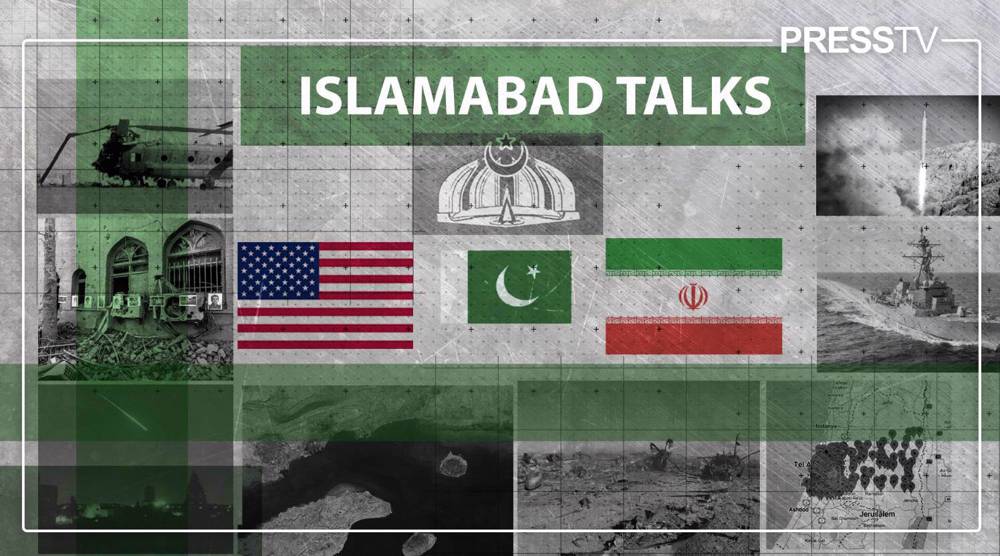
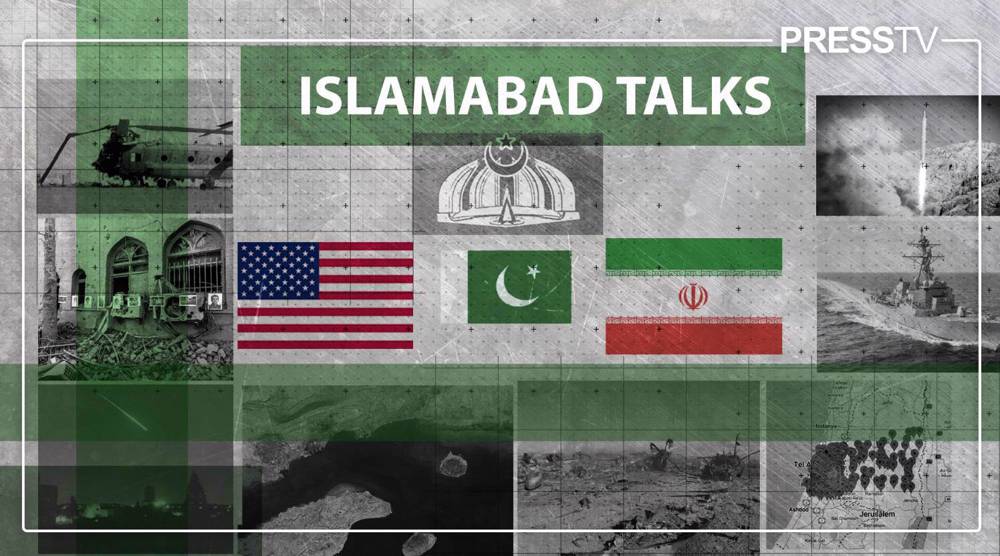
Foreign Minister Abbas Araghchi said he presented a “workable framework” to Pakistani mediators for ending the US-Israeli war of aggression during his visit to Islamabad.
Washington abruptly cancelled a high-profile trip of US envoys it had announced only a day earlier, highlighting deep confusion and disagreements inside the Trump administration.
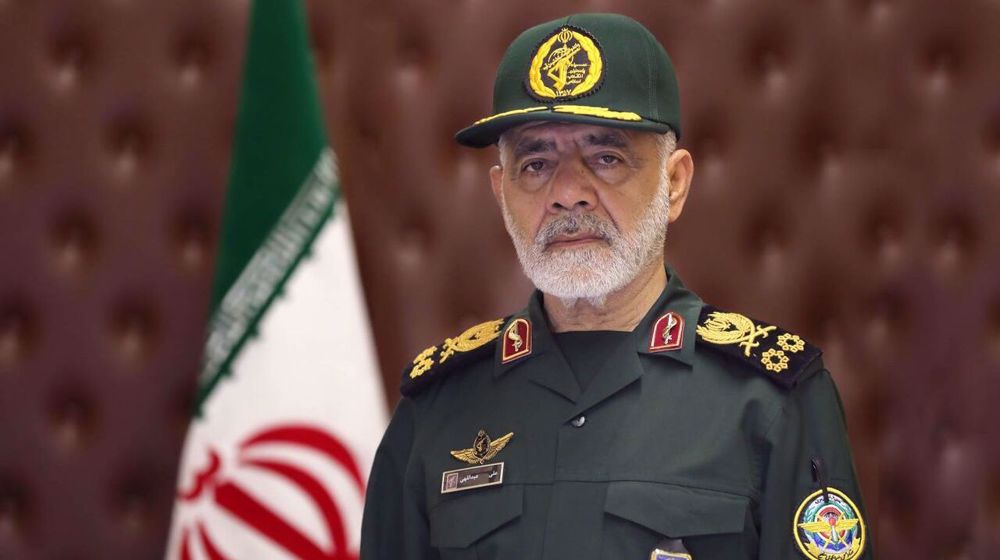
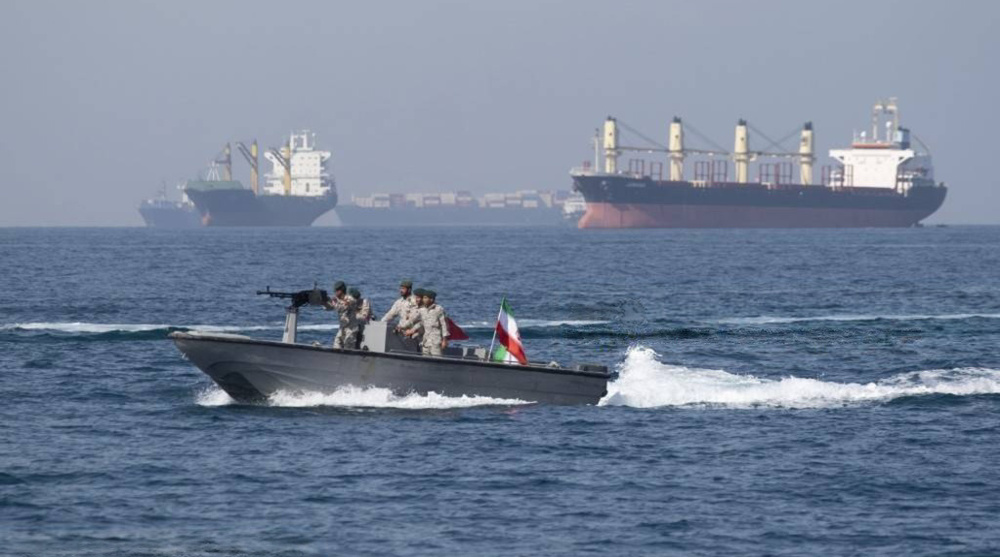
Iran’s top military command warned that continued American “piracy and blockade” in the Strait of Hormuz would trigger a decisive response.
President Masoud Pezeshkian and judiciary chief Gholam-Hossein Mohseni Ejei, in social media posts, invoked historic US defeats, from Tabas in 1980 to the recent failed operation in Isfahan, to insist that Washington cannot impose a naval siege on a nation that has repeatedly turned American aggression into humiliation.
Political cracks in the US camp widened, as the State Department admitted in an official release that it entered the war against Iran “on behalf of Israel.”
European allies distanced themselves, intelligence reports confirmed US understatements of battlefield losses, and polls showed Trump bleeding support within his own base.
Key developments on day 57 of the war, the eighteenth day of the ceasefire:
- FM Araghchi said he presented “a workable framework” to Pakistani mediators aimed at putting a lasting end to the US-Israeli war of aggression against the Islamic Republic during his “very fruitful visit” to Islamabad.
- US President Donald Trump abruptly cancelled a planned visit to Pakistan by his son-in-law, Jared Kushner and special envoy Steve Witkoff, a trip the White House had announced just a day earlier. Tehran, for its part, had never confirmed any intention of holding direct talks with the American side.
- Iran’s central military command warned that the continued naval “piracy, blockade, and banditry” by American forces in the region will be met with a decisive response from the Iranian armed forces.
- Iran’s High Council for Human Rights condemned the American blockade of Iranian ports and the seizure of an Iranian commercial vessel, the Touska, as crimes surpassing maritime piracy and state terrorism, and amounting to collective punishment against millions of Iranian civilians.
- President Pezeshkian warned the world’s arrogant powers to learn from history, as divine intervention delivered yet another crushing defeat to the United States in Isfahan, much like its humiliating failure in Tabas 46 years ago.
- Iran’s judiciary chief, Gholam-Hossein Mohseni Ejei, warned that Washington cannot impose a naval siege on the Islamic Republic, vowing that the historic defeats of US forces at Tabas and Isfahan will be repeated in the waters of the Persian Gulf.
- Iran’s parliament speaker and lead negotiator, Mohammad Baqer Qalibaf, warned that access to US assets could tighten in the West Asian region if tensions escalate, urging investors to “get out while open.”
- Ali Akbar Velayati, a senior advisor to the Leader of the Islamic Revolution Ayatollah Sayyed Mojtaba Khamenei, said while Iran stands united in the face of its enemies, a “deep fracture” is widening in the relations between the United States and its traditional European allies.
- Iran's ministry of intelligence announced the arrest of a “veteran” spy working for the Israeli regime, along with 15 members of separatist terrorist groups, following operations in different Iranian provinces.
- In a government release, the US Department of State admitted that Washington entered the recent war of aggression against Iran "at the request of" the Israeli regime.
- Attacks carried out by Iran on US bases in the West Asia region in response to US-Israeli aggression on the country caused more extensive damage than has been publicly declared by US authorities, a report by NBC News showed.
- A surprising 21 percent of Republicans who voted for Trump in the 2024 presidential election support impeaching him, a recent poll by Strength in Numbers/Verasight revealed.
- The Iranian Red Crescent Society (IRSC) announced that 7,125 people were pulled out alive from under the rubble during the recent US-Israeli war of aggression against the country.
- The United States froze $344m in cryptocurrency assets linked to Iran, US Treasury Secretary Scott Bessent said, as Washington seeks to raise pressure on Tehran.
- Bessent told The Associated Press that Washington will not renew waivers for Russian oil shipments in transit, and that any extension for Iranian oil is “completely out of the question.”
- Washington imposed fresh sanctions on a major China-based refinery and about 40 shipping firms and tankers.
- The US military stated that it now has three aircraft carriers in West Asia for the first time since the 2003 invasion of Iraq.
- The market for liquefied natural gas (LNG), strained by the ongoing war, will remain “tight” through 2026 and 2027, the International Energy Agency said.
- Brent crude futures inched up, closing above $105 per barrel, while West Texas Intermediate, the US benchmark, fell 1.5 percent to $94.40. Meanwhile, the S&P 500 gained 0.8 percent, pushing the US stock index to a new record high.
Top commander calls President Pezeshkian’s UN address ‘resounding voice of the proud Iranian nation’
IRGC dismantles terrorist team in southeastern Iran, killing five
Oil tanker rates hit record $1.2mn a day as US war on Iran snarls shipping: Report



President Pezeshkian UN speech
Saudi Mufti urges troops to attack Yemen as Macron announces deployment in Yanbu
Turkey agrees to pull out of key base in north Iraq, occupy others
Two Israeli soldiers killed after drone explodes in northern Gaza
Over 100 arrested in protests against Netanyahu’s UN speech
VIDEO | Probe shows Bucha was false flag event to demonize Russia: Russian envoy
Hormuz traffic falls to single digits despite US claims of increased transit
VIDEO | Iran honors leading figures for advances in science and technology


 PressTV NEWSLETTER
now
PressTV NEWSLETTER
now
 This makes it easy to access the Press TV website
