Iran's legal command replaces US bluff in Strait of Hormuz
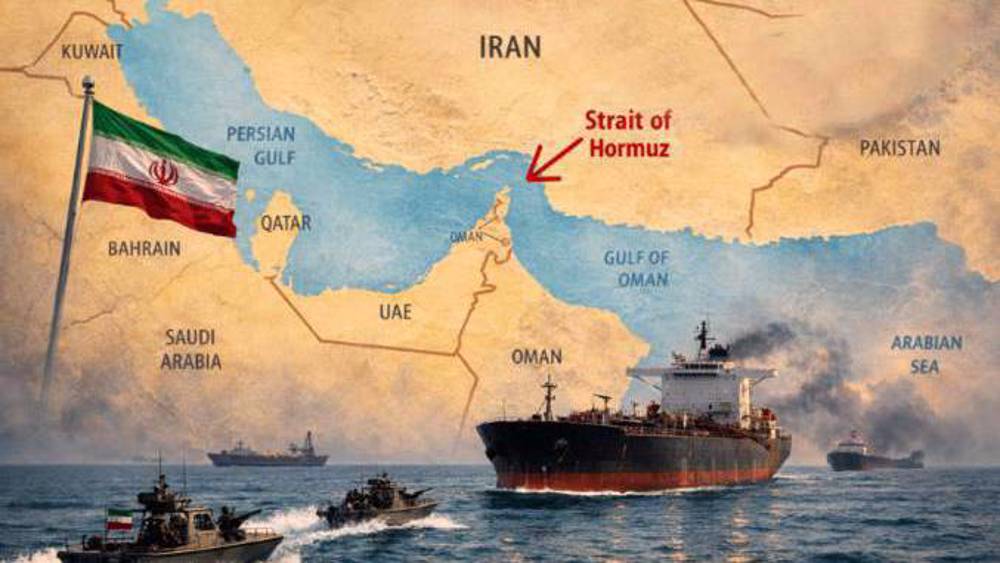
On Friday, following the announcement of a ceasefire in Lebanon, Iran declared that commercial vessels could once again transit the Strait of Hormuz.
The ceasefire in Lebanon had held and with it, the conditions Tehran had set from the beginning of the forty-day war that began on February 28 when the United States and Israel launched another unprovoked war of terrorism against Iran.
Within hours, President Donald Trump claimed credit for ending a naval blockade and declared the waterway fully accessible. But the data from Kpler, the maritime analytics firm, told a different story.
Vessel movements had not materially improved. The strait was open, yes, but on terms that bore the unmistakable signature of Iranian authority.
To understand what has changed in the Persian Gulf, one must first set aside the noise of American media warfare. The US has spent weeks describing a naval blockade that, by the evidence of Iranian oil tankers moving freely through the strait, never fully materialized.
Meanwhile, Iranian officials have urged the public to ignore Washington’s “contradictory positions”.
Foreign Minister Abbas Araghchi on Friday posted on social media that passage for all commercial vessels is declared “completely open” for the remaining period of the ceasefire between Tehran and Washington.
But he noted that transit must take place on a coordinated route designated by Iran’s Ports and Maritime Organization, reflecting a consolidation of Iranian authority over the waterway rather than a concession to outside pressure.
Within hours of Araghchi’s announcement, the Islamic Revolution Guards Corps Navy issued its own declaration, announcing that a “new order” is now in place over the strategic waterway.
Under this order, all commercial vessels will only be permitted to transit through routes designated by Iran, and all transits, commercial or otherwise, will only be allowed with the explicit authorization of the IRGC’s naval forces. The IRGC Navy further reaffirmed that military vessel transit through the strait remains strictly prohibited.
The distinction between the American and Iranian characterizations of the current situation is sharp. Trump announced a naval blockade on April 13 after peace talks in Islamabad collapsed, and US Central Command has stated that the blockade has been “fully implemented”.
Yet the same period saw Iranian vessels moving. Three Iranian oil tankers carrying a combined five million barrels of crude oil became the first loaded vessels to leave the Persian Gulf through the Strait of Hormuz since the US-imposed blockade came into effect.
The tankers—the Deep Sea, the Sonia I, and the Diona—all under US sanctions, successfully passed through the strait on Friday after departing from Iran’s Kharg Island. Kpler confirmed the crossings using satellite imagery and ship tracking data.
That is not the signature of a successful blockade. It is the signature of a maritime environment in which Iran’s authority has been asserted and, by most accounts, accepted.
The legal architecture underpinning Iran’s position predates the current war. Iran’s sovereignty over the Strait of Hormuz is rooted in the 1958 Geneva Convention on the Territorial Sea and the Contiguous Zone and the 1982 United Nations Convention on the Law of the Sea (UNCLOS).
Under these treaties, coastal states possess the right to regulate passage through their territorial waters. Iran’s territorial sea extends twelve nautical miles from its coast, and the strait at its narrowest point is only twenty-one nautical miles wide.
This means the entire waterway falls within overlapping territorial seas of Iran and Oman. For any vessel to transit, it necessarily passes through Iranian jurisdictional waters.
The right of transit passage under international law does not erase the coastal state’s authority to establish safety corridors, designate routes, and require coordination with competent authorities.
What Iran has done since the ceasefire—requiring all commercial vessels to use a predetermined route coordinated with the IRGC Navy—falls squarely within those legal parameters. The phrase “new order” is a description of a system that is now in force.
What is striking about the current arrangement is not that Iran has imposed conditions on transit that is its right under international law, but that the conditions are being enforced without objection from the global shipping industry.
The International Maritime Organization has not issued a statement challenging Iran’s routing requirements. The United States has not attempted to escort commercial vessels through non-approved channels.
The naval presence of the US Fifth Fleet, based in Bahrain, has not translated into a challenge to Iran’s designated corridor. This suggests that even Washington recognizes, implicitly, the legal legitimacy of Iran’s position.
Trump’s claim that “the naval blockade will remain in full force and effect as it pertains to Iran, only, until such time as our transaction with Iran is 100% complete” reads less as a statement of operational reality and more as a political posture.
A blockade that allows three sanctioned Iranian tankers to export five million barrels of crude oil on a single day is not a blockade by any plausible definition.
Iran’s Foreign Ministry spokesman Esmaeil Baghaei addressed this directly when asked about the US claims.
“Our hands are not tied,” he said. “If the other side acts in bad faith—and it appears they intend to act in bad faith—and if the naval blockade continues, the Islamic Republic of Iran will certainly take the necessary reciprocal actions. There is no doubt about this.”
He described the US naval blockade as a violation of the ceasefire itself, adding that “the other side has not been committed to its obligations.”
Iran is the guardian of the Strait of Hormuz, he said, adding that Tehran would not hesitate to implement measures necessary to protect its national interests.
On Saturday, Iran reasserted control over the Strait of Hormuz due to the United States' acts of “piracy.”
Ebrahim Zolfaghari, the spokesman for the Khatam al-Anbiya Central Headquarters, said the Americans continue to engage in banditry and piracy under the guise of a so-called blockade.
"For this reason, control of the Strait of Hormuz has returned to its previous state, and this strategic strait is under the intense management and control of the armed forces," he said.

Understanding Iran’s tourism momentum amid war and sanctions

BRICS paving way for alternative world order, not a war machine against West: Analyst
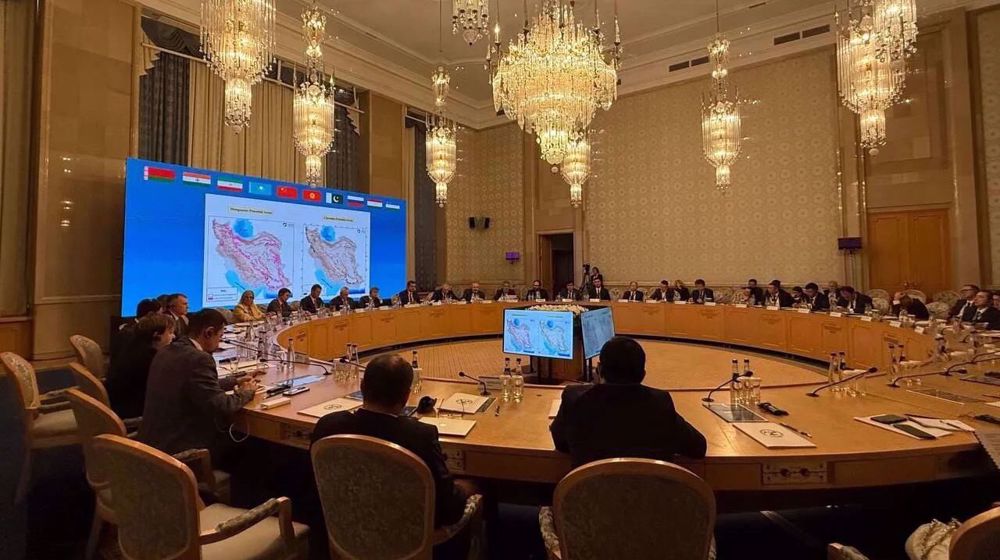
Iran finds new platform in SCO to develop its rare-earth potential



US aggression, economic warfare amount to crimes against humanity: Iran's UN envoy
Protests erupt in US as ICE agent shoots Venezuelan driver
US pressure fuels cooperation among Muslim states: Pezeshkian
Major TV networks suspend White House pool coverage after Trump ban
US visa ban on Palestinian UN delegation violates international agreements: Hamas
VIDEO | Press TV's news headlines
Iran calls on France to respect law after suspending French cultural institute in Tehran
Israel lobby no longer shy about its grip on US policy on Iran: Araghchi


 PressTV NEWSLETTER
now
PressTV NEWSLETTER
now
 This makes it easy to access the Press TV website
