Iran’s missile arsenal largely intact despite weeks of airstrikes: US intel.
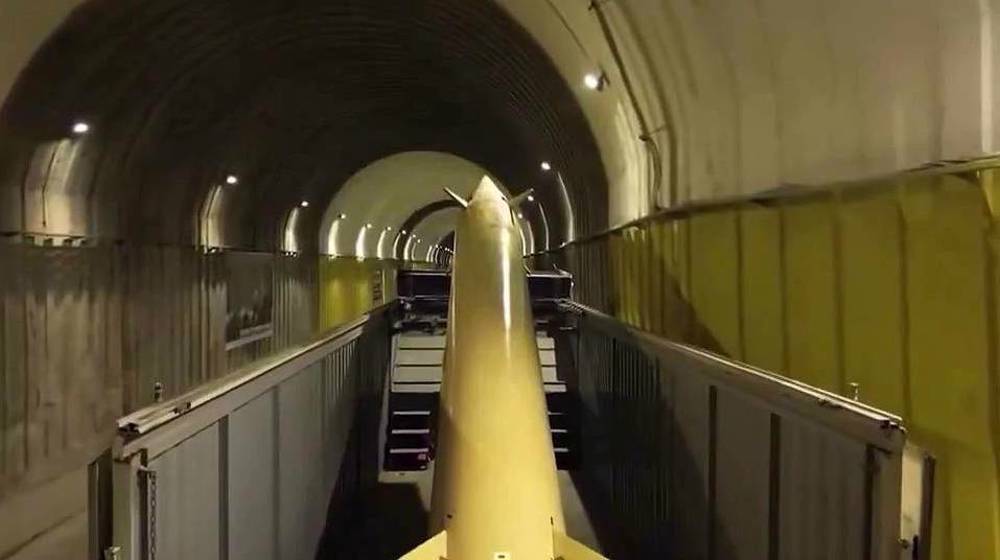
A new report indicates that US intelligence assessments show Iran still possesses an arsenal of thousands of ballistic missiles, directly contradicting claims that weeks of joint US-Israeli military strikes have significantly degraded the country’s strategic capabilities.
According to officials familiar with the intelligence, Tehran’s missile capability is sustained by an extensive network of reinforced underground storage facilities, which have largely protected its mobile launchers from weeks of US and Israeli airstrikes, The Wall Street Journal (WSJ) reported Friday.
They said Iran still possesses “thousands of medium- and short-range ballistic missiles that could be pulled out of hiding or retrieved from underground sites.”
The assessments contradict US officials claims that more than half of Iran’s missile launchers have been “destroyed, damaged or trapped underground.”
Meanwhile, Israeli officials told the WSJ that during the five-week war, the regime’s airstrikes focused on sealing Iran’s launch tunnels, but “the bases themselves proved hard to destroy.”
They told the WSJ that Iran still holds more than 1,000 medium-range missiles from a pre-war stockpile of approximately 2,500.
This, the reports said, has raised concern in the While House and Tel Aviv that Tehran could use the two-week ceasefire period to “reconstitute some of its missile arsenal.”
Kenneth Pollack, a former CIA intelligence analyst, told the WSJ that Iran has “shown a remarkable ability to innovate and reconstitute their forces quickly.”
Israeli missile interceptors dwindle to ‘double digits’ after aggression against Iran: Reporthttps://t.co/dWB5w8TKmh
— Press TV 🔻 (@PressTV) April 10, 2026
He characterized Iranian Armed Forces as “a much more formidable opponent than most Middle East militaries.”
Jon Alterman, the senior vice president of the Center for Strategic and International Studies also admitted that Iran “can still be the dominant actor controlling peace and security in the [Persian] Gulf.”
“They have this great advantage that every day they don’t lose, they win, and every day we don’t win, we lose,” Alterman said.
Utilizing advanced, indigenous technologies, Iran’s Armed Forces sustained a 40-day defense against the US and Israel.
During the war, the Islamic Revolution Guards Corps (IRGC) imposed restrictions on transit through the Strait of Hormuz, leaving hundreds of vessels and tankers linked to the aggressors stranded in the Persian Gulf.
The restrictions sent global energy prices soaring and put Donald Trump under intense pressure to end his illegal war against Iran. This led him to back down from his constant threats and announce a two-week ceasefire just hours before his final deadline of annihilation of "the whole civilization" was set to expire on Tuesday night.
Currently, a high-ranking Iranian delegation is in Pakistan’s capital, Islamabad, for talks with the United State.
Meanwhile, Iran’s Armed Forces warned that they remain in a state of full readiness, with their “fingers on the trigger,” to respond to any violation of the ceasefire by the enemies.
Iran’s military benefitted technologically from US-Israeli aggression
Iran vows much stronger response to any provocative move by enemy
Iran says strikes on US bases ‘legitimate self-defense’ after wedding massacre



IRGC chief: Blood of martyrs in US attack on wedding will not ‘go unanswered’
Iran's vice president warns of 'dark months' for US economy amid war
Lawyers seek to drop US charges against Venezuelan leader on immunity grounds
Abducted Gaza doctor’s testimony exposes appalling abuse in Israeli prisons
‘Polished-up barbarism’: Iran officials condemn US war crime of wedding bombing
VIDEO | Press TV's news headlines
Terrorizing civilians part of ‘cowardly’ US military doctrine: IRGC
Yemeni navy conducting military exercise in anticipation of US-Israeli aggression: Official


 PressTV NEWSLETTER
now
PressTV NEWSLETTER
now
 This makes it easy to access the Press TV website
