Islamabad talks: US must drop 'forever war' logic and 'Israel First' posture for any breakthrough
By Alireza Hashemi
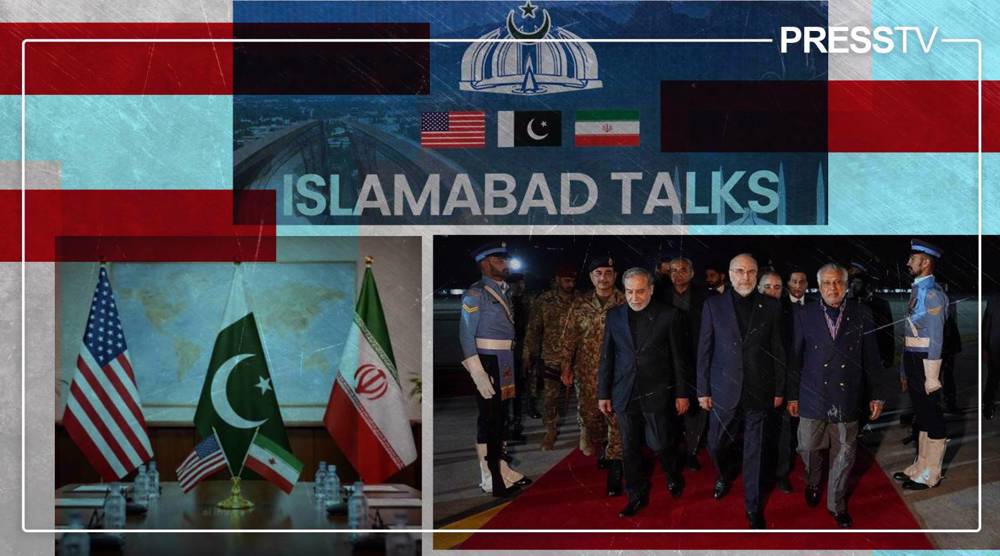
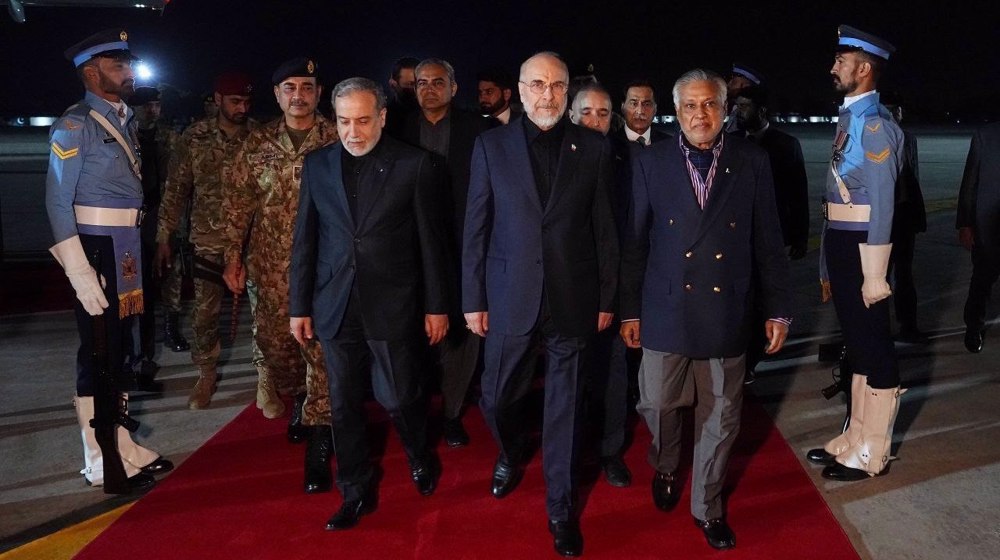
Hope and doubt ride side by side as high-level Iranian and American delegations gather in the Pakistani capital, Islamabad, for talks that carry profound weight for the world.
This is not merely an exchange of perspectives as the future of the region and the world hangs in the balance, and eyes from distant capitals watch with a mixture of curiosity and alertness.
The stated goal – a sustainable ceasefire to avert another round of American-Israeli aggression with catastrophic regional and global ramifications – remains a key diplomatic priority.
Still, when one compares what is being demanded now with how Donald Trump and Benjamin Netanyahu have dealt with the Islamic Republic in the past, a different picture emerges.
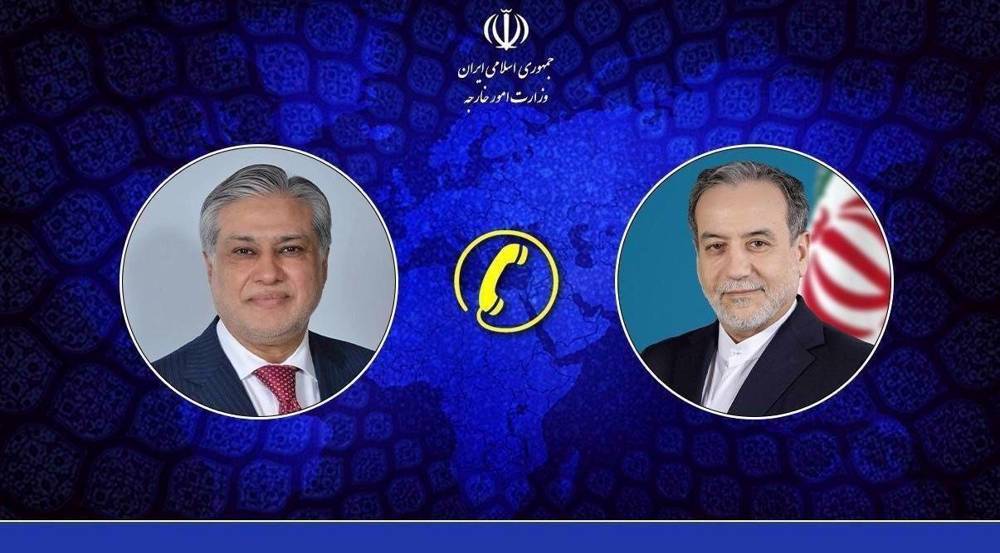
As Iranian Foreign Minister Abbas Araghchi told his German counterpart in a phone call on Saturday morning, Tehran is entering these negotiations with “complete distrust” due to America's repeated breaches of goodwill and betrayals of diplomacy.
The past experience is bitter. Iran faced unprovoked and illegal aggression twice in the past 10 months, both times in the middle of nuclear diplomacy with Washington.
This time, the Iranian delegation, led by parliament speaker Mohammad Baqer Qalibaf, is not willing to take any chances. The 10-point proposal is clear, and redlines have been marked.
The proposal calls for a complete end to the longstanding "maximum pressure" campaign and formal recognition of Iran's control over the Strait of Hormuz, including transit rights and fees.
Washington, for its part, pushed a 15-point plan that was focused on limiting Iran's nuclear progress. The proposal was not entertained by Iran, and rightly so.
The Iranian delegation is in Pakistani capital, Islamabad, for negotiations with the US aimed at securing a permanent ceasefire following weeks of US-Israeli aggression against Iran. pic.twitter.com/R4iuj0M0g7
— Press TV 🔻 (@PressTV) April 11, 2026
The enemy's attention remains fixed on enriched uranium, while the Strait of Hormuz is once again framed as requiring restored access. The goals are narrow, centered on restrictions rather than trust-building, with little indication of a broader strategic shift from the US side.
The primary obstacle to a breakthrough in Islamabad lies in the "forever war" logic guiding current American and Israeli policy toward the West Asia region. The regime in Tel Aviv thrives on war, chaos, and instability. It managed to drag Washington also into a deeper quagmire.
This logic operates through a rhetorical cycle in which military "achievements" are declared total and historic, only to be reframed months later as insufficient or obsolete, thereby justifying renewed – and unprovoked – war of aggression.
The contrast between the conclusion of the 12-day June 2025 war against the Islamic Republic and a fresh escalation in March 2026 illustrates this paradox clearly.
Trump claimed Iran's nuclear capabilities had been "obliterated," only to later claim that the country was nearing a nuclear breakthrough all over again. A complete US-turn.
Netanyahu has similarly alternated between declaring that Iran had been set back significantly and warning of rapidly advancing nuclear and missile capabilities. His intentions are clear and have been known for decades.
As former US Secretary of State John Kerry revealed in a recent interview, he pitched the proposal of bombing Iran to successive US presidents, from George Bush to Barack Obama and Joe Biden, but none of them entertained it. But Trump fell into the vicious trap.
Trump and his aides have uncritically repeated Netanyahu’s talking points regarding Iran.
US officials, including Secretary of State Marco Rubio, have shifted from portraying Iran as weakened to warning that it may soon reach a critical strategic threshold.
This pattern suggests that the definition of an "imminent threat" is not fixed but rather a moving goalpost, adjusted as needed to sustain a continuous state of confrontation.
Araghchi: Iran enters the negotiations with complete distrust
— Press TV 🔻 (@PressTV) April 11, 2026
In a phone call with his German counterpart, FM Seyed Abbas Araghchi said Iran is entering the talks with full distrust because of the US repeated breaches and betrayals of diplomacy. pic.twitter.com/GvQSPrjbIY
The Trump-Netanyahu approach rests on three key pillars that undermine the possibility of lasting diplomacy:
- The moving goalpost of "breakout" — By repeatedly claiming that Iran is perpetually "weeks away" from a nuclear threshold, regardless of prior military action, a permanent justification for preemptive strikes is maintained, in violation of international law.
- The "line of immunity" argument — This concept holds that as Iran strengthens and hardens its military and nuclear infrastructure, the window for military action is constantly closing. Yet because any state under threat will continue to reinforce its defenses, this "now or never" moment never truly expires.
- The retaliation loop — As acknowledged in various forms by US officials, strikes are often justified as necessary to prevent retaliation, retaliation that would only occur in response to an initial attack. This creates a self-reinforcing cycle that bypasses traditional deterrence logic.
Despite claims of "obliteration" in June 2025, developments in February 2026 indicate that technical knowledge and regional influence cannot simply be bombed away.
The "Axis of Resistance" continues to operate effectively, while Iran has demonstrated sustained capacity to project power through drones and missiles despite external pressure.
This leads to a stark conclusion: the objective of the US-Israeli strategy appears less about achieving a negotiated settlement and more about maintaining a continuous state of containment.
Viewed through this lens, the Islamabad talks could be part of a recurring cycle: declare an imminent threat ("weeks away," "line of immunity"); launch new aggression framed as defensive or preemptive; declare victory ("obliteration," "historic success"); acknowledge that the adversary has adapted or recovered; and use that adaptation to justify renewed escalation.
Recent baseless rhetoric from Netanyahu, including references to "Amalek," reinforces this deeply problematic dynamic by framing the war of aggression on Iran in existential, rather than political, terms, effectively ruling out a definitive diplomatic resolution.
As Iran's deputy vice president, Mohammad Reza Aref, said on Saturday morning ahead of the decisive talks in Islamabad, a deal is possible if Iran negotiates in Islamabad with representatives of 'America First'.
However, if it faces the representatives of 'Israel First,' there will be no deal, and inevitably the Islamic Republic will continue its defense "even more vigorously than before, and the world will face greater costs," he warned.
Until Washington abandons its "Israel First" posture and moves toward a framework based on mutual recognition and respect for Iranian sovereignty, diplomacy will remain elusive.
The Islamabad talks may produce a temporary pause. But without a fundamental shift away from the underlying "forever war" logic perpetuated by war hawks in Washington, where every declared victory contains the seeds of the next escalation, the cycle is likely to persist.
US aggression against Iran leaves NATO air defenses ‘beyond critical,’ officials admit
Iran will send Netanyahu ‘to hell’: Rezaei
IRGC: US, Israel resort to economic war after failing to defeat Iran



Gaza Civil Defense teams recover bodies of 233 Palestinians from destroyed buildings
Intelligence forces arrest 30 mercenaries involved in foreign-backed riots in Markazi Province
Trump needs treatment for ‘delusions’ about Strait of Hormuz: Iran deputy FM
VIDEO | US escalation for bigger failure (Part 2)
VIDEO | US escalation for a bigger failure (Part 1)
Islamic Unity Conference in Tehran urges Muslim resistance against Israel, US
Islamabad MoU: US signature, hollow from the start
Iran warns states not to become complicit in US ‘economic terrorism’


 PressTV NEWSLETTER
now
PressTV NEWSLETTER
now
 This makes it easy to access the Press TV website
