Pakistan PM's China visit could advance efforts to end US-Israeli war on Iran: Ex-Minister

By Alireza Kamandi
Following Pakistan’s Prime Minister Shehbaz Sharif’s visit to Beijing at the head of a high-powered delegation, a former Pakistani finance minister said the trip could advance efforts to broker a deal between Iran and the United States to end the unprovoked war on the Islamic Republic, with China playing a pivotal role.
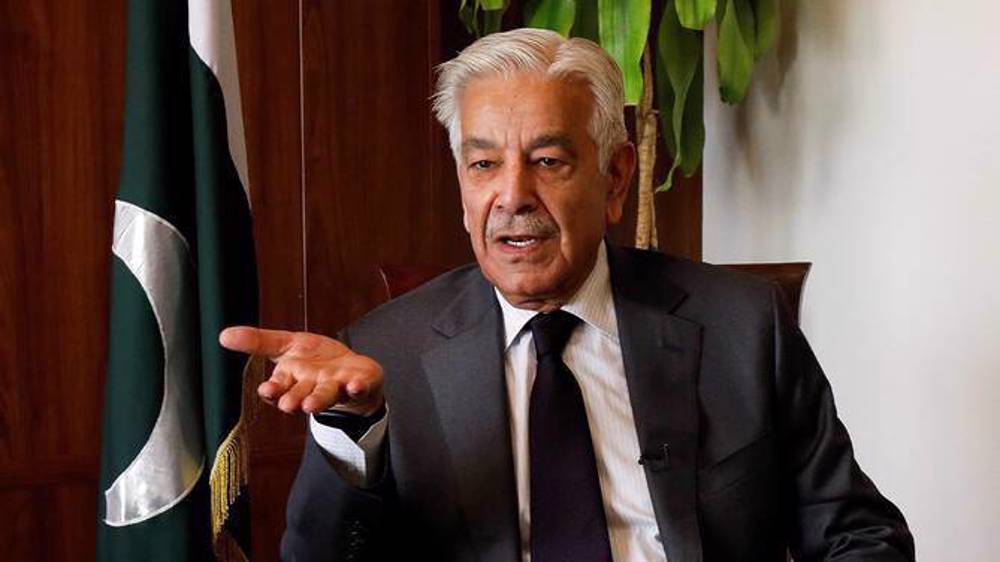
In an interview with the Press TV website, Asad Umar, who previously served as Pakistan’s Minister for Finance, Revenue and Economic Affairs, said that while the official agenda focuses on expanding bilateral ties – particularly the China-Pakistan Economic Corridor (CPEC) – the composition of the delegation tells a deeper story.
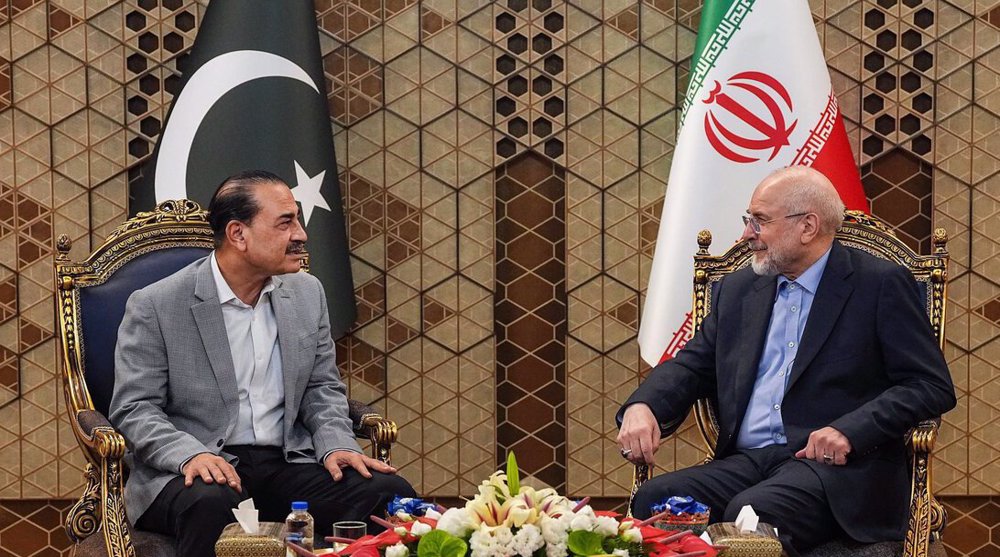
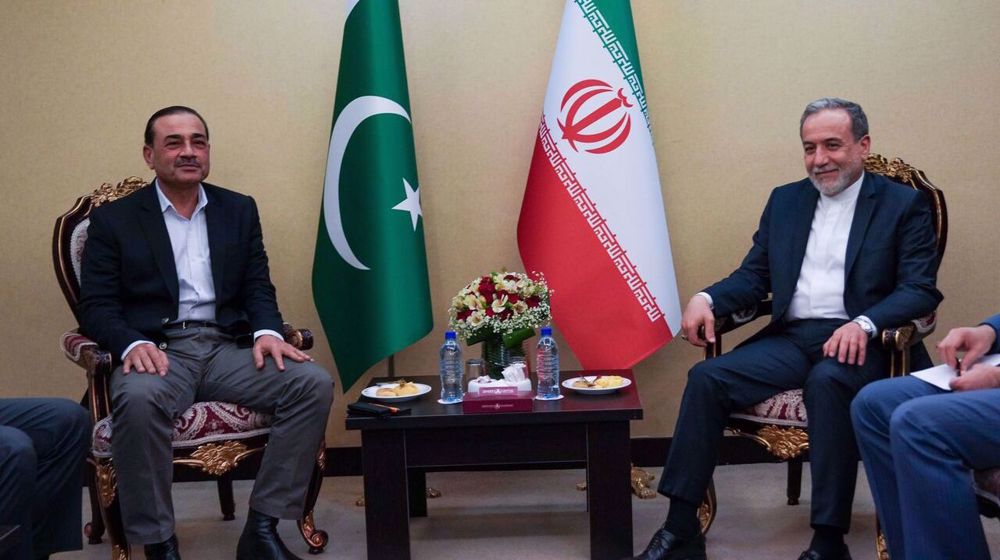
Accompanying Sharif are Foreign Minister Mohammad Ishaq Dar and Army Chief Field Marshal Asim Munir, who had just returned from a visit to Iran.
Umar noted that Pakistan had earlier approached Beijing to seek its involvement, leading to a joint five-point peace proposal issued jointly by Islamabad and China.
“There is no doubt that a potential Iran-US agreement will be on the agenda,” Umar told the Press TV website, referring to the presence of senior Pakistani political and military officials, especially after prior consultations with Iranian officials in Tehran.
When asked how successful Pakistan has been so far in facilitating a possible breakthrough between Iran and the US, Umar pointed to Islamabad’s uniquely balanced relationships with all key stakeholders.
“Pakistan has a unique place,” he said. “We have brotherly relations with Iran – culturally, many words in our language come from Farsi. We also have a close relationship with the Persian Gulf Arab states, especially Saudi Arabia, through a strategic mutual defense agreement.”
May 20: Iran warns against any new aggression as Pakistan ramps up diplomacy to end the warhttps://t.co/SV6p1cciJc pic.twitter.com/ncKu9Lmqki
— Press TV 🔻 (@PressTV) May 20, 2026
At the same time, he added, Pakistan maintains a functional working relationship with Washington. And critically, Islamabad shares an all-weather strategic partnership with China, a major global power.
“Pakistan has good relations with all key players – Iran, the US, the Persian Gulf states, and China. Therefore, I believe we can play a positive role in any potential deal,” Umar noted.
On the level of coordination between Pakistan and China, he said China is Pakistan’s “biggest security partner” as the two countries are “very close in foreign policy,” adding that the joint five-point peace proposal is clear evidence of their alignment.
“I am sure a key part of the agenda now is how China can help move toward regional peace, so that the people of Iran can permanently avert the threat of illegal aggression,” he noted.
Asked how Iran could accelerate economic cooperation between Beijing and Islamabad, Umar first expressed hope that a final diplomatic settlement would lead to the lifting of sanctions on Iran, allowing it to freely participate in global economic affairs.
Recalling his time as Pakistan’s finance minister, Umar said China has long been keen to see broader regional trade corridors. He also noted historical precedents, such as the 1964 Regional Cooperation for Development (RCD) – which included Iran, Turkey, and Pakistan – and its successor, the Economic Cooperation Organization (ECO), founded in 1985.
“I hope we will see China becoming a more significant direct participant in regional economic activity, which would greatly increase bilateral economic cooperation between Iran and Pakistan,” Umar told the Press TV website.
“My ultimate hope is for all countries in the region, especially Muslim nations, to learn from past decades. A much closer regional security and economic relationship among Iran, Pakistan, Saudi Arabia, and Turkey could form a real force – not just in the region, but in the world.”
Iran has no trust in US, will never back down from its rights: Qalibaf tells Munirhttps://t.co/cDDuxky1El
— Press TV 🔻 (@PressTV) May 23, 2026
On the strategic importance of the Strait of Hormuz, Umar was blunt about US President Donald Trump’s perceived lack of geographical awareness.
“Trump has a weak understanding of geography,” Umar said. “Before waging an aggressive war against Iran, he did not grasp how narrow the Strait of Hormuz is, or how the world’s energy supply would be destabilized if it were closed.”
Umar added that the Bab al-Mandab Strait is also “directly in the fire line” of Ansarullah, referring to Yemeni forces. Both chokepoints, he stressed, are highly vulnerable.
The US has illegally attacked Iran twice within 12 months. Iran has every right to defend itself. The Pakistani people are very proud of Iran for standing up to this illegal aggression,” Asad said.
When asked whether Iran has now joined the league of very strong countries – perhaps even a fourth superpower – after holding its ground against both the US and Israel, Umar said Iran has shown the world it has greater capability and capacity – both technical and political – to sustain such a huge challenge. It has also shown the limits of American power.
“What I am really hoping is that the world, particularly the West – the US and Europe – will realize that Israel is the real threat to peace and prosperity. Israel’s aggression and illegal attacks not only threaten the entire region but also endanger global peace,” he noted.
Umar emphasized that the Strait has proven to be a highly important lever.
“The best use of that capability for Iran is to build closer trading relationships with major powers in the region and the rest of the world,” he told the Press TV website.
Iran is the last bastion of true anti-imperial resistance, owes no one an explanation: Writer
Focus on youth and training camps key to building future generations: Weightlifting chief
During Mosaddegh's time, US pursued the same policy toward Iran as today: Filmmaker



VIDEO | Hezbollah weapons seen as key to Lebanon’s sovereignty: Analysts
IRGC Navy says Strait of Hormuz under Iran’s ‘complete and decisive’ control
Iran’s security chief, parliament speaker hail Leader’s remarks on national unity, social cohesion
Islamic Jihad says three members martyred in Israeli attack in West Bank
Human rights turned into political tool in hands of West: Iran FM
Belgium summons US ambassador after he targeted health minister
VIDEO | Press TV's news headlines
Key to solving economic issues lies in domestic production, phasing out dollar: Leader



 PressTV NEWSLETTER
now
PressTV NEWSLETTER
now
 This makes it easy to access the Press TV website
