Israel faces 'unsustainable' strategic crisis following 40-day war against Iran: Analyst
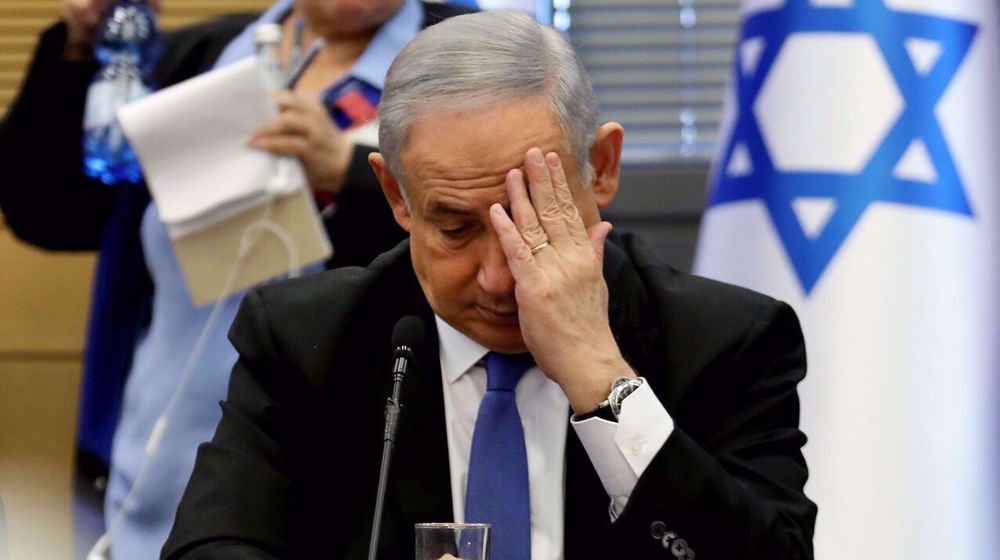
The Israeli regime is facing its worst strategic crisis following the 40-day war against Iran amid unsustainable economic burdens, eroding international support, and a deepening military manpower crisis, according to an American-Israeli analyst.
Shaeil Ben-Ephraim, a US-based geopolitical analyst and former diplomat, said with the protracted war in Lebanon looming and no resolution so far in the genocidal war on Gaza, Israel's “security reality” has deteriorated.
"Israel now faces a worse security reality than before the war," Ben-Ephraim wrote on X.
He noted that the US-Israel ceasefire deal could restrict Israel's future ability to act against Tehran, while Iran has demonstrated its capability to strike deep inside the occupied territories with its ballistic missiles.
Perhaps most alarmingly, Ben-Ephraim warned that US -Israeli relations are eroding too.
"Chances are that future rounds against Iran and other potential enemies will be fought with decreasing, and eventually no, American support at all. That is unsustainable," he said.
He said the regime’s military budget currently stands at $45.7 billion, having already been expanded by nearly $9.6 billion in a recent top-up. However, it sees even that insufficient, requesting an additional $10.9 billion before year's end just to cover existing commitments.
Footage shows destruction from recent Israeli airstrikes that targeted a residential building in Beirut's southern suburbs. pic.twitter.com/KklJoNYmq6
— Press TV 🔻 (@PressTV) April 9, 2026
"For context, that additional $10.9 billion ask alone is roughly equivalent to the entire annual defense budget of a mid-sized European nation," Ben-Ephraim noted.
Each confrontation with Iran carries a price tag of $16 to $19 billion, he stated, and if such rounds become recurring, Israel “would be spending the equivalent of a small war every year or two, not as an emergency but as a structural cost of existence."
At that pace, cumulative spending over a decade could reach $160 to $190 billion in direct military costs alone, before factoring in economic disruption, lost productivity from reserve mobilization, or deferred civilian infrastructure.
Israel's formerly robust relations with some Persian Gulf states are now under severe stress following the war against Iran and the Iranian retaliation, the analyst noted.
"Israeli machinations have put them in serious danger with Iran and caused severe damage to their tourism and energy prospects," Ben-Ephraim said.
"They will be looking to lessen dependence on the US and possibly move away from normalization with Israel, leaving Israel isolated in the region."
To counter the lack of diplomatic resolution, Israel has shifted toward a strategy of creating permanent buffer zones in southern Lebanon, Gaza, and parts of Syria, adding to mounting responsibilities in the occupied West Bank.
"The Zionist entity is now on its last stand"@TadhgHickey says that we are witnessing the closing chapter of a bloody, shameful period of history led by the Zionist entity and its supporters. pic.twitter.com/R9Gv7N1qEC
— Press TV 🔻 (@PressTV) April 9, 2026
"Patrolling these vast, hostile areas simultaneously will place an unsustainable long-term strain on IDF (Israeli military) personnel and the domestic economy," Ben-Ephraim said.
The convergence of record-high reserve call-ups, a significant brain drain in the high-tech sector, and a nearly total loss of the Palestinian labor force has created a critical manpower crisis, he added.
Israeli regime leadership recently warned the situation could cause the military to "collapse in on itself," Ben-Ephraim said.
While standard deployment for combat reservists has shifted from ad-hoc emergency calls to a structured 60 days per year in 2026 — a one-third reduction from peak burdens in 2025 — constant deployments have caused turnout rates in most reserve battalions to drop to just 60 to 70 percent.
Ben-Ephraim warned that the regime now faces a severe, unsustainable strategic crisis characterized by a permanent war economy, mounting financial strain, and increasing international isolation.

Iran Army downs US Orbiter reconnaissance drone over Strait of Hormuz
Iran dismantles terrorist cells in three provinces
How Iran turned US military and economic aggression into strategic leverage to dictate terms



US visa ban on Iranian president’s media team is bid to hide the truth: FM spokesman
US aggression, economic warfare amount to crimes against humanity: Iran's UN envoy
Protests erupt in US as ICE agent shoots Venezuelan driver
US pressure fuels cooperation among Muslim states: Pezeshkian
Major TV networks suspend White House pool coverage after Trump ban
US visa ban on Palestinian UN delegation violates international agreements: Hamas
VIDEO | Press TV's news headlines
Iran calls on France to respect law after suspending French cultural institute in Tehran


 PressTV NEWSLETTER
now
PressTV NEWSLETTER
now
 This makes it easy to access the Press TV website
