Iran rejects US proposal, lays out five conditions for ending imposed war: Source to Press TV
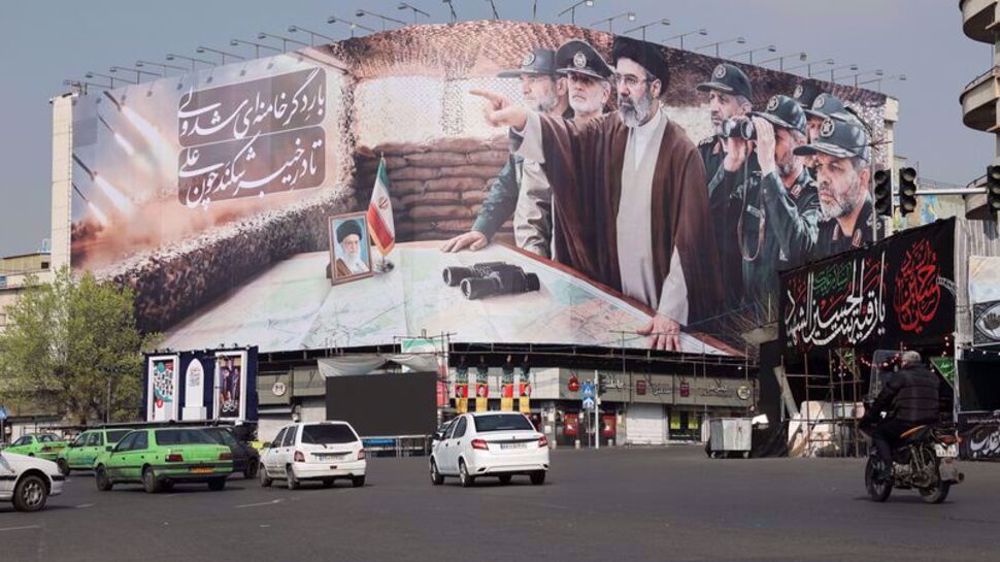
Iran has responded negatively to an American proposal aimed at ending the ongoing imposed war, insisting that it will only occur on Tehran's own terms and timeline, a senior political-security official told Press TV on Wednesday.
The official with knowledge of the details of the proposal, speaking exclusively to Press TV, said Iran will not allow US President Donald Trump to dictate the timing of the war's end.
"Iran will end the war when it decides to do so and when its own conditions are met," the official said, emphasizing Tehran's resolve to continue its defense and inflict "heavy blows" on the enemy until its demands are fulfilled.
According to the official, Washington has been pursuing negotiations through various diplomatic channels, putting forward proposals that Tehran views as "excessive" and disconnected from the reality of America's failure on the battlefield.
The official drew parallels with two previous rounds of negotiations held in the spring and winter of 2025, characterising them as deceptive.
In both instances, the official stressed, the United States had no genuine intention to engage in meaningful dialogue and subsequently carried out military aggression against Iran.
Iran responded negatively to an American proposal aimed at ending the ongoing imposed war, insisting that any cessation of hostilities will only occur on Tehran's own terms and timeline, a senior political-security official told Press TV.
— Press TV 🔻 (@PressTV) March 25, 2026
Follow: https://t.co/LWoNSpkc2J pic.twitter.com/SawxjMqVRp
Tehran has therefore categorized the latest overture, which was delivered via a friendly regional intermediary, as a ploy to heighten tensions and has responded negatively.
The official outlined five specific conditions under which Iran would agree to end the war. These include:
- A complete halt to "aggression and assassinations" by the enemy.
- The establishment of concrete mechanisms to ensure that the war is not reimposed on the Islamic Republic.
- Guaranteed and clearly defined payment of war damages and reparations.
- The end of the war across all fronts and for all resistance groups involved throughout the region
- Iran's exercise of sovereignty over the Strait of Hormuz is and will remain Iran's natural and legal right, and it constitutes a guarantee for the implementation of the other party's commitments, and must be recognized.
The official further noted that these stipulations are in addition to demands previously presented by Tehran during the second round of negotiations in Geneva, which took place just days before the US and Israel carried out a fresh round of aggression on February 28.
🔴 Spokesperson for the Central Headquarters of Khatam al-Anbiya:
— Press TV 🔻 (@PressTV) March 25, 2026
🔺 The strategic power you boasted about has turned into a strategic defeat.
🔺 The world's superpower claimant would have escaped the predicament by now if it could. pic.twitter.com/E7dj2jNbvO
Iran has communicated to all intermediaries acting in good faith that a ceasefire is contingent upon the acceptance of all of its conditions.
"No negotiations will be held prior to that," the official stressed, reiterating that the continuation of Iran's defensive operations will persist until the outlined conditions are met.
"The end of the war will occur when Iran decides it should end, not when Trump envisions its conclusion," he hastened to add.
The unprovoked and illegal war was launched on February 28 – in the middle of indirect nuclear talks – with the assassination of the Leader of the Islamic Revolution, Ayatollah Seyyed Ali Khamenei, and some top-ranking military commanders and government officials.
In response, Iranian armed forces have so far carried out nearly 80 waves of retaliatory strikes targeting Israeli and American military assets across the region.
In recent days, the American side has courted some regional countries to persuade Iran to cease its retaliatory strikes that have decimated American and Israeli military infrastructure in the region as well as to allow American vessels to pass through the Strait of Hormuz.
313,000-strong ‘Jan-Fada’ drill signifies Iran’s popular mobilization and social readiness amid war
Leader’s advisor: Any foreign forces attempting to land in Iran ‘will certainly be destroyed’
Iran’s military warns of ‘unpredictable blows’ in response to US threats



VIDEO | Tunisia fuel truck drivers go on strike over social rights
Bahraini demonstrators censure Khalifah regime’s detention, trial of Shia scholars
'We fight for Iran': Female athletes win two rowing golds, silver at 2026 Asian Games
VIDEO | From blockade to harvest: Yemen's push for agricultural independence
2026 Asian Games: Iran secures one wushu gold, three silvers
VIDEO | Press TV's news headlines
VIDEO | Riyadh’s alliance exposed
VIDEO | US energy, diesel prices


 PressTV NEWSLETTER
now
PressTV NEWSLETTER
now
 This makes it easy to access the Press TV website
