Scrutiny mounts over Trump’s Iran war amid contradictory claims, soaring costs: Reports
The Trump administration is reportedly facing mounting scrutiny over its rapidly escalating war with Iran, as contradictory explanations for the initial strikes and the soaring financial toll raise alarms in Congress and among US allies.
In less than 48 hours, senior officials offered conflicting rationales for launching the so-called “Operation Epic Fury,” a large-scale aggression that has already killed six American service members and wounded at least 18 others, while causing hundreds of casualties across Iran and the wider region, according to a report published by the Time on Tuesday.
Appearing before reporters, Secretary of State Marco Rubio initially suggested the timing of US strikes was influenced by Israel’s military planning, claiming that failing to act preemptively could have resulted in higher American casualties.
But a day later, US President Donald Trump rejected the notion that Israel pressured Washington, claiming instead that Iran was preparing to strike first.
In a legally mandated notification to Congress, Trump offered yet another justification, describing the attacks as necessary to protect US forces, defend the homeland, advance national interests, and act in “collective self-defense” alongside regional allies.
The shifting narrative has unsettled lawmakers. Senator Angus King called the evolving explanations “disturbing,” suggesting that the United States appeared to be allowing another country’s military timetable to shape American war decisions.
Senator Chris Murphy warned that the conflict could become “open-ended and forever,” saying officials privately acknowledged further American casualties were likely.

Democrats leaving classified briefings expressed concern that the scale of operations could expand further. Senator Richard Blumenthal said he feared US ground troops might eventually be deployed.
Even some Republicans signaled hesitation. Senator Josh Hawley stated he would find it difficult to support sending troops to Iran, emphasizing that such a move would require explicit congressional authorization.
Under US law, the president may deploy military force without congressional approval only in response to a direct and imminent threat.
Critics argue that the administration’s varied explanations—ranging from nuclear concerns to preempting retaliation triggered by Israel—blur the legal threshold required for unilateral action.
Congress is now preparing to vote on War Powers resolutions aimed at reasserting its constitutional authority, though the measures face long odds of passage.
Beyond legal and strategic questions, the financial costs are rising sharply. According to analysis by the Center for American Progress, the first days of the assaults have already cost more than $5 billion.
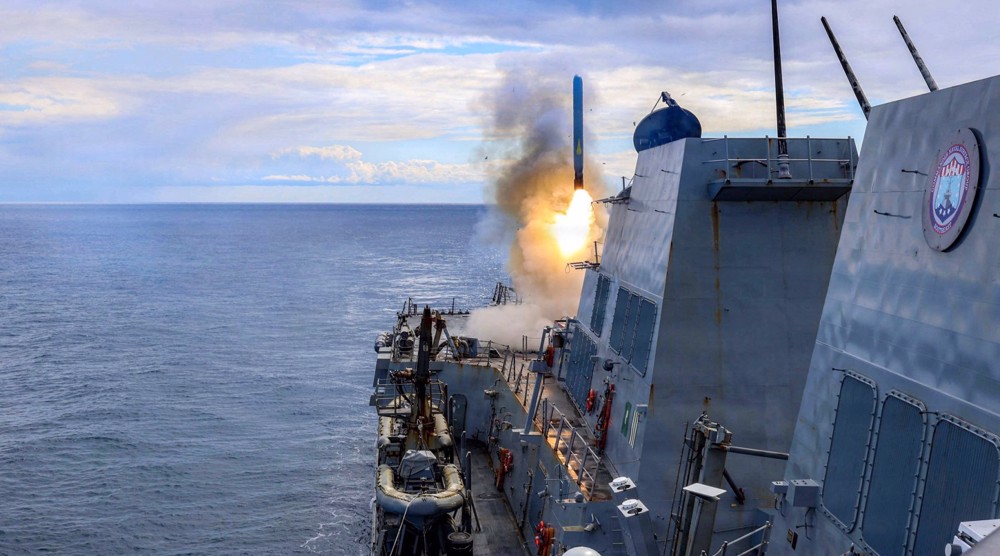
During a press briefing, Joint Chiefs Chairman Dan Caine described the deployment of more than 100 aircraft, Tomahawk missile launches, and strikes on over 1,000 targets in the onslaught’s opening phase.
Additional expenses include force repositioning—estimated at roughly $630 million—and the loss of three F-15 fighter jets, costing approximately $351 million.
Operating two carrier strike groups alone runs about $18 million per day, excluding munitions and sortie costs. Analysts warn that if operations continue at the current intensity, a three-week conflict could easily climb into the tens of billions of dollars.
Critics also highlight the domestic trade-offs. At roughly $2.2 million per Tomahawk missile, a single strike could fund Medicaid coverage for hundreds of children or thousands of school meals.
The campaign’s current $5 billion price tag could finance Supplemental Nutrition Assistance Program benefits for more than 2 million Americans for a year.
South Korea rejects Hormuz deployment plan
Trump’s ‘war of choice’ against Iran ‘a disaster’: House Democratic leader
Trump announces ‘security’ agreement on Greenland after threatening to annex it



Drawings of Minab children killed in US attack exhibited outside UN office in Geneva
Iranian engineers develop indigenous engine control units, advancing automotive electronics
VIDEO | Yemeni child survives Saudi airstrike that killed her entire family
VIDEO | News Review: Yemen’s top military officials warn Saudi Arabia of devastating response to its aggress
Iran’s Armed Forces vow to inflict further defeats on US, Israeli enemies
Child among two Palestinians abducted in Israeli West Bank raids
Putin’s United Russia leads wartime parliamentary elections
Pezeshkian to travel to New York on Tuesday to address UN General Assembly


 PressTV NEWSLETTER
now
PressTV NEWSLETTER
now
 This makes it easy to access the Press TV website
