New START’s end raises alarm over return of US-Russia nuclear rivalry

The impending expiration of the New START, the last remaining nuclear arms control treaty between the United States and Russia, has heightened fears that decades of fragile restraint are giving way to a more dangerous, unregulated nuclear era.
The Strategic Arms Reduction Treaty, known as New START, was signed in 2010 to cap the number of deployed strategic nuclear warheads for each party to 1,550 and to introduce transparency through data exchanges, notifications and on-site inspections.
Its expiration on Thursday effectively closes the chapter on bilateral arms control cooperation that helped stabilize relations after the Cold War.
New START followed the original START treaty of 1991 between the US and the Soviet Union, which barred each side from deploying more than 6,000 warheads. Although Russia suspended its participation in New START three years ago amid tensions over the Ukraine war, both countries were still believed to be observing its limits.
The treaty’s end comes after a series of abandoned arms control agreements, including the Intermediate-Range Nuclear Forces Treaty, the Open Skies Treaty, and the Conventional Armed Forces in Europe Treaty, all of which once imposed checks on military deployments across Europe.
British Admiral Sir Tony Radakin, the former head of the armed forces, has warned that the system that once kept global security in check “now risks unravelling”, calling the breakdown of arms control frameworks “one of the most dangerous aspects of our current global security”, alongside “the increasing prominence of nuclear weapons.”
Former Russian president Dmitry Medvedev, who signed New START in 2010, said its expiration should “alarm everyone”.
A senior adviser to Russian President Vladimir Putin also said on Wednesday that the Kremlin would “act in a measured manner and responsibly.”
The Russian foreign ministry later stated that “in the current circumstances, we assume that the parties to the New START are no longer bound by any obligations”, adding that Russia “remains ready to take decisive military-technical measures to counter potential additional threats to the national security.”
Pope Leo, for his part, urged both Washington and Moscow on Wednesday to renew the agreement, warning that the global climate demanded “calls for doing everything possible to avert a new arms race.”
“I urge you not to abandon this instrument without seeking to ensure that it is followed up in a concrete and effective manner,” he stressed.
UN Secretary General Antonio Guterres also called on the US and Russia to quickly sign a new nuclear arms control deal, warning that the existing treaty expired in a “grave moment for international peace and security.”
“For the first time in more than half a century, we face a world without any binding limits on the strategic nuclear arsenals of … the two states that possess the overwhelming majority of the global stockpile of nuclear weapons,” the UN chief noted in a statement on Wednesday.
By contrast, US President Donald Trump has shown little urgency.
“If it expires, it expires… We’ll just do a better agreement,” he told The New York Times last month.
Washington argues that any future deal must include China, while Moscow insists that France and the United Kingdom should also be part of new limits.
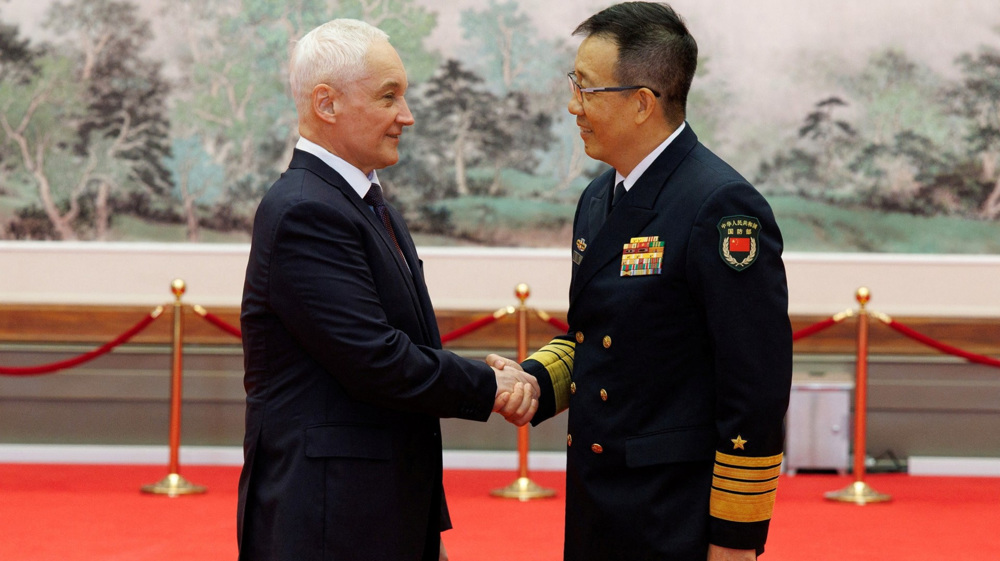
Analysts say both the US and Russia are modernizing their nuclear forces, effectively fueling an arms race already underway.
With nuclear weapons gaining renewed prominence and no breakthrough from talks such as Trump and Putin’s Alaska meeting last year, New START’s end signals a more volatile and dangerous phase in global security.

Trump-linked US startup making interceptors in UAE to counter Iran’s drones: Report
Sept. 30 marks ‘historic turning point’ for Iraq, says military spokesman
Pentagon fires Stars and Stripes managers, reporter for exposing Abraham Lincoln scandal



VIDEO | Israeli army refuses to investigate its crimes against aid workers in Gaza
Iranians ready to fight for next 20 generations to defend homeland: Army chief warns enemies
VIDEO | Press TV's news headlines
Iran mocks US ‘victory’ claim: Why launch ‘greatest financial offensive’ then?
American actor dismisses Paramount’s ‘antisemitic tropes’ after exposing Gaza genocide complicity
Thirty-one ex-US lawmakers, staffers joined military-industrial complex in past 10 years: Report
Iran: No country should fear us unless it aids aggressors
Iran sells seized US oil cargo to aid EB patients suffering under illegal sanctions


 PressTV NEWSLETTER
now
PressTV NEWSLETTER
now
 This makes it easy to access the Press TV website
