Venezuela's oil grab reveals Trump’s ‘supremacist, colonialist’ agenda: Analyst
By Mohammad Ali Haqshenas
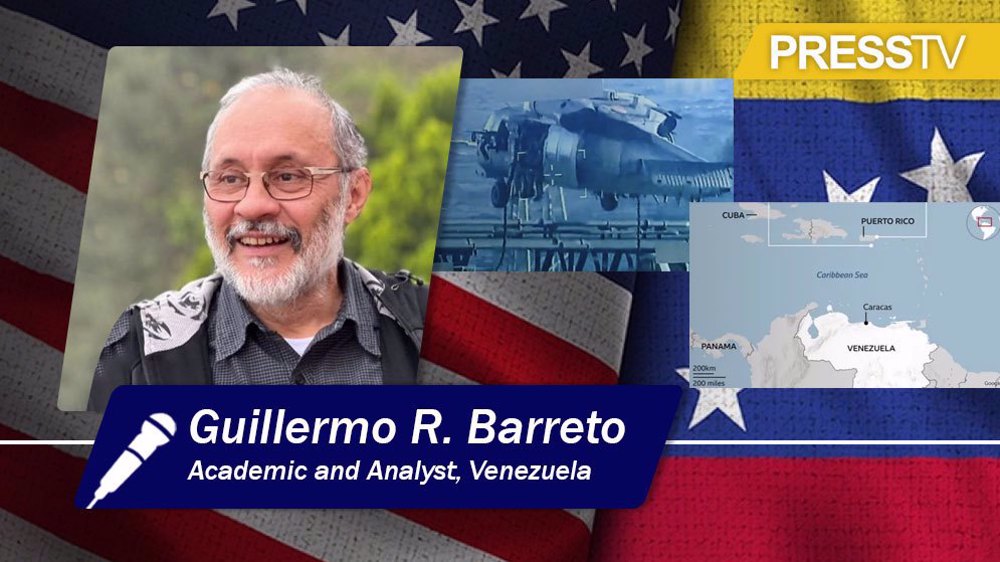
US President Donald Trump has exposed a worldview rooted in colonial entitlement by claiming Venezuela’s oil and other resources as America’s own, says a Venezuelan academic and political commentator.
Speaking to the Press TV website, Guillermo R. Barreto, a professor at the Simon Bolivar University, said Trump's claim on the South American country's rich oil resources reveals his "supremacist, colonialist, and imperialist" agenda.
“Trump explicitly stated his claim to the oil, lands, and resources that according to him belong to the US; this is undoubtedly a reckless declaration that reveals his supremacist, colonialist, and imperialist vision, devoid of any knowledge of history or international law,” he stated.
The academic and analyst said he believes Washington’s bellicose approach in the Caribbean reflects a deeper strategic anxiety.
“It is a fact that US hegemony is under threat,” Barreto said, pointing to lost ground in technology, finance, and global markets.
“The US has lost markets in Asia and Africa, and therefore, its security doctrine prioritizes the domination of Latin America (and all their resources), employing the two remaining weapons at its disposal: military power and the entertainment industry,” he added.
At the center of that strategy, he noted, is not just Venezuela itself but its important Global South allies, particularly China.
“The US doesn't just need control of these resources for its own development. It needs to prevent China (and Russia or Iran) from accessing them because, ultimately, the US's biggest war is against China,” Barreto said. “Controlling Venezuela means blocking China's access to the world's largest oil reserves.”
The geopolitical calculations also explain, in his view, Washington’s hostility toward the Bolivarian Revolution, now in its third decade.
UN experts denounce the US maritime blockade on Venezuela as a breach of international law, stressing that the affected state is entitled to self-defense.
— Press TV 🔻 (@PressTV) December 25, 2025
Follow: https://t.co/B3zXG74hnU pic.twitter.com/ew6ZsnqA1A
Ending it, Barreto said, would “destroy what they consider a bad example in their own ‘backyard’”—a model of resource sovereignty and political independence that runs counter to US dominance in the hemisphere.
The result, he warned, is an increasingly volatile posture.
“The US is showing itself to be a decadent empire struggling to survive, and this makes it very dangerous, especially when decisions are being made by what appears to be a team lacking internal coherence but strongly moved by a sense of superiority and hate,” the analyst told the Press TV website.
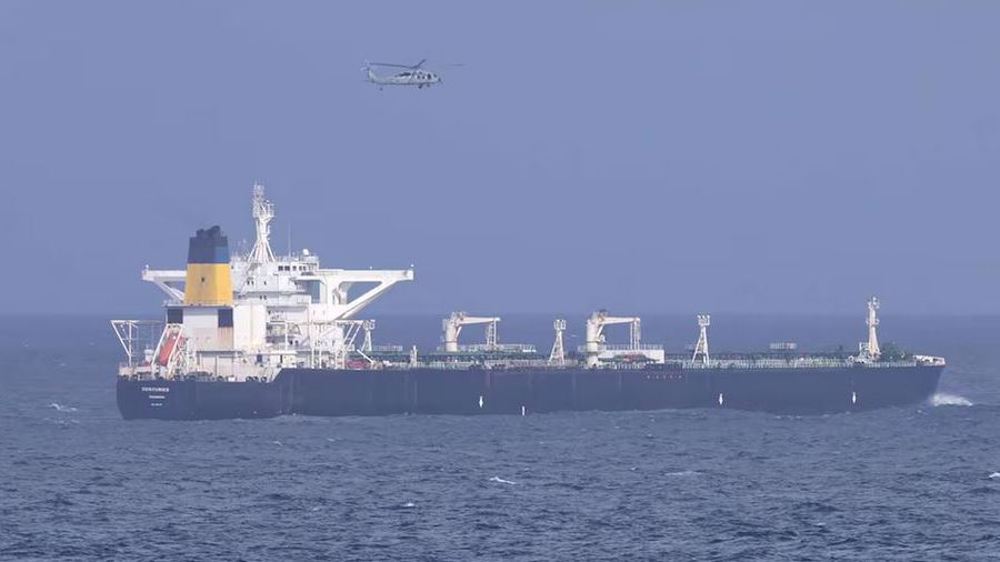
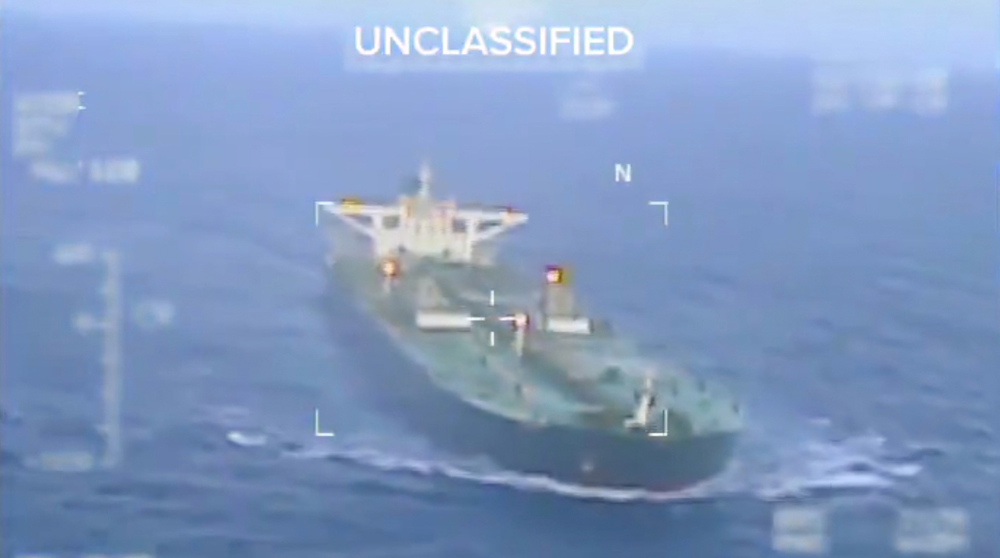
In recent months, Washington has deployed a significant naval force near Venezuela, bombed civilian or commercial ships, seized oil tankers, and announced what it has described as a blockade of sanctioned shipments entering or leaving the country.
US officials frame these actions as enforcement of sanctions and protection of American security interests, accusing — without any evidence —Caracas of financing “narcoterrorism, human trafficking, murders, and kidnappings” with oil revenues.
Venezuela categorically rejects these accusations, maintaining that Washington’s pressure campaign is aimed at overthrowing President Nicolás Maduro's government and embezzling the world’s largest proven oil reserves.
A group of UN experts has backed Venezuela, strongly condemning the US blockade against the South American country as a violation of international law and the UN Charter.
“The US has no right to enforce unilateral sanctions through an armed blockade,” the experts said in a recent report, describing the move as illegal armed aggression.
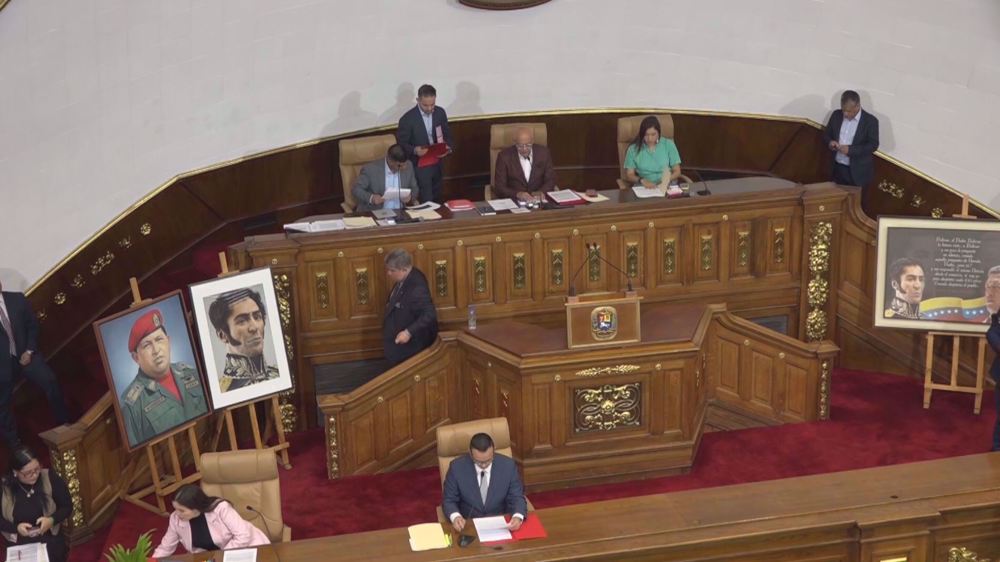
Venezuela's national assembly passes law against piracy, defending maritime trade
— Press TV 🔻 (@PressTV) December 25, 2025
Gladys Quesada reports from Caracas.
Follow: https://t.co/mLGcUTSA3Q pic.twitter.com/v0GqbdJmRr
If Washington’s aim has been to break Venezuela from within, Barreto says the strategy has backfired—particularly when it comes to the armed forces and popular mobilization forces.
More than 1,000 unilateral coercive measures imposed by the US, he said, were designed to inflict suffering on civilians and trigger social collapse.
“That has not happened,” Barreto said, pointing to another failed US "regime change" project.
Another central goal of the sanctions regime was to fracture the Bolivarian National Armed Forces. “This, too, has not occurred,” he said. Instead, he noted, external pressure has bolstered internal cohesion.
“On the contrary, the aggression against Venezuela has strengthened unity within the armed forces, mobilized millions of Venezuelans who enlisted in the national militia, and stirred patriotic sentiment in defense of our sovereignty,” Barreto said.
That sentiment, he added, extends beyond government supporters and includes “significant sectors of the opposition.”
Support for US military intervention, he said, is confined to “a small, extremist minority that does not live in the country.”
Inside Venezuela, the dominant reaction to the prospect of a direct US attack is rejection. Outside the country, he noted, solidarity has grown as regional governments and social movements increasingly view pressure on Caracas as a broader assault on Latin America itself.
Even within the US, Barreto said, unease is surfacing. “Concerns have been expressed asking for avoiding a war that could become an endless and costly war.”
Those warnings resonate against the backdrop of US airstrikes in the Caribbean, which Washington falsely claims target drug trafficking routes.
Since September, US forces have carried out dozens of military strikes on boats, killing dozens of ordinary civilians.
Officials have not publicly released evidence to support those claims, while accounts presented to international bodies indicate that more than 100 people have been killed in the attacks.
A familiar pattern in a long history of colonialism
For Barreto, the confrontation over Venezuela cannot be understood in isolation. It is, he argues, the latest chapter in a long history of US colonial and imperial ambition in the region, rooted in the very foundations of the American state.
“The United States was born at the hands of a group of white, slave-owning landowners who fervently believed in Manifest Destiny,” he said, describing the ideology of exceptionalism and predestination that has shaped US foreign policy for more than two centuries.
That worldview was codified in 1823 with the Monroe Doctrine, whose slogan—“America for the Americans”—masked an ambition to dominate the Western Hemisphere.
That doctrine, the professor maintained, stood in direct opposition to Simón Bolívar’s vision of unity among newly independent Latin American nations, a warning that history would vindicate.
Disunity, Barreto noted, enabled US expansion through territorial conquest, as in Mexico, and repeated interventions aimed at installing pliant governments across the Caribbean, Central America, and beyond.
What has changed, Barreto stated, is not the doctrine but its scope.
“The Monroe Doctrine, the idea of the US as an exceptional and superior nation, has not only remained unchanged but has expanded to include the rest of the world within what the US considers its sphere of influence," he asserted.
“The narratives seem to shift as needed—the fight against communism, the fight against terrorism, the fight against drug trafficking—but the goal remains the same: to maintain its hegemony and the control of the Earth's resources."
✍🏻 Viewpoint - Cartels or conquest? The phony US ‘war on drugs’ masks a Venezuelan oil grab
— Press TV 🔻 (@PressTV) November 25, 2025
By Mohammad Molaeihttps://t.co/0SqxDTWMfO
Venezuela’s resource wealth makes it a prime target. Beyond oil and gas, the country holds vast reserves of gold, diamonds, iron, coltan, and rare earth elements, all located just days by sea from the US coastline.
Yet, Barreto emphasized, Caracas has never rejected trade with Washington outright.
“Venezuela has always been willing to trade its resources with the US under fair and equitable conditions, always within the framework of international law," he stated. What it has refused is subordination.
The Bolivarian Revolution, Barreto said, represents “a comprehensive decolonization process” aimed at reclaiming sovereignty over territory and resources.
That, more than any alleged security threat, explains the intensity of US efforts to force political change in Caracas.
“Venezuela is currently the extreme expression of a colonialist and imperialist policy that ultimately seeks control of Latin America's resources,” Barreto said, pointing to Washington’s open interference in regional politics—from Argentina and Honduras to threats directed at Colombia and Mexico.
During Mosaddegh's time, US pursued the same policy toward Iran as today: Filmmaker
Iran’s new military appointments signal ‘offensive’ posture toward US, Israel: Analyst
Colombia's right-wing win reflects deep polarization as US alignment and Israel ties loom: Analyst



EU not ruling out new sanctions against Israel: German foreign minister
Pakistani army chief to visit Iran on Monday to help boost regional peace: Tehran
Gunmen abduct scores of worshippers from mosque in Nigeria
Pezeshkian: World astonished by Iran's resilience in face of US-Israeli wars
Focus on youth and training camps key to building future generations: Weightlifting chief
VIDEO | Iraqis condemn UK ambassador’s call for armed groups to disarm, warn against foreign intervention
VIDEO | Iran marks Intl. Day of Victims of Terrorism at Foregn Ministry
Israeli chief rabbi denies Palestinians’ existence, rights in ‘hate-filled’ rhetoric


 PressTV NEWSLETTER
now
PressTV NEWSLETTER
now
 This makes it easy to access the Press TV website
