Iran’s four-decade transport transformation
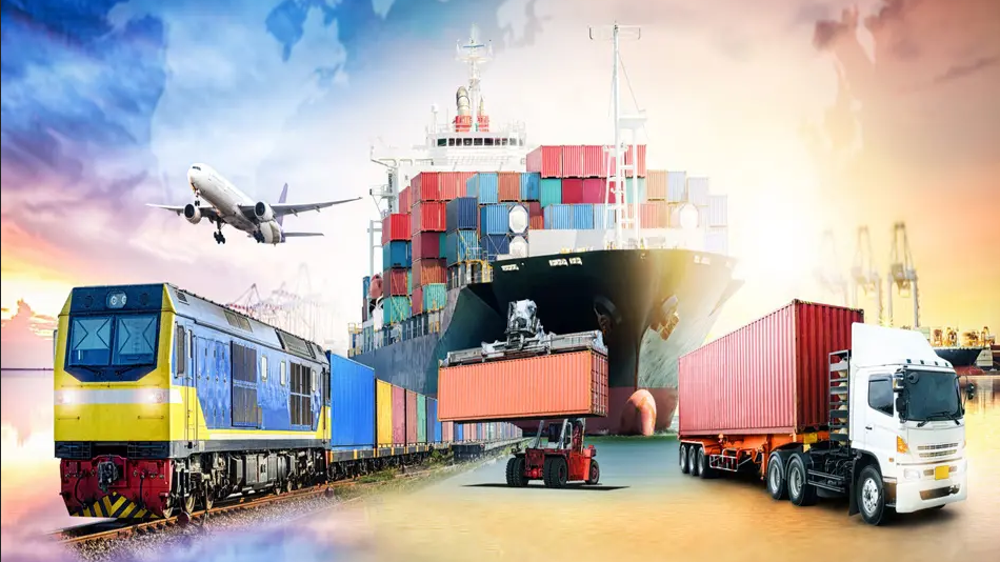
Iranian drivers broke transport records during the 12-day war in June, not only meeting demand but also moving 1.3 billion tonnes of goods from ports across the country, according to Minister of Roads and Urban Development Farzaneh Sadegh.
The minister made the announcement as Iran began marking Transport Week, emphasizing that the goal is to re-establish Iran as a transit hub and a center for logistics, with transport corridors prioritized in the country’s agenda.
Over the past week, 2,000 airline seats were added, private-sector agreements were signed in rail, road, and highway sectors, and investment packages for the next two months were unveiled.
In a development linked to the North–South International Corridor, Belarus launched a new container service connecting Belarus–Russia–Kazakhstan–Turkmenistan–Iran, aiming to reduce delivery times to about two weeks.
Transport is a fundamental pillar of economic infrastructure, without which industrial and commercial development is impossible. The designation of a Transport Day and Transport Week in Iran’s official calendar highlights the strategic importance of this sector.
Global population growth, increasing production, and expanding international trade have transformed transport from a basic public necessity into a competitive strategic domain.
Nations seek alternative routes and prioritize transit corridors, underlining Iran’s historical and geographic role as a key global trading crossroads.
The significance of transport infrastructure is evident across highways, rail development, maritime logistics, aviation, and urban road networks.
Despite economic sanctions and challenges, Iran has maintained economic operations, pursued equitable development, and expanded transport networks.
Engineering expertise developed post-revolution has enabled the country to execute major projects independently, reflecting domestic technical capacity.
In the rail sector, Iran’s network has expanded threefold over four decades. Aviation has seen seat expansion despite sanctions restricting fleet development. Airports have been constructed across major and minor cities, improving national connectivity.
The maritime sector, critical for over 90 percent of imports and exports, has developed port infrastructure, shipbuilding, and maintenance capacities domestically.
Expansion of Shahid Rajaee and Chabahar ports exemplifies achievements in ocean-going vessel handling, while transhipment has emerged as a key mechanism for bypassing sanctions and reducing freight costs, with goods transported from Chinese ports to Iranian ports and redistributed domestically in under 20 days.
Iranian engineering firms have leveraged domestic knowledge to execute transport and civil projects abroad, including for Shanghai Cooperation Organization and BRICS countries, generating employment for graduates, retaining skilled professionals, and producing foreign exchange.
Following the revolution, Iran’s road network expanded from roughly 47,000 kilometers, covering main, secondary, and other roads, to 88,821 kilometers, nearly doubling in extent. Expressways grew from 150 kilometers to over 3,053 kilometers, a twentyfold increase.
Rail lines, previously 4,500 kilometers, now total 15,700 kilometers, with many new lines reaching underserved areas. Around 3,700 kilometers of rail remain under construction, with an estimated requirement of €10 billion for completion.
Aviation, after 43 years of sanctions, has grown from around 25 commercial aircraft before the revolution to approximately 150 in operation today. Airports and heliports exceed 110 and 200, respectively, ensuring no region is more than two to three hours from air transport, and carrying roughly 30 million passengers annually.
Maritime infrastructure has expanded markedly, with port capacity increasing from 19 million tonnes in 1978 to 296 million tonnes today, a 14.5-fold rise.
Iran’s transit position is one of the shortest and most cost-effective routes regionally, where rail development follows three strategic priorities: the North–South Corridor, the East–West Corridor, and transit infrastructure improvements.
Corridors are instruments of foreign policy, as infrastructure, ports, and logistics are critical for realizing the strategic objectives of diplomacy. Iran’s unique geostrategic position makes transport a tool for converting geography into opportunity.
With 15 neighboring countries, Iran possesses significant trade potential that depends on active transport corridors, without which these capacities remain theoretical.
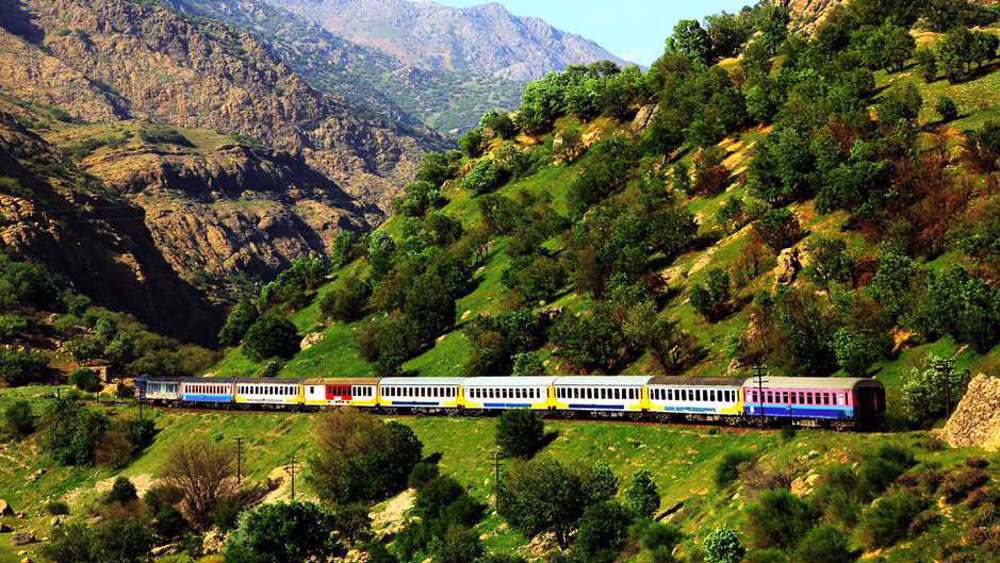
After the Islamic Revolution of 1979, Iran’s transport sector developed under conditions that were shaped by political change, war, fiscal pressure, and shifts in economic organization.
Transport, classified within services in national accounts, continued to function as a core economic activity because it connected production sites, markets, households, and government services across a geographically large country.
Recent years have seen improvements in intercity road networks, conversion of two-way roads into safe expressways, and expansion of the rail sector.
Transportation projects have become a key indicator of national progress, showcasing the scientific and engineering capabilities of Iranian professionals, who have successfully completed major projects relying primarily on domestic expertise.
Despite economic sanctions and periods of turbulence, Iranians have managed to sustain the economy through collective effort, bringing the nation closer to the goals of economic justice and infrastructure expansion that were central to the revolution.
The integration of road, rail, aviation, and maritime infrastructure has created a system capable of supporting domestic commerce, facilitating international trade, and leveraging the country’s geographic position.
In sum, Iran’s transport sector has undergone profound transformation over the past four decades, reflecting decades of planning, investment, and domestic engineering capability.
Understanding Iran’s tourism momentum amid war and sanctions

BRICS paving way for alternative world order, not a war machine against West: Analyst
Iran finds new platform in SCO to develop its rare-earth potential



Top Yemeni military brass to Saudis: ‘We will destroy your economy’
IRGC: Iran will change war’s geography, weapons if attacked again
Italy’s Meloni plans to ban schoolgirls from wearing Burqa, Niqab
IRGC air defenses destroy another US MQ-1 drone over Strait of Hormuz
Israel’s unprecedented atrocities have dealt most devastating blows to UN’s credibility: Tehran
VIDEO | Press TV's news headlines
Yemeni scholars call Saudi Mecca claim a ‘pure fabrication'
VIDEO | Saudi Arabia will face more Houthi reprisals unless it changes course: Analyst


 PressTV NEWSLETTER
now
PressTV NEWSLETTER
now
 This makes it easy to access the Press TV website
